From Florida
From Florida
While I was on vacation in Clearwater Beach I walked to Pier 60 and had a wonderful place to observe and photograph, a variety of seabirds and such. I was very entertained by birds trying to catch fish near the shore. It’s really amazing to see how each of the different species of birds get to use a strategy to accomplish their goals.
Schools of tiny fish were being rounded up by the largest birds, in this case by the pelicans. Once the mass of fish got too close to the shore they jumped out of the water, that’s when the bird’s frenzy started. It was quite a spectacle!
Pelicans, seagulls, terns, crows, even grackles were part of the hunt! Later, I saw seagulls chasing terns that had recently caught a fish to forcibly take the fish from the real owner.
I felt I was being truly entertained by these bird’s behavior.
Photo Gallery
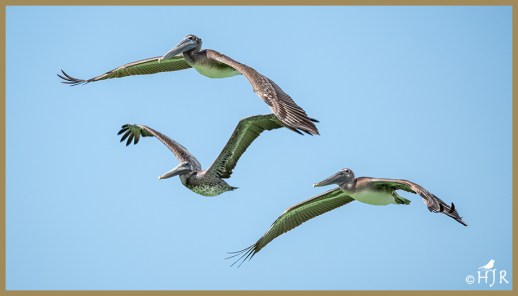
Brown Pelicans

Pelican’s fish roundup
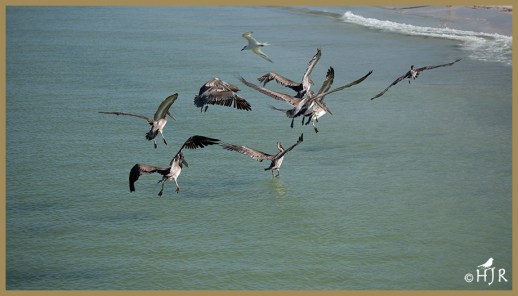
Toward the beach
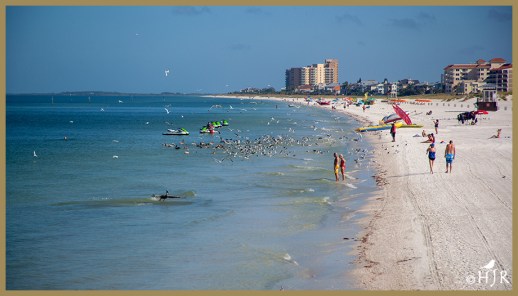
Feeding frenzy!
© HJ Ruiz – Avian101
Share this:

Bird’s ID – Red and Green Macaw
Red and Green Macaw
The Red-and-Green Macaw (Ara chloropterus), is a large, mostly-red macaw of the genus Ara.
This is the largest of the genus Ara, widespread in the forests and woodlands of northern and central South America. However, in common with other macaws, in recent years there has been a marked decline in its numbers due to habitat loss and illegal capture for the parrot trade.
The green-winged macaw can be readily distinguished from the scarlet macaw. While the breast of both birds are bright red, the upper-wing covert feathers of the green-winged macaw is mostly green but can occasionally sport a few yellow feathers above the band of green (as opposed to mostly yellow, or a strong mix of yellow and green in the scarlet macaw). In addition, the green-winged macaw has characteristic red lines around the eyes formed by rows of tiny feathers on the otherwise bare white skin patch; this is one of the biggest differences from a scarlet macaw to the casual viewer. Iridescent teal feathers are surrounded by red on the tail. If seen together, the green-winged macaw is clearly larger than the scarlet macaw as well.
Photo Gallery
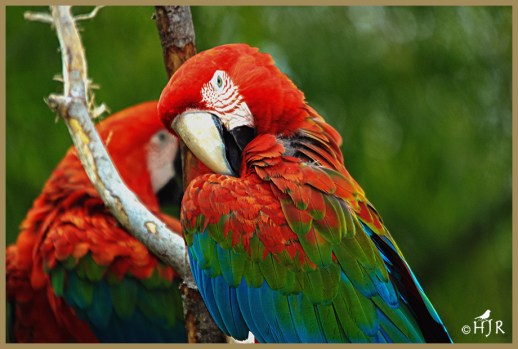

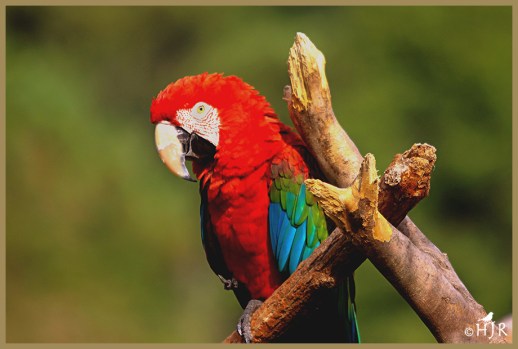
© HJ Ruiz – Avian101
Share this:

What’s Up? – Our Vacation…
Our Vacation…
My family and I went on vacation to Florida. We visited several places, among them: Clearwater Beach, Bradenton Beach and Sarasota, plus some other places that were not on the beach.
My son Tyler loves the beach, so does my wife Lucy. I had promised them we would go to the beach during the week of School recess in Georgia.
Putting it a few words, we enjoyed every minute of our vacation. We were out of our hotels daily after an early breakfast in the morning and stayed out for many hours doing all kinds of things whether at the beach or inland. There are so many interesting places to visit and enjoy.
When it comes to birds… it was kind of early on the Season for any migrations yet. Even places I visited, well known for having good numbers of birds were mostly empty with very few birds on sight.
I decided to find shore birds instead and I had better luck in that respect.
Photo Gallery
Here are a couple of pictures, Tyler posing for me. He loves to investigate everything and ask questions.


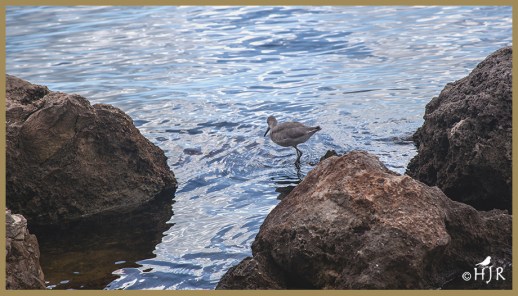
WILLET
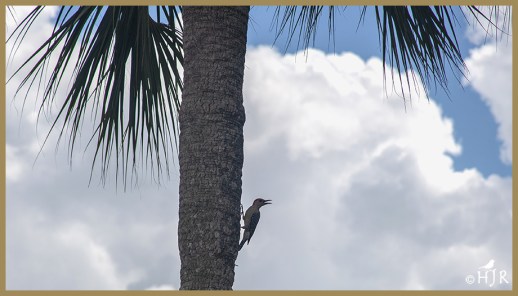
RED-BELLIED WOODPECKER
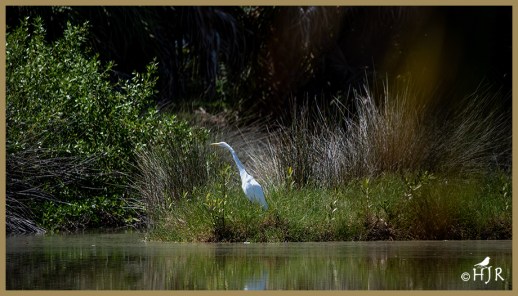
GREAT EGRET
© HJ Ruiz – Avian101
Share this:

Red Gallery – Northern Gallery
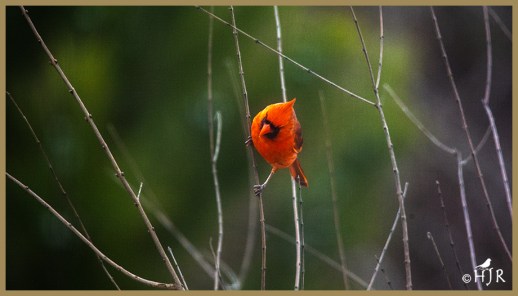
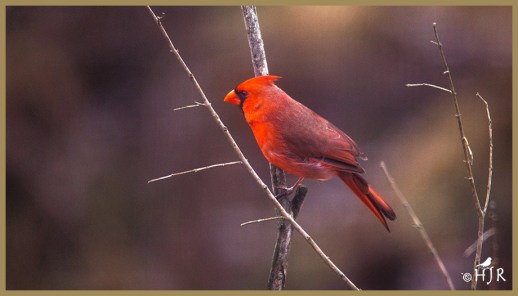
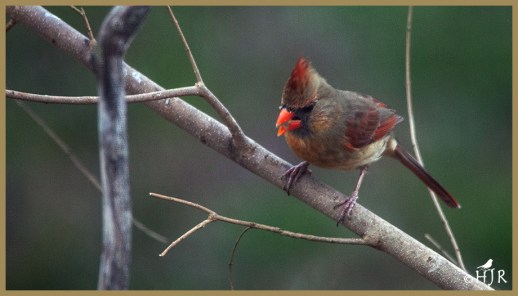
You are welcome to the Northern Cardinal Photo Gallery, every Saturday!
It’s suggested to relax and enjoy!
The eggs are white, with a tint of green, blue or brown, and are marked with lavender, gray, or brown blotches which are thicker around the larger end. The shell is smooth and slightly glossy. Three or four eggs are laid in each clutch. Eggs measure approximately 26 mm × 19 mm (1.02 in × 0.75 in) in size. The female generally incubates the eggs, though, rarely, the male will incubate for brief periods of time. Incubation takes 12 to 13 days. Young fledge 10 to 11 days after hatching. Two to three, and even four, broods are raised each year. The male cares for and feeds each brood as the female incubates the next clutch of eggs.
Photo Gallery

Important Note:
This is to let you know that I will be away on vacation with my family, and will not be blogging for a week. I will resume blogging on Monday, October 1st.
© HJ Ruiz – Avian101
Share this:

Read Past Reviews

Book # 69
Quote from the Author
“A good chuckle is healthy, it helps you break the monotony of a serious life.” ~ H.J. Ruiz


You must be logged in to post a comment.