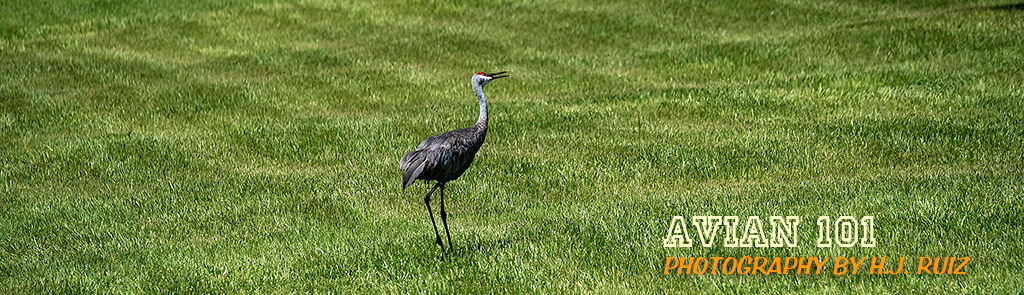
Here Birdie! A Different Approach…
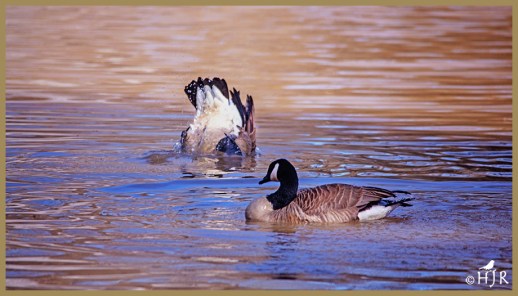
” Couples and Tempers”
She: “Kiss my… blub,!”
He: ” What?… I take it you’re breaking up with me?”
© HJ Ruiz – Avian101
Share this:

Bird’s ID – Anhinga
Anhinga
The Anhinga (Anhinga anhinga), sometimes called snakebird, darter, American darter, or water turkey, is a water bird of the warmer parts of the Americas. The word anhinga comes from the Brazilian Tupi language and means devil bird or snake bird. The origin of the name snakebird is apparent when swimming : only the colored neck appears above water so the bird looks like a snake ready to strike. They do not have external nares (nostrils) and breathe solely through their epiglottis.
The anhinga is placed in the darter family, Anhingidae, and is closely related to Indian (Anhinga melanogaster), African (A. rufa), and Australian (A. novaehollandiae) darters. Like other darters, the anhinga hunts by spearing fishes and other small prey using its sharp, slender beak.
Anhinga species are found all over the world in warm shallow waters. The American anhinga has been subdivided into two subspecies, A. a. anhinga and A. a. leucogaster, based on their location. A. a. anhinga can be found mainly east of the Andes in South America and also the islands of Trinidad and Tobago. A. a. leucogaster can be found in the southern United States, Mexico, Cuba, and Grenada. A fossil species Anhinga walterbolesi has been described from the Late Oligocene to Early Miocene of Australia.
Photo Gallery


© HJ Ruiz – Avian101
Share this:

What’s Up? – Hurricane Florence
Hurricane Florence
The past week has been a bit tense for several States for reasons of the hurricane Florence. We didn’t know exactly where it was going to touch land, Meteorologists predicted Florence would touch land in both the North and South Carolinas which it did, then the questions arose, was it going to veer toward Georgia in the South or Virginia in the North?
The hurricane touched land with a lot of power but traveled more slowly once on land. This situation kind of complicated the equation., it meant a slow traveling would create more damage of heavy rain for longer period of time, creating super floods with devastating consequences .
There was another important threat to be considered. The hurricane force and size (160 miles) travels over the sea and creates a tremendous surge of about 15 ft. this surge can travel inland with devastating force too and floods beaches and infrastructure just as much as a tsunami.
In Georgia we were lucky because the most we saw from this hurricane was heavy rain, high humidity, gray days. Fortunately we are A-OK.
My birds are not happy with having heavy rain so often but they adapt to any changes. Just like we humans have learned to adapt and be resilient, most likely that we learned from the birds, since they were on Earth eons before us.
Photo Gallery


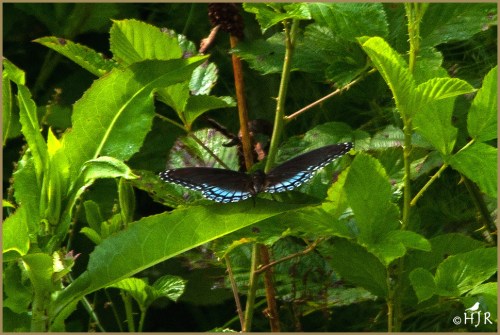
CAN YOU ID ME?
© HJ Ruiz – Avian101
Share this:

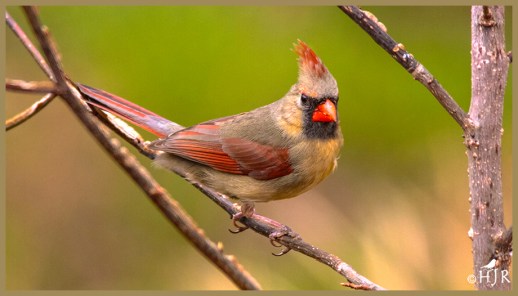
Red Gallery – Northern Cardinal
You are welcome to the Northern Cardinal Photo Gallery, every Saturday!
It’s suggested to relax and enjoy!
Males sometimes bring nest material to the female, who does most of the building. She crushes twigs with her beak until they are pliable, then turns in the nest to bend the twigs around her body and push them into a cup shape with her feet. The cup has four layers: coarse twigs (and sometimes bits of trash) covered in a leafy mat, then lined with grapevine bark and finally grasses, stems, rootlets, and pine needles. The nest typically takes three to nine days to build.
Photo Gallery

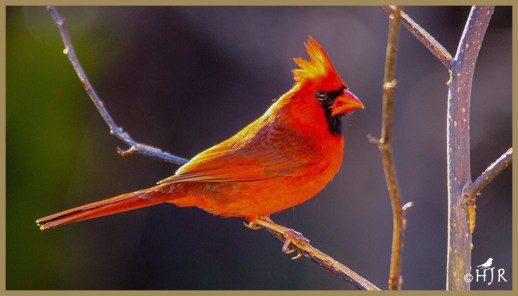
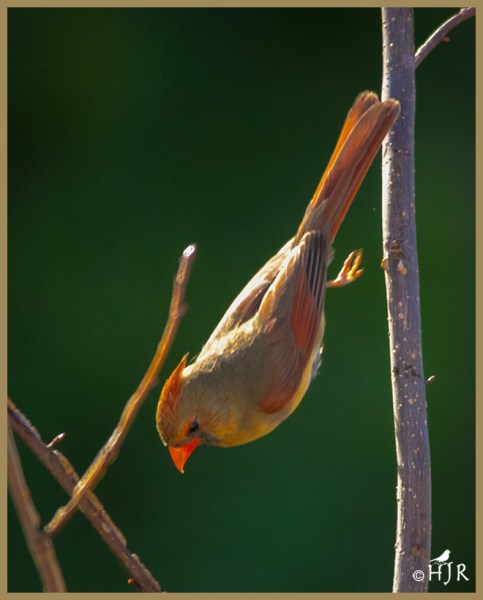
© HJ Ruiz – Avian101
Share this:

Read Past Reviews

Book # 69
Quote from the Author
“A good chuckle is healthy, it helps you break the monotony of a serious life.” ~ H.J. Ruiz


You must be logged in to post a comment.