Photo Capture # 62 – Red-winged Blackbird
Red-winged Blackbird
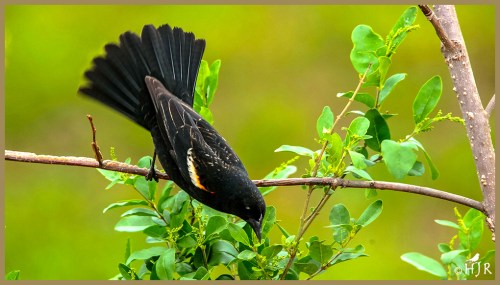
Red-winged Blackbird (M)
© HJ Ruiz – Avian101
Share this:

What’s Up? – Look what I found…
Look what I found…
Two weeks ago I had the great opportunity to photograph a variety of bird species in my backyard, which most of them are or have been in my backyard previously. As I mentioned on last Monday’s post, I shot many photos… since we had excellent weather conditions favorable for photography. 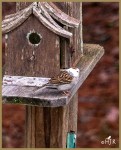
After going through the photo process ( I shoot RAW mode) I happened to notice a photo of a bird I wasn’t familiar with. I knew it was a sparrow of some kind, I checked and researched and did not find it registered anywhere. However, the body from the neck down was identical to the Chipping Sparrow, and was hanging around with a group of them. I concluded that it was a Leucistic Chipping Sparrow.
Leucism (/ˈluːsɪzəm, -kɪz-/) is a condition in which there is partial loss of pigmentation in an animal resulting in white, pale, or patchy coloration of the skin, hair, feathers, scales or cuticle, but not the eyes. It is occasionally spelled leukism. Unlike albinism, it is caused by a reduction in multiple types of pigment, not just melanin.
Photo Gallery


Eating Lunch With…
Red-winged Blackbird
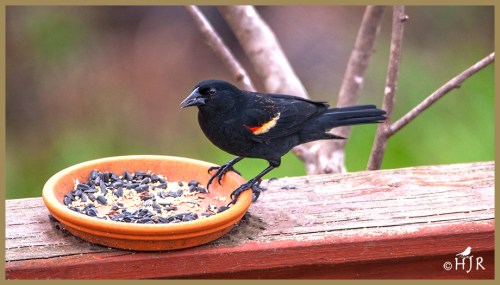
Red-winged Blackbird (M)
© HJ Ruiz – Avian101
Share this:

Photo Capture # 61 – Willet
Willet
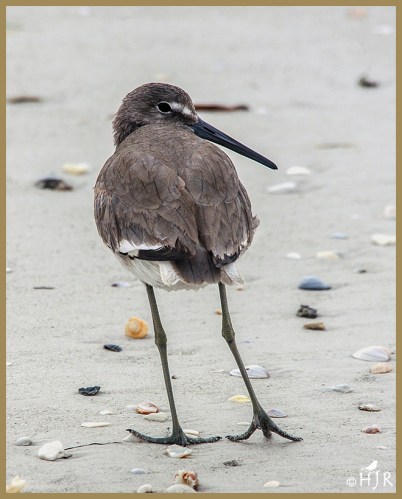
Willet
© HJ Ruiz – Avian101
Share this:

Red Gallery – Northern Cardinal
Male sings to defend nesting territory, actively attacking intruding males (and attacking his own reflection in windows and mirrors). In courtship, male and female raise heads high, sway back and forth while singing softly; male often feeds female early in breeding season. Female sings mainly in spring before start of nesting. Nest: Usually well hidden in dense shrubs, vines, or low trees, placed 3-10′ above ground, sometimes higher. Nest (built by female) is open cup made of twigs, weeds, grass, bark strips, leaves, rootlets, lined with fine grass or hair.
Photo Gallery
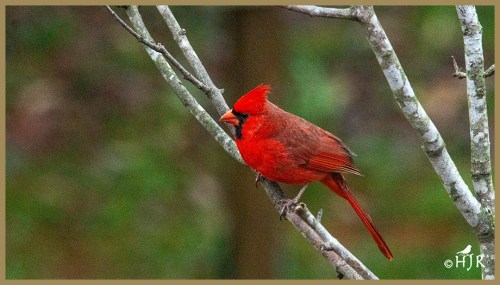
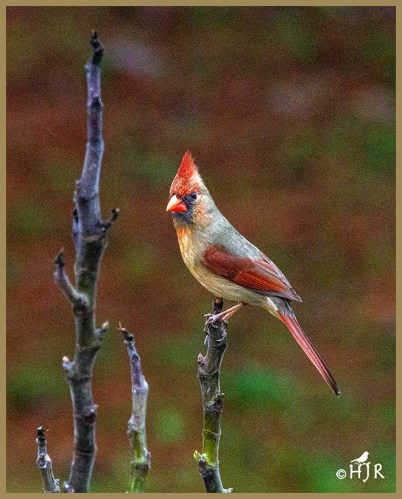
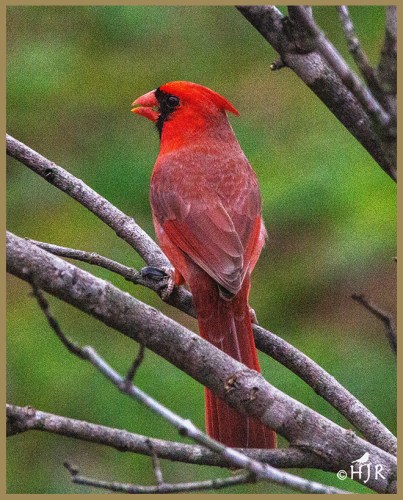
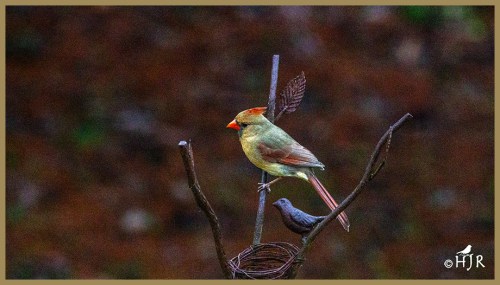
© HJ Ruiz – Avian101
Share this:

Read Past Reviews

Book # 69
Quote from the Author
“A good chuckle is healthy, it helps you break the monotony of a serious life.” ~ H.J. Ruiz


You must be logged in to post a comment.