
Bird’s ID – Glossy Ibis
Glossy Ibis
The Glossy Ibis (Plegadis falcinellus) is a wading bird in the ibis family Threskiornithidae. The scientific name derives from Ancient Greek plegados and Latin, falcis, both meaning “sickle” and referring to the distinctive shape of the bill.
This is the most widespread ibis species, breeding in scattered sites in warm regions of Europe, Asia, Africa, Australia, and the Atlantic and Caribbean regions of the Americas.
This species is a mid-sized ibis. It is 48–66 cm (19–26 in) long, averaging around 59.4 cm (23.4 in) with an 80–105 cm (31–41 in) wingspan. The culmen measures 9.7 to 14.4 cm (3.8 to 5.7 in) in length, each wing measures 24.8–30.6 cm (9.8–12.0 in), the tail is 9–11.2 cm (3.5–4.4 in) and the tarsus measures 6.8–11.3 cm (2.7–4.4 in). The body mass of this ibis can range from 485 to 970 g (1.069 to 2.138 lb). Breeding adults have reddish-brown bodies and shiny bottle-green wings. Non-breeders and juveniles have duller bodies. This species has a brownish bill, dark facial skin bordered above and below in blue-gray (non-breeding) to cobalt blue (breeding), and red-brown legs. Unlike herons, ibises fly with necks outstretched, their flight being graceful and often in V formation. It also has shiny feathers.
Sounds made by this rather quiet ibis include a variety of croaks and grunts, including a hoarse grrrr made when breeding.
The diet of the glossy ibis is variable according to the season and is very dependent on what is available. Prey includes adult and larval insects such as aquatic beetles, dragonflies, damselflies, grasshoppers, crickets, flies and caddisflies, Annelida including leeches, molluscs (e.g. snails and mussels), crustaceans (e.g. crabs and crayfish) and occasionally fish, amphibians, lizards, small snakes and nestling birds.
Photo Gallery


© HJ Ruiz – Avian101
Share this:

Photo Capture # 60 – Cooper’s Hawk
Cooper’s Hawk
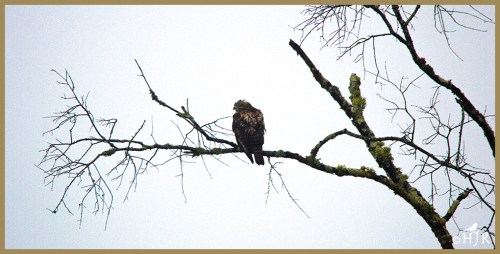
Cooper’s Hawk
© HJ Ruiz – Avian101
Share this:

Bird’s ID – Blue Grosbeak
Blue Grosbeak
The Blue Brosbeak (Passerina caerulea), is a medium-sized seed-eating bird in the same family as the northern cardinal, “tropical” or New World buntings, and “cardinal-grosbeaks” or New World grosbeaks.
The male blue grosbeak is almost entirely deep blue. The female is mostly brown. Both sexes are distinguished by their large, deep bill and double wing bars. These features, as well as the grosbeak’s relatively larger size, distinguish this species from the indigo bunting. Length can range from 14 to 19 cm (5.5 to 7.5 in) and wingspan is from 26 to 29 cm (10 to 11 in). Body mass is typically from 26 to 31.5 g (0.92 to 1.11 oz).
This is a migratory bird, with nesting grounds across most of the southern half of the United States and much of northern Mexico, migrating south to Central America and in very small numbers to northern South America; the southernmost record comes from eastern Ecuador. It eats mostly insects, but it will also eat snails, spiders, seeds, grains, and wild fruits. The blue grosbeak forages on the ground and in shrubs and trees.
Photo Gallery


© HJ Ruiz – Avian101
Share this:

Photo Capture # 59 – Boat-Tailed Grackle
Boat-Tailed Grackle
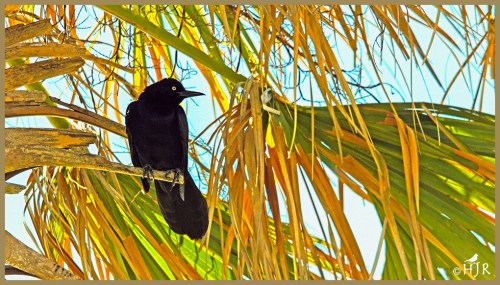
Boat-tailed Grackle
© HJ Ruiz – Avian101
Share this:

Read Past Reviews

Book # 69
Quote from the Author
“A good chuckle is healthy, it helps you break the monotony of a serious life.” ~ H.J. Ruiz
 H.J. Ruiz - Avian101
You must be logged in to post a comment.