Photography of Birds – Set # 153
Set # 153
Eastern Bluebird (M)
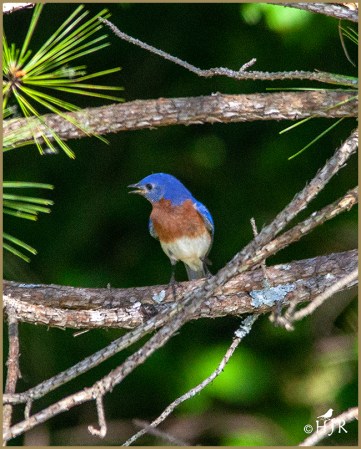
Eastern Bluebird (M)
Bluebirds feed by perching on a high point, such as a branch or fence post, and swooping down to catch insects on or near the ground. The availability of a winter food source will often determine whether or not a bird will migrate. If bluebirds do remain in a region for the winter, they group and seek cover in heavy thickets, orchards, or other areas in which adequate food and cover resources are available.
Carolina Wren
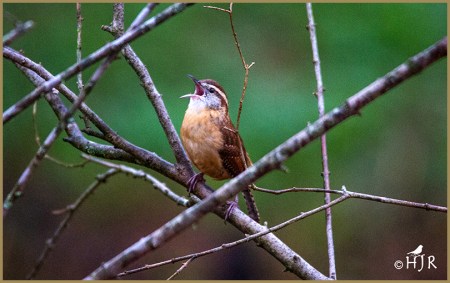
Carolina Wren
Carolina wrens spend the majority of their time on or near the ground searching for food, or in tangles of vegetation and vines. They also probe bark crevices on lower tree levels, or pick up leaf-litter in order to search for prey. Their diet consists of invertebrates, such as beetles, true bugs, grasshoppers, katydids, spiders, ants, bees, and wasps. Small lizards and tree frogs also make up the carnivorous portion of their diet. Vegetable matter, such as fruit pulp and various seeds, makes up a small percentage of their diet. In the northern portion of their range, they frequent bird feeders.
© HJ Ruiz – Avian101
Share this:

Book Review # 59 – The Gull Next Door
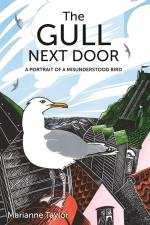
The Gull Next Door
A Portrait of a misunderstood Bird
Author:
Marianne Taylor
Publisher:
Princeton University Press
Brief Review:
The author, Marianne Taylor wrote this book taking a different approach about Gulls. She practically walks us through her biography tells us about important history about the area where she lived, also towns surrounding it.
More info
The different species of gulls were always present during her growing up. Marianne blends her own experiences with the occurring irregularities with gull’s behavior and the problem solving but the UK at the time. She became deeply interested in gulls, she paid attention to certain problems with these birds, which she describes with detail and confidence. She also writes in detail, descriptions of Britain’s gulls.
This book has 192 pages.
Reviewed by:
H.J. Ruiz -Avian101.Wordpress.com – October 11th, 2020
© HJ Ruiz – Avian101
Share this:

Photography of Birds – Set # 152
Set # 152
Eastern Towhee (M & F)
-
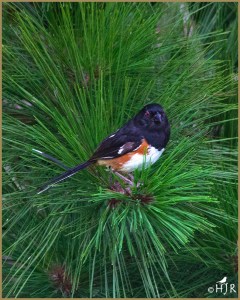
- Eastern Towhee (M)
-

- Eastern Towhee (F)
Eastern towhees typically nest on or near the ground. Several literature reviews note the predominance of eastern towhee nests below 5 feet (1.5 m). In a study of cowbird parasitism on Sanibel Island, all 5 eastern towhee nests located were within 6 feet (1.8 m) of the ground. Nests as high as 18 feet (5.5 m) have been reported in literature reviews. Nests higher off the ground in mixed aspen stands of varying ages in Pennsylvania had significantly (p<0.001) lower nest success. Of 13 unsuccessful eastern towhee nests, 11 were greater than 1-foot (0.30 m) above the ground.
© HJ Ruiz – Avian101
Share this:

Red Gallery – Northern Cardinal

Photo Gallery


© HJ Ruiz – Avian101
Share this:

Read Past Reviews

Book # 69
Quote from the Author
“A good chuckle is healthy, it helps you break the monotony of a serious life.” ~ H.J. Ruiz
 H.J. Ruiz - Avian101
You must be logged in to post a comment.