
While I was in Sarasota
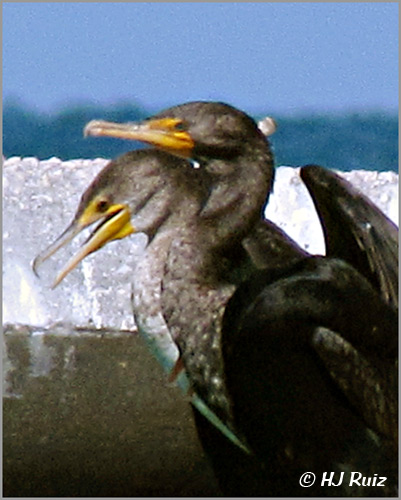
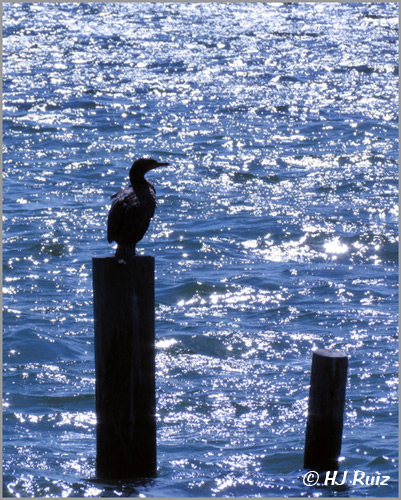
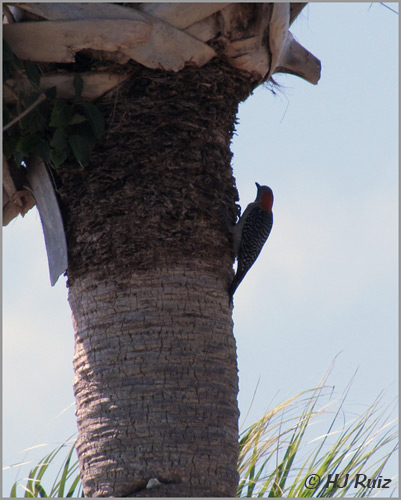
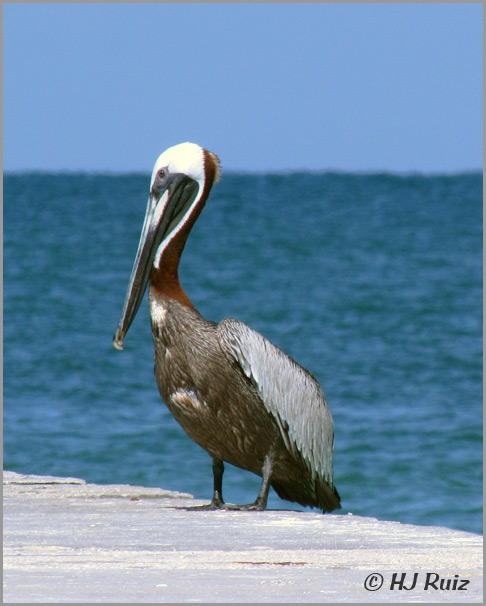
Last month while I was in Sarasota I took a drive to Bradenton Beach to have a look, while I walked along the beach on the south side I noticed some bird activity in the area so I decided to observe a bit more carefully. I saw:
- A red-bellied Woodpecker boring holes on a palm tree
- A Neotropic Cormorant, basking on the sun on a pole at the inlet side.
- Some American Brown Pelicans.
- A single Sanderling.
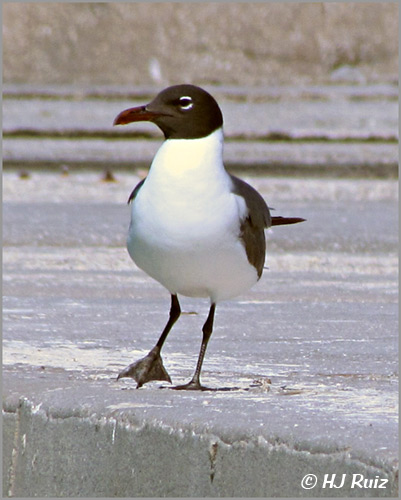
- One Laughing Gull on a broken jetty and some on the air.
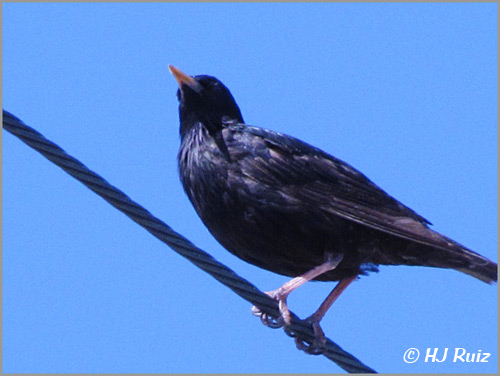
- A European Starling.
- Three Double-crested Cormorants.
Share this:

Pirates birds of the Galapagos Island – Video
Another fascinating and interesting video by © BBC. I’m sure that you will concur with me.
Share this:

Eating like a bird helps forests grow
Lions, tigers and bears top the ecological pyramid — the diagram of the food chain that every school child knows. They eat smaller animals, feeding on energy that flows up from the base where plants convert sunlight into carbohydrates.
A new study examines complex interactions in the middle of the pyramid, where birds, bats and lizards consume insects. These predators eat enough insects to indirectly benefit plants and increase their growth, Smithsonian scientists report. “Our findings are relevant to natural communities like grasslands and forests, but also to human food production, as these insect-eating animals also reduce insect pests on crop plants,” said Sunshine Van Bael, scientist at the Smithsonian Tropical Research Institute.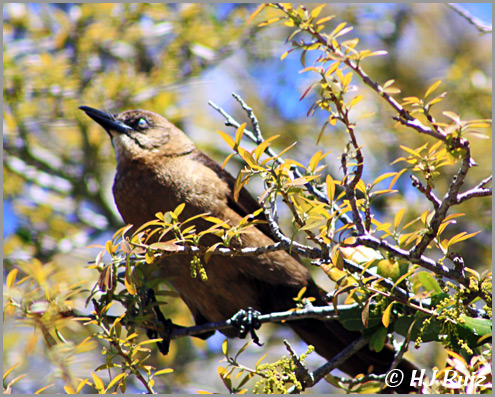
Previous theory on food webs suggested that the effects of insect-eaters on plants would be weak, because animals like birds not only feed on herbivores — which is good for the plants- but may also benefit them by feeding spiders and predatory insects. If a bird eats a lot of spiders, for example, caterpillars could be “released” from spider predation and then consume more plant material. The authors found that previous theory did not hold true; in fact, the birds simply ate the spiders and the caterpillars.
The authors reviewed more than 100 studies of insect predation by birds, bats or lizards from four continents. They found that the identity of the predator didn’t make much of a difference. Together, by eating herbivores and their insect predators, they reduced damage to plants by 40 percent, which resulted in a 14 percent increase in plant biomass.
“It’s no longer apt to say that one ‘eats like a bird’,” said Van Bael, “Our study shows that birds, bats and lizards act as one big vacuum cleaner up in the treetops. Everything’s on the menu.”
Nevertheless, there is still a lack of experimental work on the overlap in diets of the insects that birds, lizards and bats are eating, and the insects that the predatory insects, themselves are eating. “Our study shows that birds, bats and lizards protect plants, underscoring the importance of conservation of these species in the face of global change,” summed up lead author Kailen Mooney, professor of ecology and evolutionary biology at the University of California-Irvine.
Co-authors of this study, published online by the journalProceedings of the National Academy of Sciences, also include researchers from the University of Maryland, the University of Missouri — St. Louis, the University of Toledo, and the Smithsonian´s Migratory Bird Center at the National Zoological Park. The Smithsonian Tropical Research Institute, headquartered in Panama City, Panama, is a unit of the Smithsonian Institution. The institute furthers the understanding of tropical nature and its importance to human welfare, trains students to conduct research in the tropics and promotes conservation by increasing public awareness of beauty and importance of tropical ecosystems.
Photograph is © H.J. Ruiz – “My Backyard Visitors”
The above story is reprinted (with editorial adaptations by ScienceDaily staff) from materials provided by Smithsonian Tropical Research Institute,
Share this:

White-cheeked Turaco
White-cheeked Turaco – Spec. Name: Tauraco Leucotis
The White-cheeked nominate features a dark crest an orange bill and a broad white cheek lateral on the neck, posterior to the ear covert, the body is green with dark black-green under-tail and edges of wings.
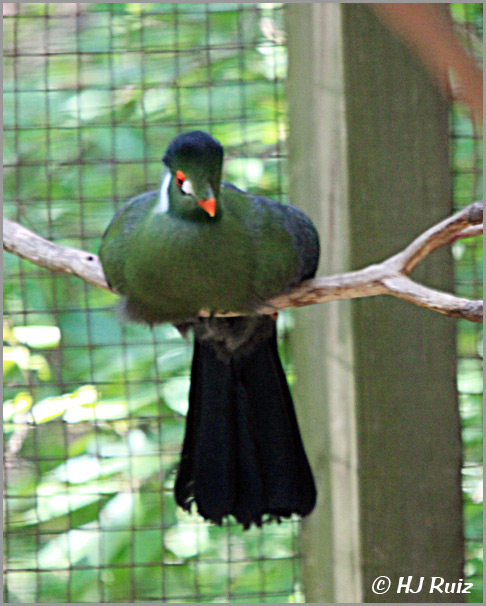
White-cheeked Turaco
This species measures approximately 42-43cm beak to tail, and weighs between 200-315g. Throughout the White-cheeked Turaco’s distribution, it is commonly found from 2200-3200m, but has been observed at lower altitudes nearer 800m. Here it frequents forest habitats, generally feeding on fruits and plant material. The species will also take arthropods, and insect-eating has been seen in captivity when pairs are rearing. The White-cheeked Turaco is probably the most common species kept and bred in captivity. It is popular with enthusiasts for its excited, dynamic behaviour and attractive appearance. This species is not globally threatened. Is abundant in certain areas of Ethiopia.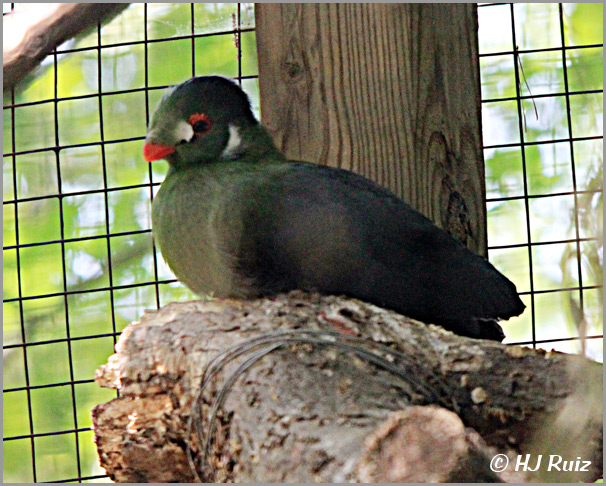
All photographs are © H.J. Ruiz – “My Backyard Visitors”
Share this:


Read Past Reviews

Book # 69

Quote from the Author
“A good chuckle is healthy, it helps you break the monotony of a serious life.” ~ H.J. Ruiz


You must be logged in to post a comment.