Tricolored Heron
The bird you are about to see on this post today I’ve photographed in Georgia and Florida. Being more numerous in Florida.
The Tricolored Heron is a small heron. It is a resident breeder from the Gulf states of the USA and northern Mexico south through Central America and the Caribbean to central Brazil and Peru. There is some post-breeding dispersal to well north of the nesting range.
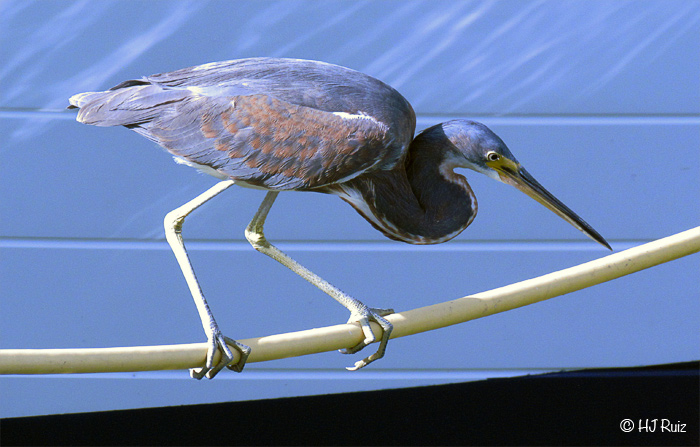
Tricolored Heron
Tricolored Heron’s breeding habitat is sub-tropical swamps. It nests in colonies, often with other herons, usually on platforms of sticks in trees or shrubs.
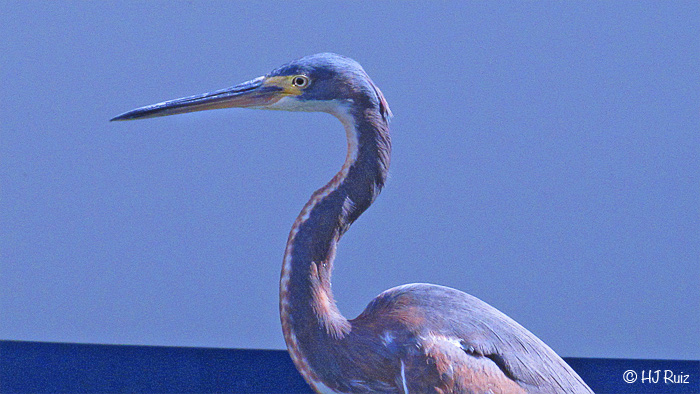
It is a medium-large, long-legged, long-necked heron with a long pointed yellowish or grayish bill with a black tip. The legs and feet are dark.
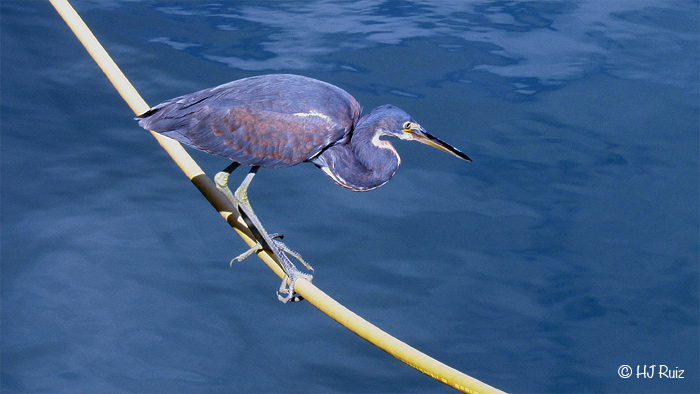
Adults have a blue-grey head, neck, back and upper-wings, with a white line along the neck. The belly is white. In breeding plumage, they have long blue filamentous plumes on the head and neck, and buff ones on the back.
Tricolored Heron stalks its prey in shallow or deeper water, often running as it does so. It eats fish, crustaceans, reptiles, and insects.


Click on images to see enlargements
Text and photographs © H.J. Ruiz – Avian 101
Share this:

Ring-billed Gull
The photographs of the bird that I’m featuring today were shot at different times in several locations.
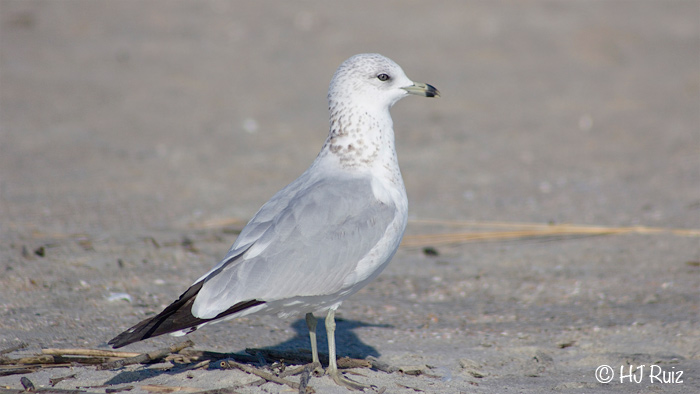
The Ring-billed Gull is a medium-sized gull. The head, neck and underparts are white; the relatively short bill is yellow with a dark ring; the back and wings are silver gray; and the legs are yellow. The eyes are yellow with red rims. This gull takes three years to reach its breeding plumage; its appearance changes with each fall molt.
Their breeding habitat is near lakes, rivers or the coast in Canada and the northern United States. They nest colonially ( Large groups) on the ground, often on islands. This bird tends to be faithful to its nesting site, if not its mate, from year to year.
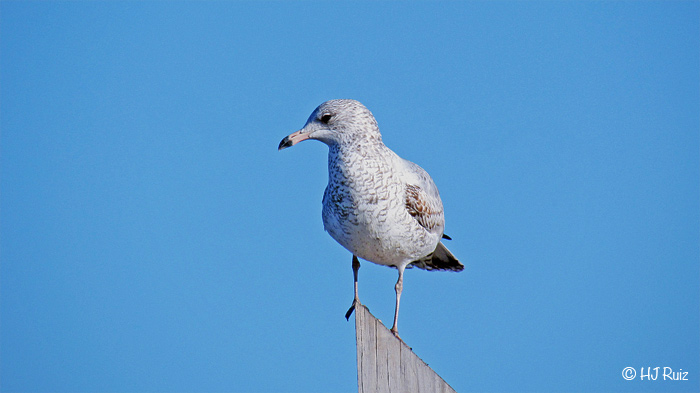
Ring-billed Gull
They are migratory and most move south to the Gulf of Mexico and the Atlantic and Pacific coasts of North America, also the Great Lakes.
This gull is a regular wanderer to western Europe. In Ireland and Great Britain it is no longer classed as a rarity, with several birds regularly wintering in these countries.
These birds forage in flight or pick up objects while swimming, walking or wading. They also steal food from other birds and frequently scavenge. They are omnivorous; their diet may include insects, fish, grain, eggs, earthworms and rodents. These birds are opportunistic and have adapted well to taking food discarded or even left unattended by people. It is regarded as a pest by many beach-goers because of its willingness to steal unguarded food on highly crowded beaches.
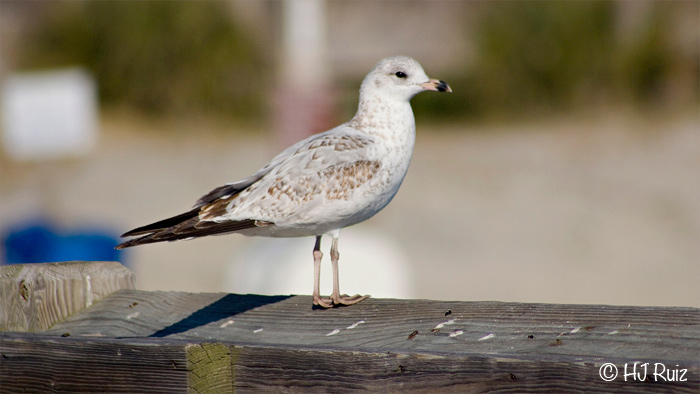
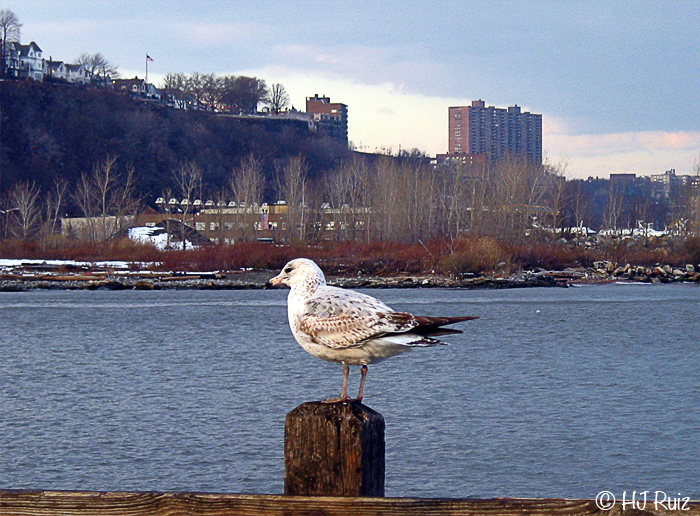
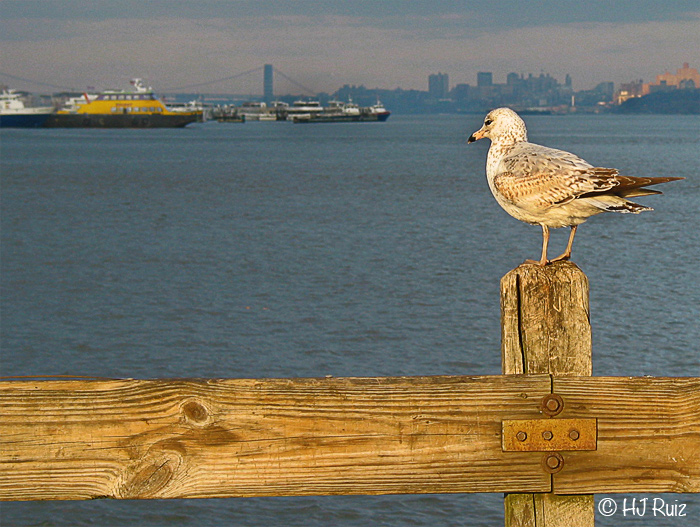
Click on images to see enlargements
Text and photographs © H.J. Ruiz – Avian 101
Share this:

Willet
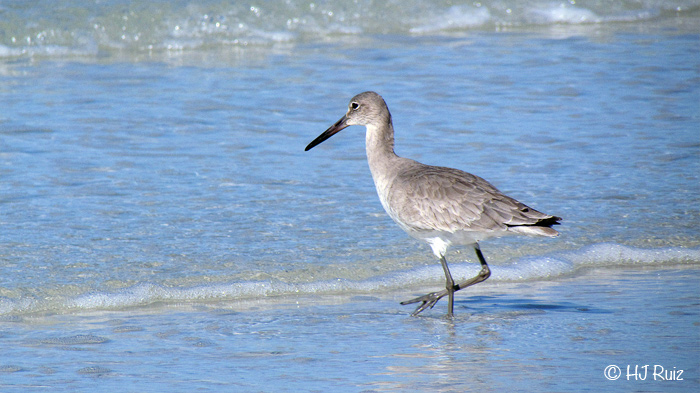
The bird I’m describing and showing in photographs today is a quite common wading bird at Florida tropical beaches. That’s were these pictures where shot.
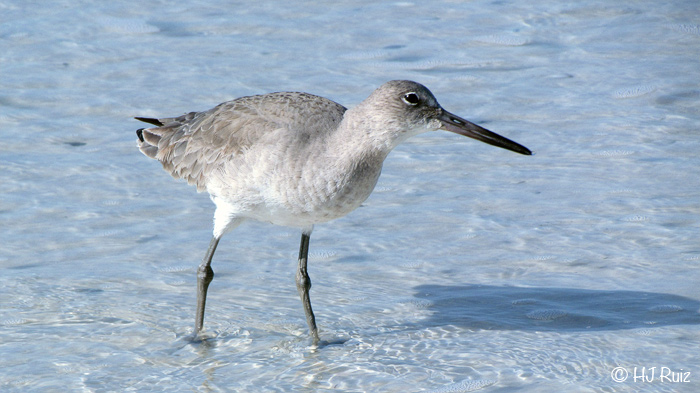
The Willet is a large shorebird in the sandpiper family. It is a good-sized and stout the largest of the shanks.
Willet
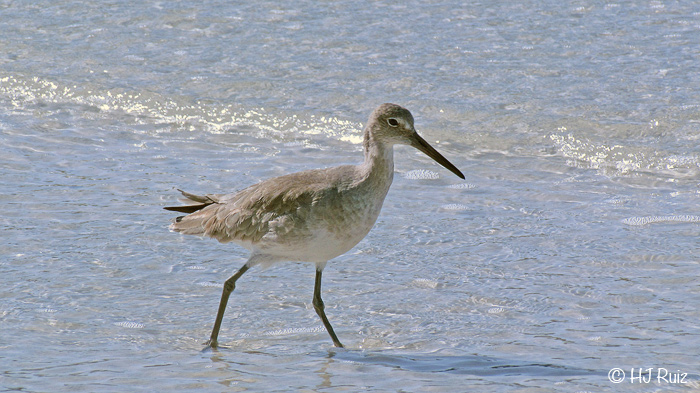
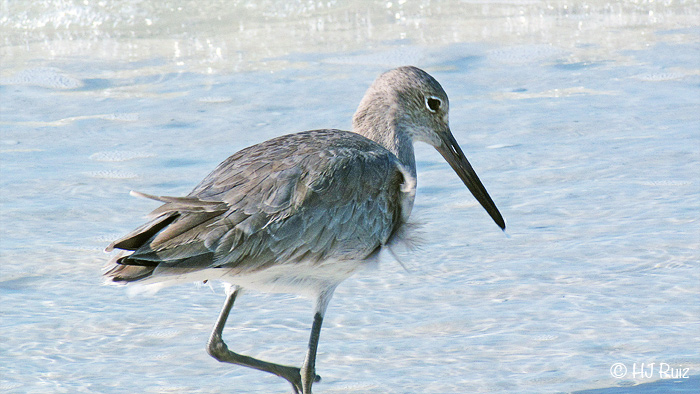
Adults have gray legs and a long, straight, dark and stout bill. The body is dark gray above and light underneath. The tail is white with a dark band at the end. The distinctive black and white pattern of the wings is a common sight along many North American coastal beaches.
They mainly eat insects, crustaceans and marine worms, but also eat some plant material.
Click on images to see enlargements
Text and photographs © H.J. Ruiz – Avian 101
Share this:

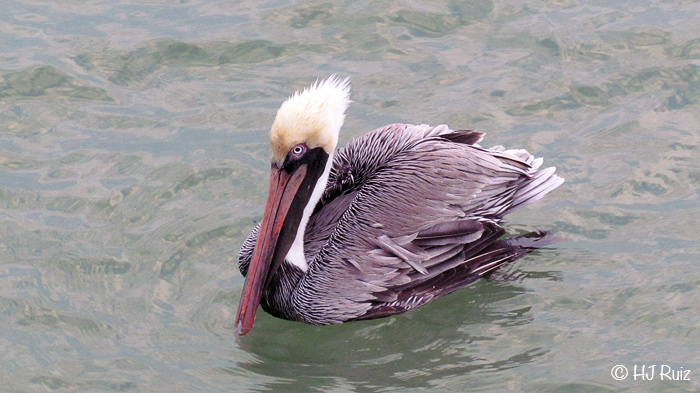
Brown Pelican
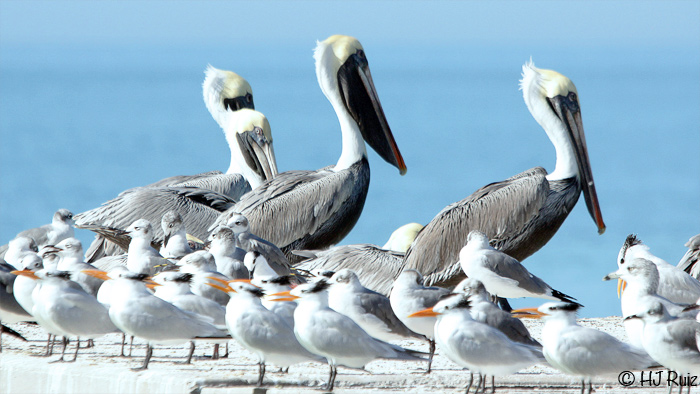
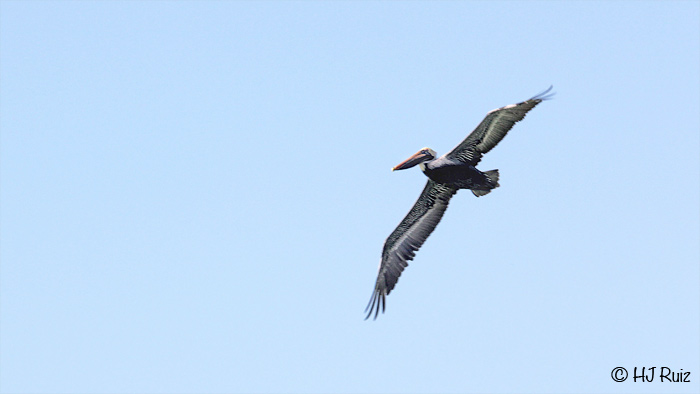
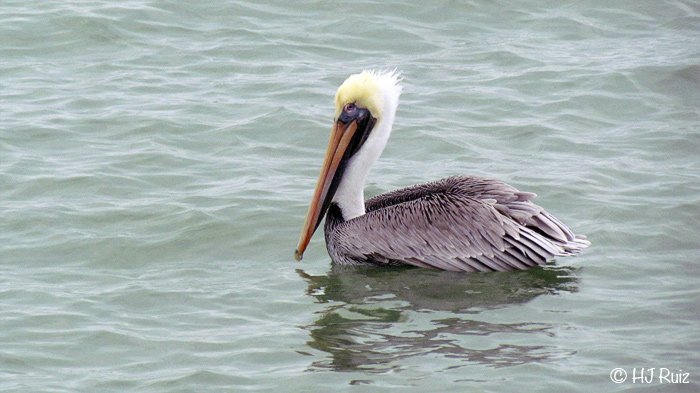
The photos that I’m posting today were shot in west Florida and East Georgia.

Brown Pelican
The Brown Pelican occurs on both coasts in the Americas. On the Atlantic Coast and Gulf Coast they distribute from Nova Scotia to Venezuela, and to the mouth of the Amazon River. On the Pacific Ocean they are found from British Columbia to south central Chile, and including the Galapagos Islands.
Some immature birds may stray to inland freshwater lakes. After nesting, North American birds move in flocks further north along the coasts, returning to warmer waters for winter.
This bird is distinguished from the American White Pelican by its brown body and its habit of diving for fish from the air, as opposed to co-operative fishing from the surface. It eats mainly fish and amphibians as well as crustaceans. Groups of Brown Pelicans often travel in single file, flying low over the water’s surface.
The nest location varies from a simple scrape on the ground on an island to a bulky stick nest in a low tree. These birds nest in colonies, usually on islands.
Click on images to see enlargements
Text and photographs © H.J. Ruiz – Avian 101
Share this:


Read Past Reviews

Book # 69

Quote from the Author
“A good chuckle is healthy, it helps you break the monotony of a serious life.” ~ H.J. Ruiz


You must be logged in to post a comment.