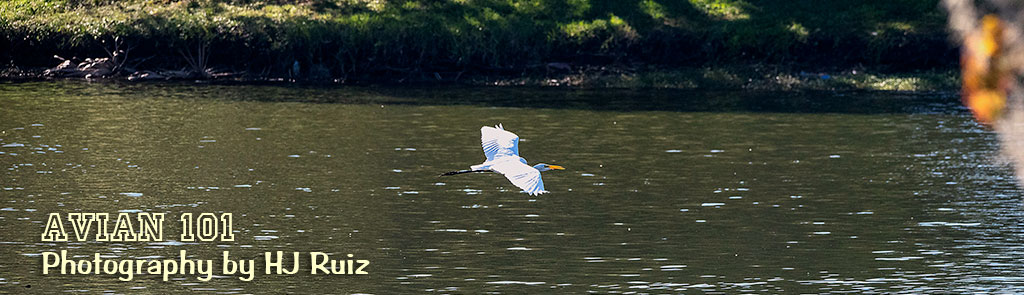
Laughing Gull
The Laughing Gull (Leucophaeus atricilla) is a medium-sized gull of North and South America. Named for its laugh-like call, it is an opportunistic omnivore and scavenger. It breeds in large colonies mostly along the Atlantic coast of North America, the Caribbean, and northern South America. The two subspecies are L. a. megalopterus — which can be seen from southeast Canada down to Central America — and L. a. atricilla, which appears from the West Indies to the Venezuelan islands. The laughing gull was long placed in the genus Larus until its present placement in Leucophaeus, which follows the American Ornithologists’ Union. This species is 36–41 cm (14–16 in) long with a 98–110 cm (39–43 in) wingspan and a weight range of 203–371 grams (7.2–13.1 oz). The summer adult’s body is white apart from the dark grey back and wings and black head. Its wings are much darker grey than all other gulls of similar size except the smaller Franklin’s gull, and they have black tips without the white crescent shown by Franklin’s. The beak is long and red. The black hood is mostly lost in winter. Laughing gulls take three years to reach adult plumage. Immature birds are always darker than most similar-sized gulls other than Franklin’s. First-year birds are greyer below and have paler heads than first-year Franklin’s, and second-years can be distinguished by the wing pattern and structure.
Photo Gallery


HJ Ruiz – November 21st, 2023
Share this:

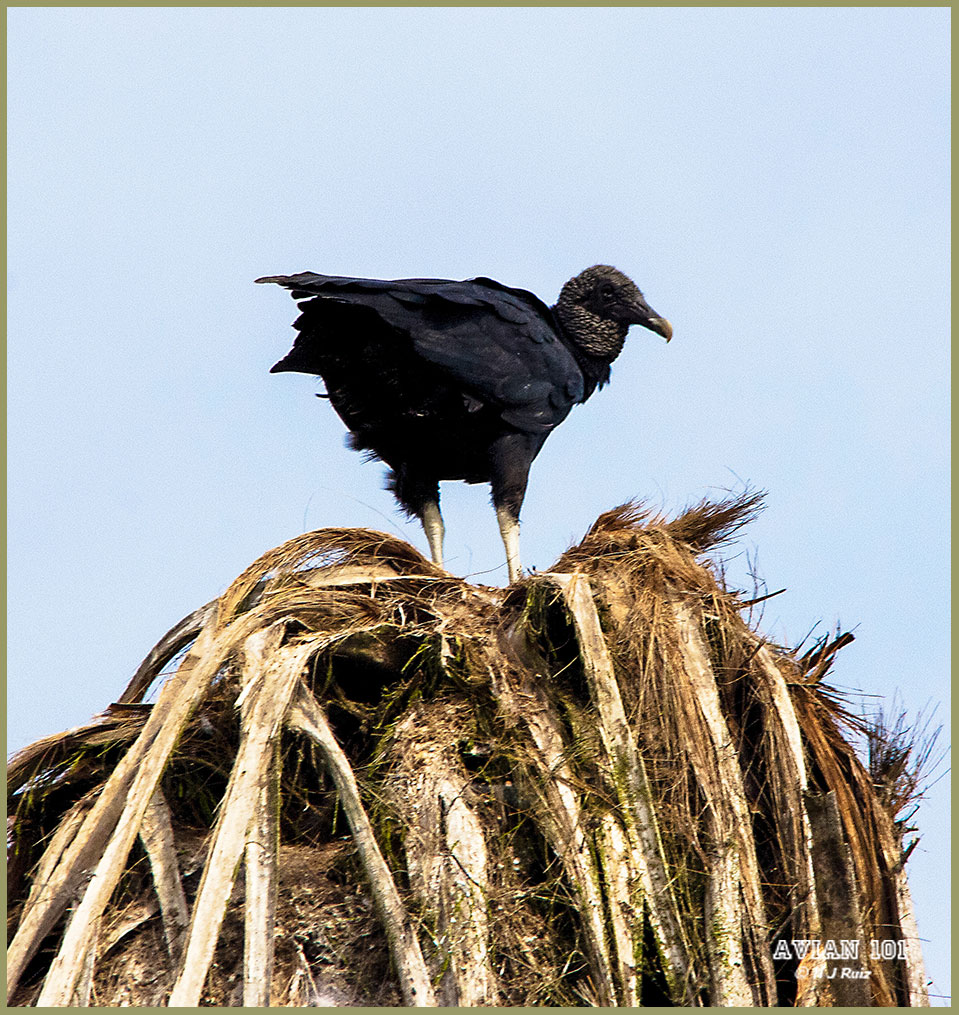
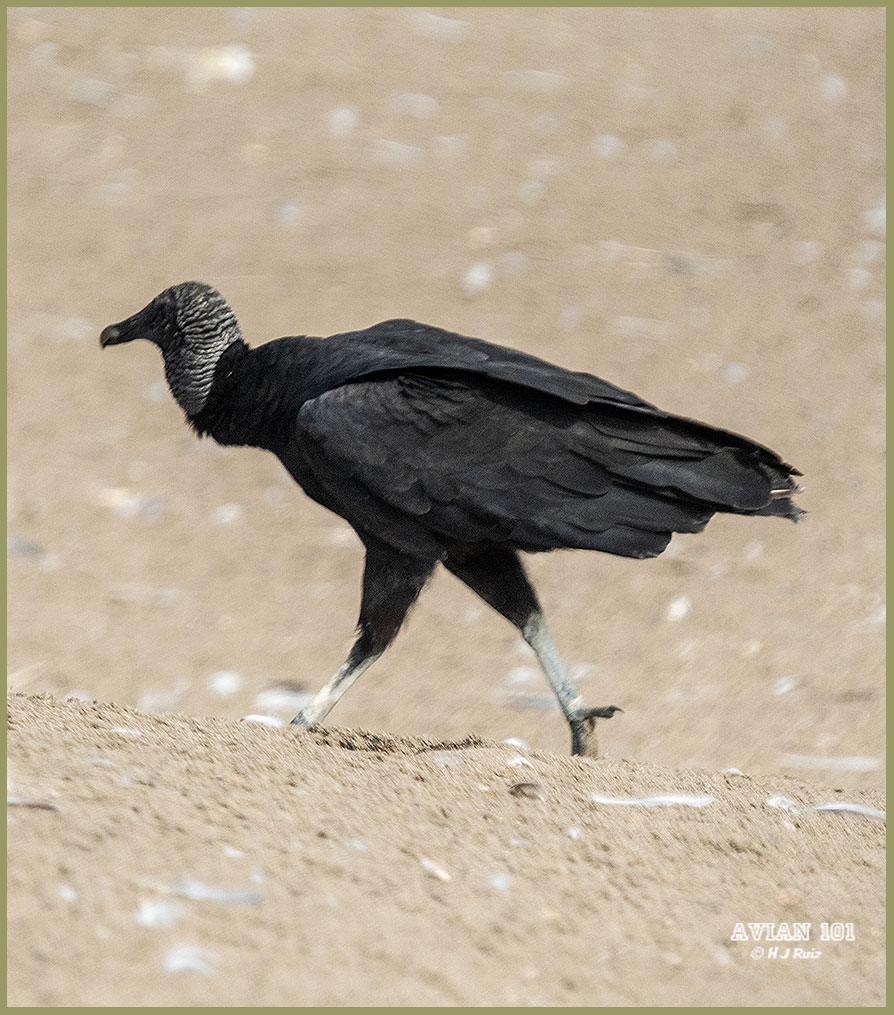
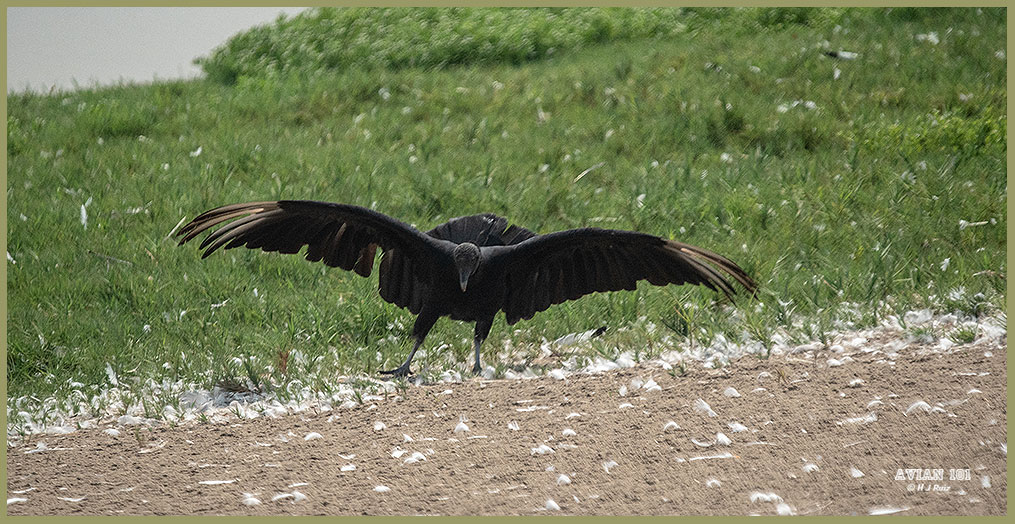
Black Vulture
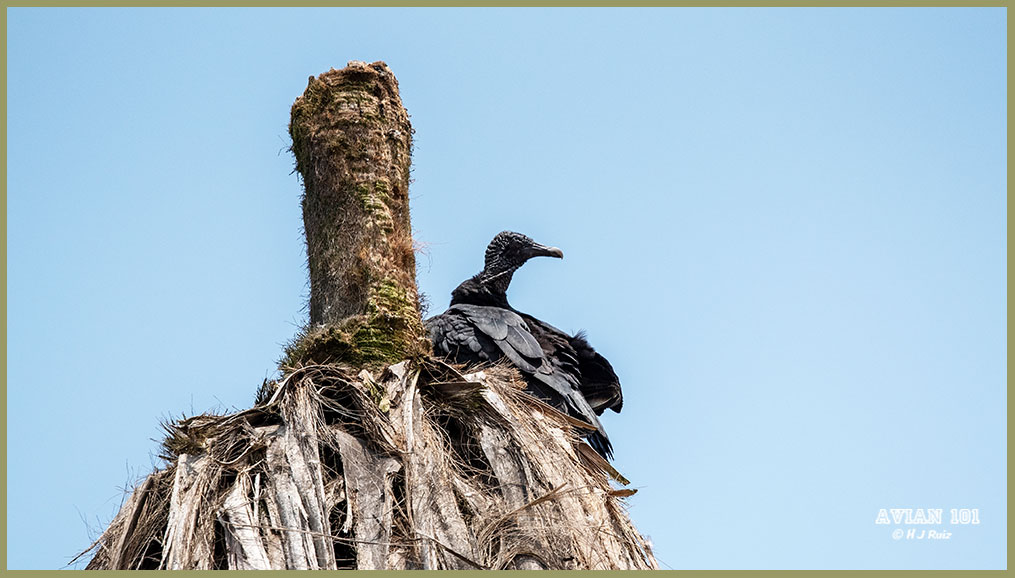
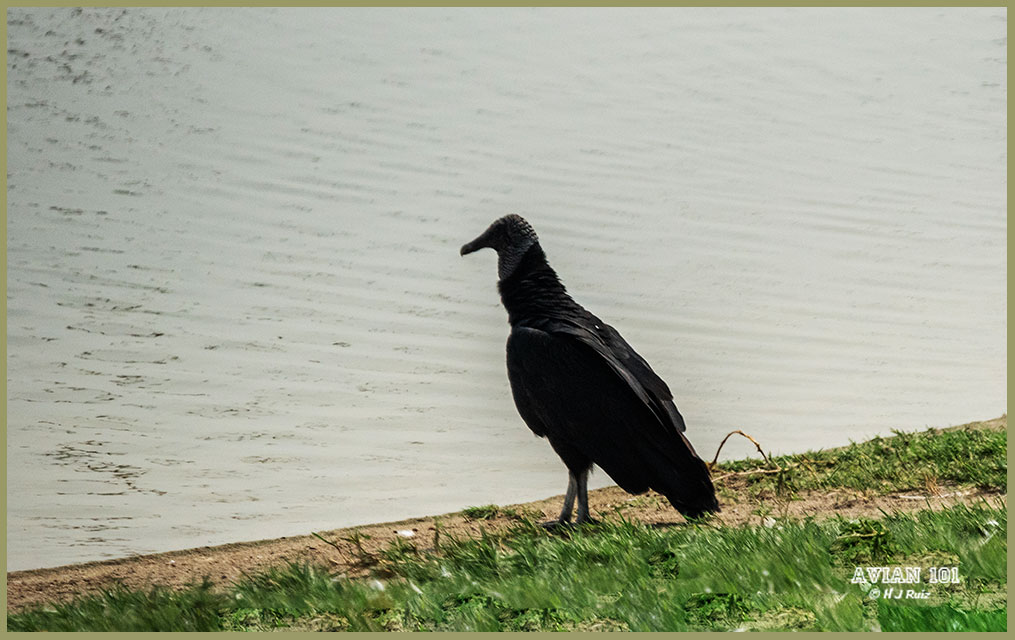
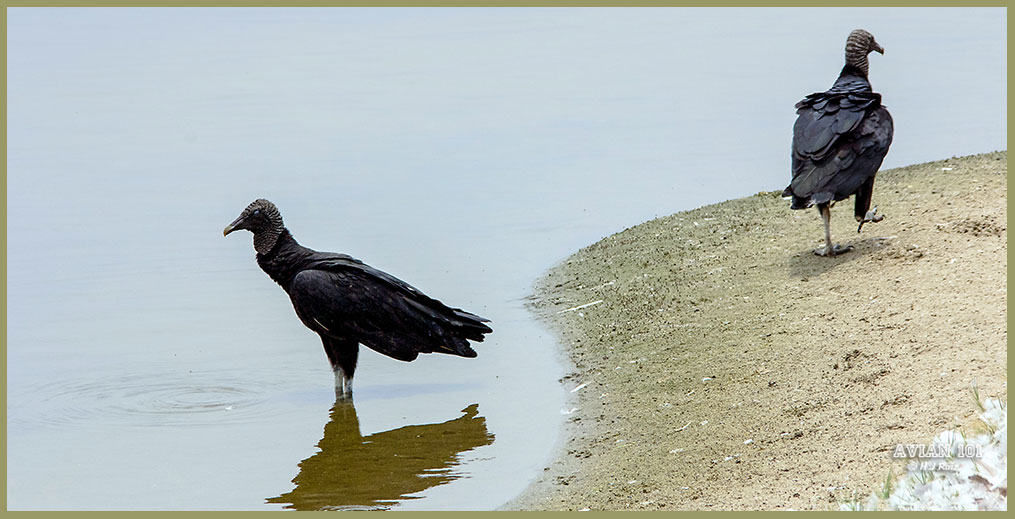
The Black Vulture (Coragyps atratus), also known as the American black vulture, Mexican vulture, zopilote, urubu, or gallinazo, is a bird in the New World vulture family whose range extends from the southeastern United States to Perú, Central Chile and Uruguay in South America. Although a common and widespread species, it has a somewhat more restricted distribution than its compatriot, the turkey vulture, which breeds well into Canada and all the way south to Tierra del Fuego. It is the only extant member of the genus Coragyps, which is in the family Cathartidae. Despite the similar name and appearance, this species is unrelated to the Eurasian black vulture, an Old World vulture, of the family Accipitridae (which includes raptors like the eagles, hawks, kites, and harriers). For ease of locating animal corpses (their main source of sustenance), black vultures tend to inhabit relatively open areas with scattered trees, such as chaparral, in addition to subtropical forested areas and parts of the Brazilian pantanal. The black vulture is a fairly large scavenger, measuring 56–74 cm (22–29 in) in length, with a 1.33–1.67 m (52–66 in) wingspan. Weight for black vultures from North America and the Andes ranges from 1.6 to 3 kg (3.5 to 6.6 lb) but in the smaller vultures of the tropical lowlands it is 1.18–1.94 kg (2.6–4.3 lb). 50 vultures in Texas were found to average 2.15 kg (4.7 lb) while 119 birds in Venezuela were found to average 1.64 kg (3.6 lb). The extended wing bone measures 38.6–45 cm (15.2–17.7 in), the shortish tail measures 16–21 cm (6.3–8.3 in) and the relatively long tarsus measures 7–8.5 cm (2.8–3.3 in). Its plumage is mainly glossy black. The head and neck are featherless and the skin is dark gray and wrinkled. The iris of the eye is brown and has a single incomplete row of eyelashes on the upper lid and two rows on the lower lid. The legs are grayish white, while the two front toes of the foot are long and have small webs at their bases.
Photo Gallery
HJ Ruiz – November 19th, 2023
Share this:

Black Skimmer
The Black Skimmer (Rynchops niger) is a tern-like seabird, one of three similar bird species in the skimmer genus Rynchops in the gull family Laridae. It breeds in North and South America. Northern populations winter in the warmer waters of the Caribbean and the tropical and subtropical Pacific coasts, but South American populations make only shorter movements in response to annual floods which extend their feeding areas in the river shallows. The black skimmer is the largest of the three skimmer species. It measures 40–50 cm (16–20 in) long with a 107–127 cm (42–50 in) wingspan. This species ranges from 212 to 447 g (7.5 to 15.8 oz), with males averaging about 349 g (12.3 oz), as compared to the smaller females 254 g (9.0 oz). The basal half of the bill is red, the rest mainly black, and the lower mandible is much-elongated. The eye has a dark brown iris and catlike vertical pupil, unique for a bird. The legs are red. The call is a barking kak-kak-kak.
Photo Gallery


HJ Ruiz – November 17th, 2023
Share this:

Variety of Bird Species # 6
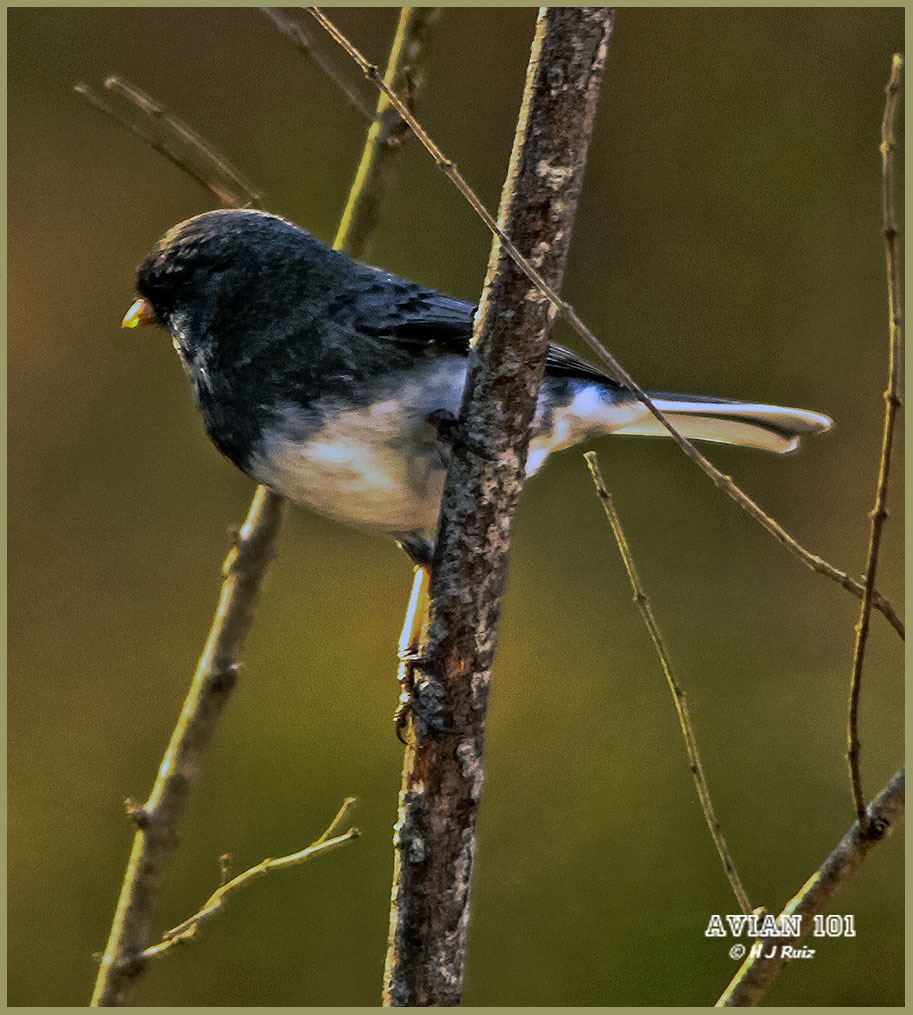
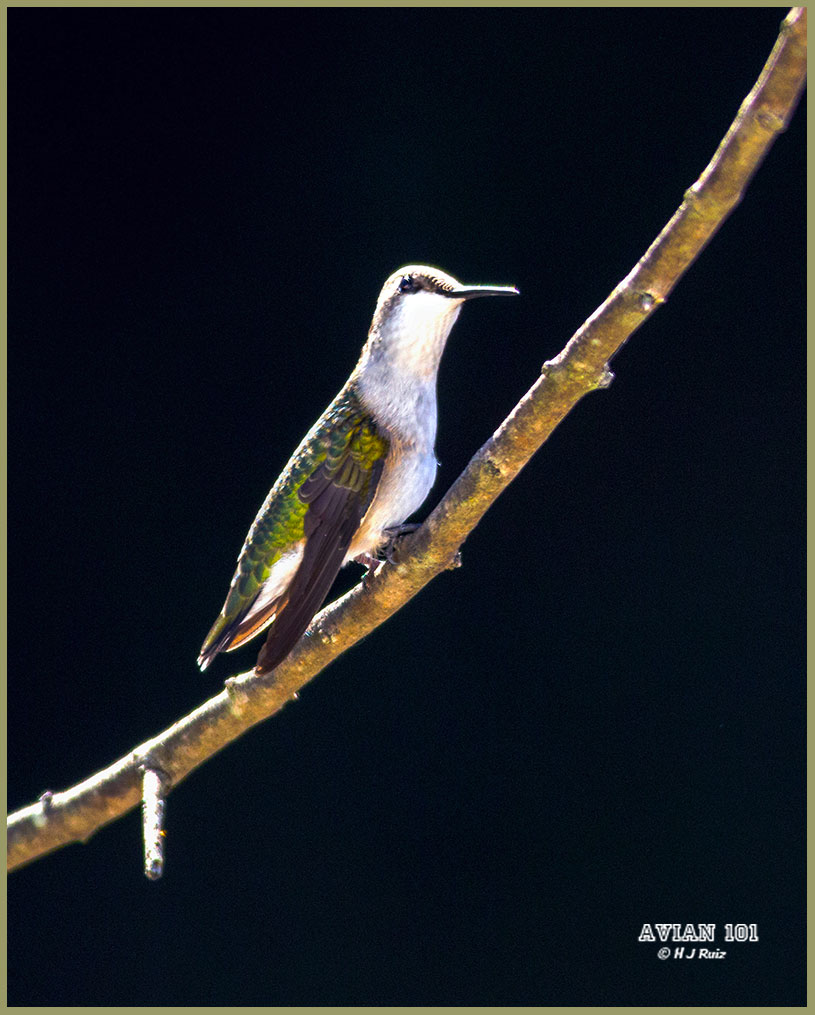
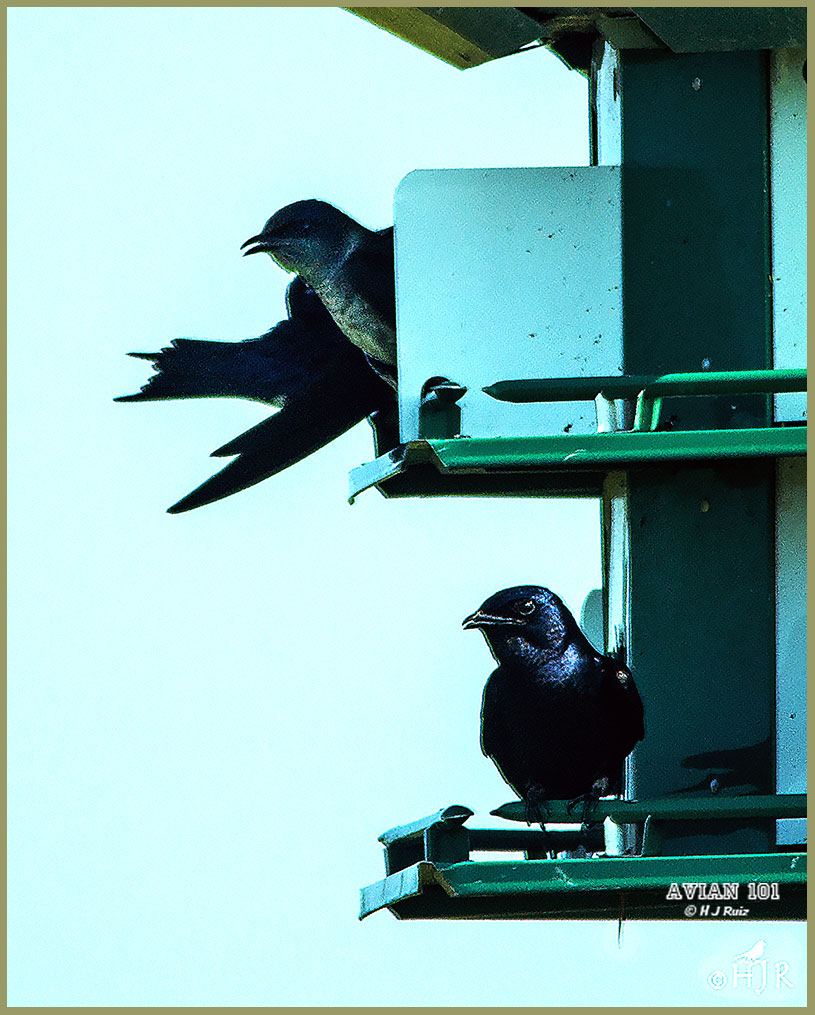
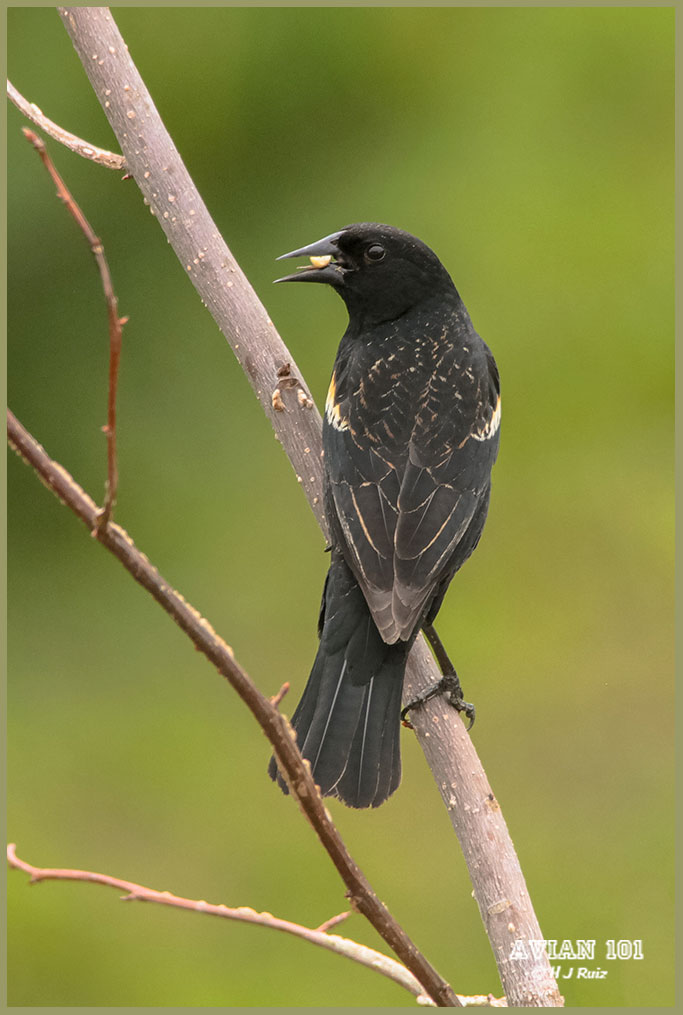
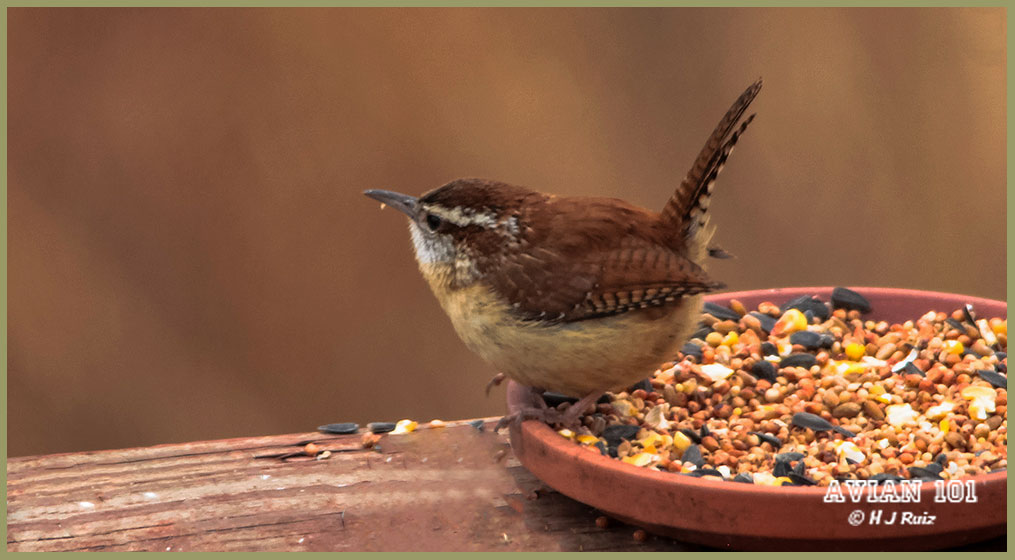
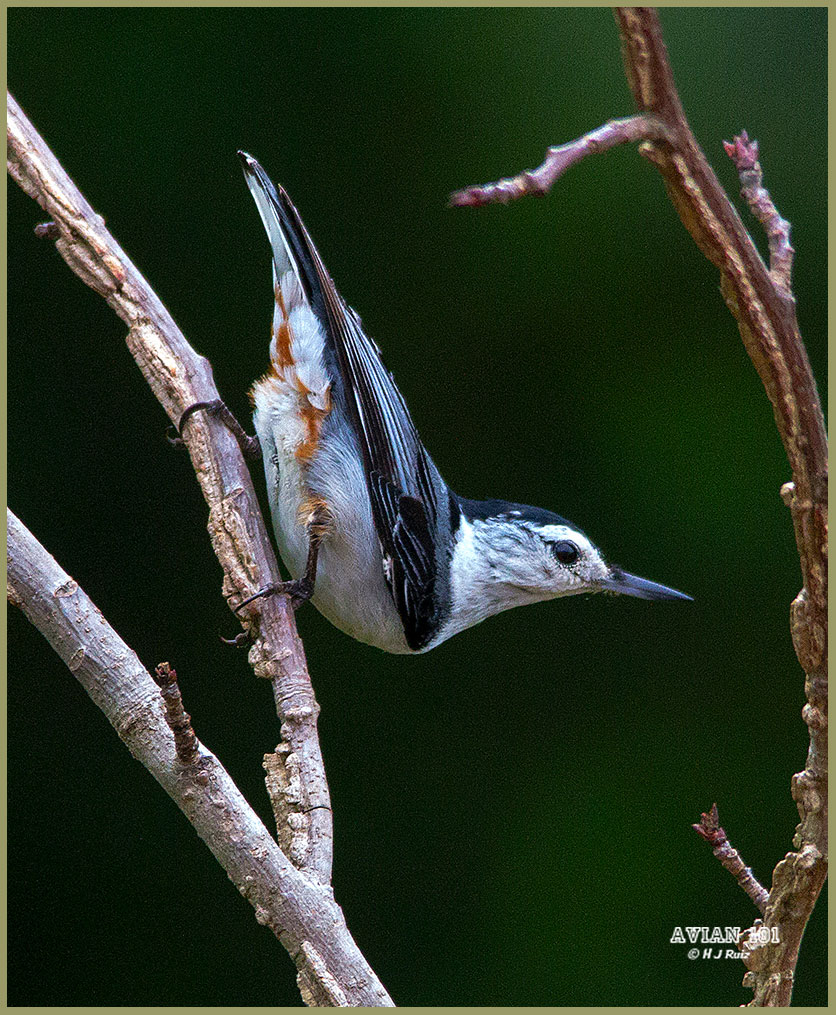
1 – Dark-eyed Junco
2 – Ruby-throated Hummingbird (Female)
3 – Purple Martin ( Male-bottom)
4 – Red-winged Blackbird (Male)
5 – Carolina Wren
6 – White-breasted Nuthatch
HJ Ruiz – November 16th, 2023
Share this:

Read Past Reviews

Book # 69
Quote from the Author
“A good chuckle is healthy, it helps you break the monotony of a serious life.” ~ H.J. Ruiz
 H.J. Ruiz - Avian101
You must be logged in to post a comment.