
Loggerhead Shrike
The loggerhead shrike (Lanius ludovicianus) is a passerine bird in the family Laniidae. It is the only member of the shrike family endemic to North America; the related northern shrike (L. borealis) occurs north of its range, however it is also found in Siberia. It is nicknamed the butcherbird after its carnivorous tendencies, as it consumes prey such as insects, amphibians, lizards, small mammals and small birds, and some prey end up displayed and stored at a site, for example in a tree. Due to its small size and weak talons, this predatory bird relies on impaling its prey upon thorns or barbed wire for facilitated consumption. The numbers of loggerhead shrike have significantly decreased in recent years, especially in Midwestern, New England and Mid-Atlantic areas. The loggerhead shrike is a medium-sized passerine. “Loggerhead” refers to the relatively large size of the head as compared to the rest of the body. The wing and tail length are about 3.82 in (9.70 cm) and 3.87 in (9.83 cm) long, respectively. It weighs on average 1.8 oz (50 g), with a range of 1.6–2.1 oz (45–60 g) for a healthy adult shrike.
- Length: 7.9–9.1 in (20–23 cm)
- Weight: 1.2–1.8 oz (34–51 g)
- Wingspan: 11.0–12.6 in (27.9–32.0 cm)
The adult plumage of the loggerhead shrike is grey above with a white to pale grey breast and black tarsi and feet. The bird possesses a black mask that extends across the eyes to its bill. The wings are black with a distinct white patch on the primaries. The tail is black edged with white and the irises are brown. The beak is short, black, and hooked, and contains a tomial tooth to help tear into prey. It is difficult to sex an adult loggerhead shrike in the field as they are sexually monochromatic. However, several studies have reported sexual dimorphism in plumage and size traits. Juveniles possess a paler gray plumage that is subtly vermiculated. The loggerhead shrike can be distinguished from the northern shrike by its smaller size, darker grey plumage, and larger black face mask that covers the eye completely. It also has a shorter bill with less prominent hook. Their calls are similar.
Photo Gallery
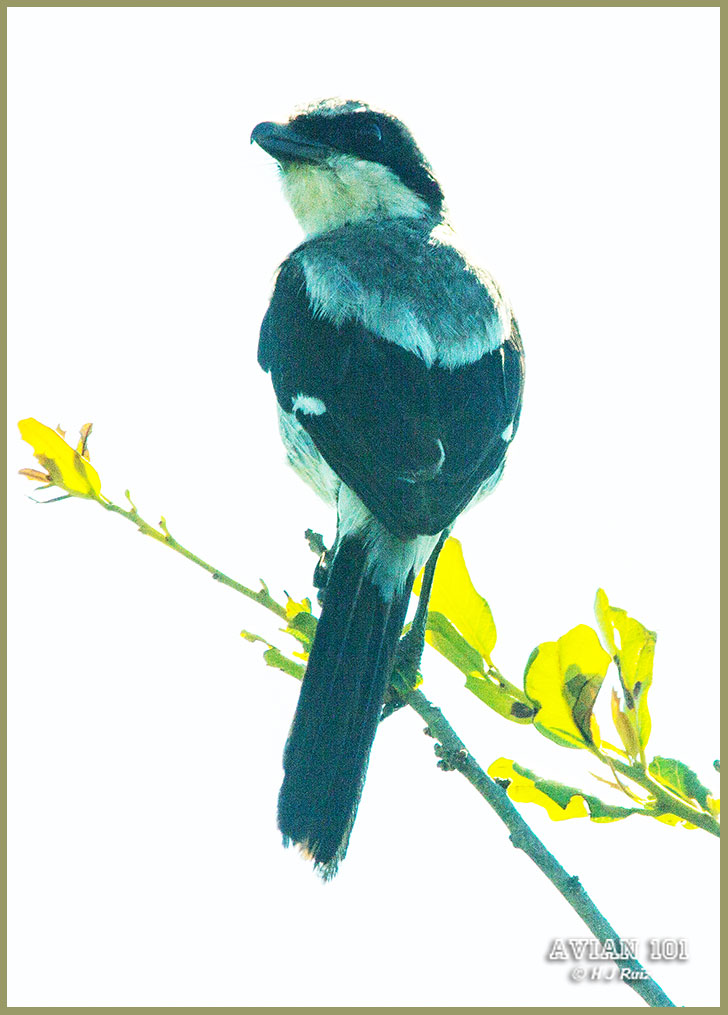
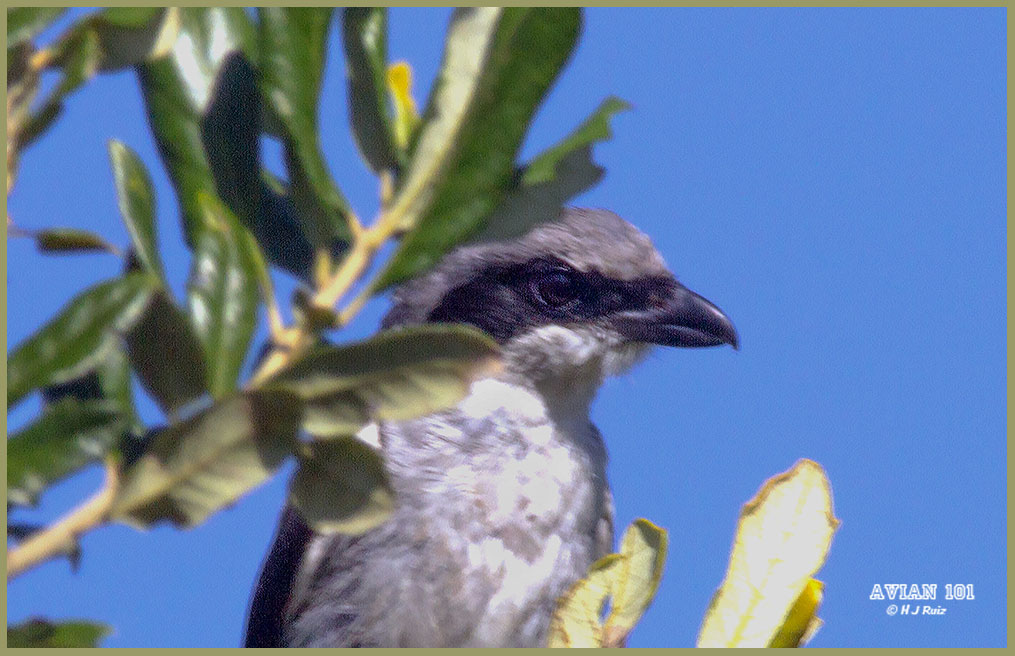
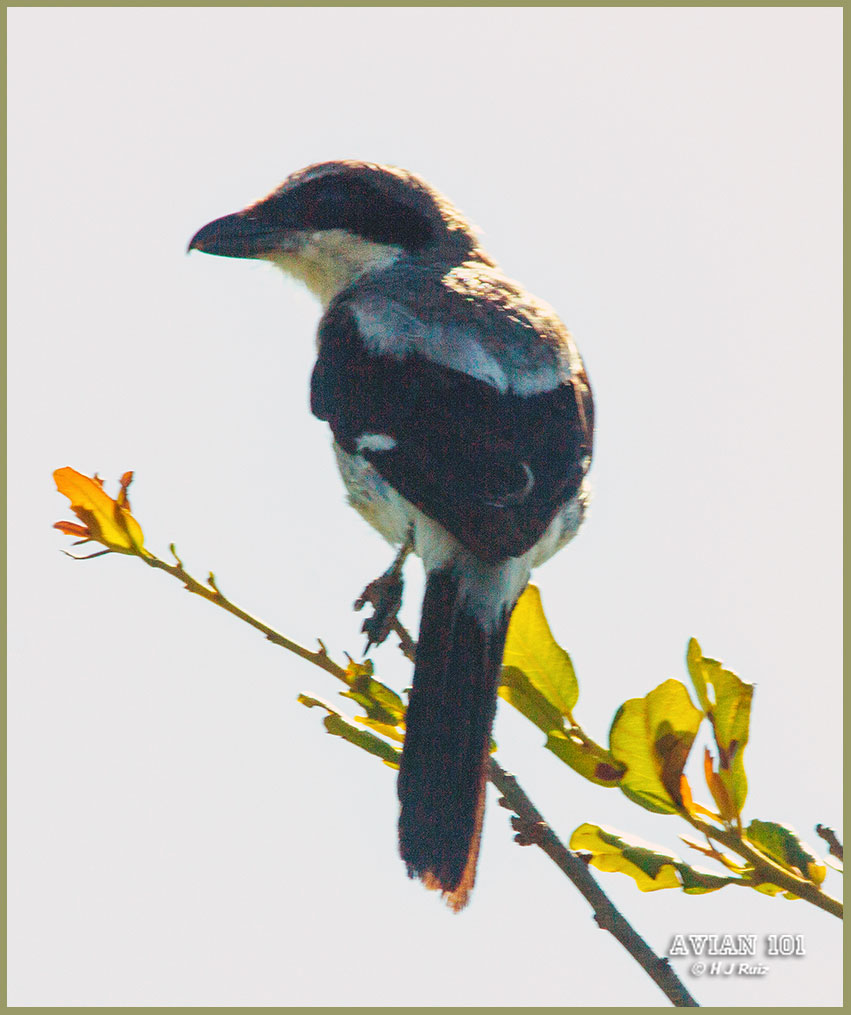

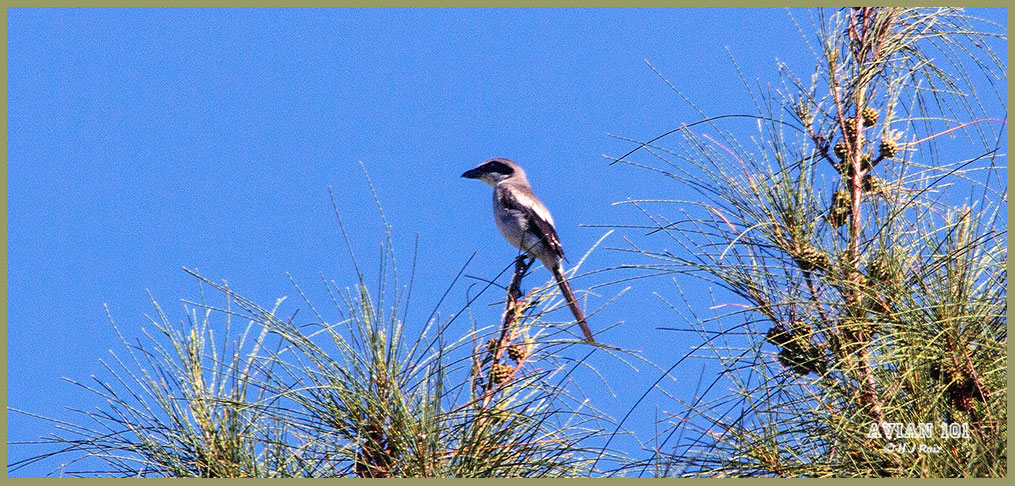
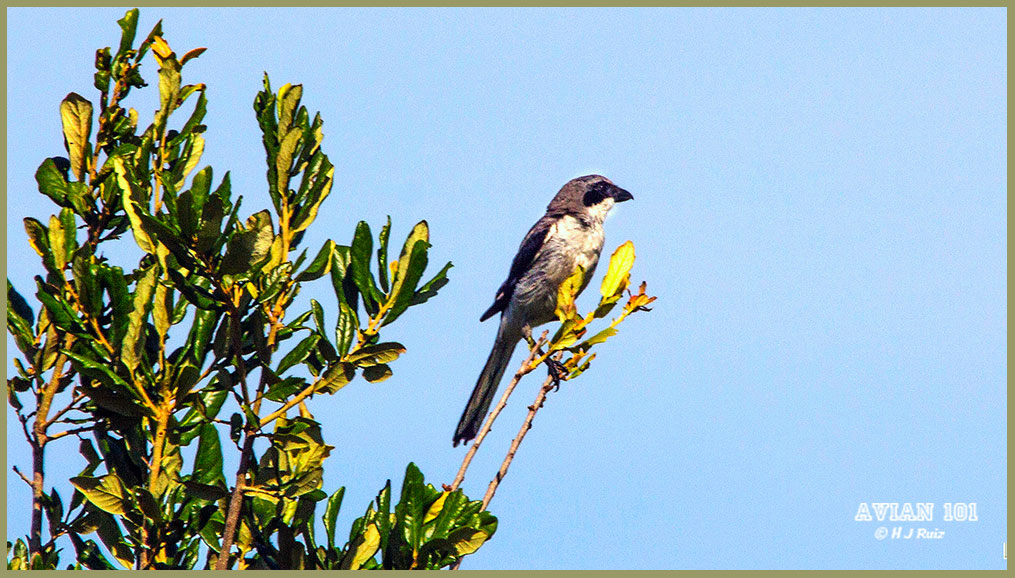
HJ Ruiz – November 26th, 2023
Share this:

Neotropic Cormorant
The Neotropic Cormorant or olivaceous cormorant (Nannopterum brasilianum) is a medium-sized cormorant found throughout the American tropics and subtropics, from the middle Rio Grande and the Gulf and Californian coasts of the United States south through Mexico and Central America to southern South America, where it is called by the indigenous name of biguá. It also breeds in the Bahamas, Cuba, and Trinidad. It can be found both on coasts (including some mangrove areas) and in inland waters. There are at least two subspecies: N. b. mexicanum from Nicaragua northwards and N. b. brasilianum further south. In Peru, the neotropic cormorant is used by the Uru people for fishing. This bird is 64 cm (25 in) long with a 100 cm (39 in) wingspan. Adult males weigh from 1.1 to 1.5 kg (2.4 to 3.3 lb), adult females 50 to 100 g (1.8 to 3.5 oz) less. Birds of the southern populations tend to be bigger than the more northerly birds. It is small and slender, especially compared to the larger, heavier-looking double-crested cormorant. It has a long tail and frequently holds its neck in an S-shape. Adult plumage is mainly black, with a yellow-brown throat patch. During breeding, white tufts appear on the sides of the head, there are scattered white filoplumes on the side of the head and the neck, and the throat patch develops a white edge. The upper wings are somewhat grayer than the rest of the body. Juveniles are brownish in color.
Photo Gallery

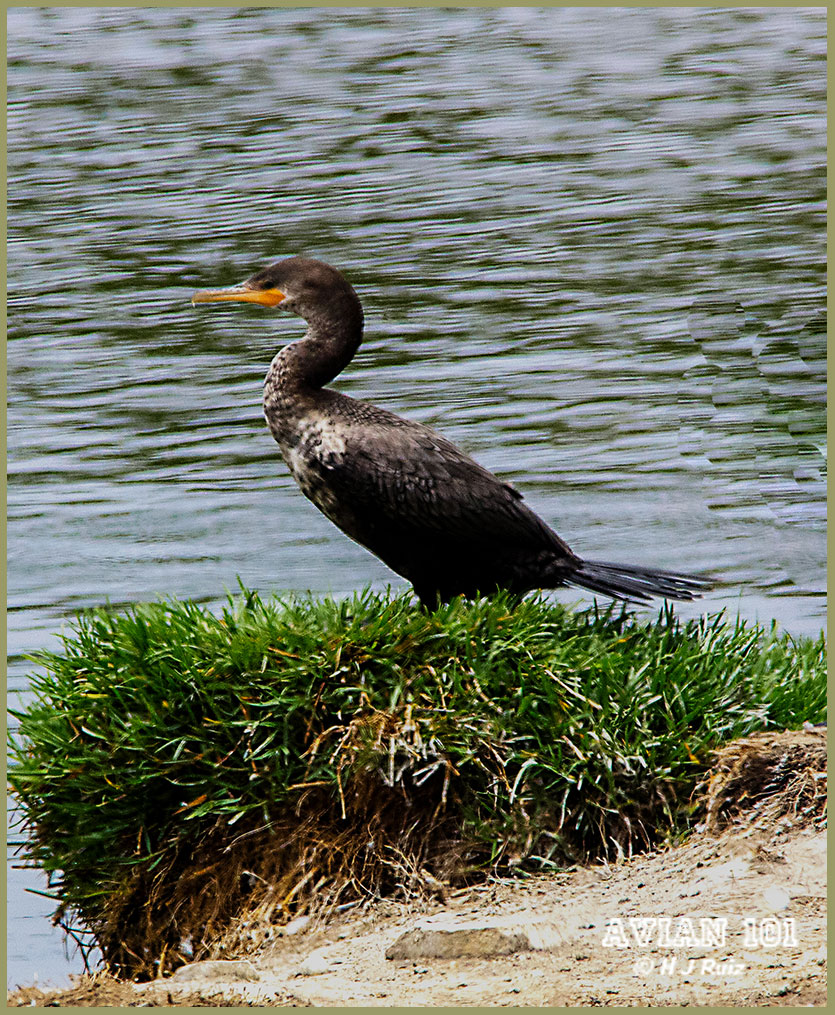
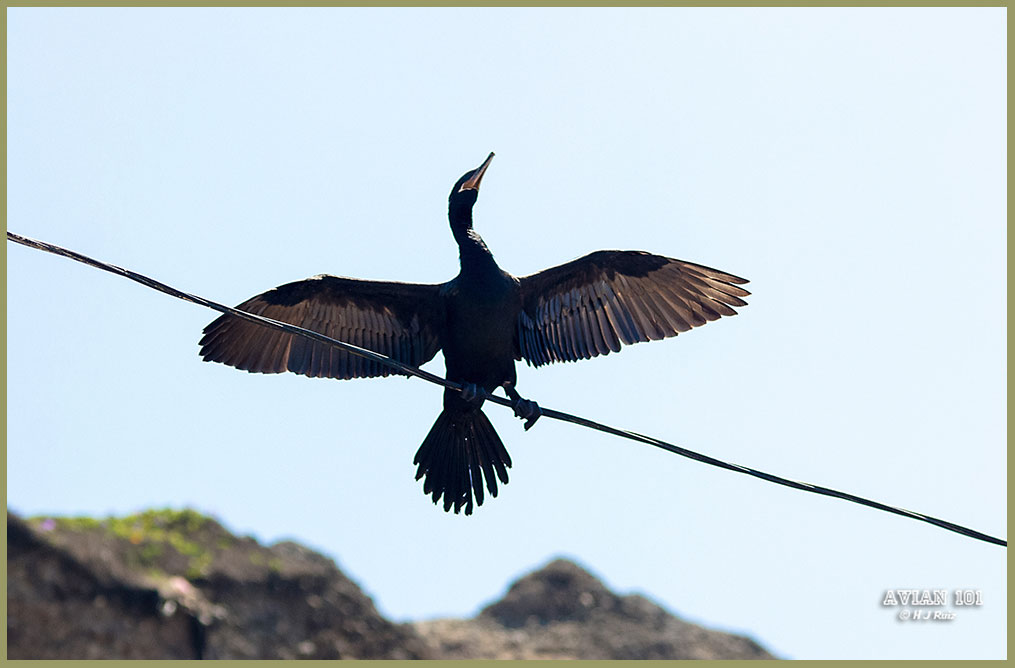


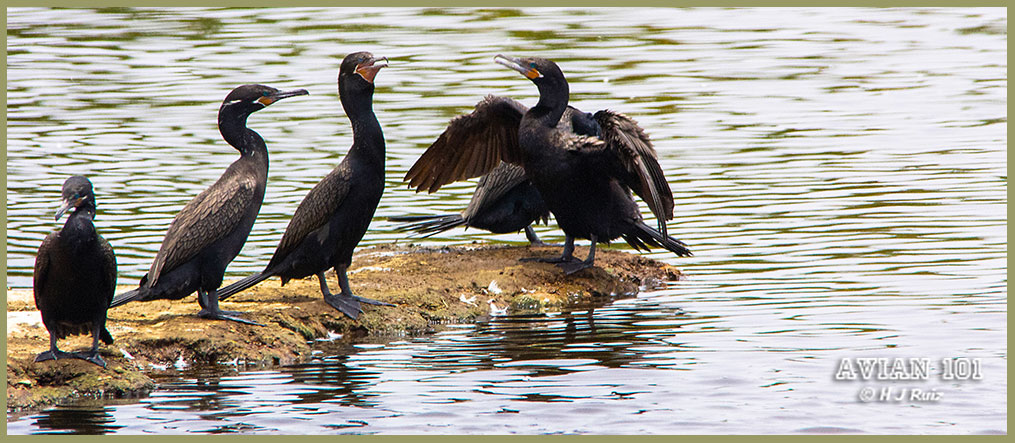
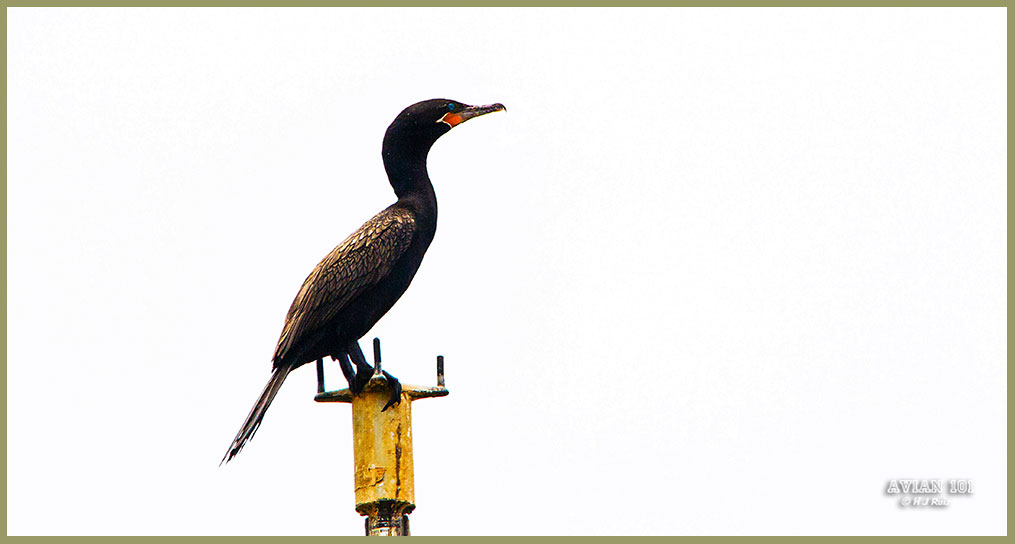
HJ Ruiz – November 24th, 2023
Share this:

Variety of Bird Species # 7


1 – Common Grackle (Male)
2 – Blue Gray Gnatcatcher
3 – Brown Thrasher
4 – Northern Cardinal (Female)
5 – Gray Catbird
6 – Pine Warbler (Male)
HJ Ruiz – November 23rd, 2023
Have a wonderful Thanksgiving Day!! to all my friends from HJ Ruiz…
Share this:

Panoramic Photography # 4
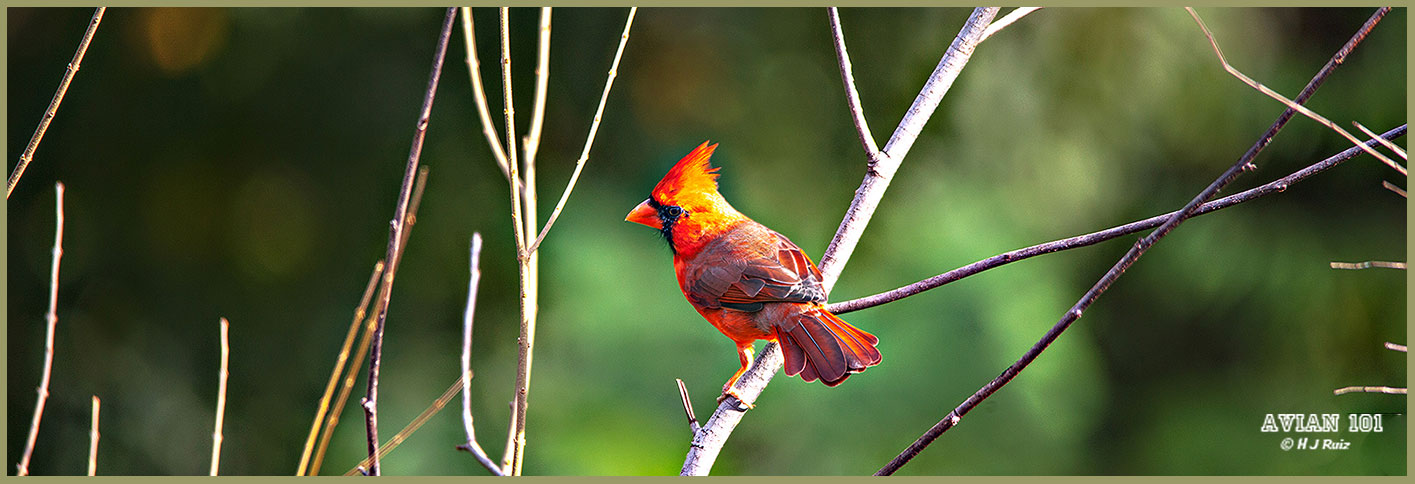
Northern Cardinal (Male)
HJ Ruiz – November 22nd, 2023
Share this:

Read Past Reviews

Book # 69
Quote from the Author
“A good chuckle is healthy, it helps you break the monotony of a serious life.” ~ H.J. Ruiz
 H.J. Ruiz - Avian101
You must be logged in to post a comment.