Book Review – # 47 – Birds of Chile
Birds of Chile – A Photo Guide
Author:
Steve N.G. Howell and Fabrice Schmitt
Publisher:
Princeton University Press
Review:
“The Photo guide to be reviewed today, brought me memories of several locations I visited on past years. The authors Howell and Schmitt are experienced as leaders with WINGS. They have created this comprehensive photo guide that will make birders or any naturalists to immediate ID of birds form the areas indicated in this guide. There are over 1000 photos on 240 pages, in high quality and shot in their own habitat.
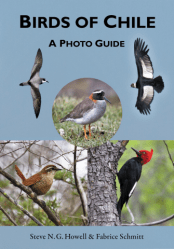 The species are described as well as their habitats and behavior so it’s their status and distribution. The contents of guide are divided as follows: Swimming Waterbirds, Flying Waterbirds, Walking Waterbirds, Gamebirds and Allies, Raptors and Owls, Larger Landbirds, Aerial Landbirds, and Songbirds.
This guide has been printed as a compact book 5 3/4 x 8 1/4 inches.”
Reviewed by:
H.J. Ruiz – Avian101.Wordpress.com – July 27th, 2018
© HJ Ruiz -Avian101
Share this:

Bird’s ID – Indigo Bunting
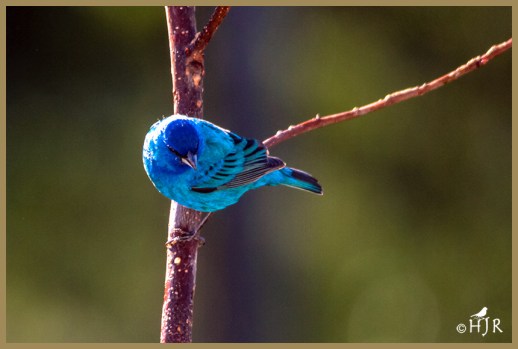
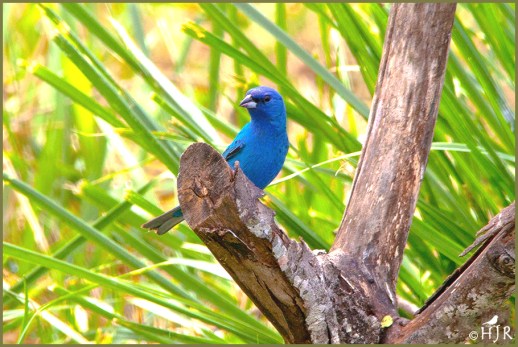
Indigo Bunting
The indigo bunting (Passerina cyanea) is a small seed-eating bird in the cardinal family, Cardinalidae. It is migratory, ranging from southern Canada to northern Florida during the breeding season, and from southern Florida to northern South America during the winter. It often migrates by night, using the stars to navigate. Its habitat is farmland, brush areas, and open woodland. The indigo bunting is closely related to the lazuli bunting and interbreeds with the species where their ranges overlap.

© HJ Ruiz – Avian101
Share this:

What’s Up? – Thanks to my Friends…
Thanks to my Friends…
It’s remarkable to have extra time now that I cut my blogging to four days a week. My days are somehow longer and more productive for my obligations. Now, I can set an schedule for my days of work and days for the hobbies I love so much, Photography and birds.
The daily blogging was absorbing too much of my time and was stretching my hours to do, too much for too long. I thank you for your loyalty to follow my blog.
I’ll make sure that you get more quality pictures and relevant information about my avian friends, which I care with love and dedication. With your help and gracious comments I’ll thrive for your delight. Thank you!.
My backyard is looking good despite the harsh weather patterns. My fig tree is a beauty and growing so fast it’s unbelievable, it’s making me very happy, because I thought it had not survived last winter’s cold. My Crape Myrtle tree is blooming now and looks incredible!
Photo Gallery


My backyard is looking good despite the harsh weather patterns. My fig tree is a beauty and growing so fast it’s unbelievable, it’s making me very happy, because I thought it had not survived last winter’s cold. My Crape Myrtle tree is blooming now and looks incredible!


© HJ Ruiz – Avian101
Share this:

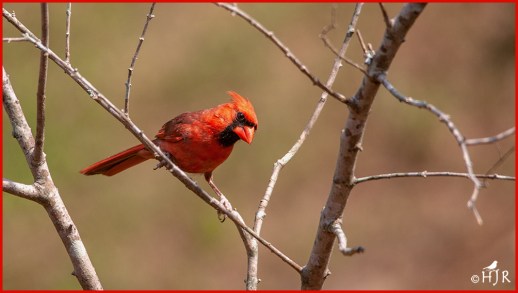
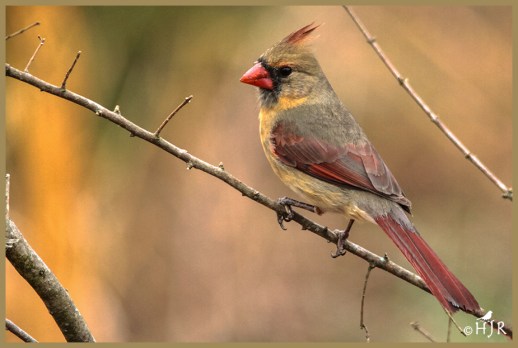
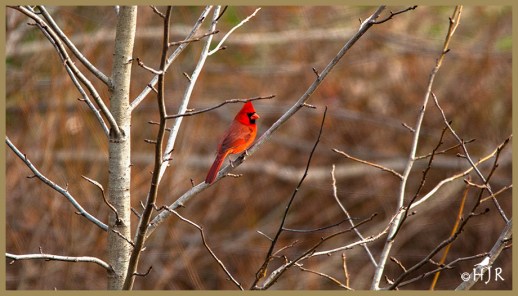
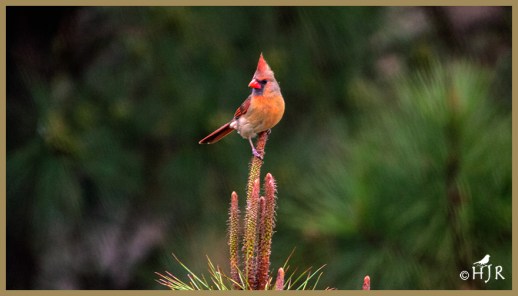
Red Gallery – Northern Cardinal
You are welcome to the Northern Cardinal Photo Gallery, every Saturday!
It’s suggested to relax and enjoy!
Northern cardinals are numerous across the eastern United States from Maine to Texas and in Canada in the provinces of Ontario, Quebec, New Brunswick and Nova Scotia. Its range extends west to the U.S.–Mexico border and south through Mexico to the Isthmus of Tehuantepec, northern Guatemala, and northern Belize. The species was introduced to Bermuda in 1700. It has also been introduced in Hawaii and southern California. Its natural habitat is in woodlands, gardens, shrublands, and wetlands.
© HJ Ruiz – Avian101
Share this:

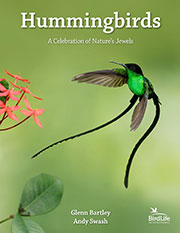
Read Past Reviews

Book # 69
Quote from the Author
“A good chuckle is healthy, it helps you break the monotony of a serious life.” ~ H.J. Ruiz


You must be logged in to post a comment.