Here Birdie! A Different Approach…
Can you find Jonathan Livingston Seagull?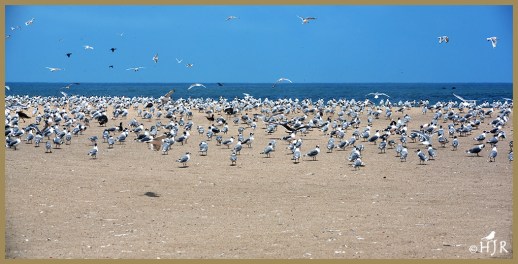
© HJ Ruiz – Avian101
Share this:

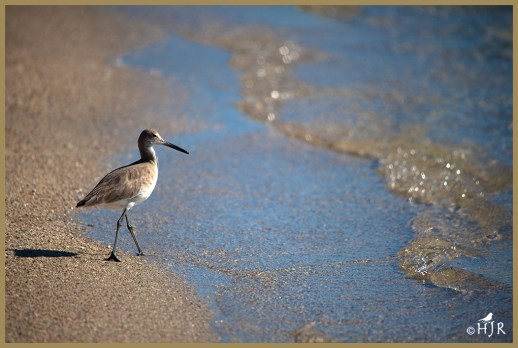
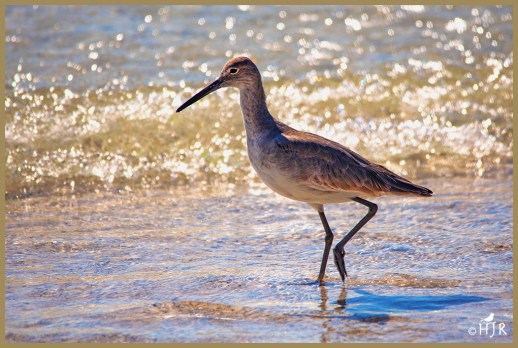
Bird’s ID – Willet
Willet
The Willet (Tringa semipalmata), formerly in the monotypic genus Catoptrophorus as Catoptrophorus semipalmatus, is a large shorebird in the Scolopacidae family. It is a relatively large and robust sandpiper, and is the largest of the species called “shanks” in the genus Tringa. Its closest relative is the lesser yellowlegs, a much smaller bird with a very different appearance apart from the fine, clear, and dense pattern of the neck, which both species show in breeding plumage. It breeds in North America and the West Indies and winters in southern North America, Central America, the West Indies and South America.

© HJ Ruiz – Avian101
Share this:

What’s Up? – Weather Improvement
Weather Improvement
The temperature has dropped a few degrees believe or not, this makes a great difference to us as well as for birds. The rain has reduced their frequency to just summer storms that do not last very long.
The result of these changes has been very beneficial to the birds because they can remain in the open for longer time and seek their meals, the avian traffic is more frequent, I should also add that seed consumption has risen considerably.
I am very happy to see Ruby-throated Hummingbirds back to my backyard. For a while I thought I wasn’t going to see them this year.
I have noticed many Brown-headed Cowbirds almost daily but…only females! Is it that they are on a mission? They might be there to lay eggs in other bird’s nests. No?
The various members of House Finch families are always around to add a little more red color to the view.
Photo Gallery


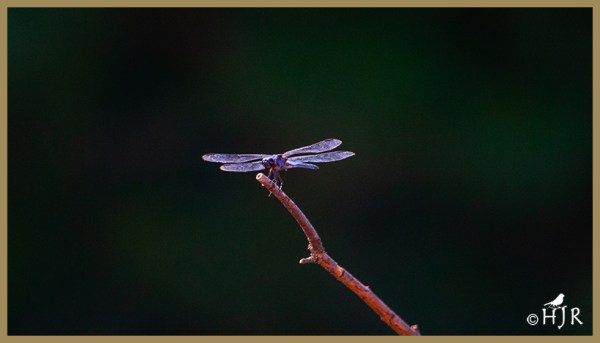
Here is one of many visitors flying around this time of the year. How about if you tell me the insect’s name.
© HJ Ruiz – Avian101
Share this:

Red Gallery – Northern Cardinal
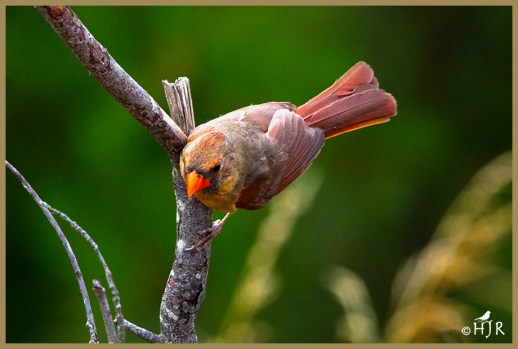
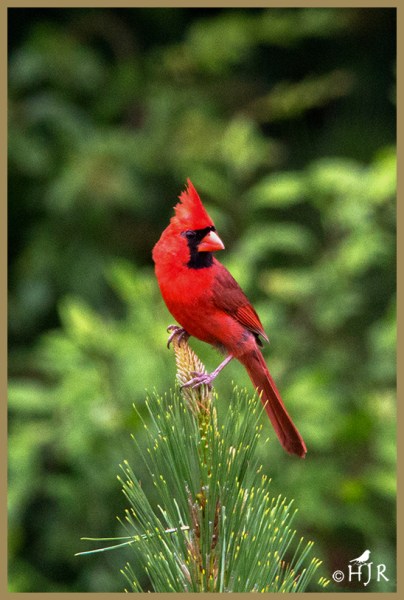
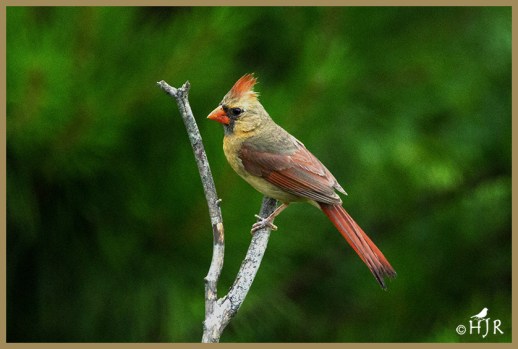
You are welcome to the Northern Cardinal Photo Gallery, every Saturday!
It’s suggested to relax and enjoy!
During winter, both male and female will fluff up their down feathers in order to trap warm air next to their body and keeping cold air from reaching their body. The down feathers are small and hairlike at the base of each flight feather. The legs and feet of almost all birds are thin and lack feathers, and so are vulnerable to rapid heat loss.Therefore, many take turns tucking one leg at a time into their body to keep them warm while still using the other to stand.
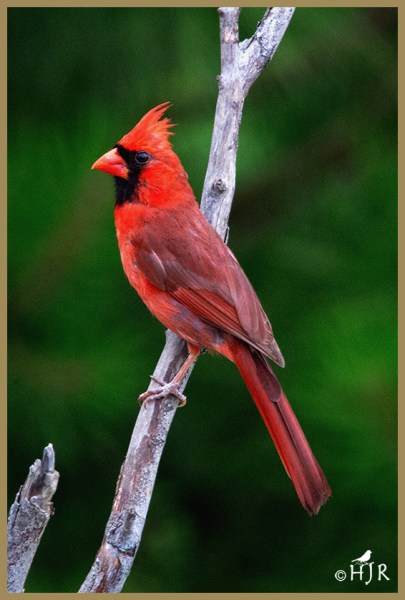
© HJ Ruiz – Avian101
Share this:

Read Past Reviews

Book # 69
Quote from the Author
“A good chuckle is healthy, it helps you break the monotony of a serious life.” ~ H.J. Ruiz


You must be logged in to post a comment.