Book Review – # 46 – Birds of the Greater Sundas, Philippines, and Wallacea
Birds of the Greater Sundas, Philippines, and Wallacea
Author:
Norman Arlott
Publisher:
Princeton University Press
Review:
“We have a new bird guide written and wonderfully illustrated by author Norman Arlott. Mr. Arlott is a renown bird artist. He has previously published other books.
This guide has a whopping 304 pages where you find over 1900 bird species from the Southeast Asian Islands, The illustrations are superbly depicting birds with 179 plates.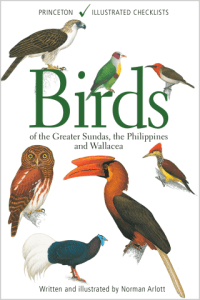
Each specie has detailed comprehensive information with very important keys factors such as habitat, distribution, status and more.
The 476 Species Distribution Maps also offer keys to breeding season, non-breeding season and residence.
If you are a birder visiting any of the Southeast Asian Islands this guide will help you get information about species in no time.”
Reviewed by:
H.J. Ruiz – Avian101.Wordpress.com – July 20th, 2018
© HJ Ruiz – Avian101
Share this:

Bird’s ID – Brown Pelican
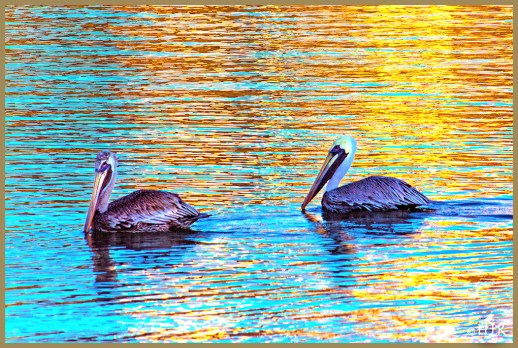
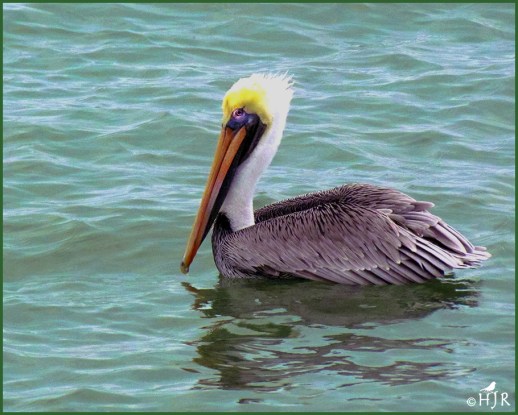
Brown Pelican
The brown pelican (Pelecanus occidentalis) is a North American bird of the pelican family, Pelecanidae. It is one of three pelican species found in the Americas and one of only two that feed by diving in water. It is found on the Atlantic Coast from Nova Scotia to the mouth of the Amazon River, and along the Pacific Coast from British Columbia to northern Chile, including the Galapagos Islands. The nominate subspecies in its breeding plumage has a white head with a yellowish wash on the crown. The nape and neck are dark maroon–brown. The upper sides of the neck have white lines along the base of the gular pouch, and the lower fore neck has a pale yellowish patch. The male and female are similar, but the female is slightly smaller. The nonbreeding adult has a white head and neck. The pink skin around the eyes becomes dull and gray in the nonbreeding season. It lacks any red hue, and the pouch is strongly olivaceous ochre-tinged and the legs are olivaceous gray to blackish-gray.
© HJ Ruiz – Avian101
Share this:

What’s Up? Hot Summer…
Hot Summer…
We are going into, what it seems a hot Summer. The sun is up early and sets down late (9:30 PM.). It is hard for anyone to be under the sun for very long without getting awfully tired and thirsty. Then we have the torrential rains that saturate the soil and devastate plants.
Well, what else is new?
My birds are adjusting to cope with the heat, I just do what I can to facilitate what will keep them safe from succumbing to the new weather patterns. I provide them with food and water. Some of my birds are starting to molt. How is the weather in your area now?
Photo Gallery


Share this:

Red Gallery – Northern Cardinal
“The Northern Cardinals that you see on my blog are members of several families that have been nesting in my backyard for over a decade. I love them very much! You can see them here every Saturday!” ~ H.J.
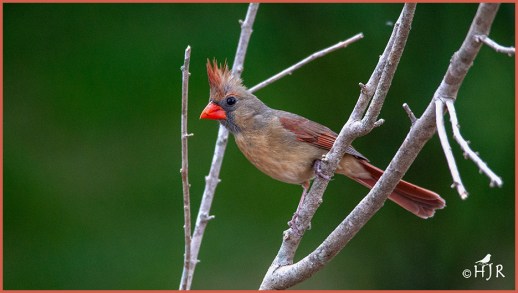
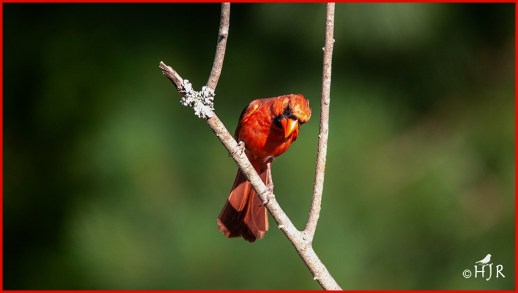
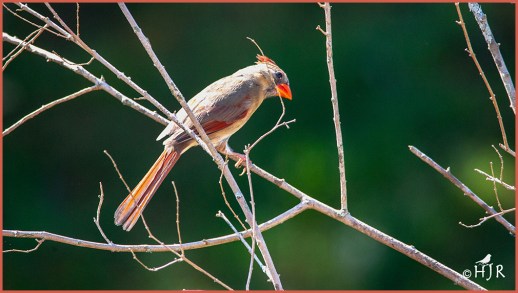
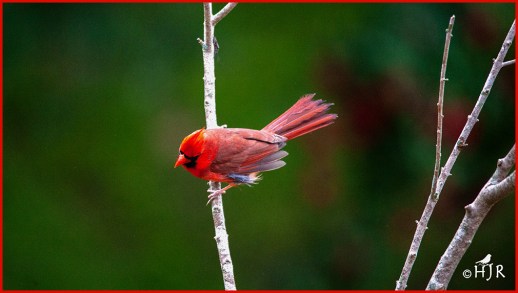
© HJ Ruiz – Avian101
Share this:

Read Past Reviews

Book # 69
Quote from the Author
“A good chuckle is healthy, it helps you break the monotony of a serious life.” ~ H.J. Ruiz


You must be logged in to post a comment.