
Here Birdie! A Different Approach…
“The New Generation”
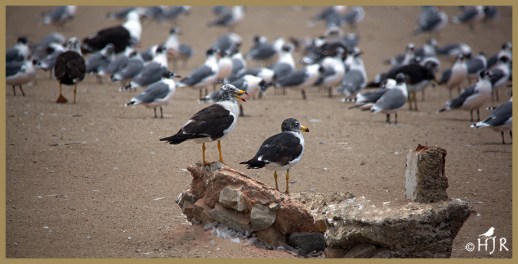
Senior: – Junior, one day you’ll be their leader, just like me!
Junior: – Yeah right…
Senior: – LISTEN TO WHAT I SAY YOU IDIOT!
© HJ Ruiz – Avian101
Share this:

Bird’s ID – Little Blue Heron
Little Blue Heron
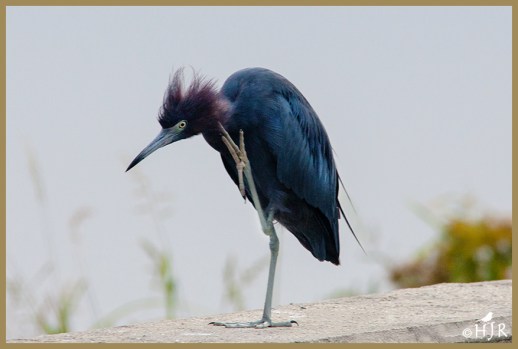
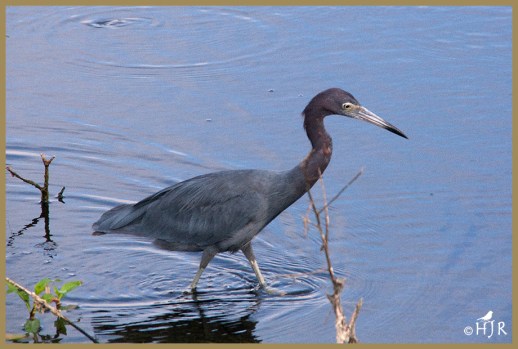
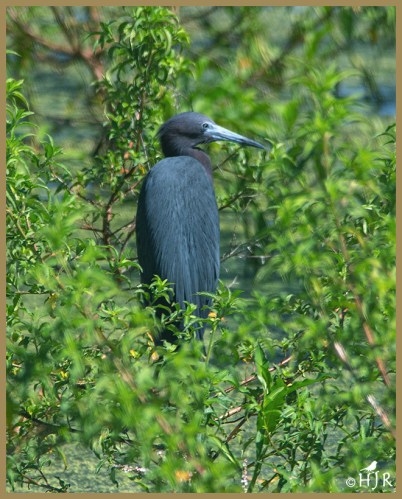
The Little Blue Heron (Egretta caerulea) is a small heron. It breeds in the Gulf states of the US, through Central America and the Caribbean south to Peru and Uruguay. It is a resident breeder in most of its range, but some northern breeders migrate to the southeastern US or beyond in winter. There is post-breeding dispersal to well north of the nesting range, as far as the Canada–US border.
This species is about 60 cm (24 in) long, with a 102 cm (40 in) wingspan, and weighs 325 g (11.5 oz). It is a medium-large, long-legged heron with a long pointed blue or greyish bill with a black tip. Breeding adult birds have blue-grey plumage except for the head and neck, which are purplish and have long blue filamentous plumes. The legs and feet are dark blue. The sexes are similar. Non-breeding adults have dark blue head and neck plumage and paler legs. Young birds are all white except for dark wing tips and have dull greenish legs. They gradually acquire blue plumage as they mature.
Photo Gallery
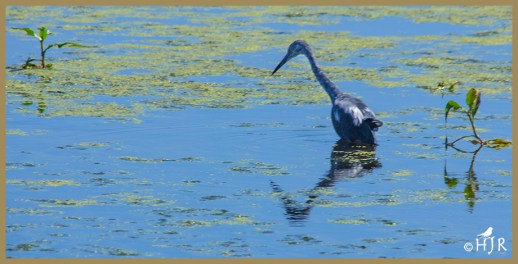
Can you ID me?

© HJ Ruiz – Avian101
Share this:

What’s Up? – What will be…
What will be, will be
My birds are feeding well, they are not numerous but they can be seen while they go for their meals. At certain times of the day when the sun is up and temperatures are high you can’t find one bird, they are sheltered in the tree’s canopies. Despite the heat and sporadic heavy rain I can see their feeders get empty, at a faster pace.
Some of my birds are going to the process of molting and others are already showing their new plumage. I’ve been reading about weather Science that are predicting that the next winter most likely be a very cold and tough one. We’ll see…Que sera, sera!
Photo Gallery


© HJ Ruiz – Avian101
Share this:

Red Gallery – Northern Cardinal
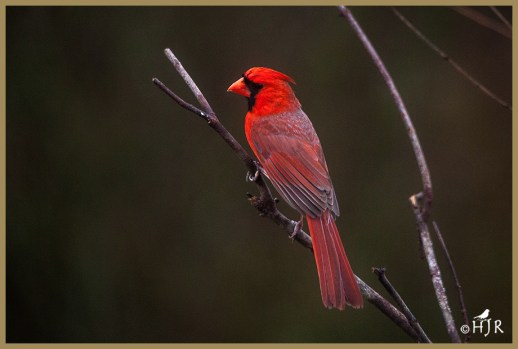
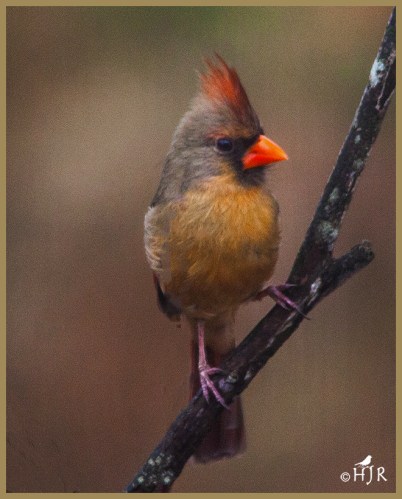
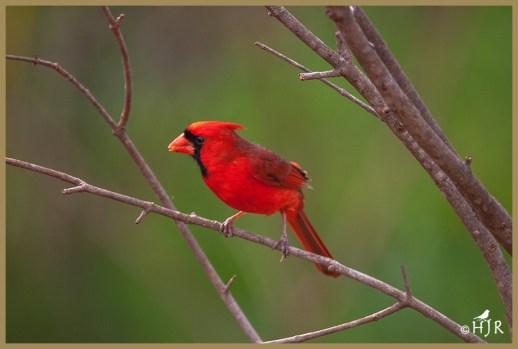
You are welcome to the Northern Cardinal Photo Gallery, every Saturday!
It’s suggested to relax and enjoy!
Northern cardinals are preyed upon by a wide variety of predators native to North America, including falcons, all Accipiter hawks, shrikes, bald eagles, golden eagles and several owls, including long-eared owls, and eastern screech owls. Predators of chicks and eggs include milk snakes, coluber constrictors, blue jays, eastern gray squirrels, fox squirrels, eastern chipmunks, and domestic cats.
Photo Gallery
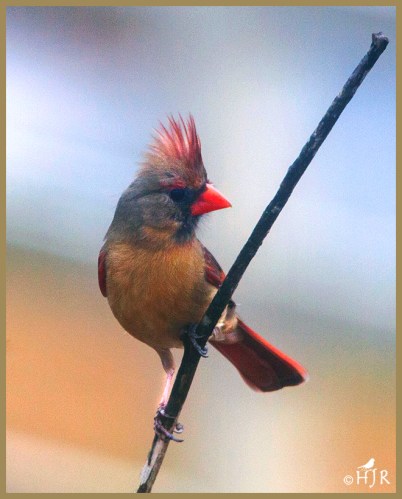
© HJ Ruiz – Avian101
Share this:

Read Past Reviews

Book # 69
Quote from the Author
“A good chuckle is healthy, it helps you break the monotony of a serious life.” ~ H.J. Ruiz


You must be logged in to post a comment.