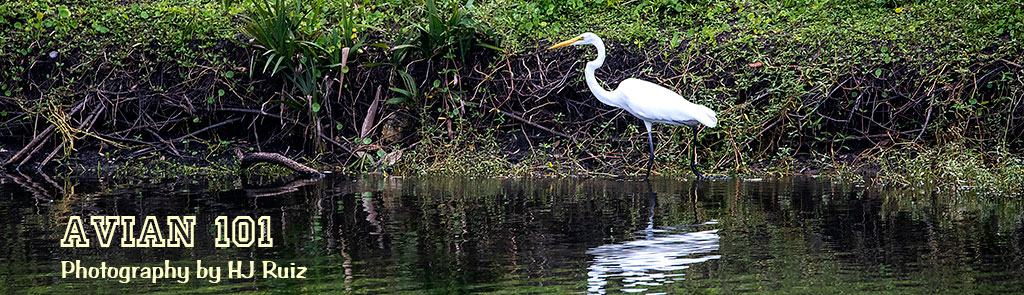
Here Birdie! A Different Approach…
This is living proof that the “Fortnite Dance” is not fit for wader birds!

© HJ Ruiz – Avian101
Share this:

Bird’s ID – Dark-eyed Junco
Dark-eyed Junco
The Dark-eyed Junco (Junco hyemalis) is a species of the juncos, a genus of small grayish American sparrows. This bird is common across much of temperate North America and in summer ranges far into the Arctic. It is a very variable species, much like the related fox sparrow (Passerella iliaca), and its systematics are still not completely untangled.
Adults generally have gray heads, necks, and breasts, gray or brown backs and wings, and a white belly, but show a confusing amount of variation in plumage details. The white outer tail feathers flash distinctively in flight and while hopping on the ground. The bill is usually pale pinkish.
Males tend to have darker, more conspicuous markings than the females. The dark-eyed junco is 13 to 17.5 cm (5.1 to 6.9 in) long and has a wingspan of 18 to 25 cm (7.1 to 9.8 in)
Photo Gallery

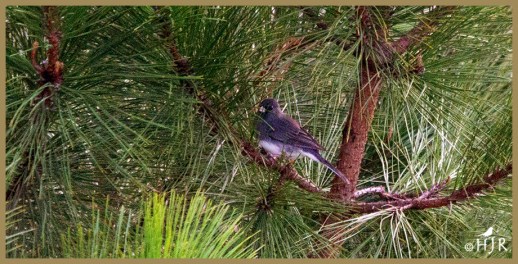
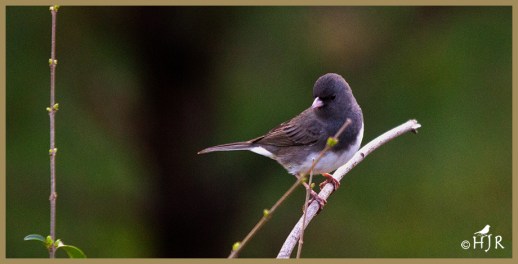
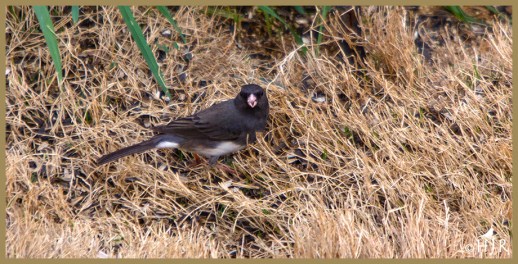
© HJ Ruiz – Avian101
Share this:

What’s Up? – Yuck!
Yuck!
The past week has been kind of… yuck! weather wise. Days were gray, dark, humid, rainy and not most preferred conditions for shooting pictures or seeing birds. Besides, I’ve been very busy with other things, not related to birds.
Most birds I’ve seen lately are almost done with the molting process and are looking more handsome than before.
My family and I have been planning to take a week vacation at the end of September. We’ll be driving to the West Coast of Florida. We’re planning to be spend a few relaxing days in Florida to enjoy the beach. Of course, once there, I will be shooting pictures of birds if the opportunity presents.
My wife Lucy loves the beach and Tyler even more, I do too but I first check if there are any birds around and shoot some pictures before I get in the water. I’m very careful with my cameras and lenses…sand and water are not compatible with cameras nor lenses. I’m hoping to have fun at the beach with my family.
Photo Gallery


Can you ID me?
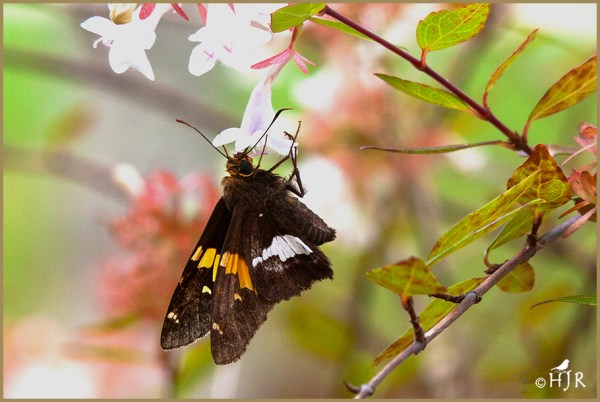
© HJ Ruiz – Avian 101
Share this:

Red Gallery – Northern Cardinal
You are welcome to the Northern Cardinal Photo Gallery, every Saturday!
It’s suggested to relax and enjoy!
The diet of the northern cardinal consists mainly (up to 90%) of weed seeds, grains, and fruits. It is a ground feeder and finds food while hopping on the ground through trees or shrubbery. It will also consume insects, including beetles, cicadas, grasshoppers, and snails; it feeds its young almost exclusively on insects. Other common items include corn (maize) and oats, sunflower seeds, the blossoms and bark of elm trees, and drinks maple sap from holes made by sapsuckers, an example of commensalism. During the summer months it shows preference for seeds that are easily husked, but is less selective when food is scarce during winter. Putting safflower seed in a feeder is a strong strategy for attracting them.
Photo Gallery
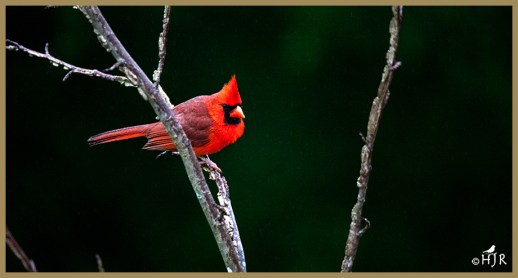
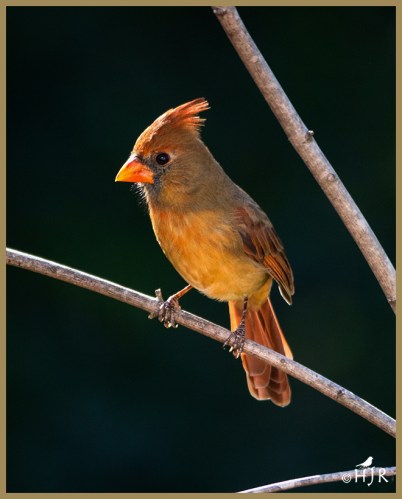

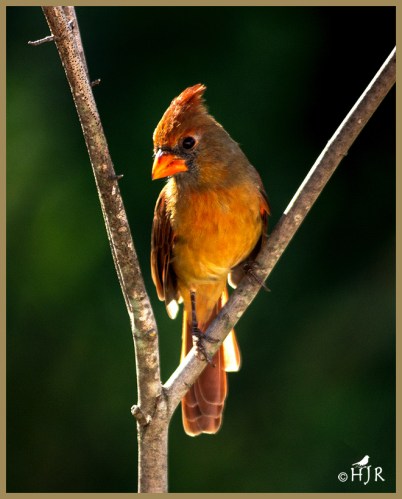
© HJ Ruiz – Avian101
Share this:

Read Past Reviews

Book # 69
Quote from the Author
“A good chuckle is healthy, it helps you break the monotony of a serious life.” ~ H.J. Ruiz


You must be logged in to post a comment.