
Book Review – #48 – The Chicken
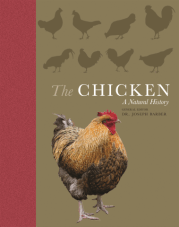
The Chicken – A Natural History
Author:
Joseph Barber
Publisher:
Princeton University Press
Review:
Click for info
“When I got my hands on this book, I was curious but I didn’t know what to expect about chickens, I think we are familiar with them, however, we don’t have enough information about their origins or what they are all about.
After I read a few pages I was fascinated with the deep study made by the author Joseph Barber. He explores their anatomy evolution and development as well as their behavior. The analytic descriptions are comprehensive. I was impressed learning about their learning, imprinting, aggression, parental behavior. Their cognitive abilities.
There’s a plethora of interesting information about the different breeds from around the world, all illustrated with beautiful photographs and artist renditions.
This paperback has 224 pages, 8”x 9” with a total of 250 color illustrations.
I’m very satisfied with this book, I have learned quite a bit about chickens and breeds that I didn’t know existed.”
Reviewed by:
H.J. Ruiz – Avian101.Wordpress.com – August 17th, 2018
© HJ Ruiz – Avian101
Share this:

Bird’s ID – American Goldfinch
American Goldfinch
The American Goldfinch (Spinus tristis) is a small North American bird in the finch family. It is migratory, ranging from mid-Alberta to North Carolina during the breeding season, and from just south of the Canada–United States border to Mexico during the winter.
The American goldfinch undergoes a molt in the spring and autumn. It is the only cardueline finch to undergo a molt twice a year. During the winter molt it sheds all its feathers; in the spring, it sheds all but the wing and tail feathers, which are dark brown in the female and black in the male. The markings on these feathers remain through each molt, with bars on the wings and white under and at the edges of the short, notched tail. The sexual dimorphism displayed in plumage coloration is especially pronounced after the spring molt, when the bright color of the male’s summer plumage is needed to attract a mate.
Photo Gallery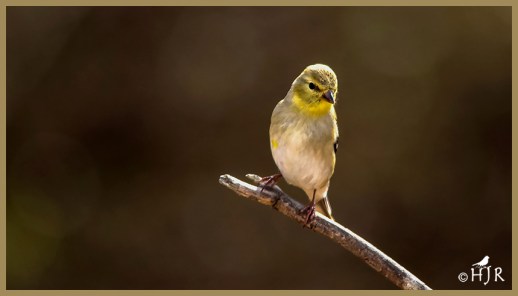
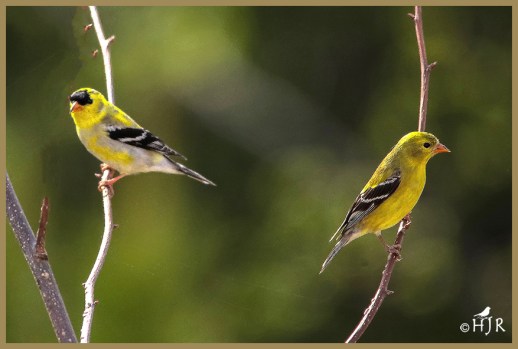
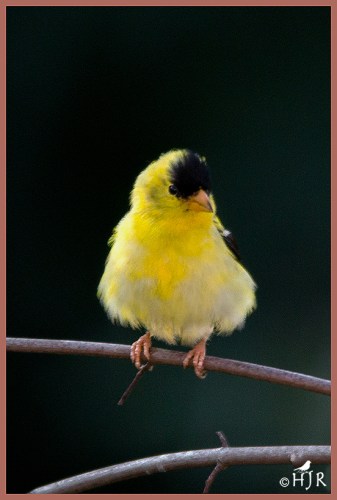
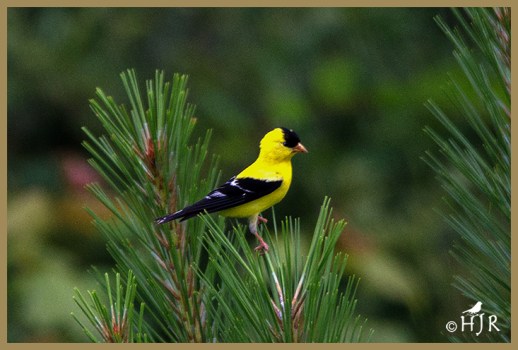
Can you ID me?
© HJ Ruiz – Avian101
Share this:

What’s Up? – Molting
Molting in Birds
In birds, molting (mounting) is the periodic replacement of feathers by shedding old feathers while producing new ones. Feathers are dead structures at maturity which are gradually abraded and need to be replaced. Adult birds molt at least once a year, although many molt twice and a few three times each year. It is generally a slow process as birds rarely shed all their feathers at any one time; the bird must retain sufficient feathers to regulate its body temperature and repel moisture. The number and area of feathers that are shed varies. In some molting periods, a bird may renew only the feathers on the head and body, shedding the wing and tail feathers during a later moulting period. Some species of bird become flightless during an annual “wing molt” and must seek a protected habitat with a reliable food supply during that time. While the plumage may appear thin or uneven during the molt, the bird’s general shape is maintained despite the loss of apparently many feathers; bald spots are typically signs of unrelated illnesses, such as gross injuries, parasites, feather pecking (especially in commercial poultry), or (in pet birds) feather plucking
Photo Gallery
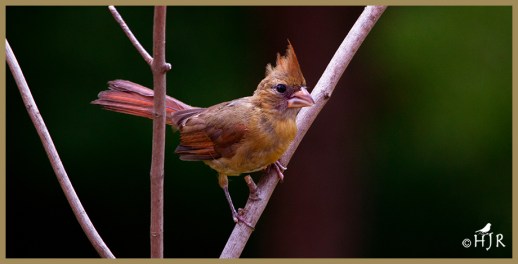
The Northern Cardinal (See pictures) is undergoing the process of molting, the bird is a healthy female, shedding feathers and renewing the plumage without any impediments for flying or feeding.
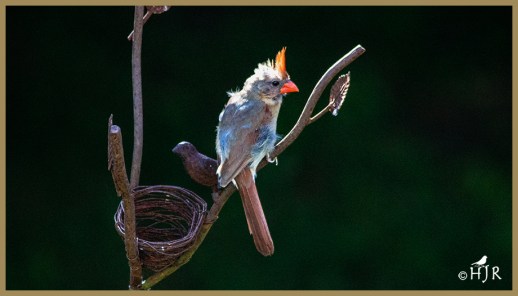
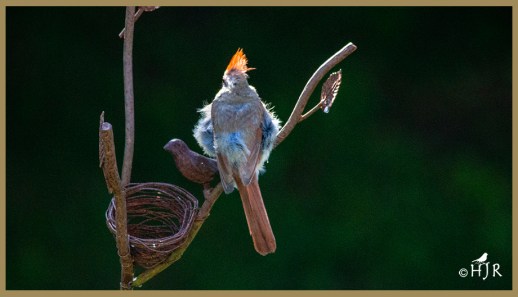
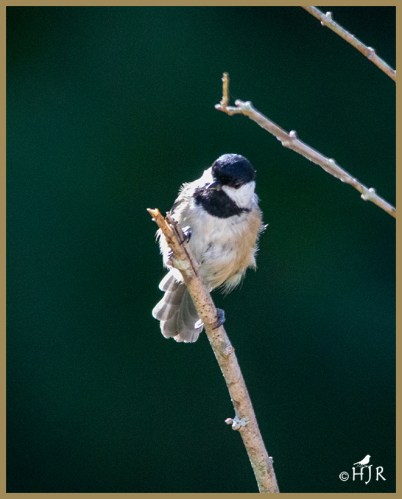
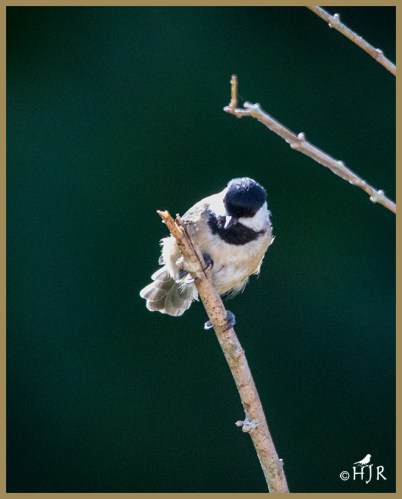
This time we have a Carolina Chickadee already showing signs that molting has started, gradually without any interference to his daily life routines.
© HJ Ruiz – Avian101
Share this:

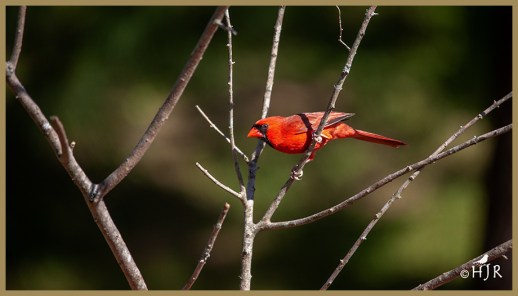
Red Gallery – Northern Cardinal
You are welcome to the Northern Cardinal Photo Gallery, every Saturday!
It’s suggested to relax and enjoy!
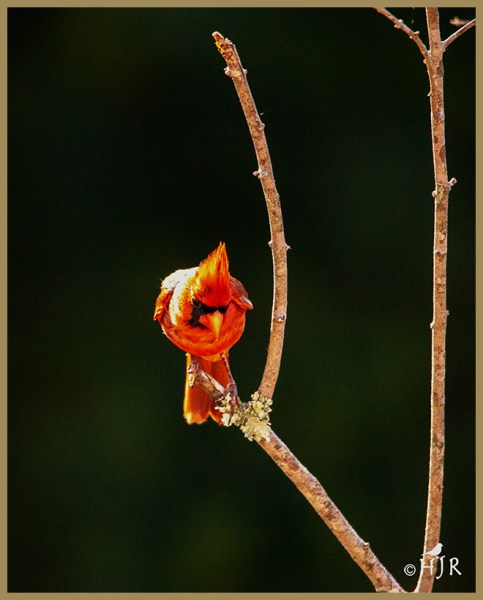
The Northern Cardinal is a territorial song bird. The male sings in a loud, clear whistle from the top of a tree or another high location to defend his territory. He will chase off other males entering his territory. He may mistake his image on various reflective surfaces as an invading male, and will fight his reflection relentlessly. The northern cardinal learns its songs, and as a result the songs vary regionally. Mated pairs often travel together.
Also, the songs of a northern cardinal will usually overlap more in syllables when compared to other northern cardinals near it than those far away from it.
Photo Gallery

© HJ Ruiz – Avian101
Share this:

Read Past Reviews

Book # 69
Quote from the Author
“A good chuckle is healthy, it helps you break the monotony of a serious life.” ~ H.J. Ruiz


You must be logged in to post a comment.