Here Birdie! A Different Approach…
“It Happens so!”
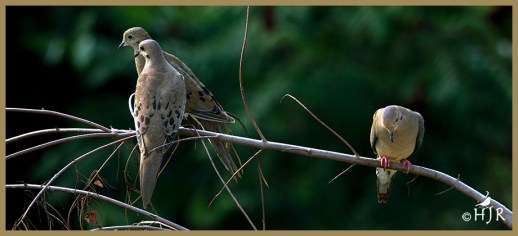
Mom: ~ The teacher is complaining that he’s constantly…
Dad: ~ WHAT is the problem now? He’s too much!
Mom: ~ …interrupting her during class!
© HJ Ruiz – Avian101
Share this:

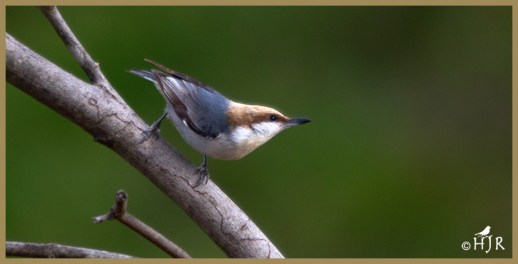
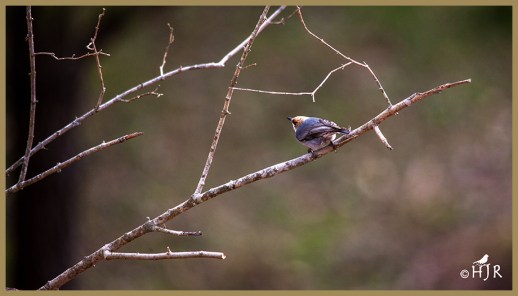
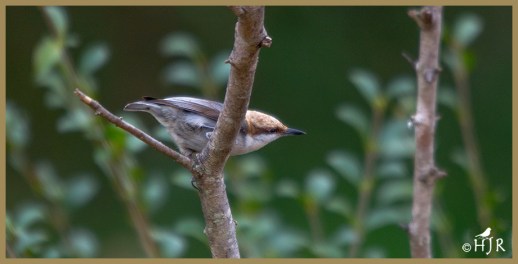
Bird’s ID – Brown-headed Nuthatch
Brown-headed Nuthatch
The Brown-headed Nuthatch (Sitta pusilla) is a small songbird found in pine forests throughout the Southeastern United States.
The bird, like other nuthatches, possesses a sharp black nail-like beak, which it uses to pound open seeds. It is a frequent visitor to feeding stations and is highly fond of sunflower seeds and suet cakes.
Bold and inquisitive, this bird is readily approachable by humans. The bird is frequently observed using a small chip of bark held in its beak as a tool to dig for insects.
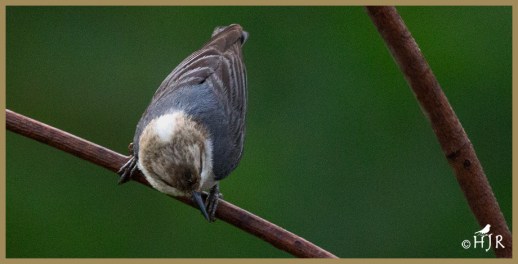
Despite the other species’ common name, the brown-headed nuthatch is about the same size as the pygmy nuthatch and the two species are the world’s smallest nuthatches. In the brown-headed nuthatch, the total length is 9–11 cm (3.5–4.3 in), wingspan is 16–18 cm (6.3–7.1 in) and body mass is 10–12 g (0.35–0.42 oz). This species sports a brown cap with narrow black eyeline and buff white cheeks, chin, and belly. Its wings are bluish-gray in color. A small white spot is found at the nape of the neck. The bird’s call is a sharp whee-hyah sounding very similar to a “rubber duck” toy and particularly is loud for a bird its size. They also make softer “pit pit pit” calls while in flight as well as other squeaking noises.
Photo Gallery
Can you ID me?
© HJ Ruiz – Avian101
Share this:

What’s Up? – Fig…ure this!
Fig…ure This!
While we are approaching Autumn, our days are getting shorter and the temperature has dropped a few degrees, still hot but not so much. Rain has diminished in frequency.
I’m starting to see more of the Ruby-throated Hummingbirds, since the nectar doesn’t warm up so much under the sun. Other birds are making feeders very busy again, that includes a single squirrel. I see many Mourning doves and Brown-headed Cowbirds, fighting for the a better chance to stuff themselves with seeds. These have a voracious appetite!
I’m so happy with my fig tree, it’s growing so fast it’s incredible! Last year I planted it and by winter time it practically froze! It was just two or three sticks black as carbon. My wife said it was most likely dead. She came to that conclusion based on what a neighbor, we bought on fig tree each and planted them. Theirs froze too and got rid of it. I decided to just leave the blackened sticks alone and voila as soon as the Spring started, I saw little buds sooting out of the ground directly from the roots of the fig tree! Now, is over six feet tall!
Photo Gallery


© HJ Ruiz – Avian101
Share this:

Red Gallery – Northern Cardinal
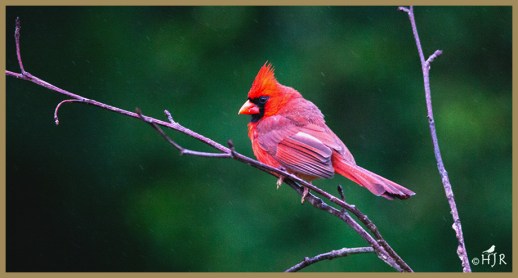
You are welcome to the Northern Cardinal Photo Gallery, every Saturday!
It’s suggested to relax and enjoy!
Pairs mate for life, and stay together year-round. Mated pairs sometimes sing together before nesting. During courtship they may also participate in a bonding behavior where the male collects food and brings it to the female, feeding her beak-to-beak. If the mating is successful, this mate-feeding may continue throughout the period of incubation.
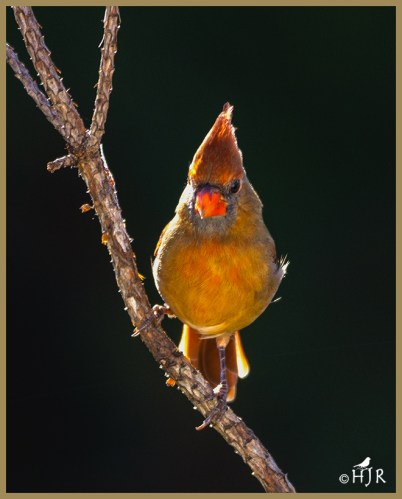

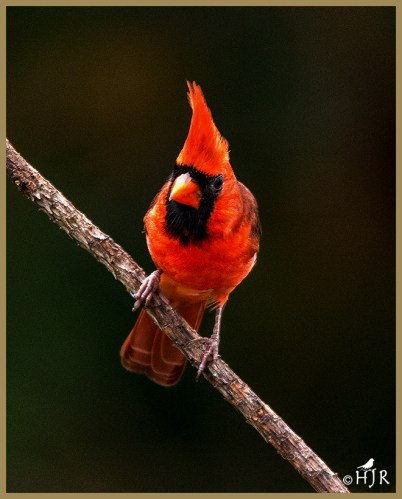
© HJ Ruiz – Avian101
Share this:

Read Past Reviews

Book # 69
Quote from the Author
“A good chuckle is healthy, it helps you break the monotony of a serious life.” ~ H.J. Ruiz


You must be logged in to post a comment.