
Book Review # 49 – How to be an Urban Birder
How to be an Urban Birder
Author:
David Lindo
Publisher:
Princeton University Press
Review:
“This book may be of great help to many people that love birds but happen to live in urban areas. These people will be surprised to find out the many bird species that have adapted to live in areas where humans thrive and reside, far from woods or open fields. The author Mr. David Lindo, has a great deal of information which most likely be relevant to make a birder out of you…an urban birder!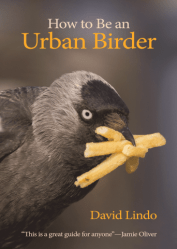
Mr. Lindo is well known throughout the UK and will give you the best tips for making birds visit your gardens.
He has a number of ways to provide enough information about becoming a birder and set many examples, drawings, photographs and color illustrations. With 232 pages and 270 color photos.
And I quote Mr. Lindo: “If you stopped someone in the street to ask them to name an urban bird, they would almost certainly come up with pigeon. After that, a few of those people may struggle and offer up a sparrow into the mix and then perhaps draw a blank.”
Reviewed by:
H.J. Ruiz – Avian101.Wordpress.com – September 7th, 2018
© HJ Ruiz – Avian101
Share this:

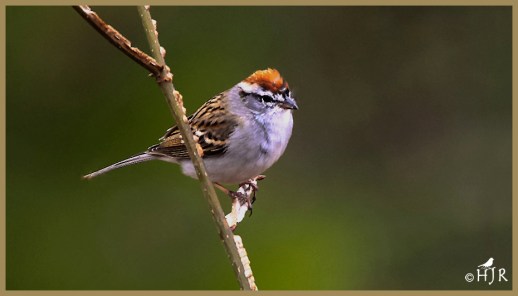
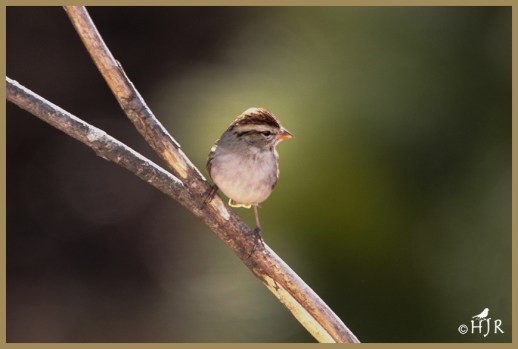
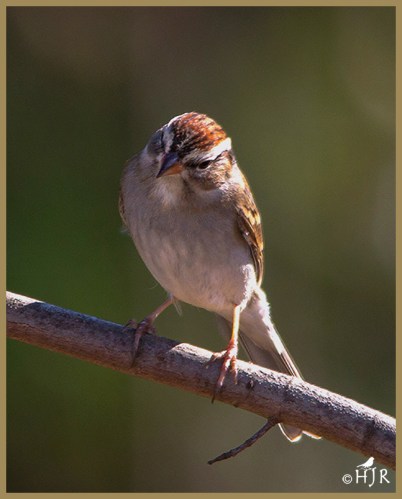
Bird’s ID – Chipping Sparrow
Chipping Sparrow
The Chipping Sparrow (Spizella passerina) is a species of American sparrow, a passerine bird in the family Passerellidae. It is widespread, fairly tame, and common across most of its North American range. There are two subspecies, the eastern chipping sparrow and the western chipping sparrow. This bird is a partial migrant with northerly populations flying southwards in the fall to overwinter in Mexico and the southern United States, and flying northward again in spring. It molts twice a year. In its breeding plumage it has orangish-rust upper parts, gray head and underparts and a distinctive reddish cap. In non-breeding plumage, the cap is brown and the facial markings are less distinct. The song is a trill and the bird has a piercing flight call that can be heard while it is migrating at night.
In the winter, chipping sparrows are gregarious and form flocks, sometimes associating with other bird species. They mostly forage on the ground for seeds and other food items, as well as clambering on plants and trees, feeding on buds and small arthropods. In the west of their range they breed mainly in coniferous forests, but in the east, they choose woodland, farmland, parks and gardens. Breeding starts in late April and May and the nest is often built in a tree.
Photo Gallery

© HJ Ruiz – Avian101
Share this:

What’s Up? – Humidity…
Humidity…
We had a mixture of very humid hot days last week, often sunny, but sometimes gray. The humidity adds an extra factor when the weather is hot like in Summer. The mugginess is unpleasant any way you feel it. This humid period is caused by the Tropical Storm Gordon that hit the Pensacola area in Florida (Gulf of Mexico).
We are rapidly approaching the Hurricane Season. Then, things will get more dangerous. It happens every year, sometimes the hurricanes are monstrously large and intense., with such power that would devastate many vast areas. These are extremely dangerous by any standards.
My backyard and birds are still here, like all of us, coping with the weather changes.
Photo Gallery


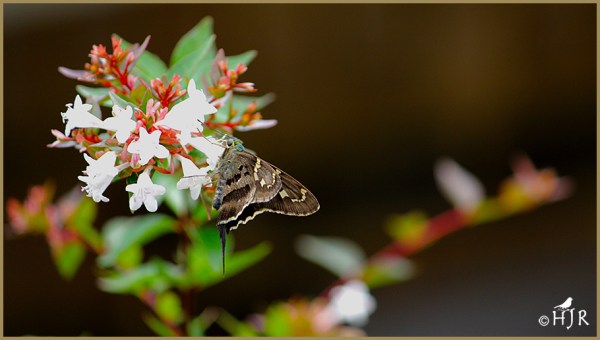
Can You ID Me?
© HJ Ruiz – Avian101
Share this:

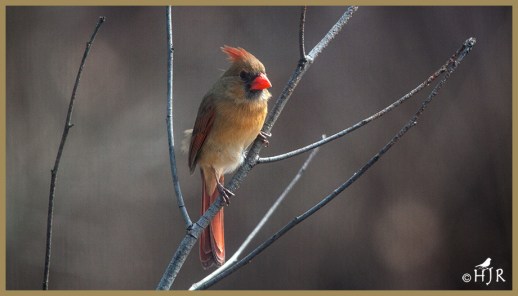
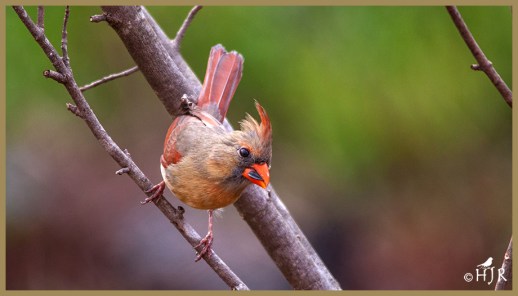
Red Gallery – Northern Cardinal
You are welcome to the Northern Cardinal Photo Gallery, every Saturday!
It’s suggested to relax and enjoy!
The female builds a cup nest in a well-concealed spot in dense shrub or a low tree 1–3 m (3.3–9.8 ft) off the ground. The nest is made of thin twigs, bark strips, and grasses, lined with grasses or other plant fibers. Eggs are laid one to six days following the completion of the nest. The eggs are white, with a tint of green, blue or brown, and are marked with lavender, gray, or brown blotches which are thicker around the larger end. The shell is smooth and slightly glossy.
Photo Gallery


© HJ Ruiz – Avian101
Share this:

Read Past Reviews

Book # 69
Quote from the Author
“A good chuckle is healthy, it helps you break the monotony of a serious life.” ~ H.J. Ruiz


You must be logged in to post a comment.