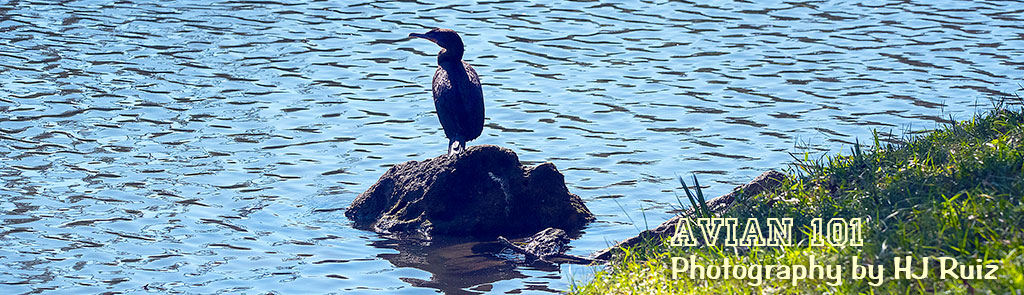
What’s Up? – Let’s be optimist…
Let’s be optimist…
I’ll start by describing our weather last week. Oddly, It changes almost daily in a way that is hard to keep up with it! Some days, in the early morning you have to dress as you would in winter because it is breezy and cold, then at noon you have to dress with a short sleeve shirt because it gets too warm. We also have rainy days, with the sky being gray and so dark that is like night, then the following day we are back to warmer weather. Oy vey!
My birds are totally adapting to those changes and their appetite continues to be normal and they look healthy. I’m the one that have problems (Not with my health) but to shoot pictures, because it’s too dark or it’s raining too hard to get any good shots!
This Autumn is not going to be a pretty one. The ups and downs of temperatures are not allowing for the gradual change of foliage’s colors like normally would occur, instead, the cold spells shrivel up the leaves and they drop later.
However, when the weather warms up and the sky is blue, my backyard get very avian active, then I do what I do with my cameras.
Photo Gallery


© HJ Ruiz – Avian101
Share this:

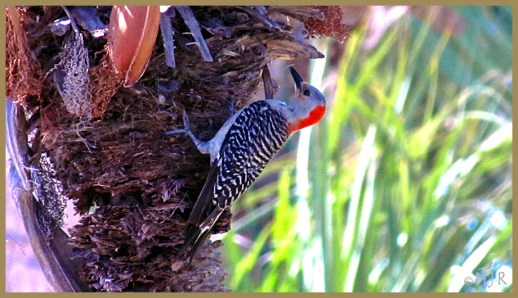
Photo Capture # 10 – Red-bellied Woodpecker
Red- bellied Woodpecker
© HJ Ruiz – Avian101
Share this:

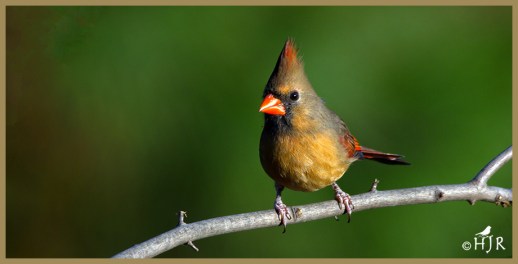
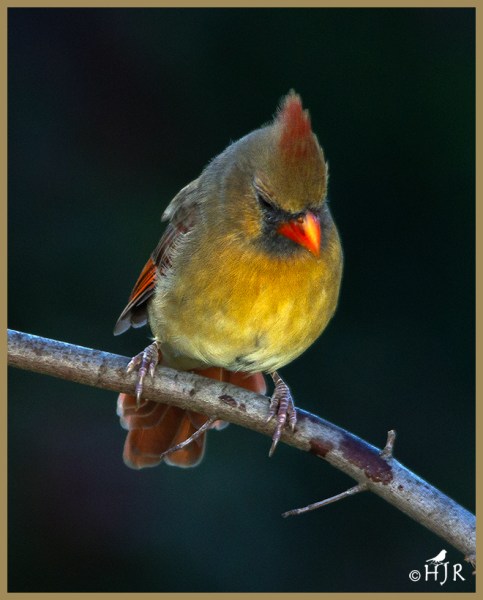
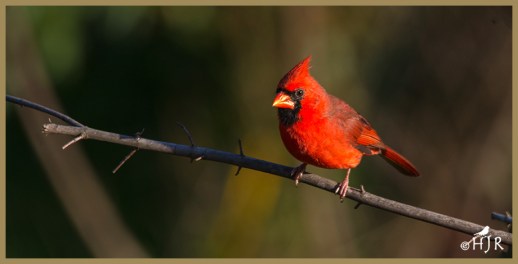
Red Gallery – Northern Cardinal
You are welcome to the Northern Cardinal Photo Gallery, every Saturday!
It’s suggested to relax and enjoy!
Northern cardinals are numerous across the eastern United States from Maine to Texas and in Canada in the provinces of Ontario, Quebec, New Brunswick and Nova Scotia. Its range extends west to the U.S.–Mexico border and south through Mexico to the Isthmus of Tehuantepec, northern Guatemala, and northern Belize. An allopatric population is found on the Pacific slope of Mexico from Jalisco to Oaxaca; note that this population is not shown on the range map. The species was introduced to Bermuda in 1700. It has also been introduced in Hawaii and southern California. Its natural habitat is in woodlands, gardens, shrublands, and wetlands.
Photo Gallery

© HJ Ruiz – Avian101
Share this:

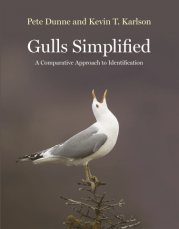
Book Review # 52 – Gulls Simplified
Gulls Simplified – A comparative Approach to Identification
Author:
Pete Dunne and Kevin T. Karlson
Publisher:
Princeton University Press
Review:
More…
“ I don’t know about you my friendly readers, but when you need to identify any seagull, it is not so simple. It really takes time and patience and a good guide to get the right key descriptions and reach a conclusion of what the seagull’s name is.
This field guide , written and illustrated by authors Pete Dunne and Kevin T. Karlson will
definitely help you dissipate your problems to ID any American seagull.
With 208 pages and 330 color illustrations the guide offers you simple comparisons between different species and pertinent information about them. Every descriptions are key factors to lead you toward a complete identification of the researched species of gulls.
The detailed information of key points opens up a path to understand the way to approach when you initiate a research.
The guide has been created to really be a great tool for birders, photographers or bird enthusiasts. It is well planed by experienced professionals with the mission to share their knowledge with others.”
Reviewed by:
H.J. Ruiz – Avian101.Wordpress.com – November 9th, 2018
© HJ Ruiz – Avian101
Share this:

Read Past Reviews

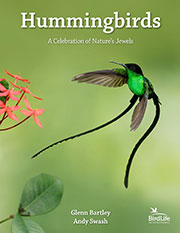
Book # 69
Quote from the Author
“A good chuckle is healthy, it helps you break the monotony of a serious life.” ~ H.J. Ruiz


You must be logged in to post a comment.