
What’s Up? – Commitment…
Commitment…
In a couple more weeks we’ll be changing seasons to winter. To us in our area, seemed that we had winter all through autumn! Let’s hope that the coming winter will be a mild and a beautiful one. That, I’m sure would make us happy.
The cold weather has ruined the process of foliage turning colors, something that makes autumn very special! It has been too frigid for my taste. I always loved the foliage in earth colors and the nice walks over the ground covered with thousands of colorful leaves. Dressing with a wool sweater and racking leaves…
My birds are there every morning waiting for me, bringing them their favorite seeds. I love to see them coming out of the trees and bushes to get their meals. I enjoy my doing that, I feel the sense of commitment with them.
Photo Gallery


© HJ Ruiz – Avian101
Share this:

Photo Capture # 22 – Red-crested Cardinal
Red-crested Cardinal

Red-crested Cardinal
© HJ Ruiz
Share this:

Red Gallery – Northern Cardinal
During winter, both male and female will fluff up their down feathers in order to trap warm air next to their body and keeping cold air from reaching their body. The down feathers are small and hairlike at the base of each flight feather.
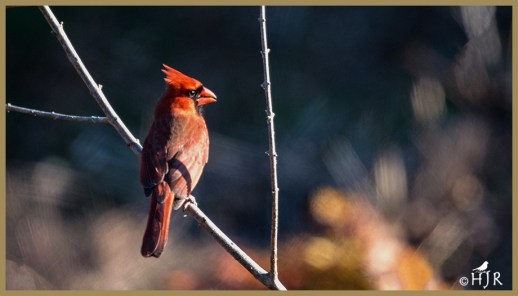
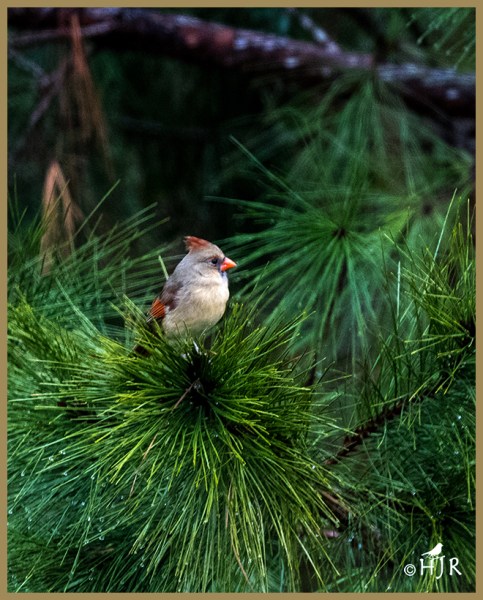
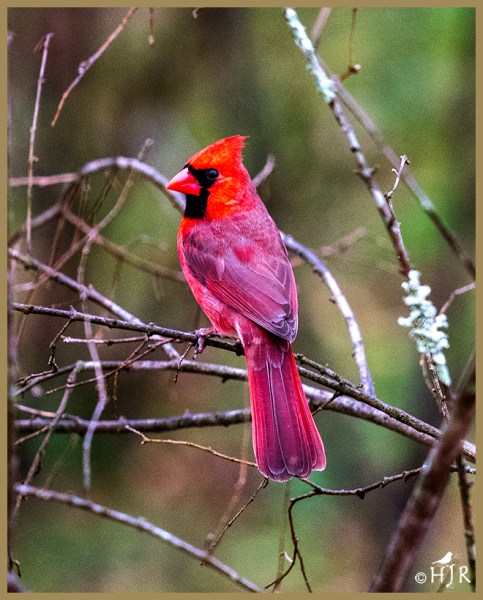
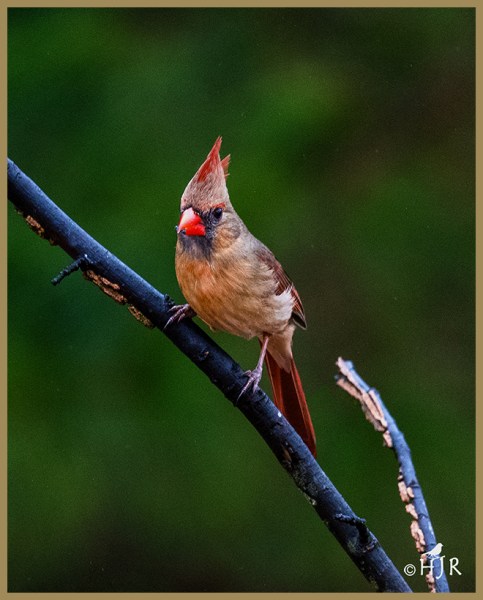
© HJ Ruiz – Avian101
Share this:

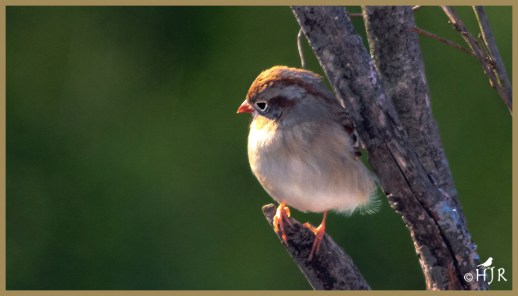
Bird’s ID – Field Sparrow
Field Sparrow
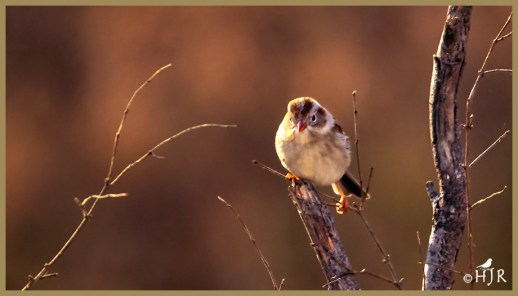
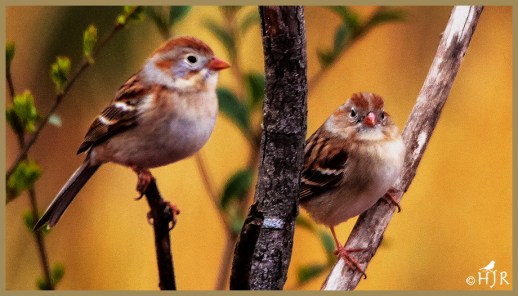
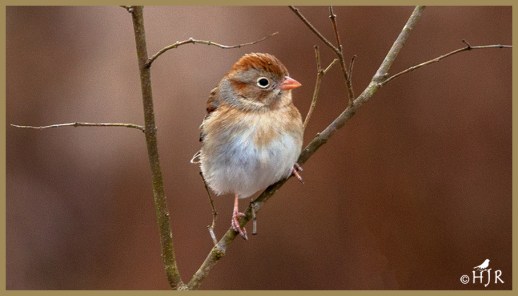
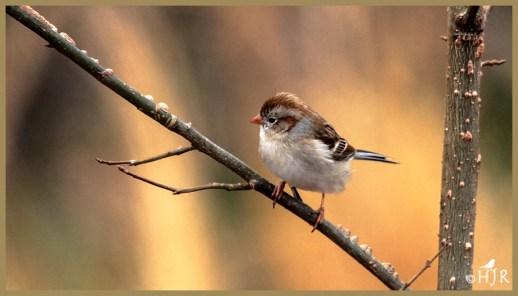
The Field Sparrow (Spizella pusilla) is a small New World sparrow in the family Passerellidae. It is about 140 mm (6 in) long and weighs about 12.5 g (0.4 oz). The head is gray with a rust-colored crown, white eye-ring and pink bill. The upper parts are brown streaked with black and buff, the breast is buff, the belly is white and the tail is forked. There are two different color morphs, one being grayer and the other more rufous.
The field sparrow is distributed across eastern Canada and the eastern United States, with northern populations migrating southwards to southern United States and Mexico in the fall. The typical habitat of this bird is bushy country with shrubs and grassland. The nest is a cup-shaped construction built on the ground and hidden beneath a bush or clump of grass. The birds forage on the ground or in low vegetation, feeding mainly on seeds and insects.
Adults have brown upper-parts, a buff breast, a white belly, two whitish wing bars and a dark-brown forked tail. They have a grey face, a rusty crown, a white eye ring and a pink bill. They have rusty markings behind the eye. There are grey and rufous color variants.
Their breeding habitat is brushy, shrubby fields across eastern North America. The nest is an open cup on the ground under a clump of grass or in a small thicket.
These birds are permanent residents in the southern parts of their range. Northern birds migrate to the southern United States and Mexico.
Photo Gallery

© HJ Ruiz – Avian101
Share this:

Read Past Reviews

Book # 69
Quote from the Author
“A good chuckle is healthy, it helps you break the monotony of a serious life.” ~ H.J. Ruiz


You must be logged in to post a comment.