Bird’s ID – Mourning Dove
Mourning Dove
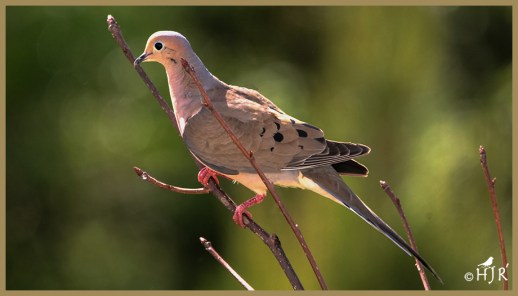
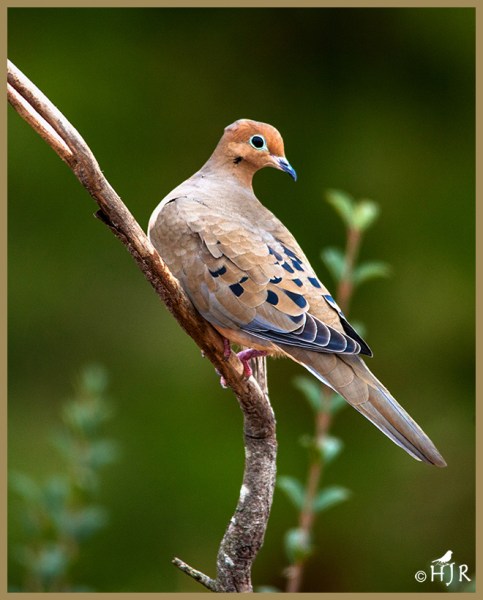
The Mourning Dove (Zenaida macroura) is a member of the dove family, Columbidae. The bird is also known as the American mourning dove or the rain dove, and erroneously as the turtle dove, and was once known as the Carolina pigeon or Carolina turtledove. It is one of the most abundant and widespread of all North American birds. It is also a leading gamebird, with more than 20 million birds (up to 70 million in some years) shot annually in the U.S., both for sport and for meat. Its ability to sustain its population under such pressure is due to its prolific breeding; in warm areas, one pair may raise up to six broods of two young each in a single year. The wings make an unusual whistling sound upon take-off and landing, a form of sound. The bird is a strong flier, capable of speeds up to 88 km/h (55 mph). It is the national bird of the British Virgin Islands.
Mourning doves are light grey and brown and generally muted in color. Males and females are similar in appearance. The species is generally monogamous, with two squabs (young) per brood. Both parents incubate and care for the young. Mourning doves eat almost exclusively seeds, but the young are fed crop milk by their parents.
The plumage is generally light gray-brown and lighter and pinkish below. The wings have black spotting, and the outer tail feathers are white, contrasting with the black inners. Below the eye is a distinctive crescent-shaped area of dark feathers. The eyes are dark, with light skin surrounding them. The adult male has bright purple-pink patches on the neck sides, with light pink coloring reaching the breast. The crown of the adult male is a distinctly bluish-grey color. Females are similar in appearance, but with more brown coloring overall and a little smaller than the male. The iridescent feather patches on the neck above the shoulders are nearly absent, but can be quite vivid on males. Juvenile birds have a scaly appearance, and are generally darker.
Photo Gallery
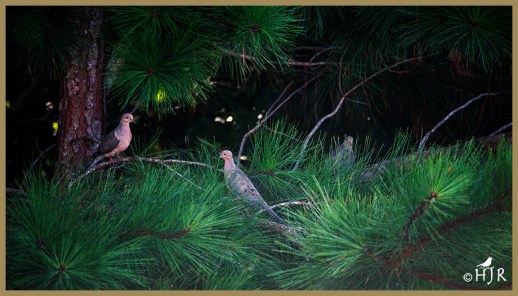
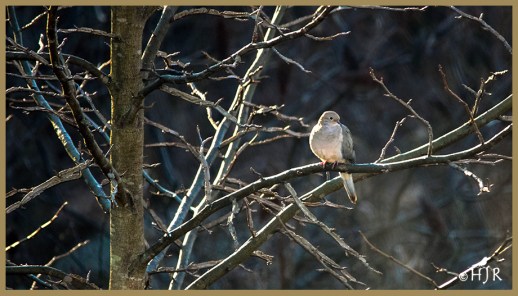
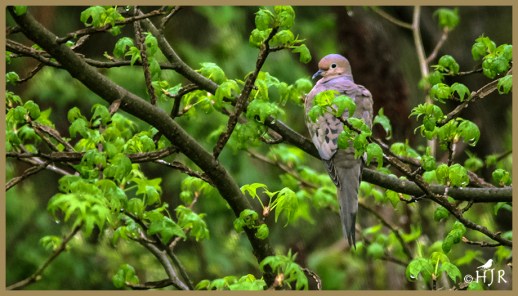
© HJ Ruiz – Avian101
Share this:

Photo Capture # 24 – Green Heron
Green Heron
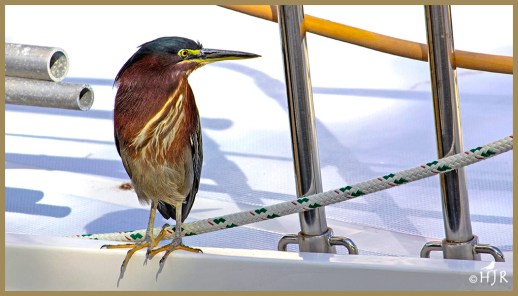
Green Heron
© HJ Ruiz – Avian101
Share this:

Bird’s ID – Carolina Chickadee
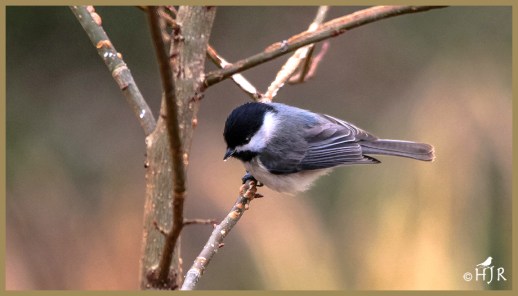
Carolina Chickadee
The Carolina Chickadee (Poecile carolinensis) is a small passerine bird in the tit family Paridae. It is often placed in the genus Parus with most other tits, but mtDNA cytochrome b sequence data and morphology suggest that separating Poecile more adequately expresses these birds’ relationships (Gill et al., 2005). The American Ornithologists’ Union has been treating Poecile as distinct genus since 1998.
Adults are 11.5–13 cm (4.5–5.1 in) long with a weight of 9–12 g (0.32–0.42 oz), and have a black cap and bib with white sides to the face. Their underparts are white with rusty brown on the flanks; their back is grey. They have a short dark bill, short wings and a moderately long tail. Very similar to the black-capped chickadee, the Carolina chickadee is distinguished by the slightly browner wing with the greater coverts brown (not whitish fringed) and the white fringing on the secondary feathers slightly less conspicuous; the tail is also slightly shorter and more square-ended.
These birds hop along tree branches searching for insects, sometimes hanging upside down or hovering; they may make short flights to catch insects in the air. Insects form a large part of their diet, especially in summer; seeds and berries become important in winter. They sometimes hammer seeds on a tree or shrub to open them; they also will store seeds for later use.
During the fall migration and winter, chickadees often flock together. Many other species of birds, including titmice, nuthatches, and warblers can often be found foraging in these flocks. Mixed flocks stay together because the chickadees call out whenever they find a good source of food. This calling out forms cohesion for the group, allowing the other birds to find food more efficiently.
Carolina chickadees are able to lower their body temperatures to induce an intentional state of hypothermia called torpor. They do this to conserve energy during extremely cold winters. In extremely cold weather conditions they look for cavities where they can hide in and spend up to fifteen hours at a time in torpor; during this time they are awake but unresponsive; they should not be picked up and handled at this time, as the stress of being held may cause their death.
Photo Gallery
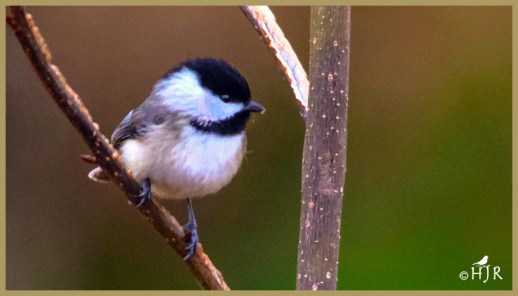
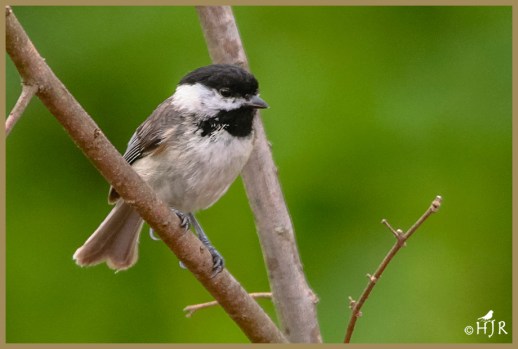
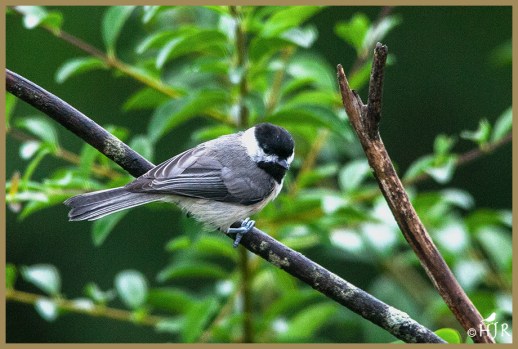
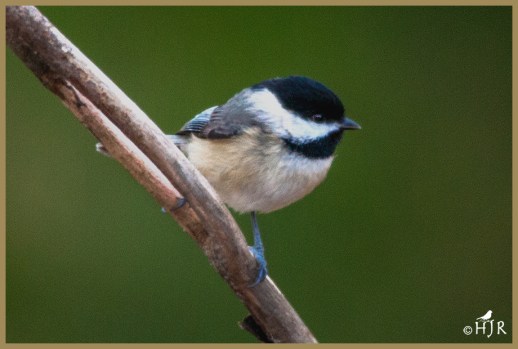
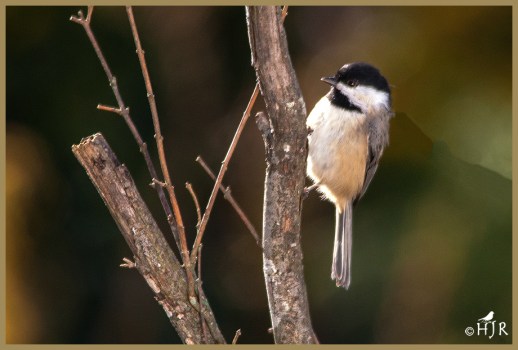
© HJ Ruiz – Avian101
Share this:

Photo Capture # 23 – Reddish Egret
Reddish Egret
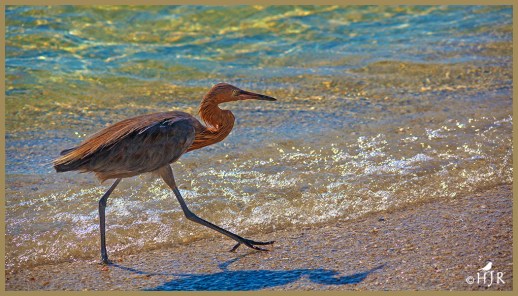
Reddish Egret
© HJ Ruiz – Avian101
Share this:

Read Past Reviews

Book # 69
Quote from the Author
“A good chuckle is healthy, it helps you break the monotony of a serious life.” ~ H.J. Ruiz


You must be logged in to post a comment.