Bird’s ID – Carolina Chickadee
Carolina Chickadee
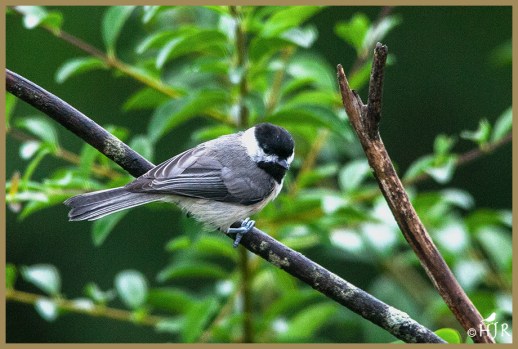
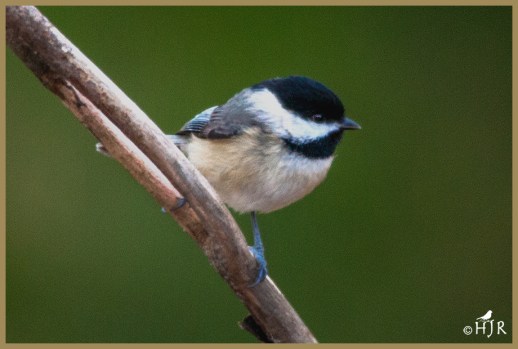
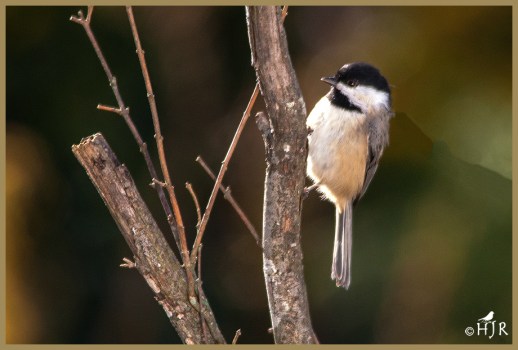
The Carolina Chickadee (Poecile carolinensis) is a small passerine bird in the tit family Paridae. It is often placed in the genus Parus with most other tits, but mtDNA cytochrome b sequence data and morphology suggest that separating Poecile more adequately expresses these birds’ relationships (Gill et al., 2005). The American Ornithologists’ Union has been treating Poecile as distinct genus since 1998.
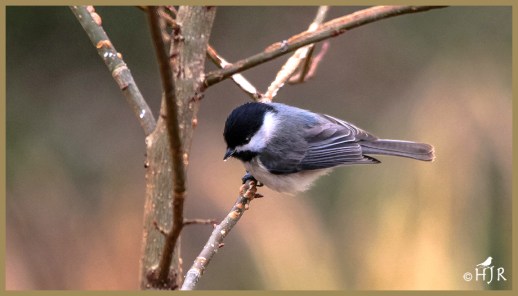
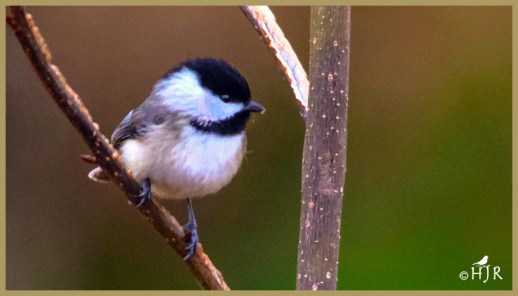
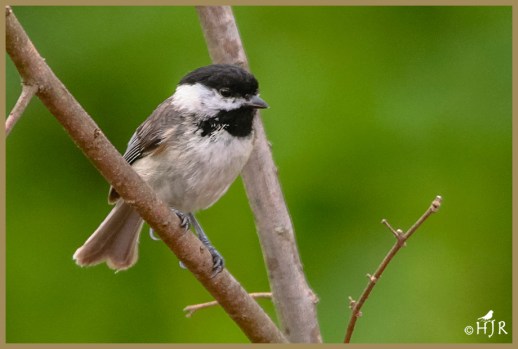
Adults are 11.5–13 cm (4.5–5.1 in) long with a weight of 9–12 g (0.32–0.42 oz), and have a black cap and bib with white sides to the face. Their underparts are white with rusty brown on the flanks; their back is grey. They have a short dark bill, short wings and a moderately long tail. Very similar to the black-capped chickadee, the Carolina chickadee is distinguished by the slightly browner wing with the greater coverts brown (not whitish fringed) and the white fringing on the secondary feathers slightly less conspicuous; the tail is also slightly shorter and more square-ended.
These birds hop along tree branches searching for insects, sometimes hanging upside down or hovering; they may make short flights to catch insects in the air. Insects form a large part of their diet, especially in summer; seeds and berries become important in winter. They sometimes hammer seeds on a tree or shrub to open them; they also will store seeds for later use.
During the fall migration and winter, chickadees often flock together. Many other species of birds, including titmice, nuthatches, and warblers can often be found foraging in these flocks. Mixed flocks stay together because the chickadees call out whenever they find a good source of food. This calling out forms cohesion for the group, allowing the other birds to find food more efficiently.
Carolina chickadees are able to lower their body temperatures to induce an intentional state of hypothermia called torpor. They do this to conserve energy during extremely cold winters. In extremely cold weather conditions they look for cavities where they can hide in and spend up to fifteen hours at a time in torpor; during this time they are awake but unresponsive; they should not be picked up and handled at this time, as the stress of being held may cause their death.




I’m accustomed to hearing the word ‘torpor’ applied to people, but I didn’t know it was a specific state for chickadees (and other birds). Very interesting.
Thank you Linda! 🙂
Good advice about their torpor state, HJ. And what a joy to see your photos of this delightful chickadee. We don’t get the Carolina chickadee on the west coast, so what a treat to see it here. Always a delight to be here, thank you, HJ.
You’re most welcome and thank you my dear friend. 🙂
Wonderful profile captures, HJ! 🙂
Thank you very much Donna. 🙂
Very cute bird, HJ! Excellent images!!
They are! Thank you Indira. 🙂
Such beautiful images. =) Thanks for the tip. At this time of year I always make sure to keep the feeders full.
Thank you Anima. 🙂
Very much enjoyed your photographs, what a dear little bird.
They are similar to the Coal Tits in UK. Thank you very much Susan. 🙂
Great post HJ and photos! It illustrates two of the important features of many small birds world wide in the principal of the MFF (Mixed Feeding Flock) by sharing their company together for both protection and food finding and yet being several different species. We see this a lot with our small birds also and is the basis of large flocks of the same species, but breeding potential is then included in these cases. This is why so many Australian bird species are capable of learning the languages of other bird species and other bird dialects of the same species (Parrots, Cockatoos, Budges and Lorikeets). Interesting recent finding with bird communication.
You’re totally right about those studies. In USA many of the species of bird form flocks that travel together especially in winter times. Thank you very much Ashley for sharing. 🙂
Charming pictures of a charming bird.
Thanks Tom. 🙂
Reblogged this on By the Mighty Mumford and commented:
BEAUTIFUL CHICKADEE IMAGERY!