
What’s Up? – We begin 2019 in my Backyard
We begin 2019 in my Backyard
We have started year 2019 with days of heavy rain but in the afternoon the temperature raises to the low 60ºs. The sky is always gray and dim, not very good for pictures.
Rain as always may be good for plants but a nuisance for birds and their feeders. I’m feeding them suet-seed mixes which resists more the continuous rain.
Any birds that visit my backyard are welcome to get a meal or if they want to build a nest and stay, that is fine with me. I want them to feel comfortable and safe, this way they look relaxed for my pictures. Let’s hope that 2019 will bring me lots of birds to photograph.
Photo Gallery


Eating Lunch With…
House Finch Dad and Brood
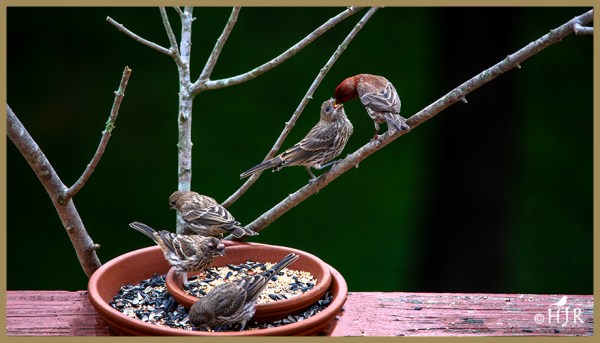
Good Dad feeding chicks.
© HJ Ruiz – Avian101
Share this:

Photo Capture # 34 – Northern Cardinal
Northern Cardinal (M)
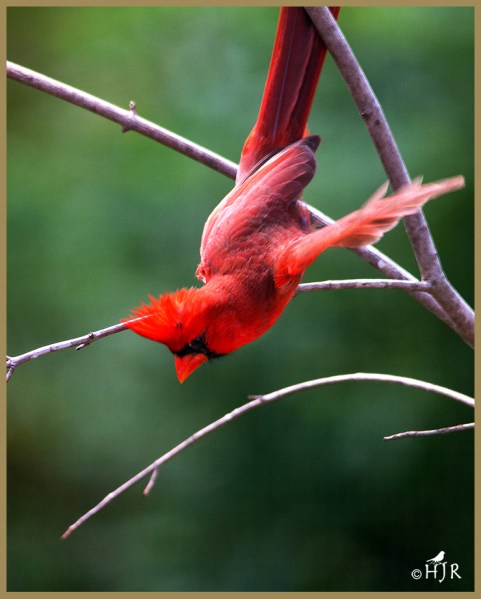
Northern Cardinal (M)
© HJ Ruiz – Avian101
Share this:

Red Gallery – Northern Cardinal
The northern cardinal is a territorial song bird. The male sings in a loud, clear whistle from the top of a tree or another high location to defend his territory. He will chase off other males entering his territory. He may mistake his image on various reflective surfaces as an invading male, and will fight his reflection relentlessly. The northern cardinal learns its songs, and as a result the songs vary regionally. Mated pairs often travel together. Also, the songs of a northern cardinal will usually overlap more in syllables when compared to other northern cardinals near it than those far away from it.
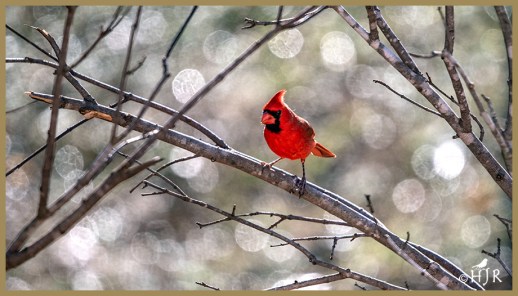
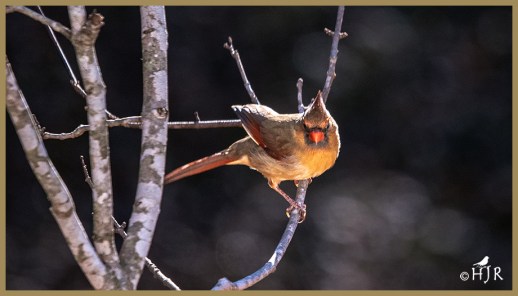
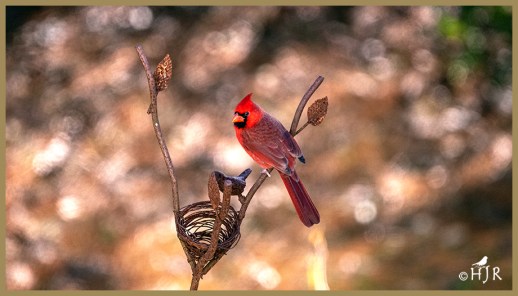
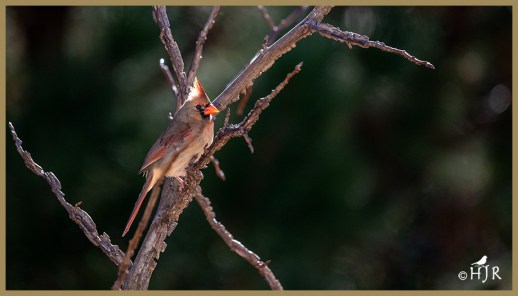
© HJ Ruiz – Avian101
Share this:

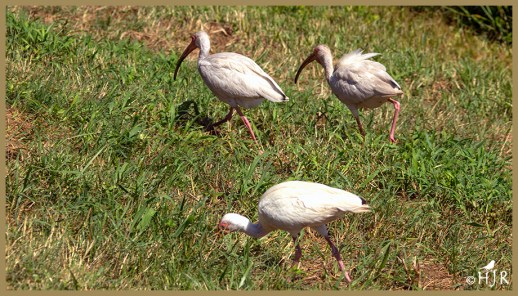
Bird’s ID – American White Ibis
American White Ibis
The American White Ibis (Eudocimus albus) is a species of bird in the ibis family, Threskiornithidae. It is found from Virginia via the Gulf Coast of the United States south through most of the coastal New World tropics. This particular ibis is a medium-sized bird with an overall white plumage, bright red-orange down-curved bill and long legs, and black wing tips that are usually only visible in flight. Males are larger and have longer bills than females. The breeding range runs along the Gulf and Atlantic Coast, and the coasts of Mexico and Central America. Outside the breeding period, the range extends further inland in North America and also includes the Caribbean. It is also found along the northwestern South American coastline in Colombia and Venezuela. Populations in central Venezuela overlap and interbreed with the scarlet ibis. The two have been classified by some authorities as a single species.
Their diet consists primarily of small aquatic prey, such as insects and small fishes. Crayfish are its preferred food in most regions, but it can adjust its diet according to the habitat and prey abundance. Its main foraging behavior is probing with its beak at the bottom of shallow water to feel for and capture its prey. It does not see the prey.
During the breeding season, the American white ibis gathers in huge colonies near water. Pairs are predominantly monogamous and both parents care for the young, although males tend to engage in extra-pair copulation with other females to increase their reproductive success. Males have also been found to pirate food from unmated females and juveniles during the breeding season.
Human pollution has affected the behavior of the American white ibis via an increase in the concentrations of methylmercury, which is released into the environment from untreated waste. Exposure to methylmercury alters the hormone levels of American white ibis, affecting their mating and nesting behavior and leading to lower reproduction rates.
The white plumage and pink facial skin of adult American white ibises are distinctive. Adults have black wingtips that are usually only visible in flight. In non-breeding condition the long down curved bill and long legs are bright red-orange. During the first ten days of the breeding season, the skin darkens to a deep pink on the bill and an almost purple-tinted red on the legs. It then fades to a paler pink, and the tip of the bill becomes blackish. It is difficult to determine the sex of an adult American white ibis from its external appearance, since the sexes have similar plumage. However, there is sexual dimorphism in size and proportion as males are significantly larger and heavier than females and have longer and stouter bills.
Photo Gallery
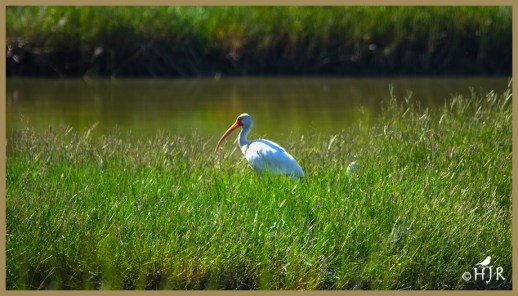
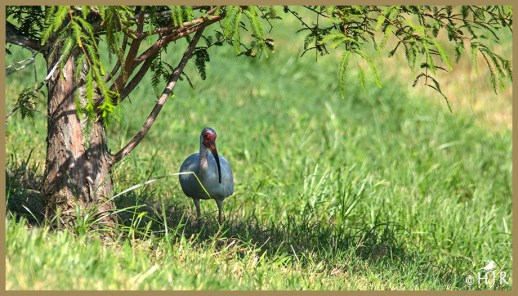


© HJ Ruiz – Avian101
Share this:

Read Past Reviews

Book # 69
Quote from the Author
“A good chuckle is healthy, it helps you break the monotony of a serious life.” ~ H.J. Ruiz


You must be logged in to post a comment.