Variety of Bird Species # 9
Photo Gallery
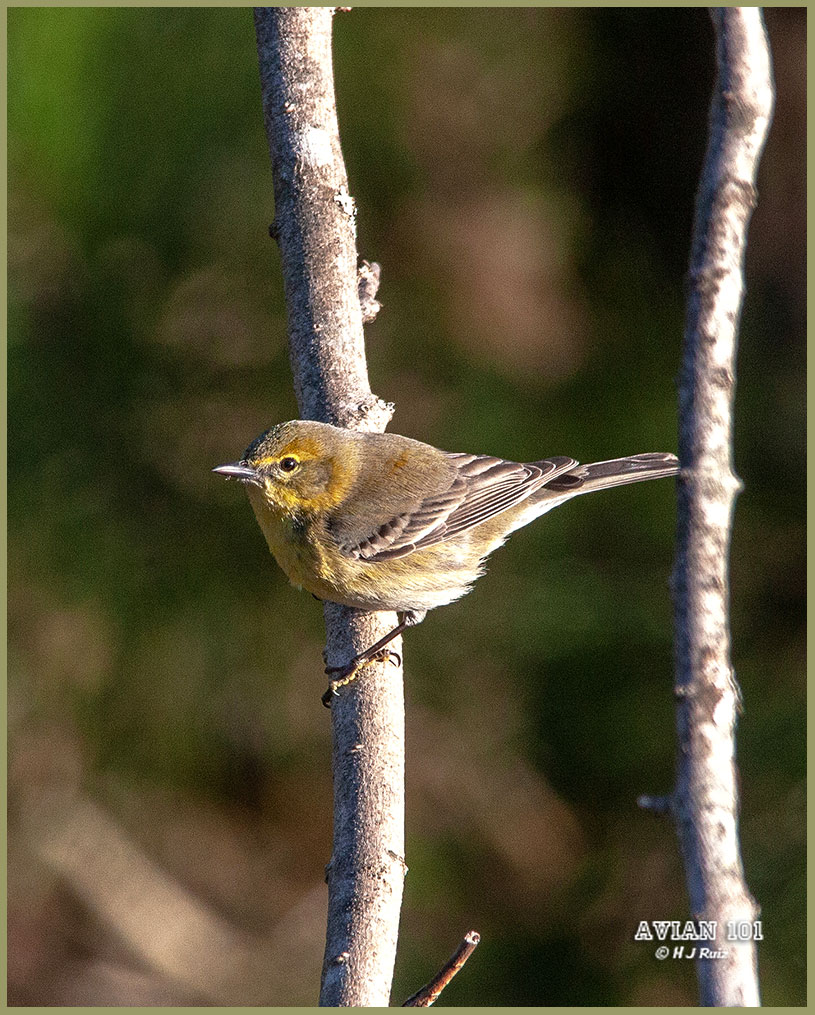


1 – Pine Warbler (Female)
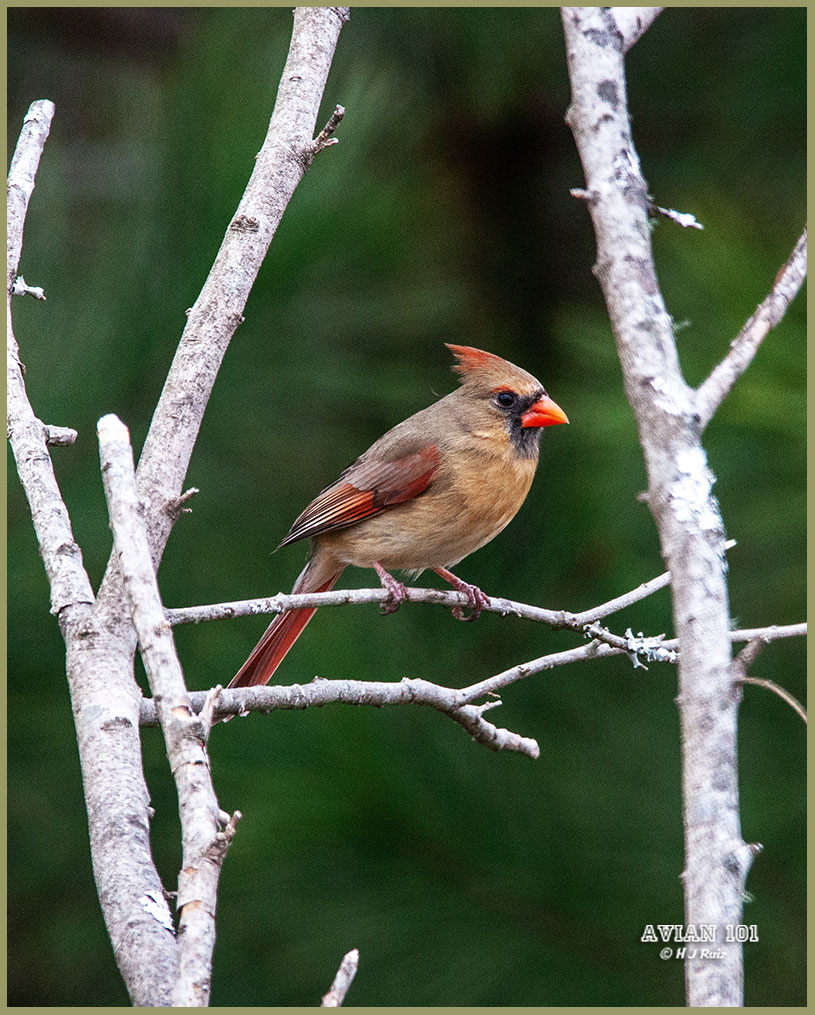
2 – Northern Cardinal (Female)
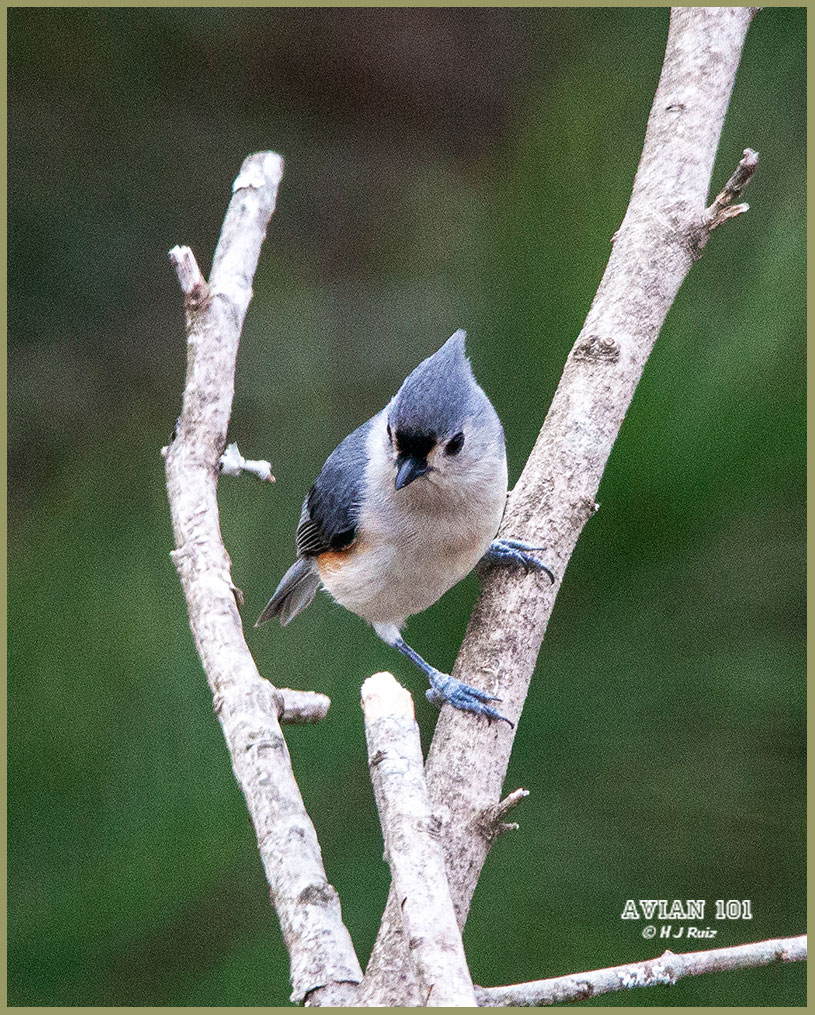
3 – Tufted Titmouse
4 – Northern Cardinal (Male)
5 – Pine Warbler (Male)
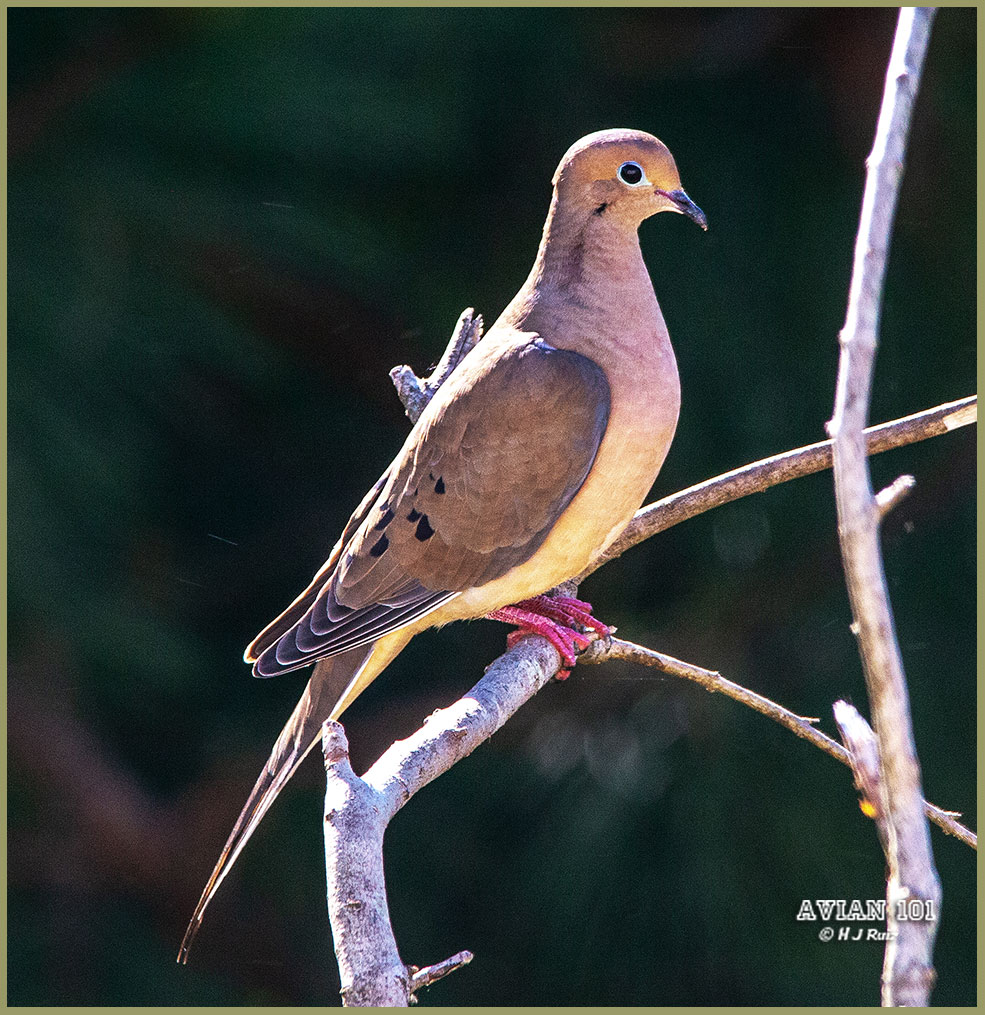
6 – Mourning Dove
HJ Ruiz – December 7th, 2023
Share this:

Panoramic Photography # 6

Field Sparrow
HJ Ruiz – December 6th, 2023
Share this:

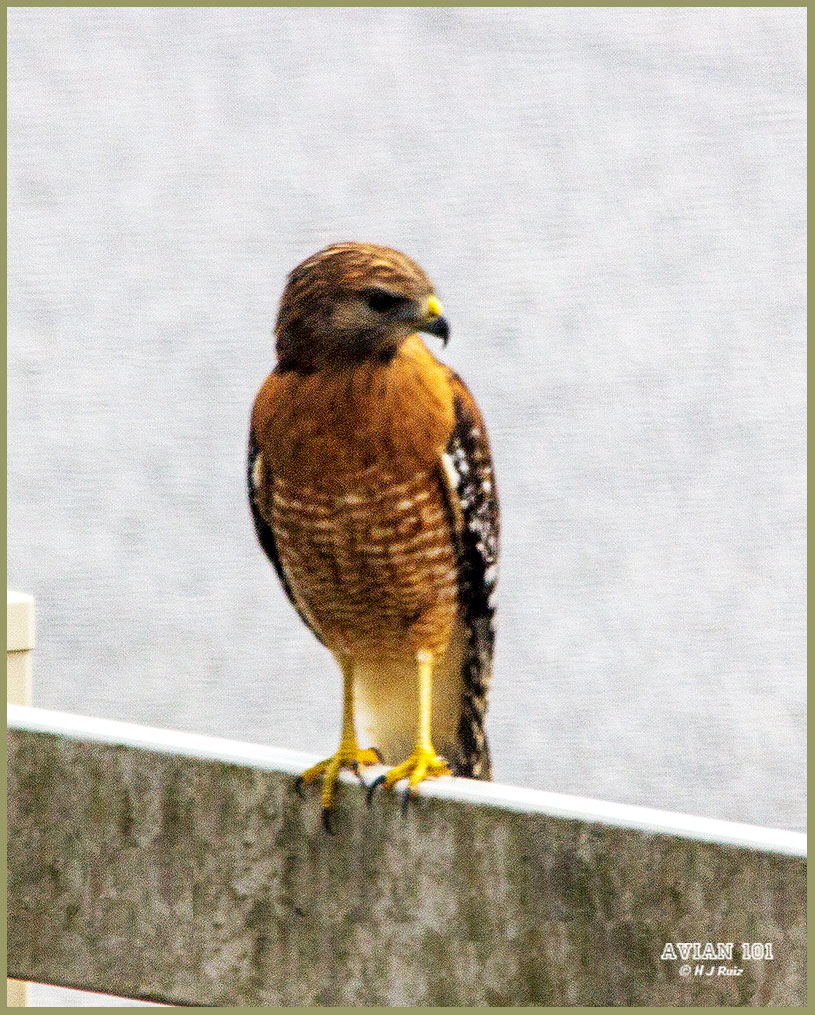
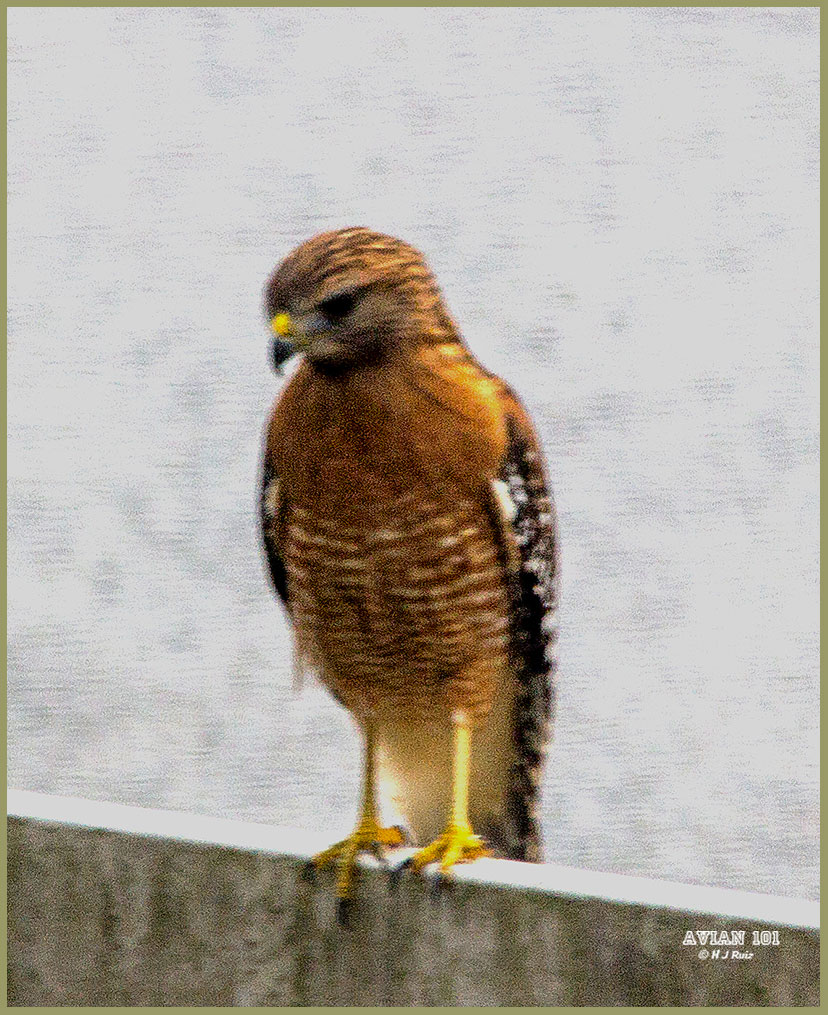
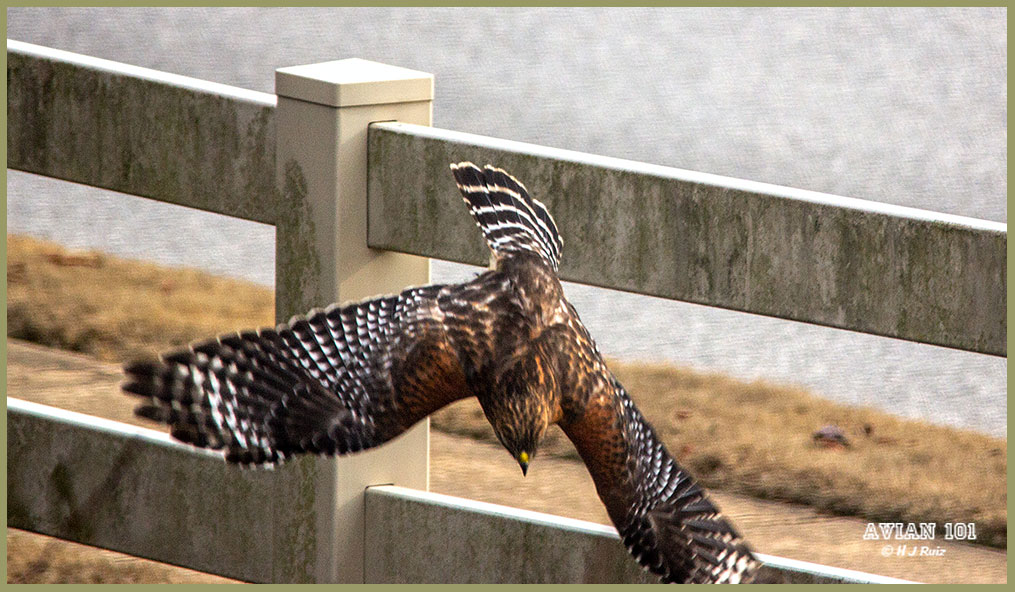
Red-shouldered Hawk
The Red-shouldered Hawk (Buteo lineatus) is a medium-sized buteo. Its breeding range spans eastern North America and along the coast of California and northern to northeastern-central Mexico. It is a permanent resident throughout most of its range, though northern birds do migrate, mostly to central Mexico. The main conservation threat to the widespread species is deforestation. Males are 38 to 58 cm (15 to 23 in) long and weigh on average 550 g (1.21 lb). Females are slightly larger at 47 to 61 cm (19 to 24 in) in length and a mean weight of 700 g (1.5 lb). The wingspan can range from 90 to 127 cm (35 to 50 in). Adult birds can vary in mass from 460 to 930 g (1.01 to 2.05 lb). Among standard measurements, the wing bone is 28–35 cm (11–14 in) long, the tail is 16–24 cm (6.3–9.4 in) long and the tarsus is 7.5–9 cm (3.0–3.5 in). Adults have brownish heads, reddish chests, and pale bellies with reddish bars. Their tails, which are quite long by Buteo standards, are marked with narrow white bars. Red “shoulders” are visible when the birds are perched. These hawks’ upper parts are dark with pale spots and they have long yellow legs. Western birds may appear more red, while Florida birds are generally paler. The wings of adults are more heavily barred on the upper side. Juvenile red-shouldered hawks are most likely to be confused with juvenile broad-winged hawks, but can be distinguished by their long tails, crescent-like wing markings, and a more flapping, Accipiter-like flight style. In direct comparison, it is typically larger and longer proportioned than the broad-wing, though is slightly smaller and more slender than most other common North American Buteo species. This bird is sometimes also confused with the widespread red-tailed hawk. That species is larger and bulkier, with more even-sized, broad wings, and is paler underneath, with a reddish tail often apparent. The red-tail is also more likely to soar steadily, with wings in a slight dihedral.
Photo Gallery
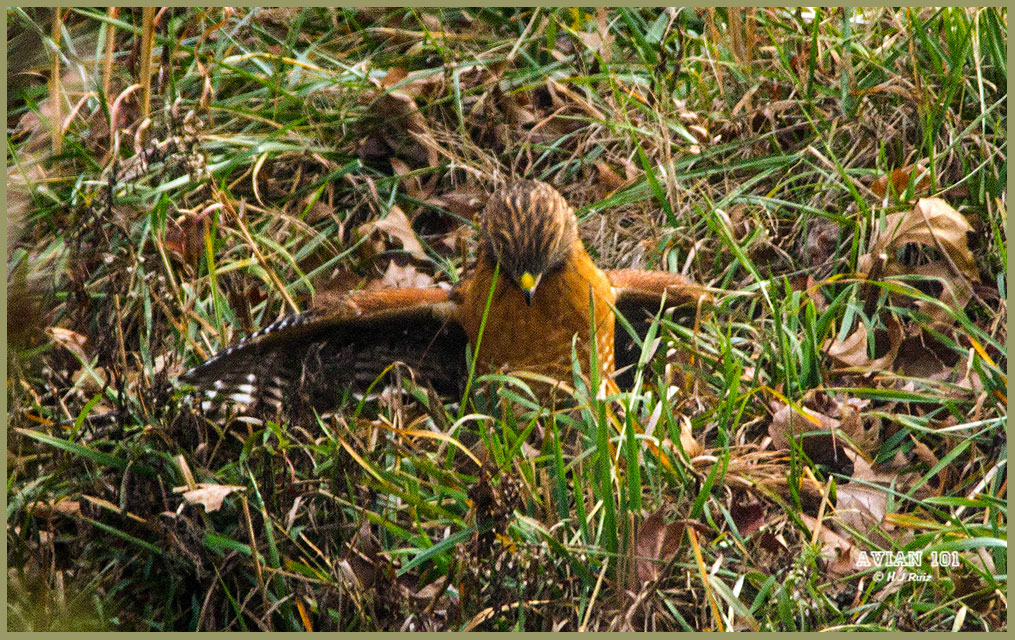
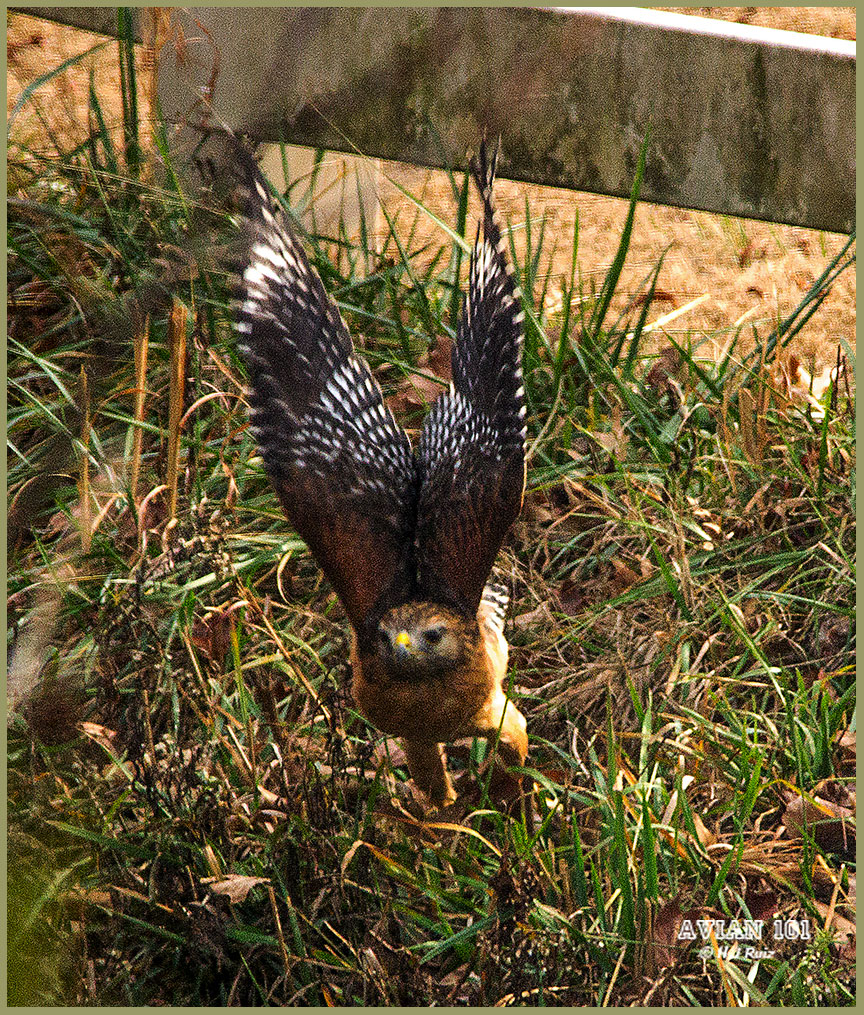
HJ Ruiz – December 5th, 2023
Share this:

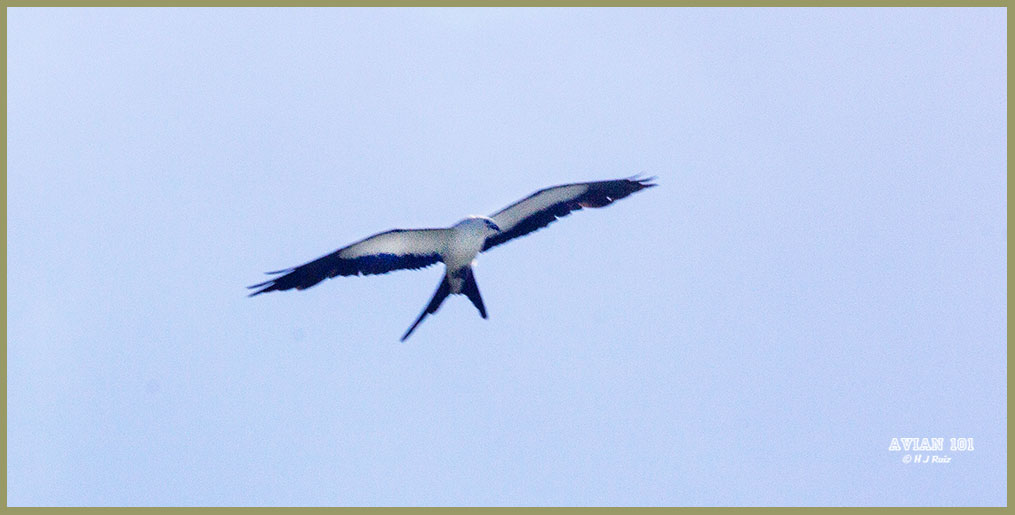
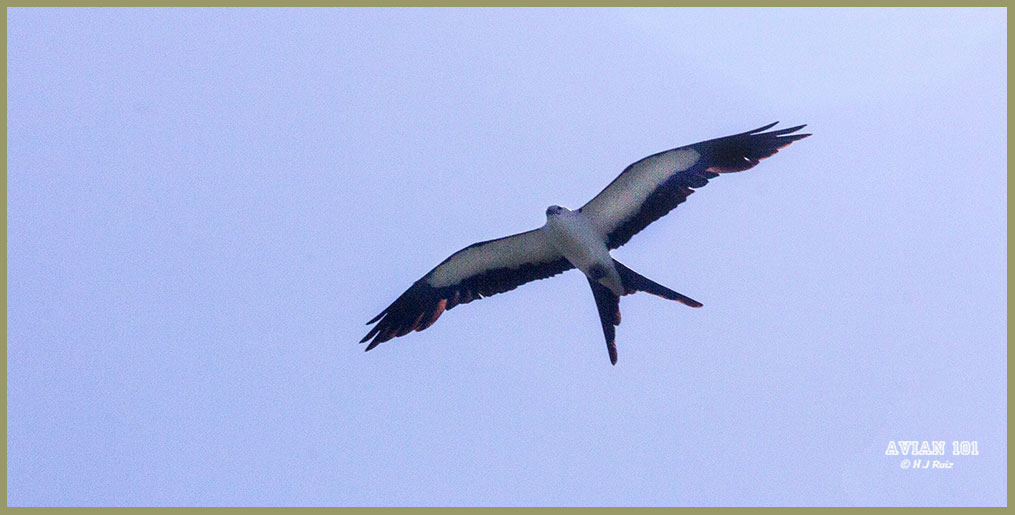
Swallow-tailed Kite
The Swallow-tailed Kite (Elanoides forficatus) is a pernine raptor which breeds from the southeastern United States to eastern Peru and northern Argentina. It is the only species in the genus Elanoides. Most North and Central American breeders winter in South America where the species is resident year round. The species is 50 to 68 cm (20 to 27 in) in length, with a wingspan of approximately 1.12–1.36 m (3.7–4.5 ft). Male and female individuals appear similar. The body weight is 310–600 g (11–21 oz). The body is a contrasting deep black and white. The flight feathers, tail, feet, bill are all black. Another characteristic is the elongated, forked tail at 27.5–37 cm (10.8–14.6 in) long, hence the name swallow-tailed. The wings are also relatively elongated, as the wing chord measures 39–45 cm (15–18 in). The tarsus is fairly short for the size of the bird at 3.3 cm (1.3 in). The body is a contrasting deep black and white. The upper side of the wings is black along with the, tail, feet, and bill. The underside of the wings is partly black and partly white. Young swallow-tailed kites are duller in color than the adults, and the tail is not as deeply forked. Sometimes a high-pitched chirp is emitted, though the birds mostly remain silent.
Photo Gallery
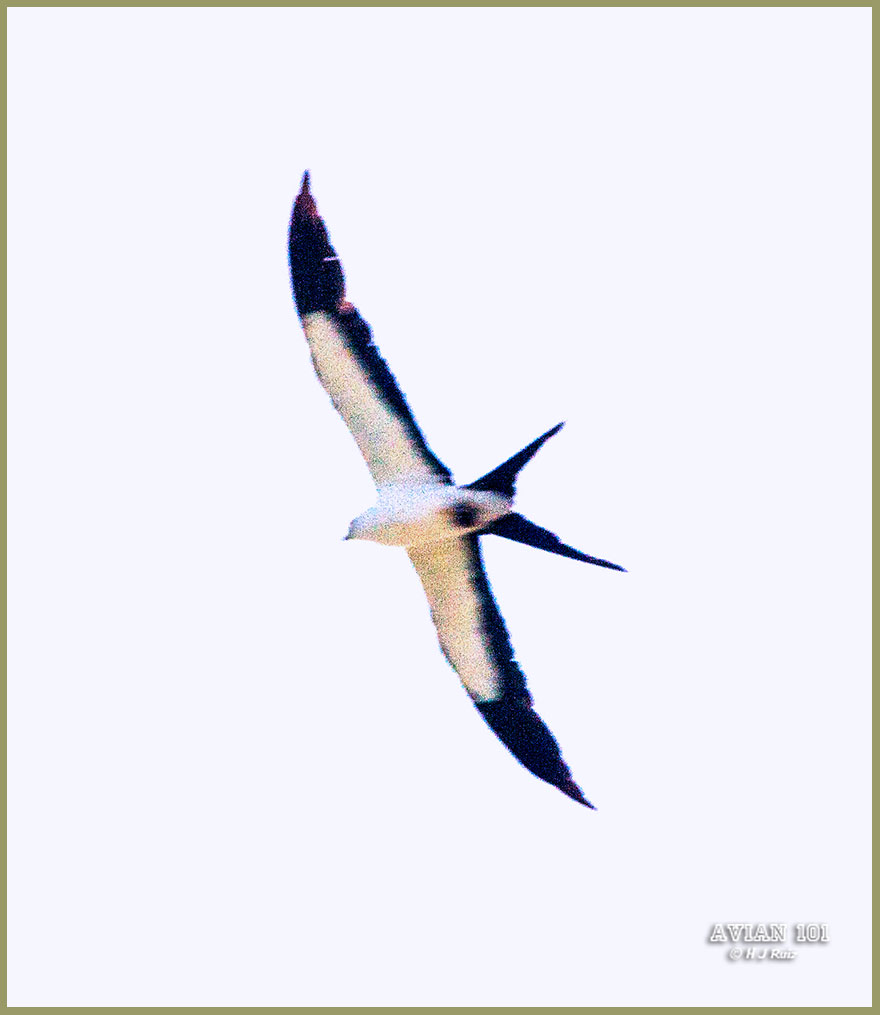
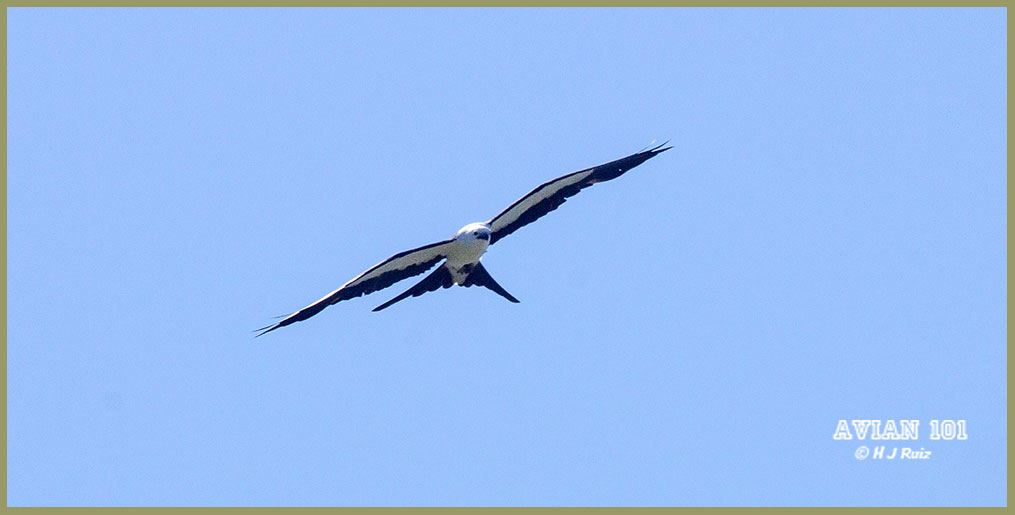

HJ Ruiz – December 3rd, 2023
Share this:

Read Past Reviews

Book # 69

Quote from the Author
“A good chuckle is healthy, it helps you break the monotony of a serious life.” ~ H.J. Ruiz
 H.J. Ruiz - Avian101
You must be logged in to post a comment.