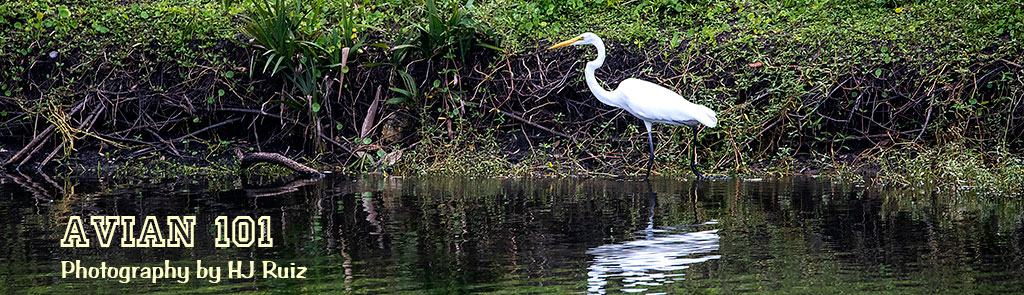
Photography of Birds – Set # 44
Set # 44
Canada Geese

Canada Geese
Extremely successful at living in human-altered areas, Canada geese have proven able to establish breeding colonies in urban and cultivated areas, which provide food and few natural predators. The success of this common park species has led to its often being considered a pest species because of its depredation of crops and its noise, droppings, aggressive territorial behavior towards both humans and other animals, and its habit of begging for food (caused by human hand feeding).
Yellow-crowned Night Heron
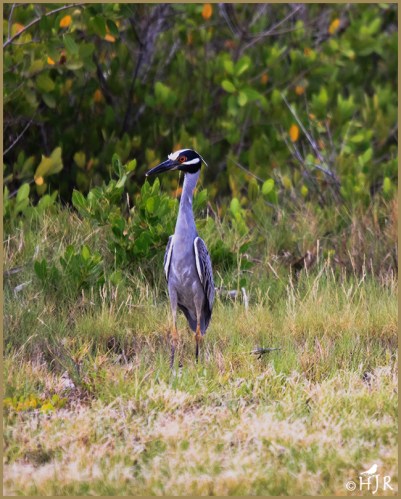
Yellow-crowned Night Heron
The yellow-crowned night heron looks for shallow water to live in: marshes, wooded swamps, and lakeshores for inland populations, and thickets, mangroves and cliff-bound coasts for coastal populations. It can also be found in areas that don’t always have enough water, but that gets flooded on a regular basis. Its habitat is closely linked to that of the crustaceans that make for most of its diet, and it tolerates freshwater, brackish water, and saltwater.
Another important habitat factor is nesting sites. The yellow-crowned night heron needs bushes or trees to build nests, although it will use rock ledges where vegetation is unavailable (for example, on cliffs).
© HJ Ruiz – Avian101
Share this:

Photography of Birds – Set # 43
Set # 43 (Local Birds)


Lately, I’ve seen more birds in my backyard when the sun is bright and the temperature warms the day a bit. II’ve seen also a brown rabbit and six squirrels which raid my feeders for seeds. I’m still waiting for the Ruby-throated Hummingbirds, I have the feeling that they will not come ’till is warmer. I’ve seen some House Finch flegelings, also European Starling, the Northern Mockingbirds have nestlings and I suspect that Eastern Bluebirds have babies too.
© HJ Ruiz – Avian101
Share this:

Photography of Birds – Set # 42
Set # 42
Brown Pelican
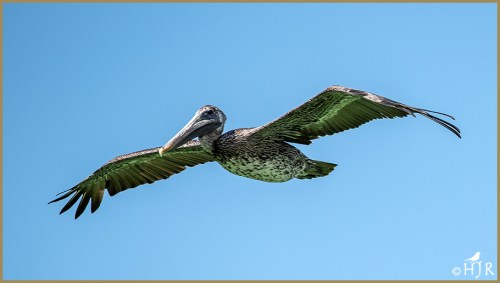
Brown Pelican
The brown pelican is a very gregarious bird; it lives in flocks of both sexes throughout the year.In level flight, brown pelicans fly in groups, with their heads held back on their shoulders and their bills resting on their folded necks. They may fly in a V formation, but usually in regular lines or single file, often low over the water’s surface. To exclude water from the nasal passage, they have narrower internal regions of the nostrils.
Anhinga
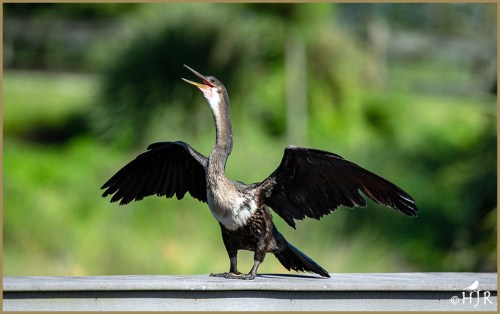
Anhinga
Anhingas swim with their webbed feet and pursue their prey, fish, under water and spear their prey by rapidly stretching out their neck. They come up to handle and swallow fish. Unlike ducks, ospreys and pelicans which coat their feathers with oil from their uropygial gland, the anhinga does not have waterproof feathers. Their feathers get soaked upon immersion in water. Therefore, they cannot stay floating on water for long periods of time. Their dense bones, wetted plumage and neutral buoyancy in water, allows them to fully submerge and search for underwater prey.
© HJ Ruiz – Avian101
Share this:

Photography of Birds – Set # 41
Set # 41 (Local Birds)


Our weather has been acting really crazy, It’s cold overnight and morning, then warms up to a difference of over 40º F!
It doesn’ matter to the birds, they get hungry and come to the feeders. One day I had six squirrels at the same time raiding the feeders.
I just hope that all my fellow readers are well and coping with the pandemic situation the best way possible.
© HJ Ruiz – Avian101
Share this:

Read Past Reviews

Book # 69
Quote from the Author
“A good chuckle is healthy, it helps you break the monotony of a serious life.” ~ H.J. Ruiz


You must be logged in to post a comment.