Photography of Birds – Set # 80
Set # 80
Brown-headed Cowbird (F)
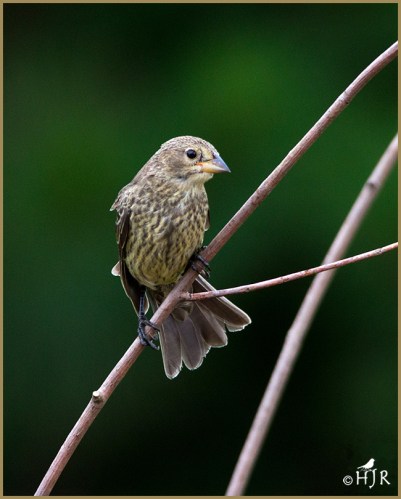
Brown-headed Cowbird (F)
Brown-headed Cowbird (M)
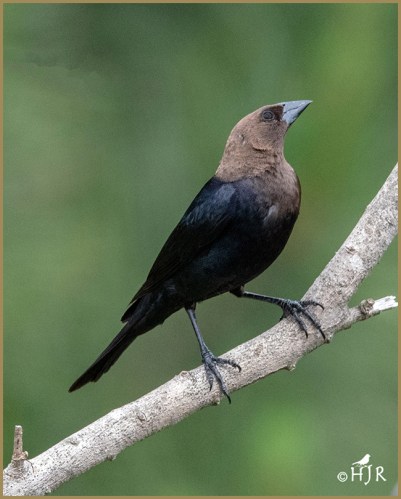
Brown-headed Cowbird (M)
The brown-headed cowbird is an obligate brood parasite: it lays its eggs in the nests of other small passerines (perching birds), particularly those that build cup-like nests. The brown-headed cowbird eggs have been documented in nests of at least 220 host species, including hummingbirds and raptors. The young cowbird is fed by the host parents at the expense of their own young. Brown-headed cowbird females can lay 36 eggs in a season. More than 140 different species of birds are known to have raised young cowbirds.
© HJ Ruiz – Avian101
Share this:

Framed Memories # 3
-
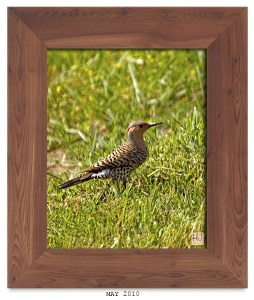
- Northern Flicker
-

- Boat-tailed Grackle
© HJ Ruiz – Avian101
Share this:

Photography of Birds – Set # 79
Set # 79
House Finch ( Fledgling)

House Finch (Fledgling)
House Finch (M)

House Finch (M)
The male also feeds the female during breeding and incubation of the eggs, and raising of the young, and the male is the primary feeder of the fledgelings (who can be differentiated from the females by the pin feathers remaining on their heads).
© HJ Ruiz – Avian101
Share this:

Photography of Birds – Set # 78
Set # 78
Common Grackle
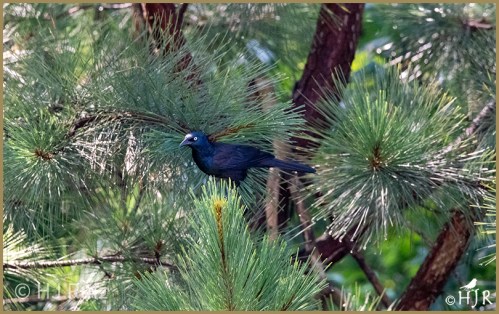
Common Grackle
The Common Grackle forages on the ground, in shallow water, or in shrubs; it may steal food from other birds. It is omnivorous, eating insects, minnows, frogs, eggs, berries, seeds, grain, and even small birds and mice. Grackles at outdoor eating areas often wait eagerly until an unwary bird drops some food. They rush forward and try to grab it, often snatching food out of the beak of another bird.
Brown Thrasher
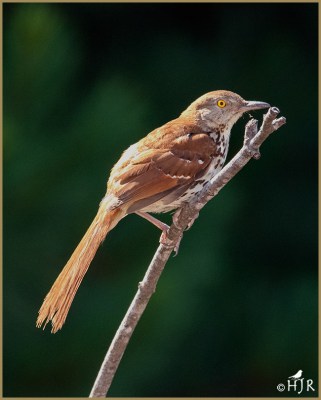
Brown Thrasher
This bird is omnivorous, which has a diet that includes insects, berries, nuts and seeds, as well as earthworms, snails, and sometimes lizards and frogs. Across seasons and its breeding range, it was found 63% of stomach contents were made of animal matter, the remaining 37% being plant material. During the breeding season, the diet consists primarily of beetles, grasshoppers, and other arthropods, and fruits, nuts and seeds.
© HJ Ruiz – Avian101
Share this:

Read Past Reviews

Book # 69
Quote from the Author
“A good chuckle is healthy, it helps you break the monotony of a serious life.” ~ H.J. Ruiz


You must be logged in to post a comment.