
Snowy Egret
The Snowy Egret (Egretta thula) is a small white heron. The genus name comes from Provençal French for the little egret, aigrette, which is a diminutive of aigron, ‘heron’. The species name thula is the Araucano term for the black-necked swan, applied to this species in error by Chilean naturalist Juan Ignacio Molina in 1782. The snowy egret is the American counterpart to the very similar Old World little egret, which has become established in the Bahamas. At one time, the plumes of the snowy egret were in great demand as decorations for women’s hats. They were hunted for these plumes and this reduced the population of the species to dangerously low levels. Now protected in the United States by law, under the Migratory Bird Treaty Act, this bird’s population has rebounded. Adult snowy egrets are entirely white apart from the yellow lores between the long black bill and the eye, black legs, and bright yellow feet. The nape and neck bear long, shaggy plumes known as aigrettes. Immature snowy egrets have duller, greenish legs.
Measurements
Measurements:
- Length: 22.1–26.0 in (56–66 cm)
- Weight: 13.1 oz (370 g)
- Wingspan: 39.4 inches (100 cm)
Photo Gallery





HJ Ruiz – October 3rd, 2023
Share this:

Sandhill Crane
The Sandhill Crane (Antigone canadensis) is a species of large crane of North America and extreme northeastern Siberia. The common name of this bird refers to habitat like that at the Platte River, on the edge of Nebraska’s Sandhills on the American Great Plains. Sandhill Cranes are known to hang out at the edges of bodies of water, especially in the Central Florida region. The central Platte River valley in Nebraska is the most important stopover area for the nominotypical subspecies, the lesser sandhill crane (A. c. canadensis), with up to 450,000 of these birds migrating through annually. Adults are gray overall; during breeding, their plumage is usually much worn and stained, particularly in the migratory populations, and looks nearly ochre. The average weight of the larger males is 4.57 kg (10.1 lb), while the average weight of females is 4.02 kg (8.9 lb), with a range of 2.7 to 6.7 kg (6.0 to 14.8 lb) across the subspecies. Sandhill cranes have red foreheads, white cheeks, and long, dark, pointed bills. In flight, their long, dark legs trail behind, and their long necks keep straight. Immature birds have reddish-brown upperparts and gray underparts. The sexes look alike. Sizes vary among the different subspecies; the average height of these birds is around 80 to 136 cm (2 ft 7 in to 4 ft 6 in). Their wing chords are typically 41.8–60 cm (16.5–23.6 in), tails are 10–26.4 cm (3.9–10.4 in), the exposed culmens are 6.9–16 cm (2.7–6.3 in) long, and the tarsi measure 15.5–26.6 cm (6.1–10.5 in). Wingspan is 78.7 in (200 cm).
Photo Gallery
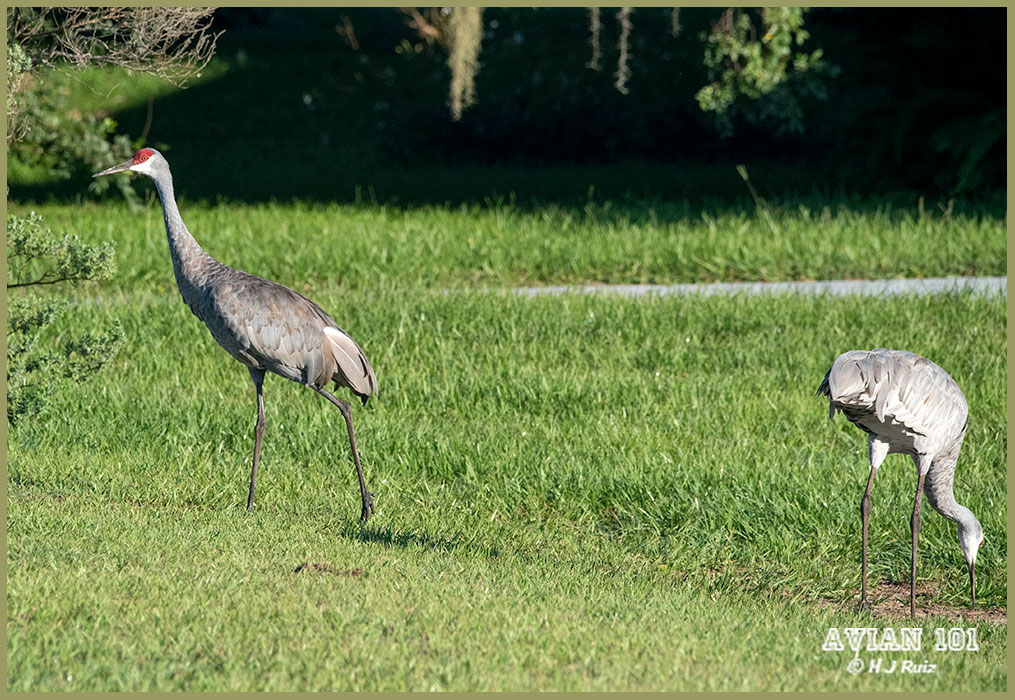
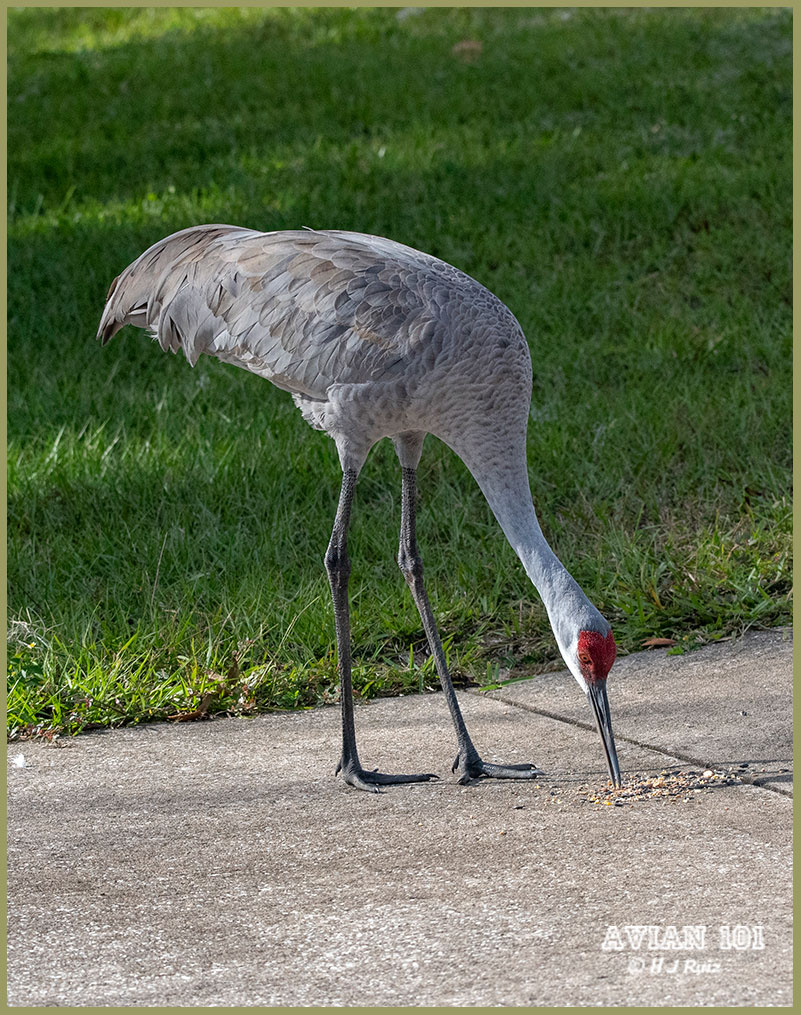
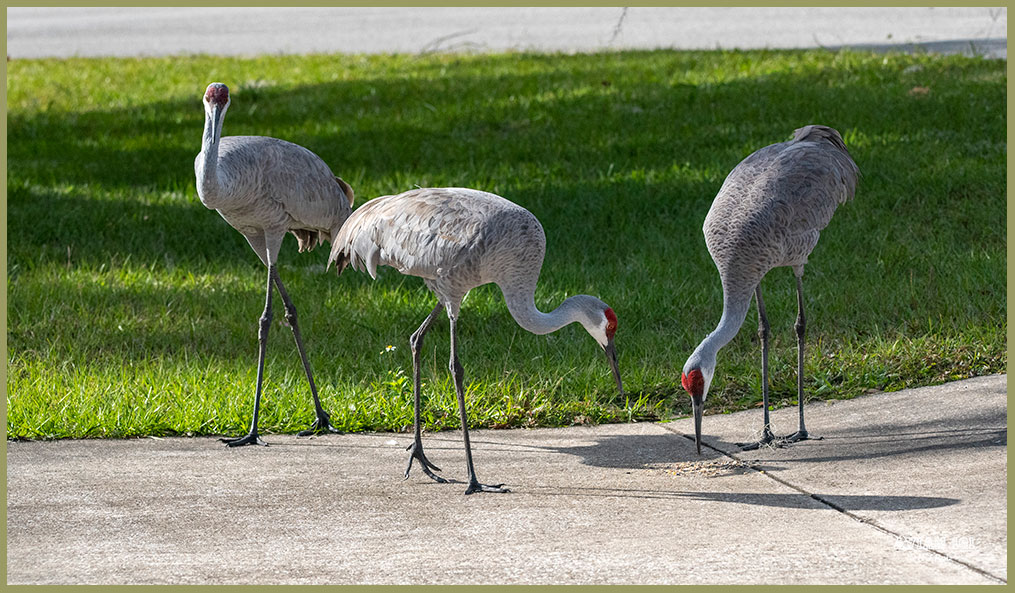
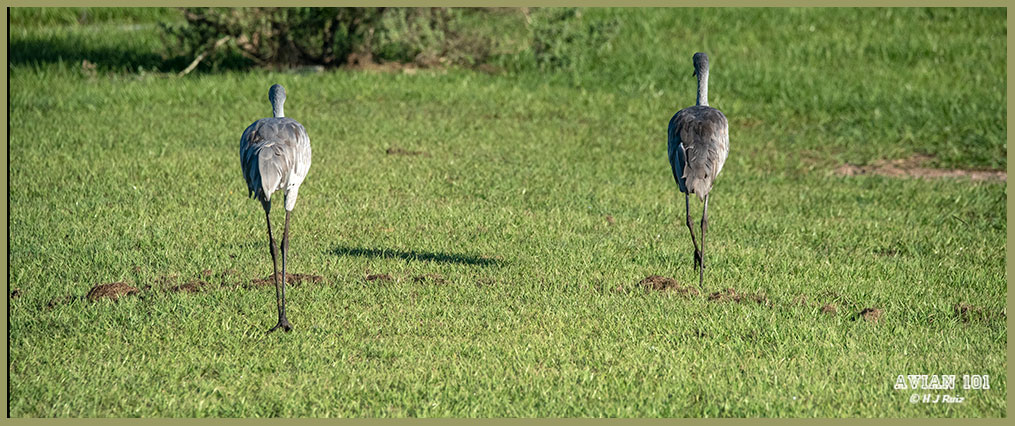
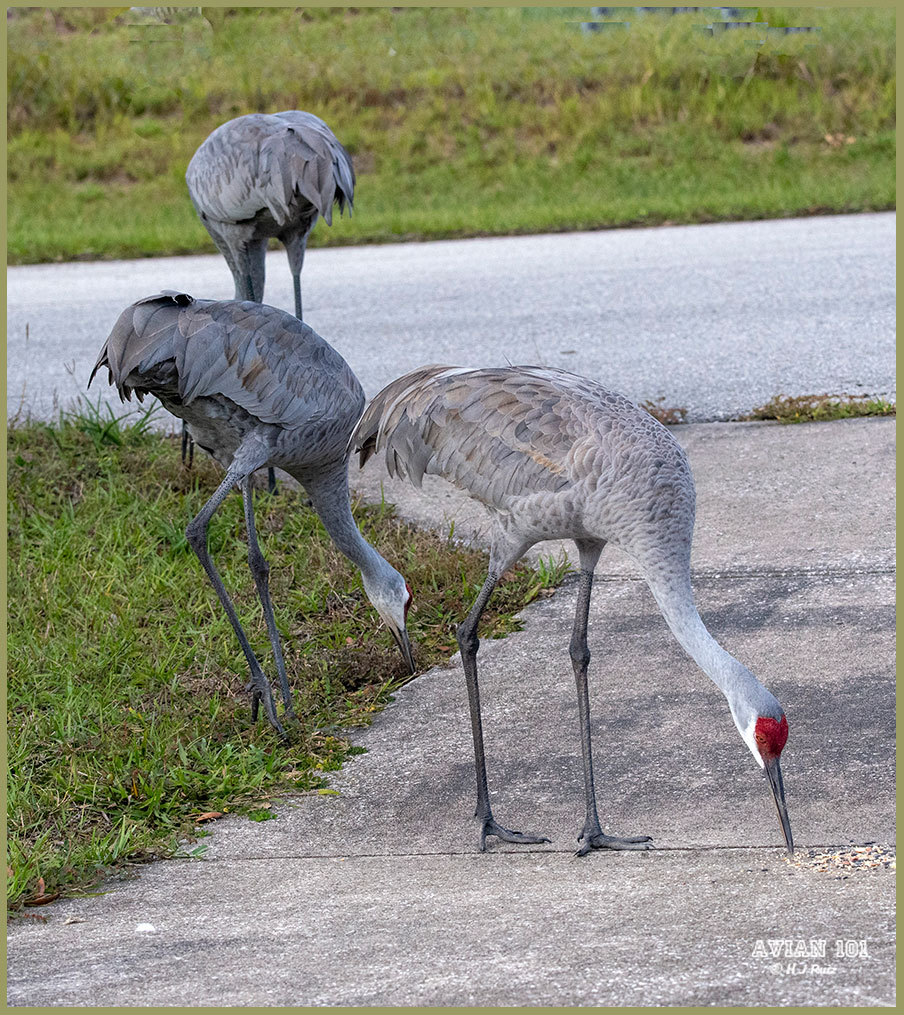
HJ Ruiz – October 1st, 2023
Share this:

Moorhen
Moorhens—(Gallinula tenebrosa) sometimes called marsh hens or dusky moorhens—are medium-sized water birds that are members of the rail family (Rallidae). Most species are placed in the genus Gallinula, Latin for “little hen”. They are close relatives of coots. They are often referred to as (black) gallinules. Recently, one of the species of Gallinula was found to have enough differences to form a new genus Paragallinula with the only species being the lesser moorhen (Paragallinula angulata).
Two species from the Australian region, sometimes separated in Tribonyx, are called “native hens” (also native-hen or nativehen). The native hens differ visually by shorter, thicker and stubbier toes and bills, and longer tails that lack the white signal pattern of typical moorhens.These rails are mostly brown and black with some white markings in plumage colour. Unlike many of the rails, they are usually easy to see because they feed in open water margins rather than hidden in reedbeds.
They have short rounded wings and are weak fliers, although usually capable of covering long distances. The common moorhen in particular migrates up to 2,000 km (1,200 mi) from some of its breeding areas in the colder parts of Siberia. Those that migrate do so at night. The Gough moorhen on the other hand is considered almost flightless; it can only flutter some metres. As is common in rails, there has been a marked tendency to evolve flightlessness in island populations.
Moorhens can walk very well on their strong legs, and have long toes that are well adapted to soft uneven surfaces.
These birds are omnivorous, consuming plant material, small rodents, amphibians and eggs. They are aggressively territorial during the breeding season, but are otherwise often found in sizeable flocks on the shallow vegetated lakes they prefer.
Photo Gallery

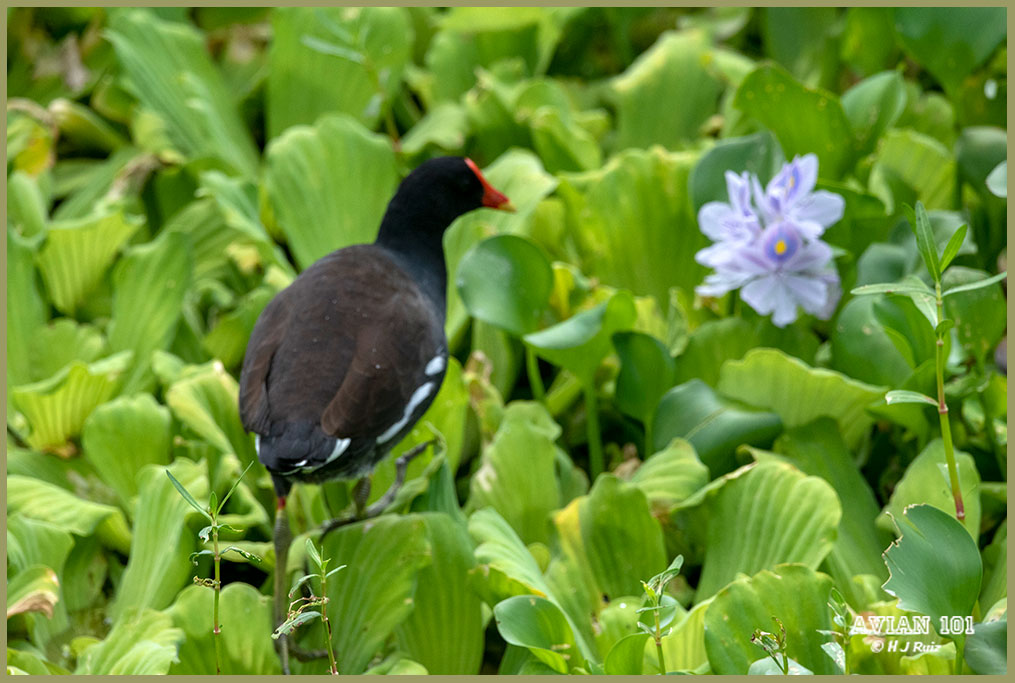
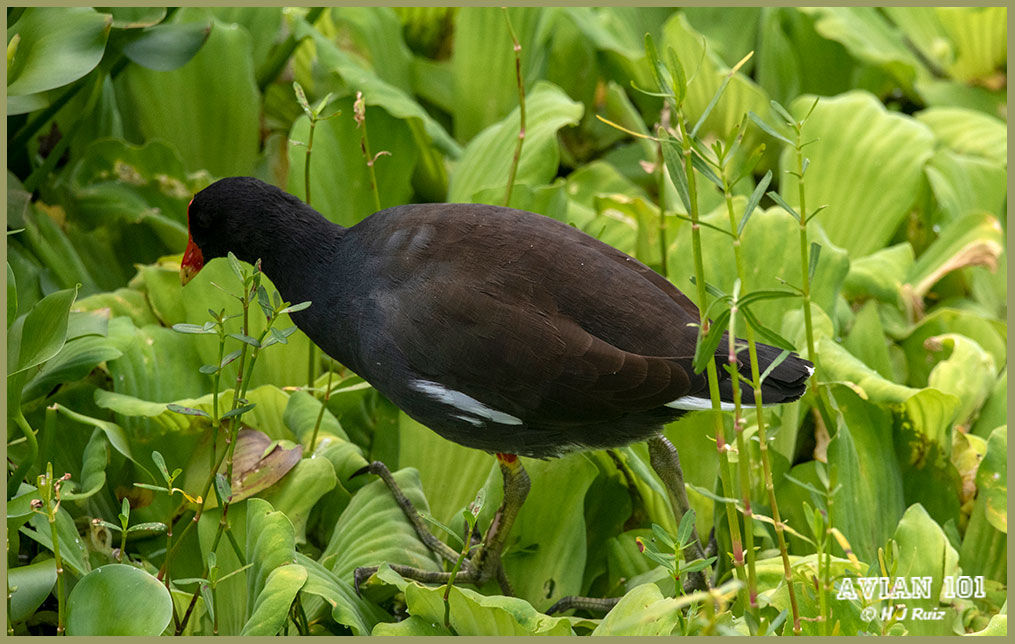
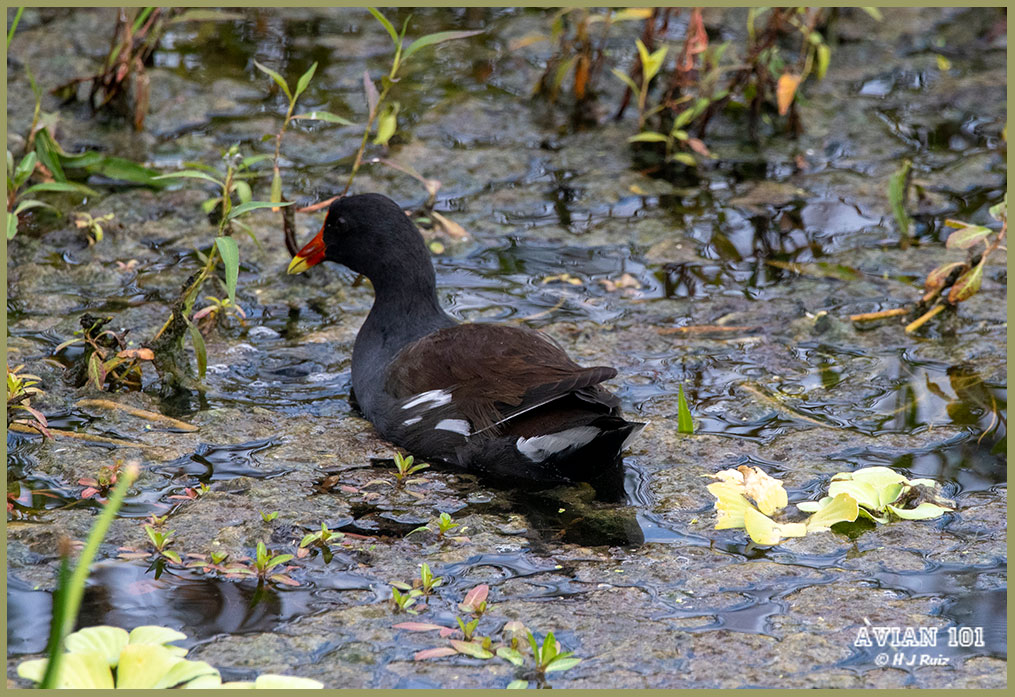

HJ Ruiz – September 29th, 2023
Share this:

American White Ibis
The American White ibis (Eudocimus albus) is a species of bird in the ibis family, Threskiornithidae. It is found from Virginia via the Gulf Coast of the United States south through most of the coastal New World tropics. This particular ibis is a medium-sized bird with an overall white plumage, bright red-orange down-curved bill and long legs, and black wing tips that are usually only visible in flight. Males are larger and have longer bills than females. The breeding range runs along the Gulf and Atlantic Coast, and the coasts of Mexico and Central America. Outside the breeding period, the range extends further inland in North America and also includes the Caribbean. It is also found along the northwestern South American coastline in Colombia and Venezuela. Populations in central Venezuela overlap and interbreed with the scarlet ibis. The two have been classified by some authorities as a single species.The white plumage and pink facial skin of adult American white ibises are distinctive. Adults have black wingtips that are usually only visible in flight. In non-breeding condition the long downcurved bill and long legs are bright red-orange. During the first ten days of the breeding season, the skin darkens to a deep pink on the bill and an almost purple-tinted red on the legs. It then fades to a paler pink, and the tip of the bill becomes blackish. It is difficult to determine the sex of an adult American white ibis from its external appearance, since the sexes have similar plumage] However, there is sexual dimorphism in size and proportion as males are significantly larger and heavier than females and have longer and stouter bills. This species is moderately large for an ibis but is relatively short legged, compact and bulky for a large wader. A study of the American white ibis in southern Florida yielded weight ranges of 872.9 to 1,261 g (1.924 to 2.780 lb) for males and 592.7 to 861.3 g (1.307 to 1.899 lb) for females, with average weights of 1,036.4 g (2.285 lb) for males and 764.5 g (1.685 lb) for females. The length of adult female and male birds ranges from 53 to 70 cm (21 to 28 in) with a 90 to 105 cm (35 to 41 in) wingspan. Among standard measurements, American white ibis measure 20.5–31 cm (8.1–12.2 in) along each wing, have a tail measurement of 9.3–12.2 cm (3.7–4.8 in), a tarsus of 6.75–11.3 cm (2.66–4.45 in) and a culmen of 11–16.9 cm (4.3–6.7 in).
Photo Gallery


HJ Ruiz – September 28th, 2023
Share this:

Read Past Reviews

Book # 69

Quote from the Author
“A good chuckle is healthy, it helps you break the monotony of a serious life.” ~ H.J. Ruiz
 H.J. Ruiz - Avian101
You must be logged in to post a comment.