
Boat-Tailed Grackle
The Boat-tailed Grackle (Quiscalus major) is a passerine bird of the family Icteridae found as a permanent resident on the coasts of the Southeastern United States. The male boat-tailed grackle is 37–43 cm (15–17 in) long and weighs 165–250 g (5.8–8.8 oz). Adult males have entirely iridescent black plumage, a long dark bill, a pale yellowish or brown iris, and a long keel-shaped tail. The adult female is much smaller at 26–33 cm (10–13 in) long and a weight of 90–115 g (3.2–4.1 oz). She is also distinguished by her shorter tail and tawny-brown coloration, which covers the body apart from the darker wings and tail. The wingspan in adult birds is 39–50 cm (15–20 in). In standard measurements, this species measures 13–20 cm (5.1–7.9 in) along the wing bone, 11–20 cm (4.3–7.9 in) in tail length, 2–4.2 cm (0.79–1.65 in) along the culmen, and 3.6–5.8 cm (1.4–2.3 in) along the tarsus. On average, the boat-tailed grackle weighs about 10% more than the closely related great-tailed grackle, although the male great-tailed grackle has an even longer tail. The boat-tailed grackle is found in coastal saltwater marshes and, in Florida, also on inland waters. In salt marsh areas, least bitterns will often associate with and make mixed colonies with grackles. Boat-tailed grackles have established significant populations in several United States Gulf Coast cities and towns, where they can be found foraging in trash bins, dumpsters, and parking lots.
Photo Gallery

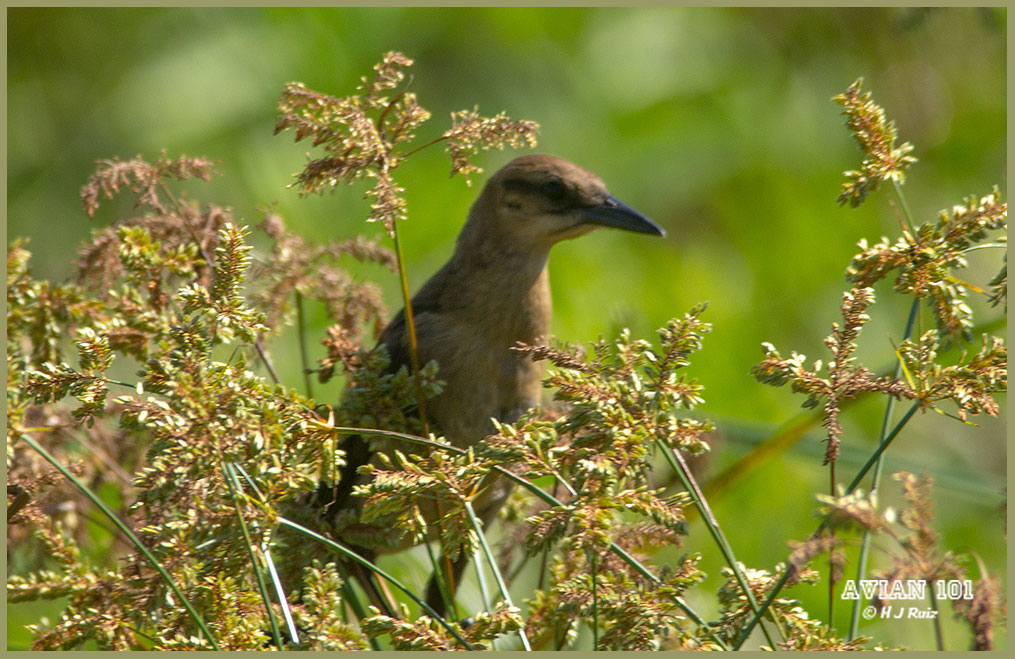

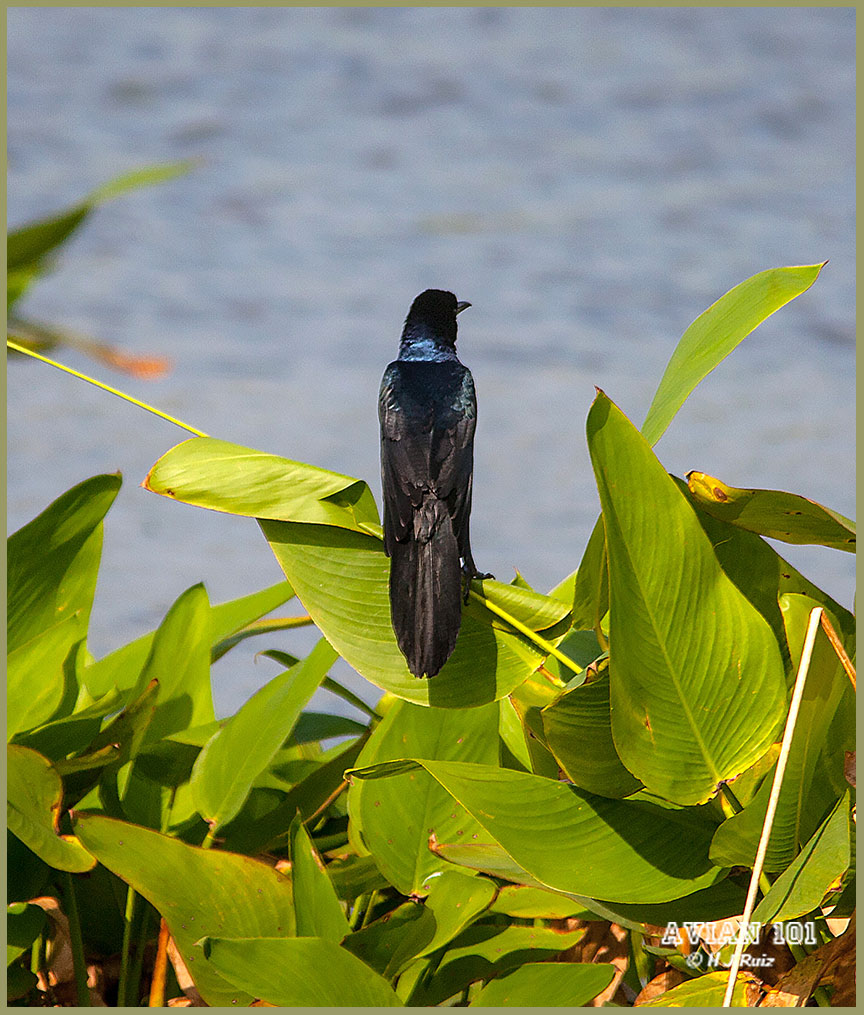

HJ Ruiz – October 9th, 2023
Share this:

Double Crested Cormorant
The Double-Crested Cormorant (Nannopterum auritum) is a member of the cormorant family of water birds. It is found near rivers and lakes, and in coastal areas, and is widely distributed across North America, from the Aleutian Islands in Alaska down to Florida and Mexico. Measuring 70–90 cm (28–35 in) in length, it is entirely black except for a bare patch of orange-yellow facial skin and some extra plumage that it exhibits in the breeding season, when it grows a double crest in which black feathers are mingled with white. Five subspecies are recognized. It mainly eats fish and hunts by swimming and diving. Its feathers, like those of all cormorants, are not waterproof and it must spend time drying them out after spending time in the water. Once threatened by the use of DDT, the numbers of this bird have increased markedly in recent years. he double-crested cormorant is a large waterbird with a stocky body, long neck, medium-sized tail, webbed feet, and a medium-sized hooked bill. It has a body length of between 70 and 90 cm (28 and 35 in) long, with a wingspan of between 114 and 123 cm (45 and 48 in). Double-crested cormorants weigh between 1.2 and 2.5 kg (2.6 and 5.5 lb). Males and females do not display sexual dimorphism.
Photo Gallery
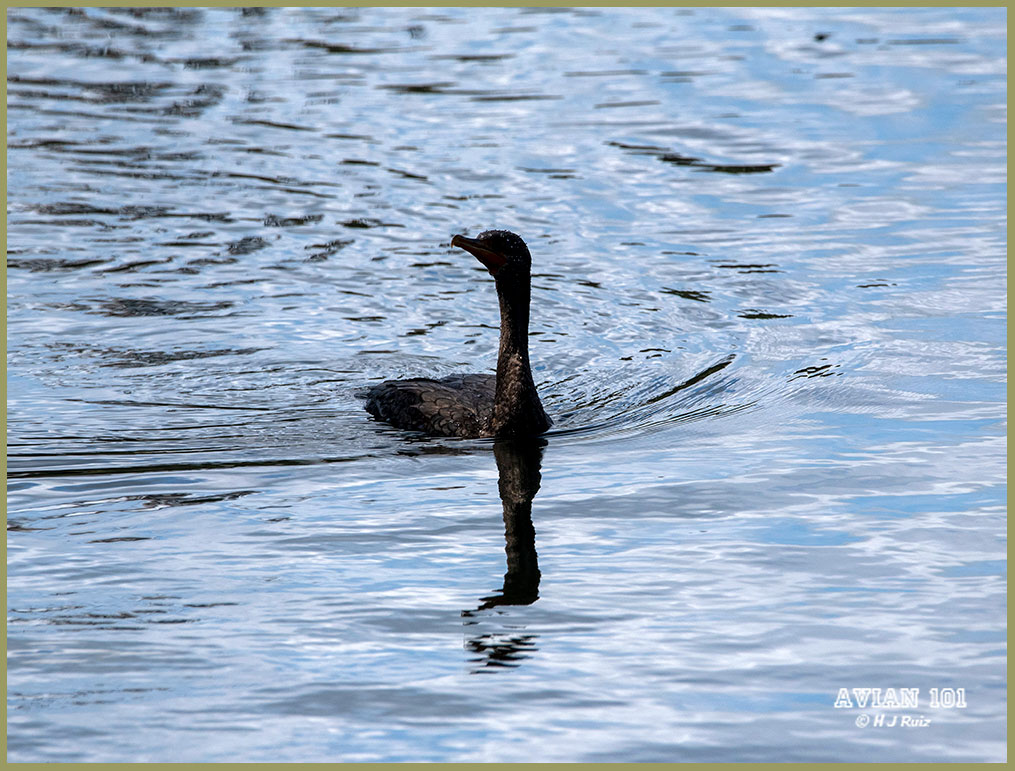
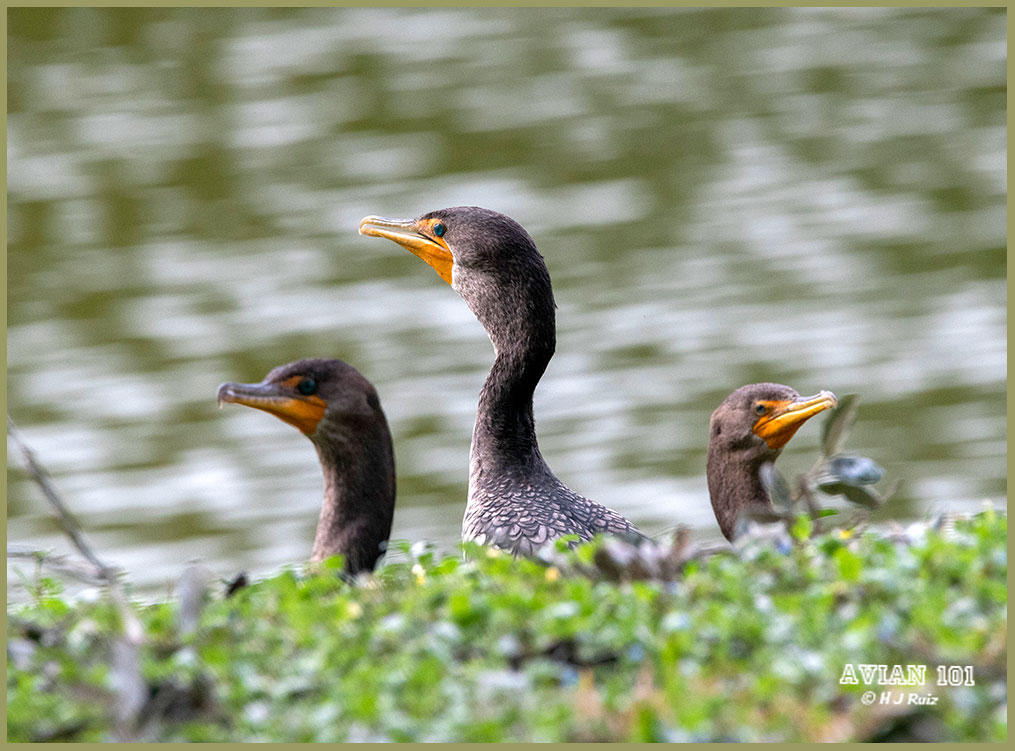
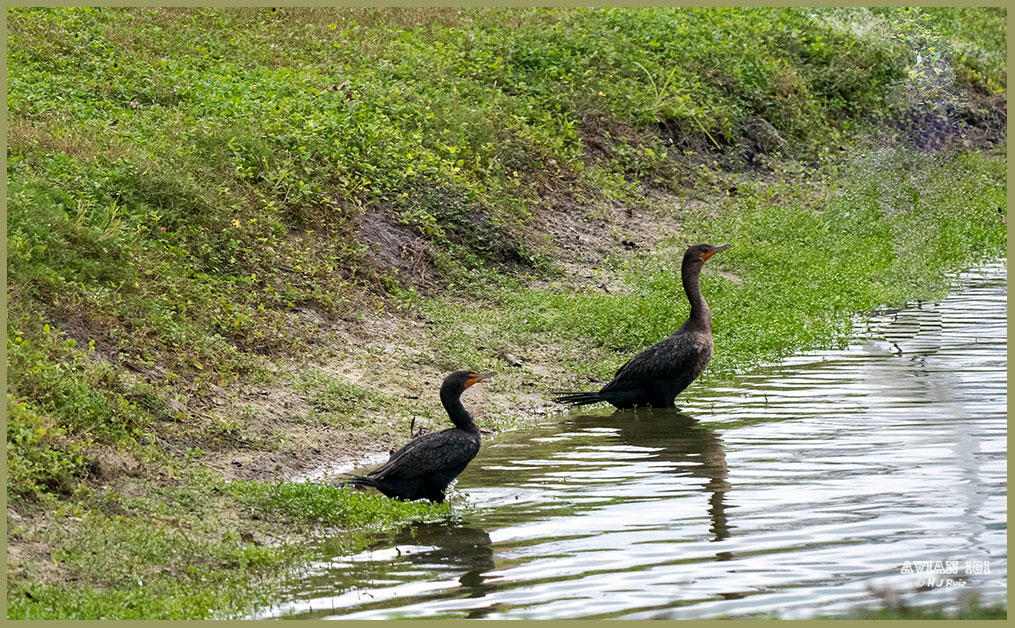
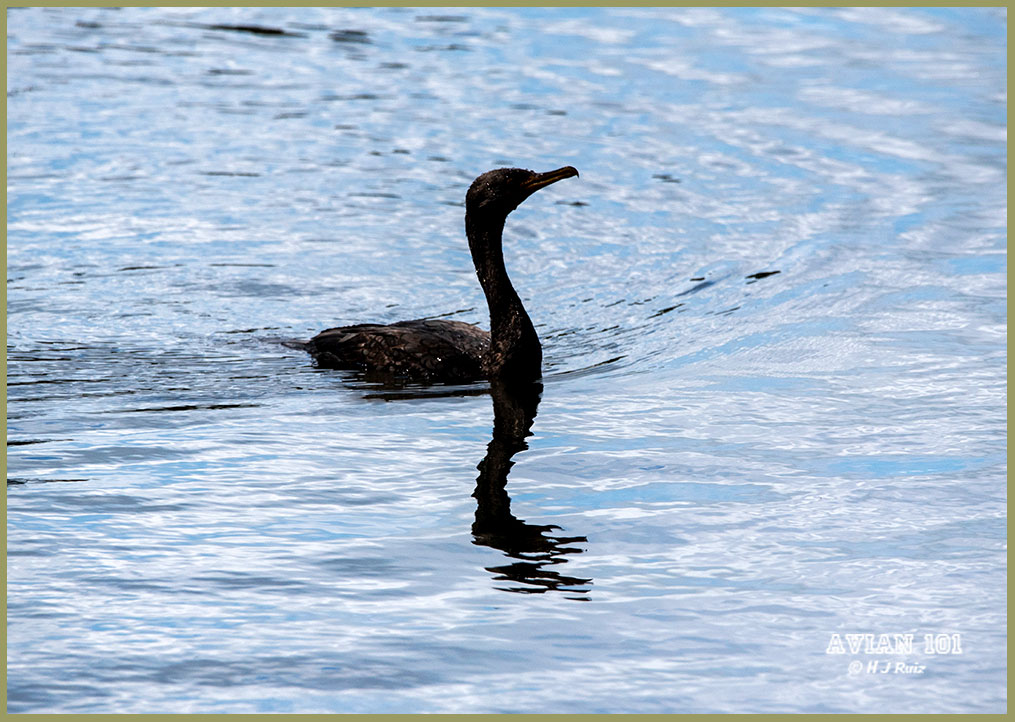
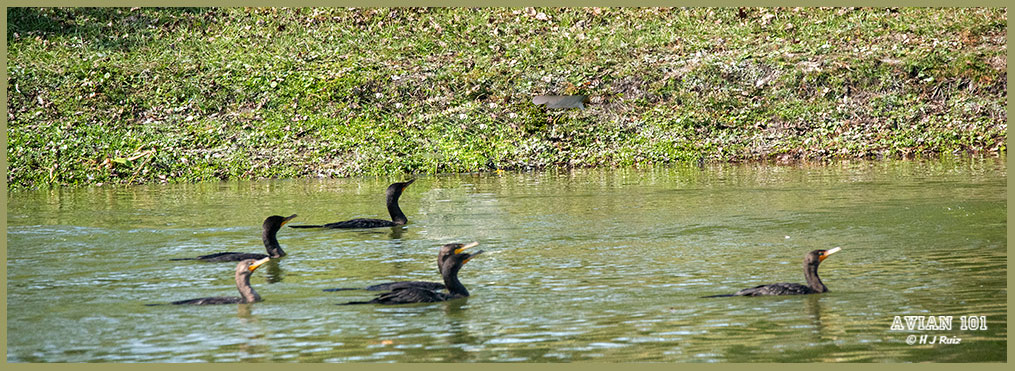
HJ Ruiz – October 8th, 2023
Share this:

Muscovy Duck
The Muscovy Duck (Cairina moschata) is a duck native to the Americas, from the Rio Grande Valley of Texas and Mexico south to Argentina and Uruguay. Feral Muscovy ducks are found in New Zealand, Australia, and in Central and Eastern Europe. Small wild and feral breeding populations have also established themselves in the United States, particularly in Florida, Louisiana, Massachusetts, the Big Island of Hawaii, as well as in many other parts of North America, including southern Canada t is a large duck, with the males about 76 cm (30 in) long, and weighing up to 7 kg (15 lb). Females are noticeably smaller, and only grow to 3 kg (6.6 lb), roughly half the males’ size. The bird is predominantly black and white, with the back feathers being iridescent and glossy in males, while the females are more drab. The amount of white on the neck and head is variable, as well as the bill, which can be yellow, pink, black, or any mixture of these colors. It may have white patches or bars on the wings, which become more noticeable during flight. Both sexes have pink or red wattles around the bill, those of the male being larger and more brightly colored.
Photo Gallery
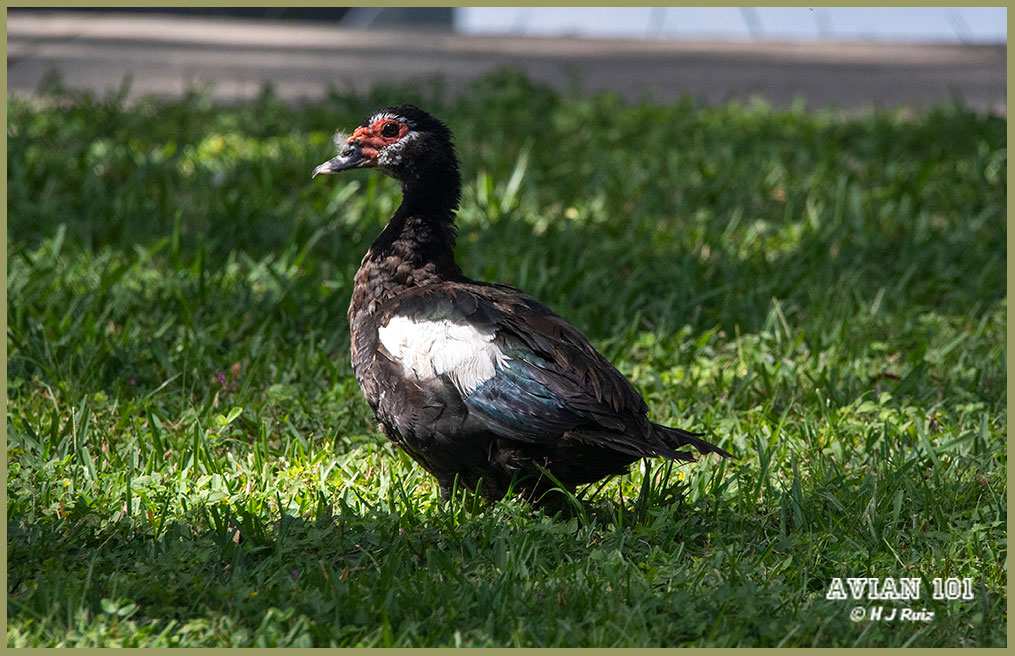


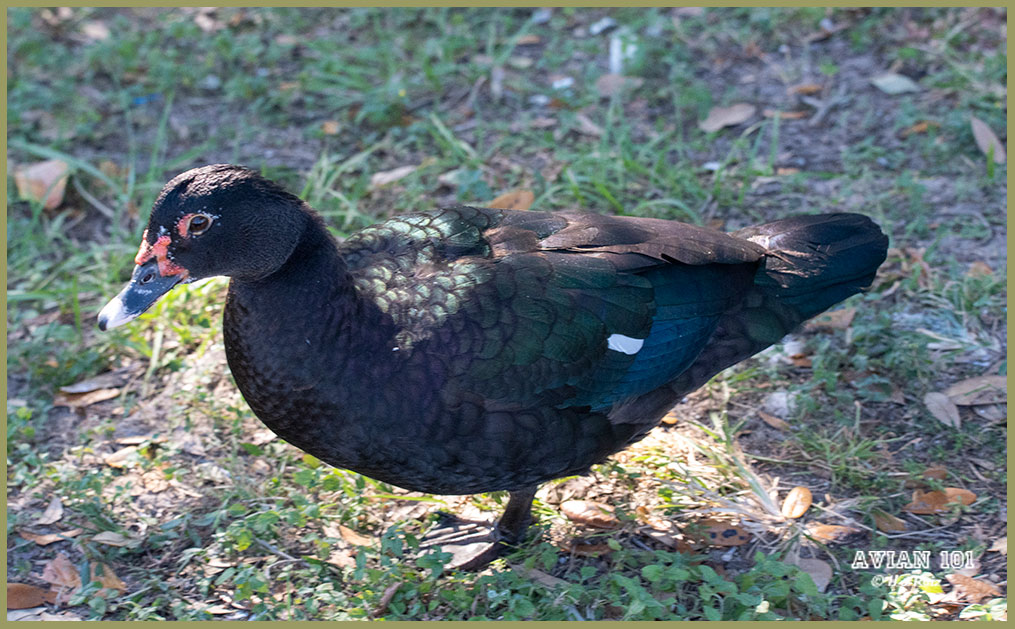
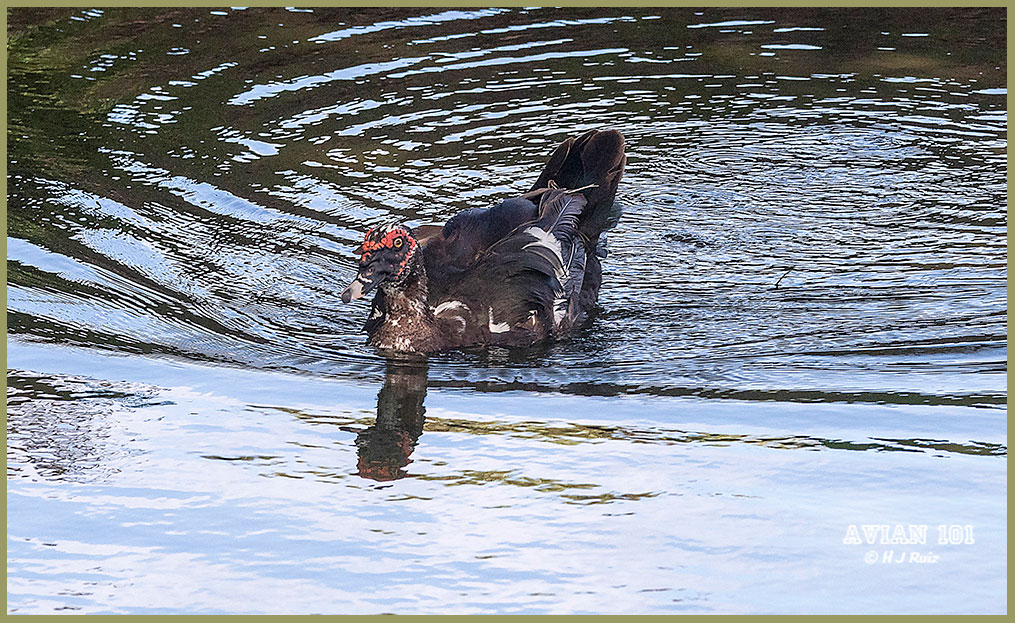
HJ Ruiz – October 6th, 2023
Share this:

Great Blue Heron
The Great Blue Heron (Ardea herodias) is a large wading bird in the heron family Ardeidae, common near the shores of open water and in wetlands over most of North and Central America, as well as far northwestern South America, the Caribbean and the Galápagos Islands. It is a rare vagrant to coastal Spain, the Azores, and areas of far southern Europe. An all-white population found in south Florida and the Florida Keys is known as the great white heron. Debate exists about whether this represents a white color morph of the great blue heron, a subspecies of it, or an entirely separate species. The great blue heron is the largest heron native to North America. Among all extant herons, it is surpassed in size only by the goliath heron (Ardea goliath) and the white-bellied heron (Ardea insignis). It exhibits a minor degree of sexual dimorphism; males are slightly larger than females, but otherwise the sexes are not easily outwardly distinguishable. It has head-to-tail length of 91–137 cm (36–54 in), a wingspan of 167–201 cm (66–79 in), a height of 115–138 cm (45–54 in), and a weight of 1.82–3.6 kg (4.0–7.9 lb). In British Columbia, adult males averaged 2.48 kg (5.5 lb) and adult females 2.11 kg (4.7 lb). In Nova Scotia and New England, adult herons of both sexes averaged 2.23 kg (4.9 lb), while in Oregon, both sexes averaged 2.09 kg (4.6 lb) Thus, great blue herons are roughly twice as heavy as great egrets (Ardea alba), although only slightly taller than them, but they weigh only about half as much as a large goliath heron.
Photo Gallery


HJ Ruiz – October 5th, 2023
Share this:

Read Past Reviews

Book # 69
Quote from the Author
“A good chuckle is healthy, it helps you break the monotony of a serious life.” ~ H.J. Ruiz
 H.J. Ruiz - Avian101
You must be logged in to post a comment.