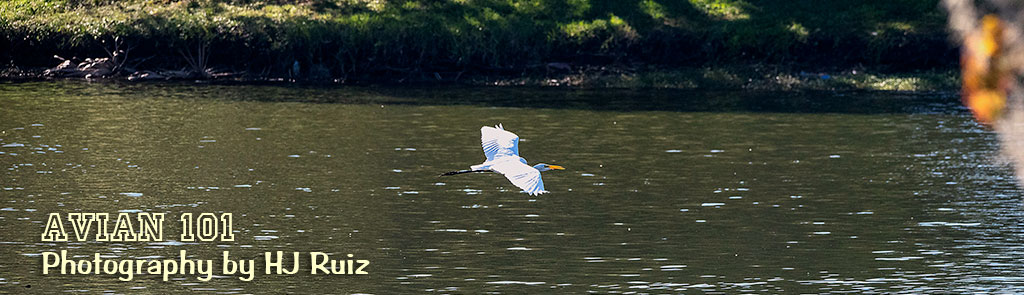
Bird’s ID – Great Blue Heron
Great Blue Heron
The Great Blue Heron (Ardea herodias) is a large wading bird in the heron family Ardeidae, common near the shores of open water and in wetlands over most of North America and Central America, as well as the Caribbean and the Galápagos Islands. It is a rare vagrant to coastal Spain, the Azores, and areas of far southern Europe. An all-white population found only in south Florida and the Florida Keys is known as the great white heron. Debate exists about whether it is a white color morph of the great blue heron, a subspecies of it, or an entirely separate species.
It is the largest North American heron and, among all extant herons, it is surpassed only by the goliath heron (Ardea goliath) and the white-bellied heron (Ardea insignis). It has head-to-tail length of 91–137 cm (36–54 in), a wingspan of 167–201 cm (66–79 in), a height of 115–138 cm (45–54 in), and a weight of 1.82–3.6 kg (4.0–7.9 lb). In British Columbia, adult males averaged 2.48 kg (5.5 lb) and adult females 2.11 kg (4.7 lb). In Nova Scotia and New England, adult herons of both sexes averaged 2.23 kg (4.9 lb), while in Oregon, both sexes averaged 2.09 kg (4.6 lb) Thus, great blue herons are roughly twice as heavy as great egrets (Ardea alba), although only slightly taller than them, but they can weigh about half as much as a large goliath heron.
Notable features of great blue herons include slaty (gray with a slight azure blue) flight feathers, red-brown thighs, and a paired red-brown and black stripe up the flanks; the neck is rusty-gray, with black and white streaking down the front; the head is paler, with a nearly white face, and a pair of black or slate plumes runs from just above the eye to the back of the head. The feathers on the lower neck are long and plume-like; it also has plumes on the lower back at the start of the breeding season. The bill is dull yellowish, becoming orange briefly at the start of the breeding season, and the lower legs are gray, also becoming orangey at the start of the breeding season. Immature birds are duller in color, with a dull blackish-gray crown, and the flank pattern is only weakly defined; they have no plumes, and the bill is dull gray-yellow. Among standard measurements, the wing chord is 43–49.2 cm (16.9–19.4 in), the tail is 15.2–19.5 cm (6.0–7.7 in), the culmen is 12.3–15.2 cm (4.8–6.0 in), and the tarsus is 15.7–21 cm (6.2–8.3 in). The heron’s stride is around 22 cm (8.7 in), almost in a straight line. Two of the three front toes are generally closer together. In a track, the front toes, as well as the back, often show the small talons.
The primary food for great blue heron is small fish, though it is also known to opportunistically feed on a wide range of shrimp, crabs, aquatic insects, rodents, and other small mammals, amphibians, reptiles, and birds, especially ducklings. Primary prey is variable based on availability and abundance. In Nova Scotia, 98% of the diet was flounder In British Columbia, the primary prey species are sticklebacks, gunnels, sculpins, and perch. California herons were found to live mostly on sculpin, bass, perch, flounder, and top smelt. Nonpiscine prey is rarely quantitatively important, though one study in Idaho showed that from 24 to 40% of the diet was made up of voles.
Photo Gallery



 H.J. Ruiz - Avian101
Interesting and loved the photographs, thank you.
I thank you Susan. I appreciate it! 🙂
Beautiful pictures, H.J.! I love the reflections in the water. I don’t know why exactly, but Great Blues also, more than any of the other herons, always remind me of dinosaurs in flight. Do you have these wonderful birds all year ’round?
Well, they all are descendants of dinosaurs. Only one of the shots is from Georgia, the rest are from Florida. Thank you Lisa. 🙂
Lovely pictures HJ.
Thank you Tom! 🙂
I especially like the photo showing it by the waves.
Actually it’s a river that was carrying more water at the time and the rocks created a kind of “white water” effect. The bird was in one instant pulled because the strong current, but recovered and later gave me a fabulous opportunity to shoot a series of pictures quite extraordinary. The GBH started to dance like, it was really fantastic. Thank you Linda. 🙂
That makes it even better — he obviously knows how to deal with the water.
Excellent images of a beautiful, majestic bird, HJ!
Thanks a lot my friend. 🙂
Slanciatissimo collo, per questo bel volatile
Un saluto,silvia
Grazie mille Sivia. 🙂
Reblogged this on Wolf's Birding and Bonsai Blog.