Just Different
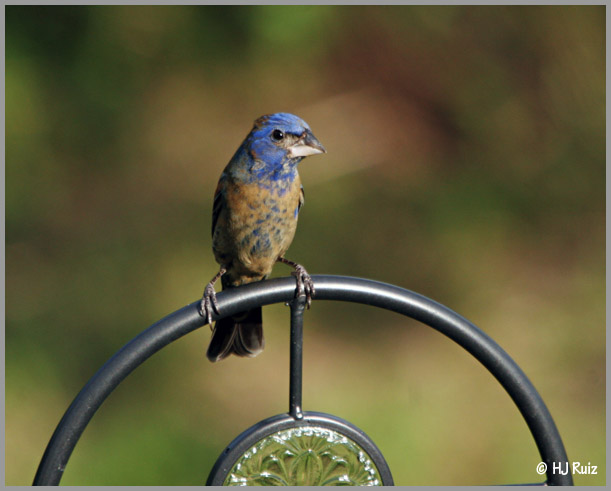
Once in a while from all the birds that show up at my feeders I see some that are a little odd if compared with the rest of their kind. Most are just different because some their colors. I picked some of them to make my point. As always there’re exceptions to the rules. Nothing wrong with them it just attracts attention because breaks the natural pattern.
A few months ago I saw a Northern Cardinal with no feathers down to the neck, but the body was totally “normal” I thought that it was perhaps hurt or with illness. I decided to research a bit of that on the web and I found out that there is a genetic oddity in that specie and are called Bald Cardinals, not a sickness just perhaps a genetic mutation. They don’t look so pretty but they live a normal life expectancy. I did not keep a picture of it. Made me sad. I should have kept it since is apparently normal.
-
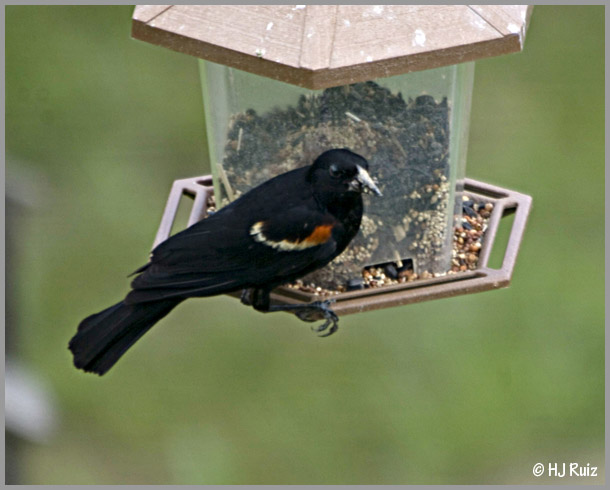
- Red-winged Blackbird with white beak
-
- House Finch (F) Almost white in color
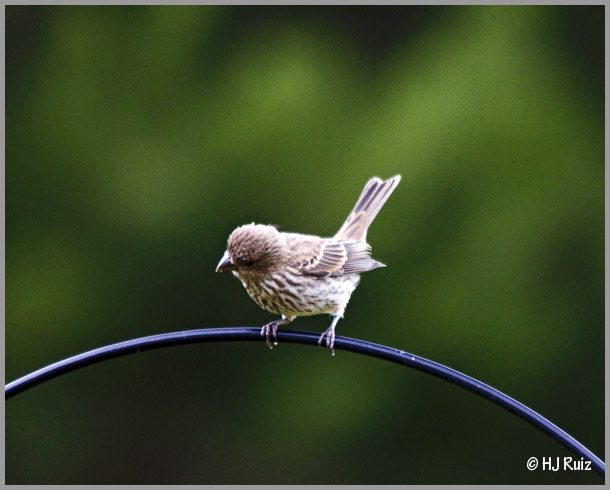
-
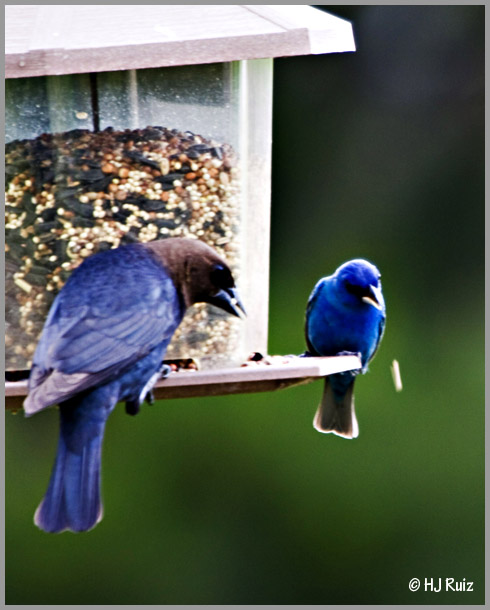
- Brown-headed Cowbird (M) with almost blue body, next to Indigo Bunting
-
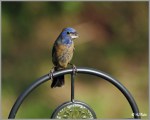
- Blue Grosbeak (F) Odd colors plumage
Share this:

Gallery of Birds # 41
The gallery that I’m posting today are some of the current species of birds that are coming to my feeders. They are a bunch of young and beautiful birds that make my life full with enjoyment and content.
I wish you can feel the same enjoyment through my photographs. 🙂
-
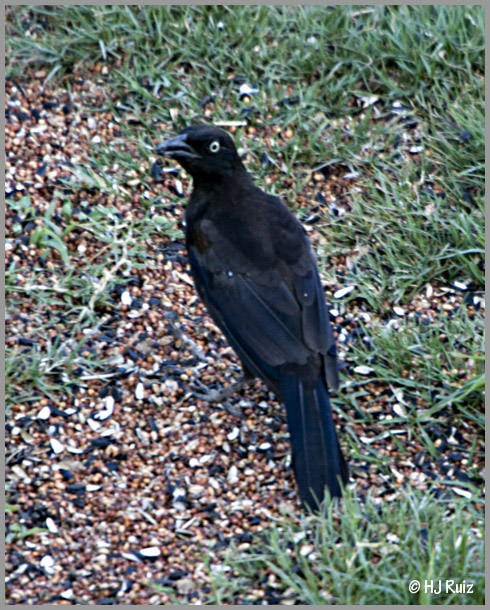
- Common Grackle (M)
-
- Indigo Bunting (M)

-
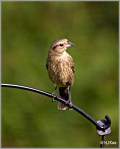
- Red-winged Blackbird (F-young)
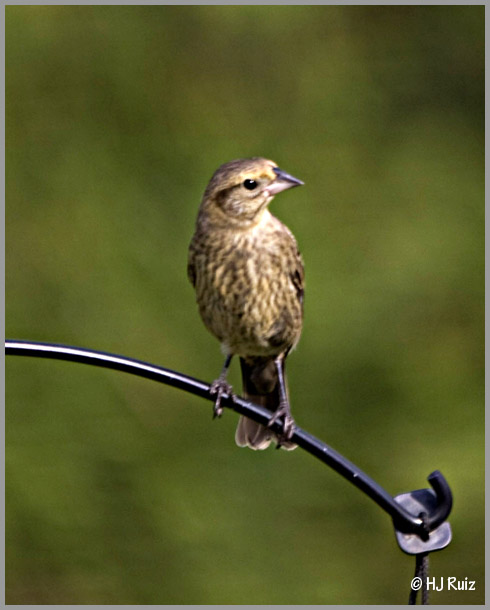
-

- House Finch (M-young)
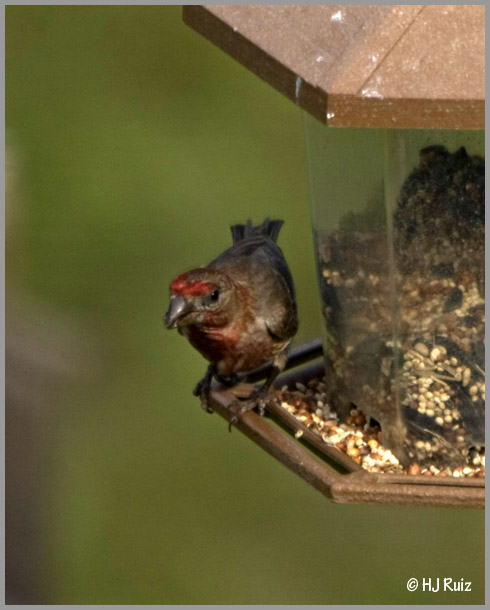
-
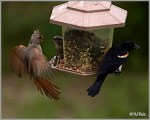
- Feisty young birds at feeder

-
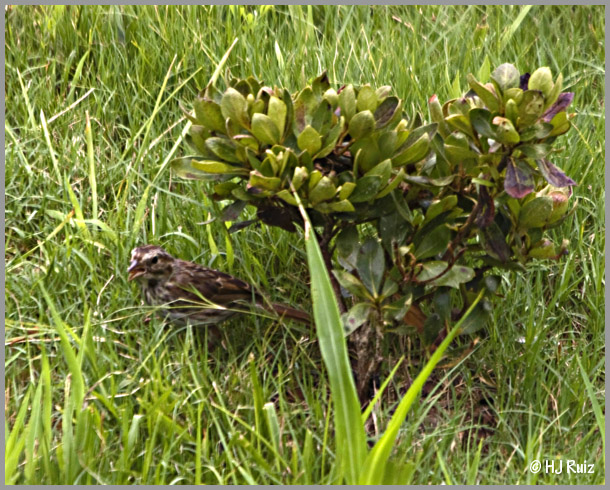
- Chipping Sparrow
-
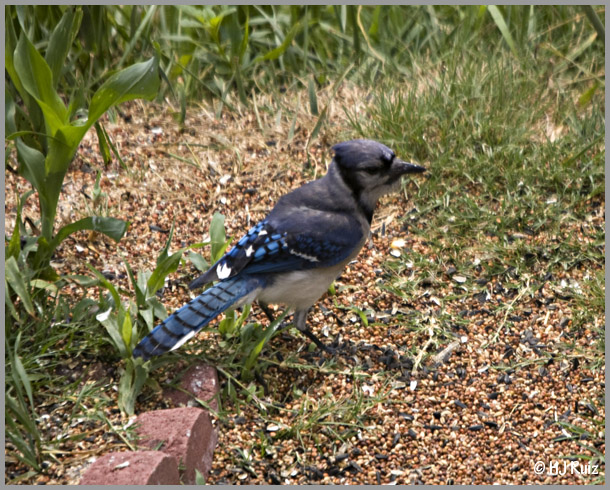
- Blue Jay
-

- Northern Cardinal (M-young)

Share this:

Princeton and exotic birds
I’ve just gotten a letter from my friend Jessica Pellien who is Assistant Publicity Director for Princeton University Press. She has given me interesting information about books written and illustrated with great photography; the topics being exotic birds from other Continents.
Birds of Australia: Eighth Edition
Ken Simpson & Nicolas Day
http://press.princeton.edu/titles/9142.html
This is the completely revised eighth edition of Australia’s best-selling field guide, with close to 600,000 copies sold. In 132 color plates of remarkable beauty and precision, Nicolas Day captures the details of all 780 of Australia’s birds. Succinct text by Ken Simpson and other experts gives key points of identification for every species, as well as information about the birds’ abundance and patterns of movement. Detailed color distribution maps accompany the species text.
Nightjars, Potoos, Frogmouths, Oilbird, and Owlet-nightjars of the World
Nigel Cleere
http://press.princeton.edu/titles/9288.html
This is the ultimate identification guide to the nightjars, potoos, frogmouths, Oilbird, and owlet-nightjars of the world. Covering all 135 known species of these elusive and cryptically plumaged birds, this illustrated guide features more than 580 superb color photographs depicting every species and many subspecies, including numerous images never before published.
Birds of the West Indies
Written and illustrated by Norman Arlott
http://press.princeton.edu/titles/9290.html
The West Indies, stretching from Grand Bahama in the north to Grenada in the south, is home to more than 550 bird species. Birds of the West Indies is the complete guide for identifying all of the diverse birds in these island territories. The guide’s 80 vivid color plates are accompanied by succinct text focusing on key field-identification characteristics, and distribution maps for all species are conveniently located at the back of the guide for handy reference.
Share this:

My Babies!
My feeders are being mobbed by birds, mostly young and impetuous, full of energy and making a mess when they are eating. They move too much and the seeds drop all over because they all want to eat at once!.
So these are my babies, the new generation that still lack experience and patience. But I can’t help it to feel certain attachment to them. These beautiful flying creatures were hatched and are growing in my backyard. I’m feeling like their Daddy. 🙂 Why not?
For today I picked three photos of some of them so you can meet them.
-
- Northern Cardinal (Male, young)
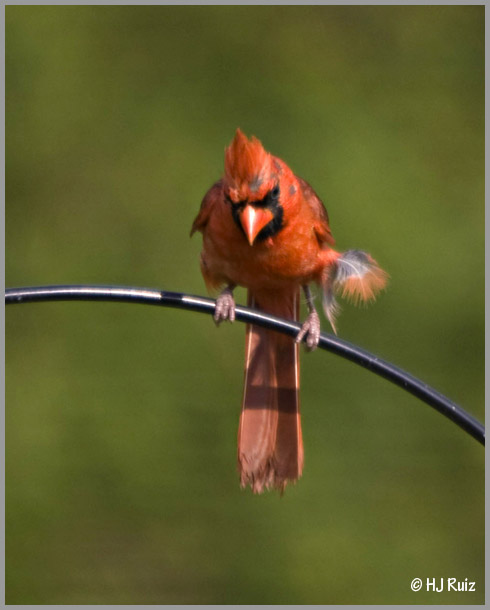
-

- Northern Cardinal (Male, young)
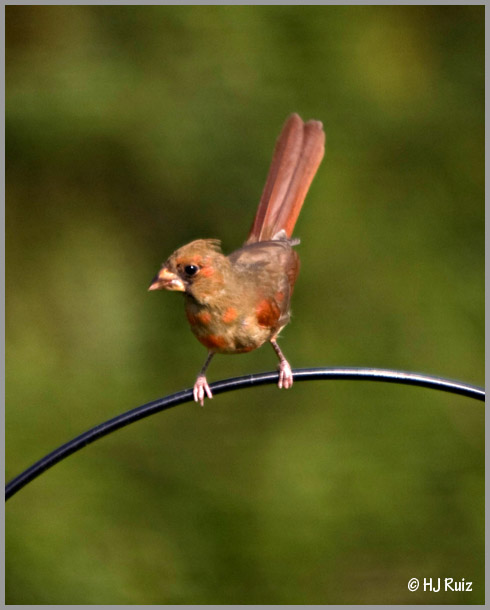
-
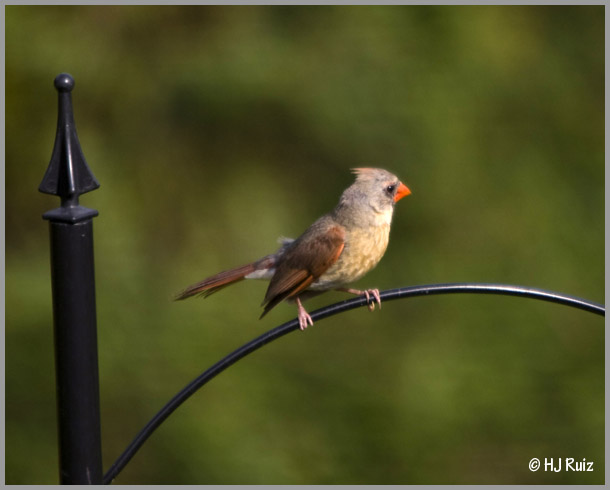
- Northern Cardinal (Female, young)
Share this:


Read Past Reviews

Book # 69

Quote from the Author
“A good chuckle is healthy, it helps you break the monotony of a serious life.” ~ H.J. Ruiz


You must be logged in to post a comment.