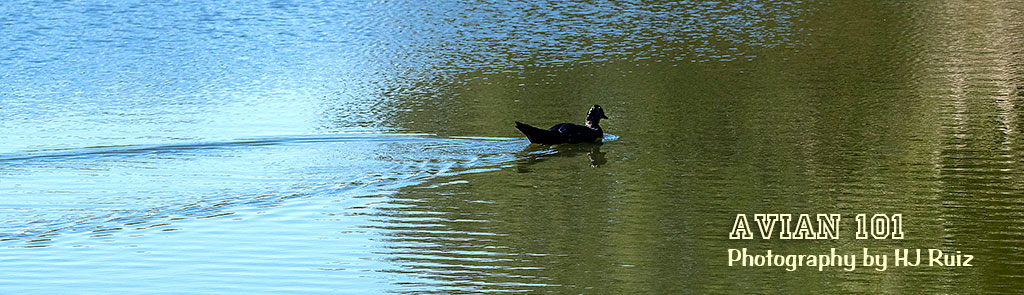
Neotropic Cormorant
Neotropic Cormorant or Olivaceous Cormorant – Spec. Name: Phalacrocorax Brasilianus
This is a medium-sized cormorant found throughout the American tropics and subtropics, from the middle Rio Grande and the Gulf and Californian coasts of the USA south through Mexico andCentral America to southern South America. It also breeds on the Bahamas, Cuba and Trinidad. It can be found both at coasts (including some mangrove areas) and on inland waters. There are at least two subspecies: P. b. mexicanus from Nicaragua northwards and P. b. brasilianus further south.

Neotropic Cormorants
The species was documented in 1658 by Willem Piso after travels in Brazil. This formed the basis for the description and naming of the species by Johann Friedrich Gmelin in 1789. Many later authors preferred to use the name Phalacrocorax olivaceus based on Alexander von Humboldt’s 1805 description because the identity of Piso’s birds was considered uncertain. Recently, many authorities such as theAmerican Ornithologists’ Union have begun to use Phalacrocorax brasilianus after M. Ralph Browning argued that Piso’s description and paintings do indeed refer to the Neotropic Cormorant.[1]
This bird is 64 cm long with a 100 cm wingspan. Adults males weigh from 1.1 to 1.5 kg, adult females 50 to 100 grams less. Birds of the southern populations tend to be bigger than the more northerly birds. It is small and slender, especially compared to the larger, heavier-lookingDouble-crested Cormorant. It has a long tail and frequently holds its neck in an S-shape. Adultplumage is mainly black, with a yellow-brown throat patch. During breeding, white tufts appear on the sides of the head, there are scattered white filoplumes on the side of the head and the neck, and the throat patch develops a white edge. The upper wings are somewhat greyer than the rest of the body. Juveniles are brownish in color.
Behavior
Neotropic Cormorants in New Mexico
Its diet consists mainly of small fish, but will also eat tadpoles, frogs, and aquatic insects. Information about its prey is sparse, but inland birds seem to feed on small, abundant fish in ponds and sheltered inlets, less than 10 cm in length, with an individual weight of a gram or two, such as Poecilia spp. especially the sailfin molly Poecilia latipinna. This cormorant forages for food by diving underwater, propelling itself by its feet. Its dives are brief, between 5 and 15 seconds. It is also known to forage in groups, with several birds beating the water with their wings to drive fish forward into shallows.

Large group of Neotropic Cormorants
Neotropic Cormorants are monogamous and breed in colonies. The nest is a platform of sticks with a depression in the center circled with twigs and grass. It is built a few metres above the ground or water in bushes or trees. Up to five chalky, bluish-white eggs are laid. Most pairs lay 3 eggs, but the mean number hatched is less than 2. The eggs soon become nest-stained. Both sexes incubate for about 25–30 days, and both parents feed the young until around the 11th week. By week 12, they are independent. One brood is raised per year.
Unlike other cormorants, this bird can often be seen perching on wires.
This bird is largely a permanent resident, with some birds occasionally wandering north in the warmer months.
Photographs © H.J. Ruiz “My Backyard Visitors”
Text is available under the Creative Commons Attribution-ShareAlike License; additional terms may apply. See Terms of Use for details.
Wikipedia® is a registered trademark of the Wikimedia Foundation, Inc., a non-profit organization.
Share this:

Calm after the storm
We spent a few days of watching TV and receiving weather warnings for heavy storms with strong winds. The closest tornado that we had was only 4 miles from us!! Can you believe that? Fortunately we were spared but we got very strong winds and periods of heavy rainfall. At times we felt the house shook with the strong gusts of wind. My wife has friends that lost their house gutters and other the garage doors were ripped off. No injures in any of those cases.
I feel very sad for all those families that lost relatives all throughout the South of the US. My deep condolences to them!
-

- Northern Mockingbird

-

- Red-winged Blackbird (M)

-

- Red-winged Blackbird (F)

-

- Field Sparrow

Share this:

Ostrich
Ostrich, Spec. Name: Struthio Camelus
This is a large flightless bird native to Africa. It is the only living species of its family, Struthionidae and its genus, Struthio. Ostriches share the order Struthioniformes with the kiwis, emus, and other ratites. It is distinctive in its appearance, with a long neck and legs and the ability to run at maximum speeds of about 97.5 kilometres per hour (60.6 mph), the top land speed of any bird. The Ostrich is the largest living species of bird and lays the largest egg of any living bird (extinct elephant birds of Madagascar and the giant moa of New Zealand did lay larger eggs).
The diet of the Ostrich mainly consists of plant matter, though it also eats invertebrates. It lives in nomadic groups which contain between five and fifty birds. When threatened, the Ostrich will either hide itself by lying flat against the ground, or will run away. If cornered, it can attack with a kick from its powerful legs. Mating patterns differ by geographical region, but territorial males fight for a harem of two to seven females. These fights usually last just minutes, but they can easily cause death through slamming their heads into opponents.

Ostrich
The Ostrich is farmed around the world, particularly for its feathers, which are decorative and are also used as feather dusters. Its skin is used for leather products and its meat marketed commercially.
Ostriches usually weigh from 63 to 130 kilograms (140–290 lb), with exceptional male Ostriches weighing up to 155 kilograms (340 lb). The feathers of adult males are mostly black, with white primaries and a white tail. However, the tail of one subspecies is buff. Females and young males are greyish-brown and white. The head and neck of both male and female Ostriches is nearly bare, with a thin layer of down. The skin of the females neck and thighs is pinkish gray, while the male’s is blue-gray, gray or pink dependent on subspecies.
The long neck and legs keep their head 1.8 to 2.75 metres (6 to 9 ft) above the ground, and their eyes are said by whom? to be the largest of any land vertebrate – 50 millimetres (2.0 in) in diameter; they can therefore perceive predators at a great distance. The eyes are shaded from sun light falling from above.
Their skin varies in colour depending on the sub-species. The strong legs of the Ostrich are unfeathered and show bare skin, with the tarsometatarsus (the lowest upright part of the leg) being covered in scales – red in the male, black in the female. The bird has just two toes on each foot (most birds have four), with the nail on the larger, inner toe resembling a hoof. The outer toe has no nail. The reduced number of toes is an adaptation that appears to aid in running. Ostriches can run at over 70 kilometres per hour (43 mph) for up to 30 minutes. The wings reach a span of about 2 metres (6 ft 7 in) and are used in mating displays and to shade chicks. The feathers lack the tiny hooks that lock together the smooth external feathers of flying birds, and so are soft and fluffy and serve as insulation. They have 50-60 tail feathers, and their wings have 16 primary, four alular and 20-23 secondary feathers. The Ostrich’s sternum is flat, lacking the keel to which wing muscles attach in flying birds.The beak is flat and broad, with a rounded tip. Like all ratites, the Ostrich has no crop, and it also lacks a gallbladder. They have three stomachs, and the caecum is 71 centimetres (28 in) long. Unlike all other living birds, the Ostrich secretes urine separately from faeces. Contrary to all other birds who store the urine and faeces combined in the coprodeum, they store the faeces in the terminal rectum. They also have unique pubic bones that are fused to hold their gut. Unlike most birds the males have a copulatory organ, which is retractable and 8 inches (20 cm) long. Their palate differs from other ratites in that the sphenoid and palatal bones are unconnected.
At sexual maturity (two to four years), male Ostriches can be from 1.8 to 2.8 metres (5 ft 11 in to 9 ft 2 in) in height, while female Ostriches range from 1.7 to 2 metres (5 ft 7 in to 6 ft 7 in). During the first year of life, chicks grow about 25 centimetres (10 in) per month. At one year of age, Ostriches weigh around 45 kilograms (100 lb). Their lifespan is up to 40 or 45 years.
A female ostrich can determine her own eggs amongst others in a communal nest.
All photographs are © H.J. Ruiz – Avian101
Text is available under the Creative Commons Attribution-ShareAlike License; additional terms may apply. See Terms of Use for details..
Share this:

Great Poem by Melanie Copeland
I’ve been honored with a dedicated poem written by my friend Melanie Copeland … it reads like this:
Flight Of Love
Beautiful American Robin -You fly
Cool crisp morning -Across the sky.
Linger for a moment – To catch your breath
Longing looking for – A place to nest.
American Robin your- No different now
Than the others around you – that perch on a bough.
Your skills abound the – the world you grace
Motor skills better – than an indie car race.
Yes little Carolina Chickadee – you may be small
But flying around – you astound us all.
Petite or immense – you land on the fence
Look across the land – where you have been banned.
You carry along – you tune, your song
And live life with luster – although you cluster.
We appreciate you – in all that you do
As you fly above – and remind us of love.
Melanie Copeland © 2011
Written in dedication to H.J. Ruiz
“May you always notice the small creatures that vie for our attention.”
Note: Have you read her latest publication?
“Wandering Words: Poetry Across The Roads of USA”

Wandering Words
Share this:


Read Past Reviews

Book # 69

Quote from the Author
“A good chuckle is healthy, it helps you break the monotony of a serious life.” ~ H.J. Ruiz


You must be logged in to post a comment.