Special Places # 26
Special Places
Photo Art by H.J.
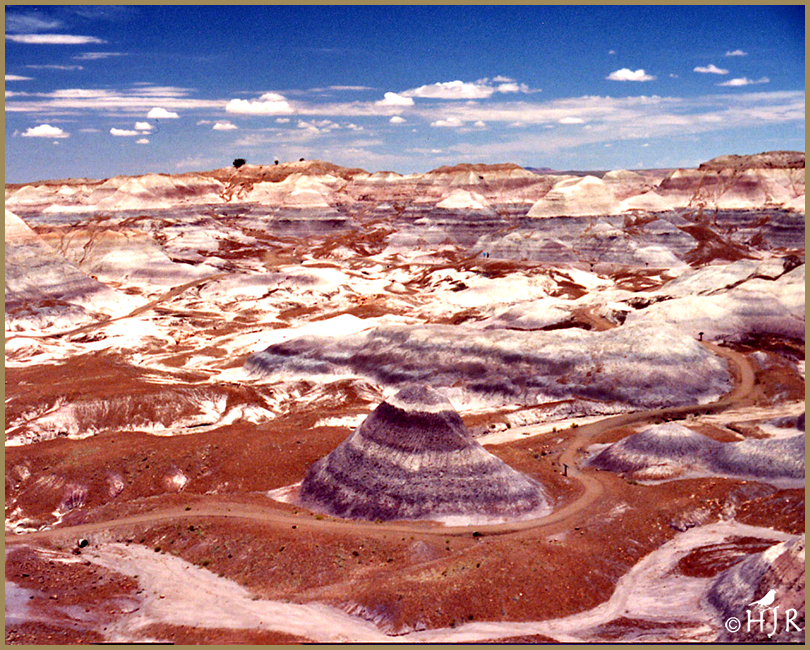

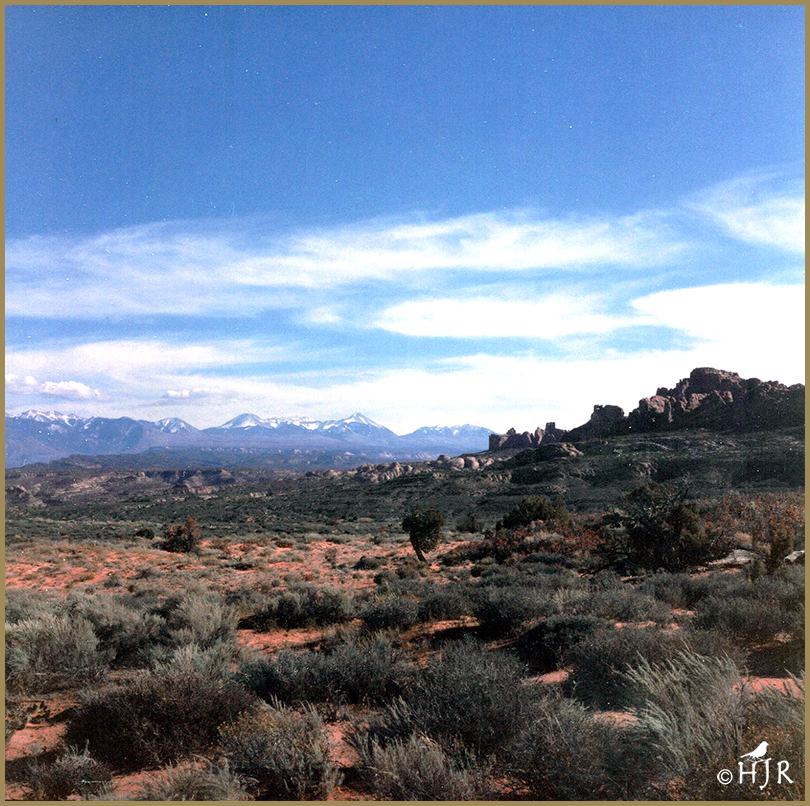
1 – Top Left: Small view of Painted Desert National Park, Arizona.
2 – Top Right: Autumn foliage at Wide Hollow Reservoir, Utah.
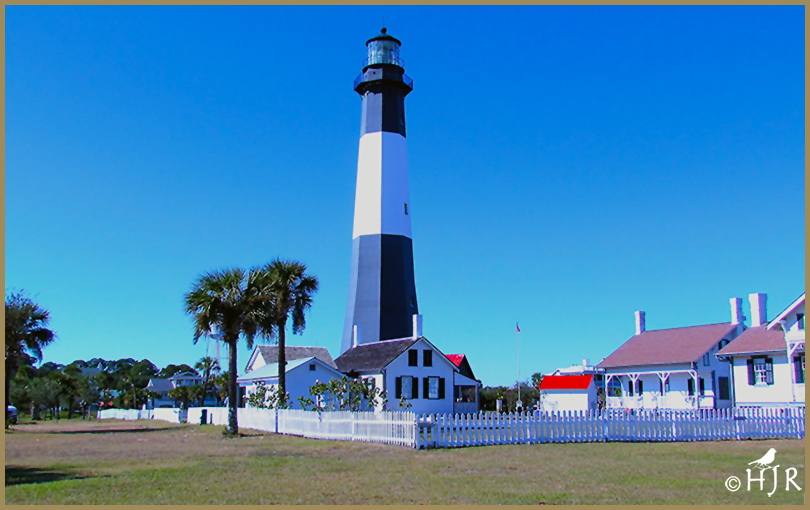
3 – Left Middle -Top: Tybee Island Lighthouse in Tybee Island, Georgia.
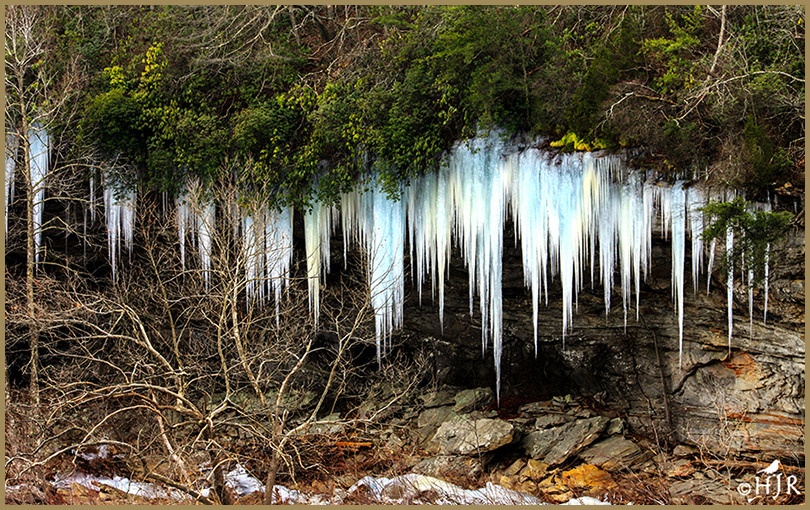
4 – Left Middle- Bottom: Icicles at the Little River Canyon in Alabama.
5 – Bottom: Open View of the LaSal Mountains in the background, Utah.
© HJ Ruiz – Avian101
Share this:

Red Art Gallery – Northern Cardinal # 35
Red Art Gallery
Photo Gallery
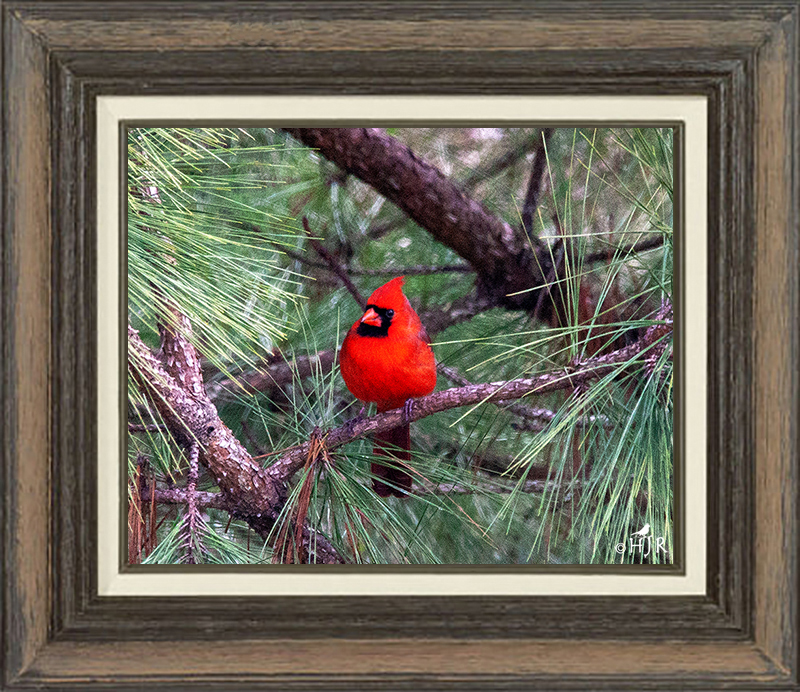
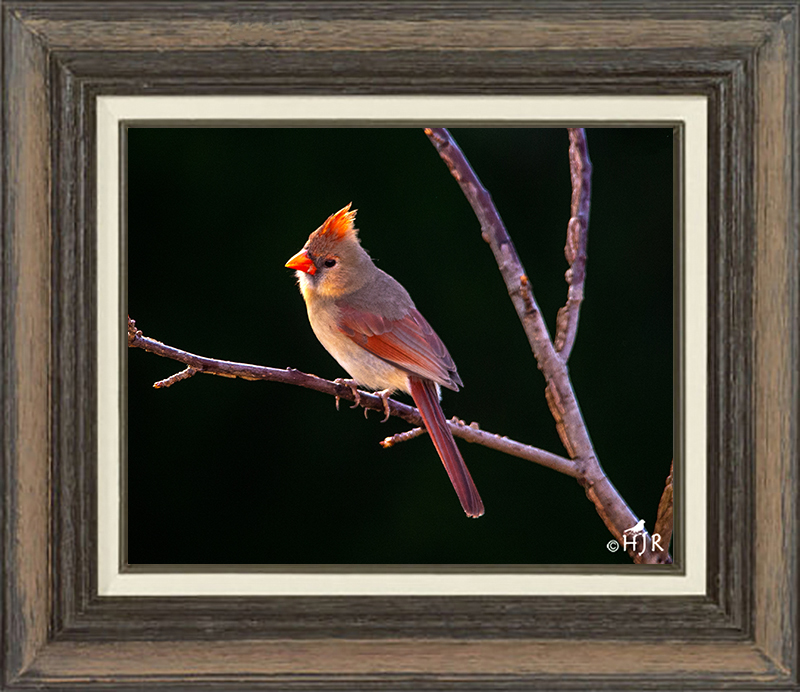
© HJ Ruiz – Avian101
Share this:

Birds of the Week # 9
Brown-headed Cowbird
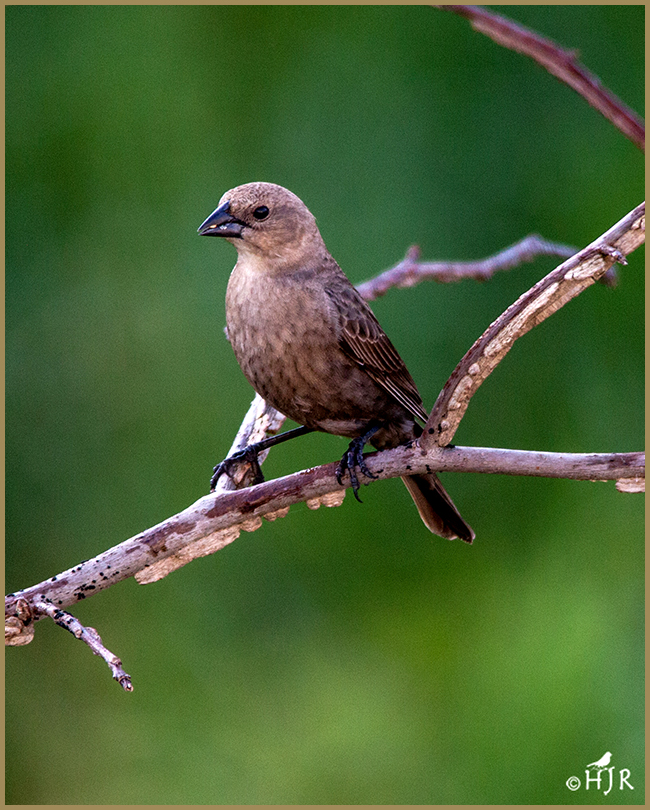

The Brown-headed Cowbird is an obligate brood parasite; it lays its eggs in the nests of other small passerines (perching birds), particularly those that build cup-like nests. The brown-headed cowbird eggs have been documented in nests of at least 220 host species, including hummingbirds and raptors. The young cowbird is fed by the host parents at the expense of their own young. Brown-headed cowbird females can lay up to 36 eggs in a season. More than 140 different species of birds are known to have raised young cowbirds. Unlike the common cuckoo, the brown-headed cowbird is not divided into gentes whose eggs imitate those of a particular host.
Some host species, such as the house finch, feed their young a vegetarian diet. This is unsuitable for young brown-headed cowbirds, meaning few survive to fledge.
Mourning Dove

Like other columbines, the mourning dove drinks by suction, without lifting or tilting its head. It often gathers at drinking spots around dawn and dusk. Mourning Doves eat almost exclusively seeds, which make up more than 99% of their diet. Rarely, they will eat snails or insects. Mourning doves generally eat enough to fill their crops and then fly away to digest while resting. They often swallow grit such as fine gravel or sand to assist with digestion. The species usually forages on the ground, walking but not hopping. At bird feeders, mourning doves are attracted to one of the largest ranges of seed types of any North American bird, with a preference for rapeseed, corn, millet, safflower, and sunflower seeds. Mourning doves do not dig or scratch for seeds, though they will push aside ground litter; instead they eat what is readily visible. They will sometimes perch on plants and eat from there.
House Finch

The House Finch during courtship, the male will touch bills with the female. He may then present the female with choice bits of food, and if she mimics the behavior of a hungry chick, he may actually feed her. The male also feeds the female during breeding and incubation of the eggs, and raising of the young, and the male is the primary feeder of the fledgelings (who can be differentiated from the females by the pin feathers remaining on their heads). Females are typically attracted to the males with the deepest pigment of red to their head, more so than the occasional orange or yellowish-headed males that sometimes occur.
Eastern Towhee
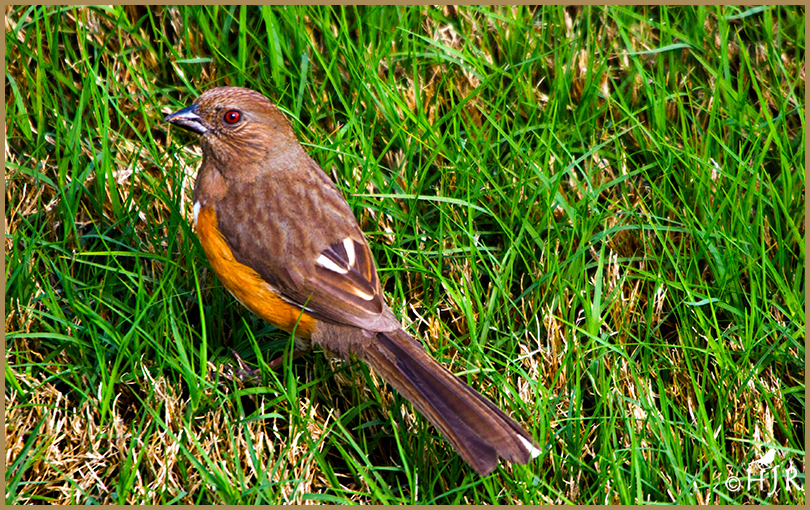
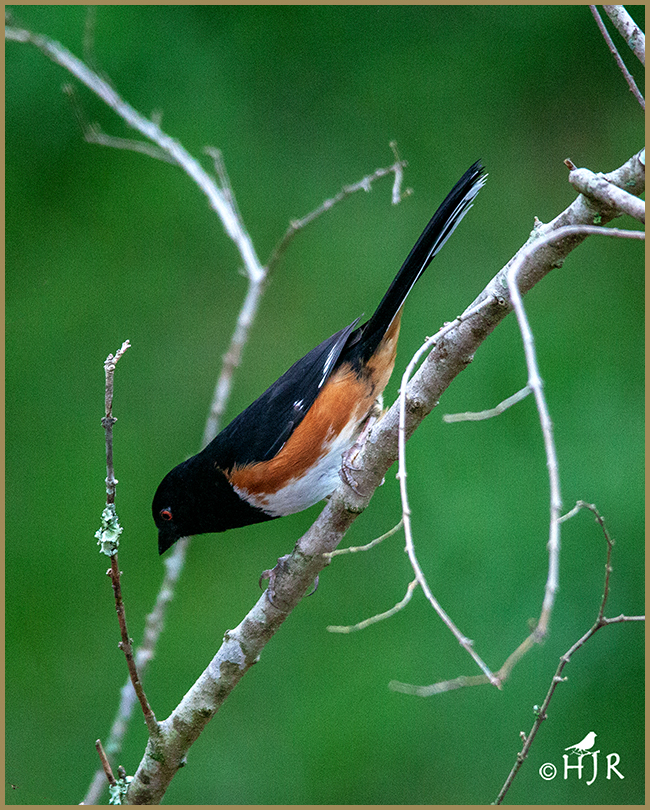
Breeding begins in spring and continues to late summer. Reports of eastern towhees nesting as early as late March in Florida and Georgia, in mid- to late April in some midwestern states, and as late as mid-May in northern New England were summarized in a literature review. Literature reviews also report nest construction by the female, which takes about three to five days. Egg laying typically occurs until August. For example, a review of eastern towhees in Indiana notes nesting from 15 April to 20 August. However, a literature review of eastern towhees in Florida included a report of a nest observed on 2 September 1983 that contained two eggs. According to several literature reviews, eastern towhees may renest after failed nesting attempts and can raise two, and in the south sometimes three, broods per season.
© HJ Ruiz – Avian101
Share this:

Special Places # 25
Special Places
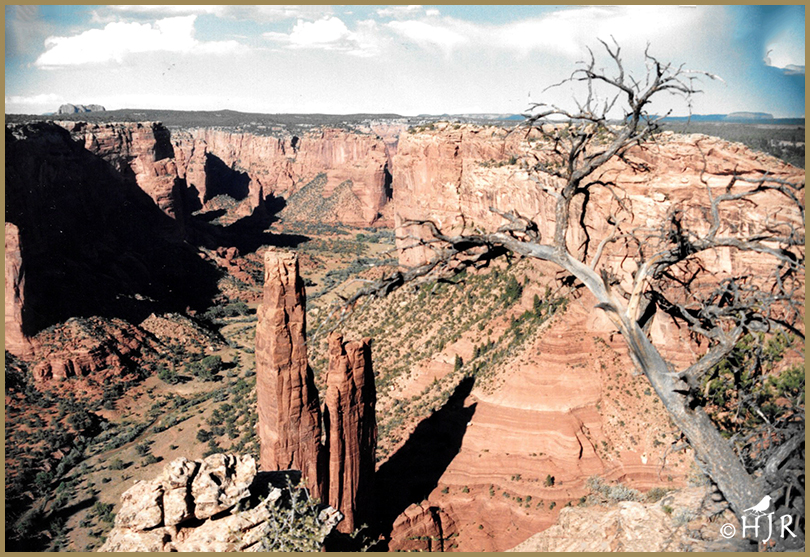
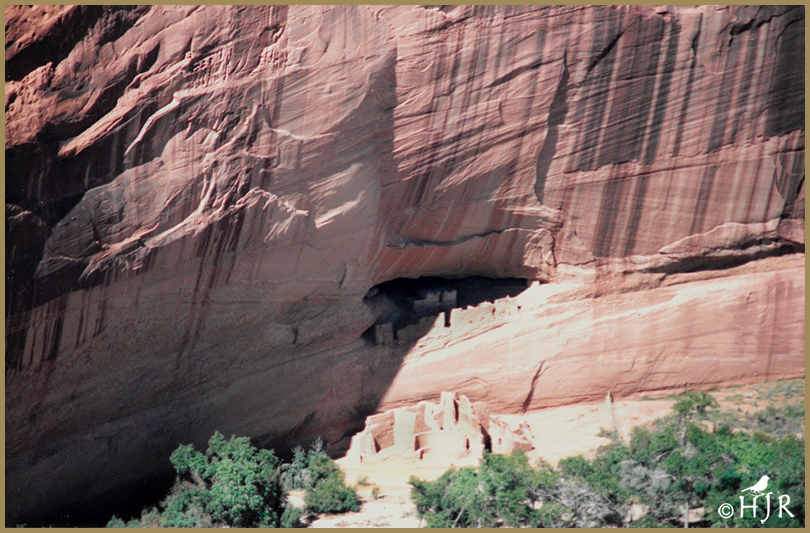
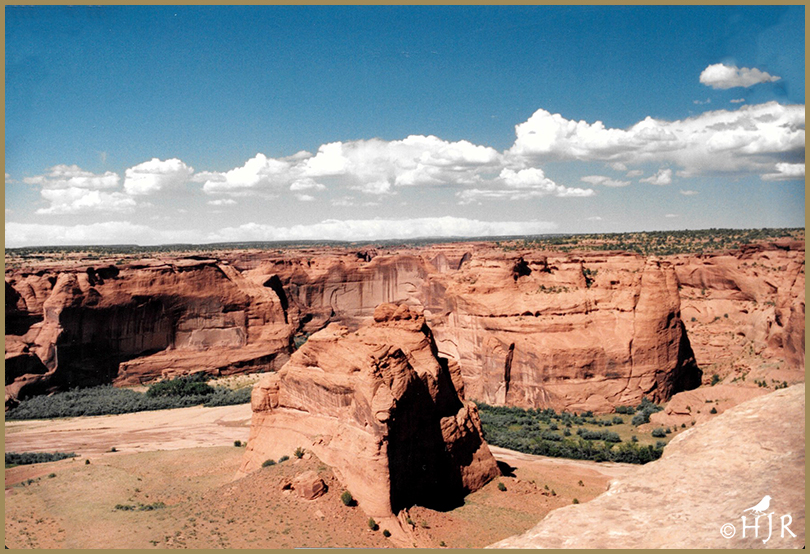
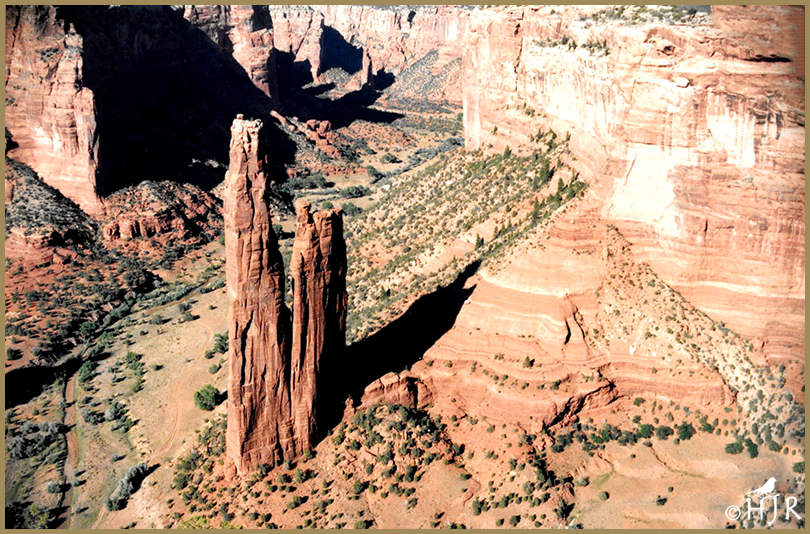
Canyon de Chelly National Monument
Canyon de Chelly National Monument (/dəˈʃeɪ/ də-SHAY) was established on April 1, 1931, as a unit of the National Park Service. Located in northeastern Arizona, it is within the boundaries of the Navajo Nation and lies in the Four Corners region. Reflecting one of the longest continuously inhabited landscapes of North America, it preserves ruins of the indigenous tribes that lived in the area, from the Ancestral Puebloans (formerly known as Anasazi) to the Navajo. The monument covers 83,840 acres (131 sq mi; 339 km2) and encompasses the floors and rims of the three major canyons: de Chelly, del Muerto, and Monument. These canyons were cut by streams with headwaters in the Chuska Mountains just to the east of the monument. None of the land is federally owned. Canyon de Chelly is one of the most visited national monuments in the United States
The name Chelly (or Chelley) is a Spanish borrowing of the Navajo wordTséyiʼ, which means “canyon” (literally “inside the rock” < tsé “rock” + -yiʼ “inside of, within”). The Navajo pronunciation is [tséɣi]. The Spanish pronunciation of de Chelly [deˈtʃeʎi] was adapted into English, apparently modeled on a French-like spelling pronunciation, and is now /dəˈʃeɪ/ də-SHAY.
Canyon de Chelly is entirely owned by the Navajo Tribal Trust of the Navajo Nation. It is the only National Park Service unit that is owned and cooperatively managed in this manner. About 40 Navajo families live in the park. Access to the canyon floor is restricted, and visitors are allowed to travel in the canyons only when accompanied by a park ranger or an authorized Navajo guide. The only exception to this rule is the White House Ruin Trail.
| Location | Apache County, Arizona |
| Nearest city | Chinle |
| Coordinates | 36.155281°N 109.508995°W |
| Area | 83,840 acres (339.3 km2) |
| Created | April 1, 1931 |
| Visitors | 439,306 (in 2018) |
| Governing body | Bureau of Indian Affairs |




© HJ Ruiz – Avian101
Share this:

Read Past Reviews

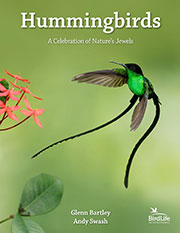
Book # 69
Quote from the Author
“A good chuckle is healthy, it helps you break the monotony of a serious life.” ~ H.J. Ruiz
 H.J. Ruiz - Avian101
You must be logged in to post a comment.