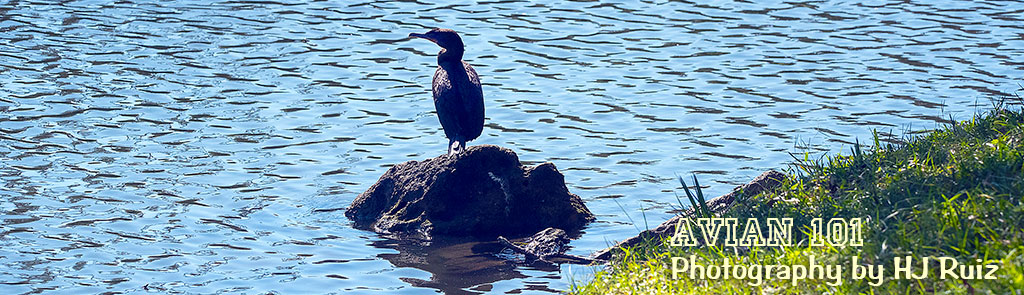
Testing my Canon 60D
The photos I’m posting today were shot last Saturday. I made a series of shots testing both my Canon 60D and my new Gimbal Head H2.
I believe that both items performed well, I’m satisfied with the results. Here are some of the shots open for your comments.
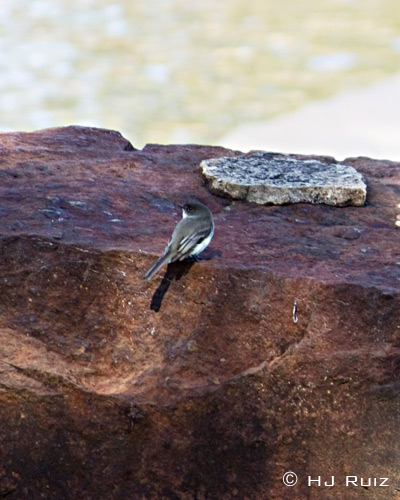
Eastern Phoebe - Canon 60D - f/6.3 - 1/80 - ISO 125
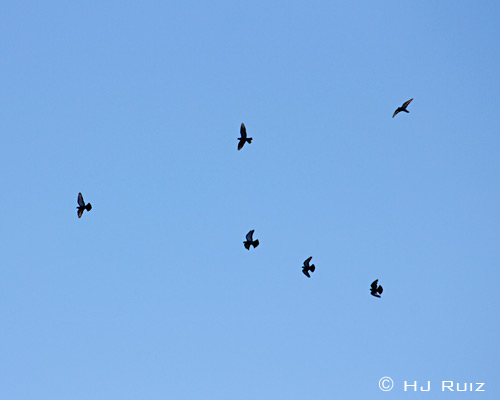
Flock of Rock Pigeons - Canon 60D - f/9.0 - 1/400 - ISO 125
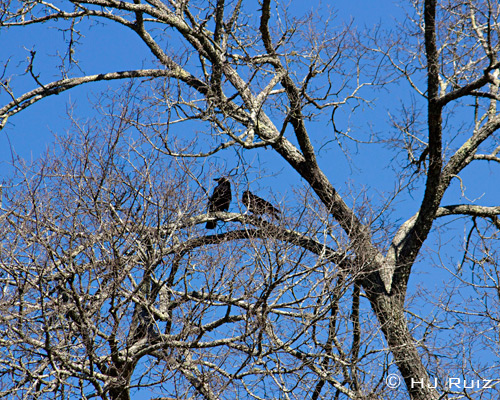
Common Crows - Canon 60D - f/ 8.0 - 1/400 - ISO 125
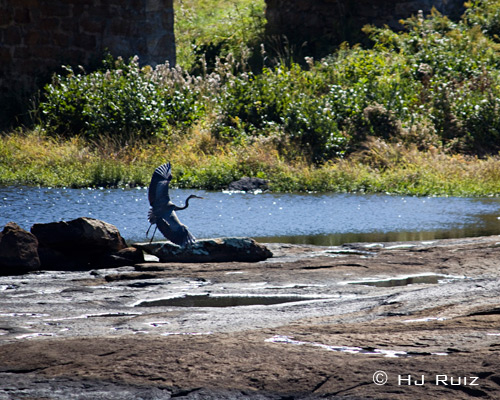
Great Blue Heron - Canon 60D - f/ 6.3 - 1/400 - ISO 125
All photos are © H.J. Ruiz – Avian 101
Share this:

Mallards, snow and bad weather
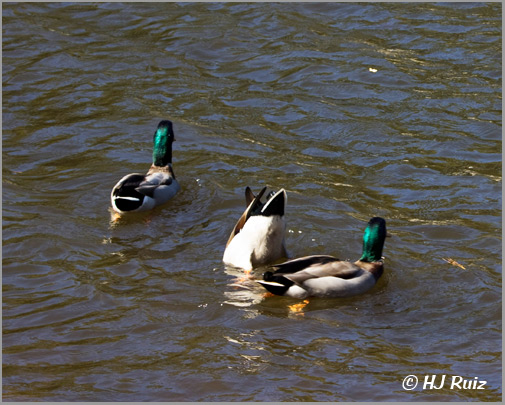
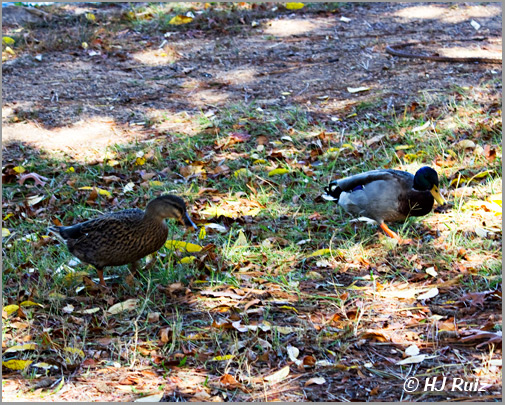
I’ve seen more Mallard ducks in Georgia this year at ponds and lakes than previous years. When I was living in New Jersey, our home was close to a lake and the Mallards were a permanent fixture 🙂 and the Canada Geese at all the golf courses. They became a nuisance for the greens. Mallards are gracious ducks, their plumage is colorful and bright. Especially the male species.
Writing about New Jersey, some relatives are telling us that they got “buried” in heavy snow by reason of an early snow storm that have just hit them. Many people are without electric power still. Some other had problems with fallen trees, remember that most trees are still not shading their leaves and snow clings to the leaves making them heavy and the weight breaks the tree causing them to fall.
I hope that we don’t get a bad Winter this year. It would strain the country’s economy even more. Let’s hope it’d be a mild Winter instead! 🙂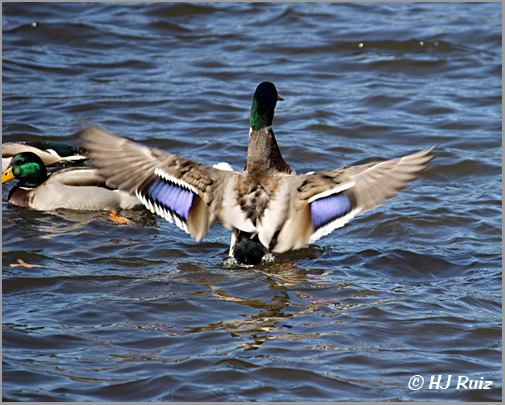

 All photographs are © H.J. Ruiz – Avian101
Share this:

Not just any Saturday!
Last Saturday I had the chance to test a bit more the camera I bought, a Canon 60D.
Lucy, Tyler and I went out to see some of the foliage and take some of the cooler air starting to creep down to Georgia. It was very bright and comfortable even when a cold breeze could be felt once in a while. We wore warmer cloths so it was ok to be outdoors.
Tyler had a great time walking all over, even chasing ducks and geese! :). He has just started walking two weeks ago and now we are chasing him all over.
Beside trying my new Canon 60D, I used my new Gimbal Head GBH2 by Induro to support my camera and long lenses which I did with great delight.
Changing subject, when we were driving back on I-75 heading north in direction of Atlanta, a blue SUV at at least 100 mph crossed in front of me dangerously close that I was forced to react quickly to avoid collision. That vehicle continued passing other cars at high speed putting many drivers in danger. Two minutes later five or more patrol cars with lights flashing and sirens wailing passed us.
Believe me, It was matter of just a few inches that we didn’t crash because that SUV, if I hadn’t swerved off as I did we would have been toast! Especially at the speed that they were going. I believe that their intention was to push me off the way but failed! I was feeling very angry at those people and at the same time thanking G-d for keeping us safe. Tyler was sleep at the moment. I’m glad to be here.
I got some pictures for you, no exif:
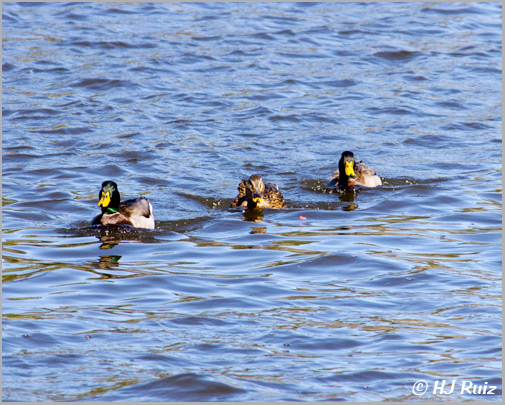
Malards - 2 males 1 female
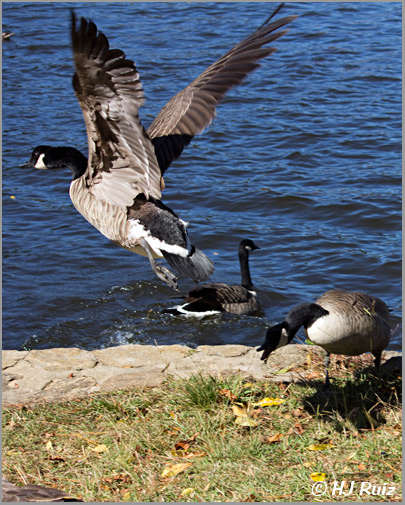
Canada Geese
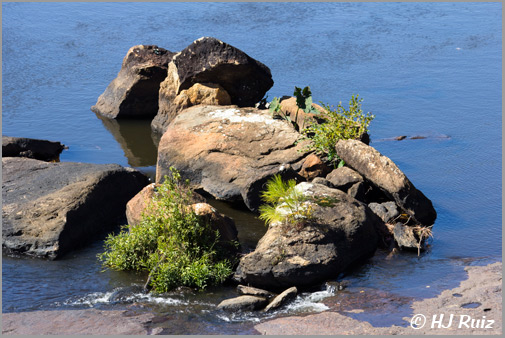
Color and texture
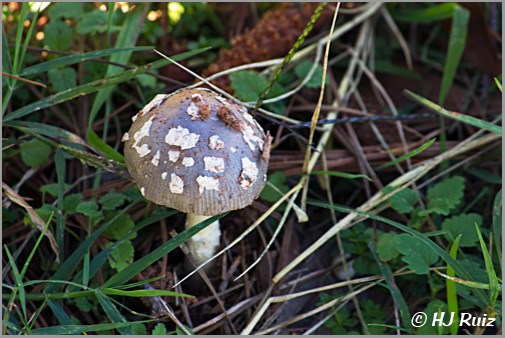
Lonely mushroom
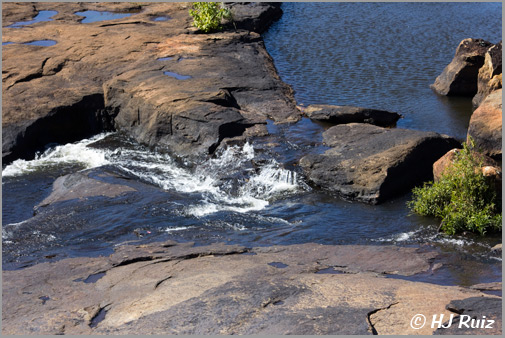
Running shoals
Follow up from Halloween:
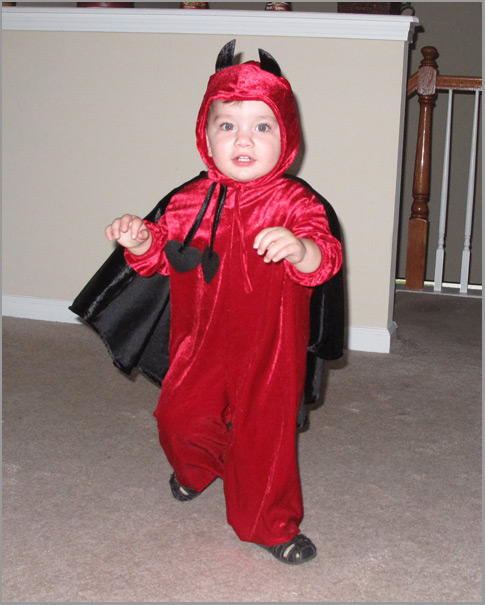
Tyler's as a little devil (Very appropriated!)

Tyler with good friends Joseph and KatieAlice
All photographs are © H.J. Ruiz – Avian101
Share this:

Prehistoric Birds, Poor Flyers?
Archaeopteryx, the theropod dinosaur believed to be the earliest bird, was discovered 150 years ago but debates about how flight evolved still persist. The two theories are that flight evolved in running bipeds through a series of short jumps or that Archaeopteryxleapt from tree to tree using its wings as a balancing mechanism.

Archaeopteryx. (Credit: Image courtesy of Todd Marshall)
Dr Robert Nudds at The University of Manchester is carrying out a series of biomechanical investigations to shed light on the subject with his colleague Dr Gareth Dyke at University College Dublin.
For their latest paper Dr Nudds and Dr Dyke applied a novel biomechanical analysis to the flight feathers of the early birdsArchaeopteryx and Confuciusornis to find out if they were strong enough to allow flight.
They found that the dinosaur feathers’ much thinner central stem (rachis) must have been solid or they would have broken under the lift forces generated during flight or by gusts of wind. This solid structure is very different to modern birds, whose rachises are broader, hollow straws. If the dinosaurs’ feathers had had hollow rachises, they would not have been able to fly at all.
“These are surprising results,” says Dr Nudds, whose findings are published in Science.
“I thought the feathers would be strong enough with a hollow rachis to fly but they weren’t. Even with a solid rachis, they were not very good. These dinosaurs were rubbish at flying.
“This pushes the origin of flapping flight to after Archaeopteryxand Confuciusornis. It must have come much later.”
It is impossible to tell from fossils whether the rachises were solid or hollow. However Dr Nudds, at Manchester’s Faculty of Life Sciences, believes the dinosaurs’ feathers were solid and therefore they could fly, but very poorly.
“The fossilsof Confuciusornis and Archaeopteryx suggest flight and at this stage it would be a brave person to say they couldn’t fly” he says.
“However their feathers must have been very different to modern birds and they were poor fliers. I believe the feathers were originally for insulation or display purposes then they found that by elongating them they had a parachuting surface, then a gliding surface.
“Archaeopteryx and Confuciusornis are still at a very early stage in the evolution of flight.”
Dr Nudds’ and Dr Dykes’ work builds on their previous paper, in the journal Evolution, which investigated how the movement of feathered dinosaur forelimbs evolved into flapping flight. Again they found the flight was a consequence of gradual changes in wing shape and movement — a long, slow evolution.
Dr Nudds adds: “Our analysis also shows that Confuciusornis, which is younger by 25 million years, was worse at flying than Archaeopteryx. This raises the further question of lineage — did the dinosaur-bird line branch off, giving rise to flying and flightless birds?”
He and Dr Dyke plan to analyse other fossilized feathers to find out when flapping flight evolved. However such specimens are rare.
“I don’t mind,” says Dr Nudds. “It makes it more exciting and all the more intriguing.”
The above story is reprinted from materials provided by University of Manchester.
Share this:


Read Past Reviews

Book # 69

Quote from the Author
“A good chuckle is healthy, it helps you break the monotony of a serious life.” ~ H.J. Ruiz


You must be logged in to post a comment.