Birds in flight
While I was visiting Tybee Island off the coast of Georgia, I had the opportunity to photograph many birds, some of them in flight other on the ground.
For today’s post I picked 4 photographs of birds in flight.
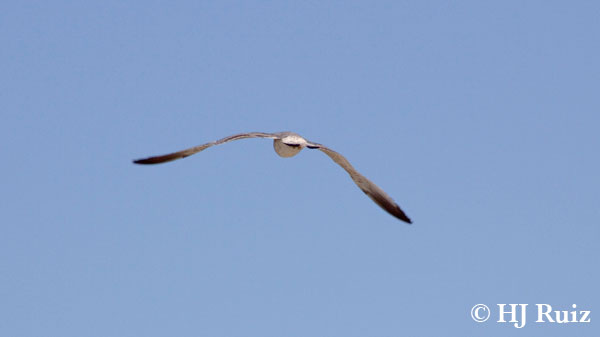
Seagull
Canon 60D – f/ 13.0 – 1/ 500 – ISO 125
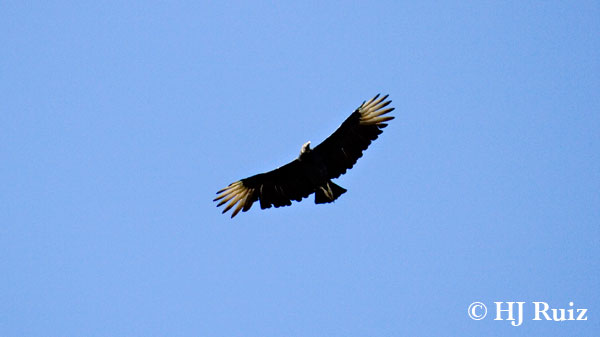
Black Vulture
Canon 60D – f/ 6.3 – 1/ 800 – ISO 125
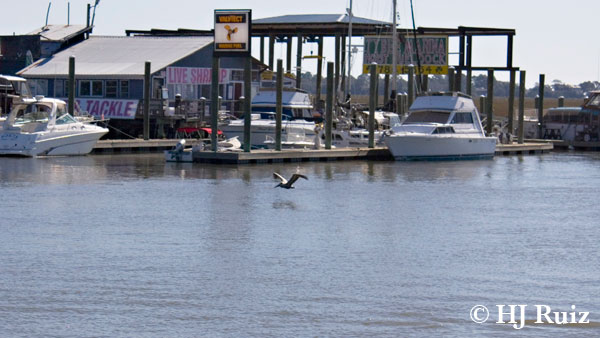
Brown Pelican
Canon 60D – f/ 6.3 – 1/ 1600 – ISO 125
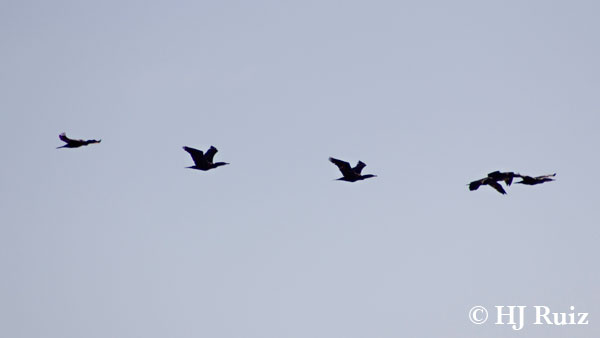
Cormorants
Canon 60D – f/ 6.3 – 1/3200 – ISO 125
All photos are © H.J. Ruiz – Avian 101
Share this:

Ruddy Turnstone
Ruddy Turnstone – Spec. Name: Arenaria interpres
This is a small wading bird, one of two species of turnstone in the genus Arenaria. It is now classified in the sandpiper family Scolopacidae but was formerly sometimes placed in the plover family Charadriidae. It is a highly migratory bird, breeding in northern parts of Eurasia and North America and flying south to winter on coastlines almost worldwide. It is the only species of turnstone in much of its range and is often known simply as Turnstone.
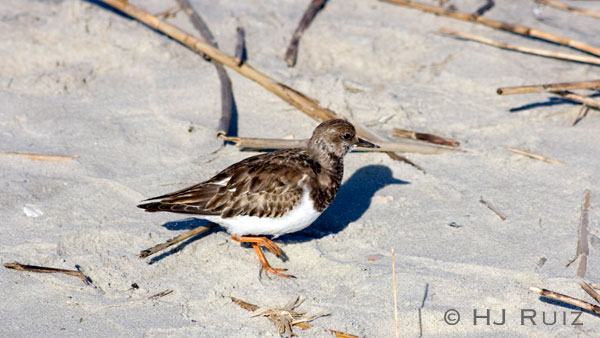
Ruddy Turnstone
It is a fairly small and stocky bird, 22–24 centimetres (8.7–9.4 in) long with a wingspan of 50–57 centimetres (20–22 in) and a weight of 85–150 g (3.0–5.3 oz). The dark, wedge-shaped bill is 2–2.5 centimetres (0.79–0.98 in) long and slightly upturned. The legs are fairly short at 3.5 centimetres (1.4 in) and are bright orange.
At all seasons, the plumage is dominated by a harlequin-like pattern of black and white. Breeding birds have reddish-brown upper parts with black markings. The head is mainly white with black streaks on the crown and a black pattern on the face. The breast is mainly black apart from a white patch on the sides. The rest of the underparts are white. In flight it reveals a white wingbar, white patch near the base of the wing and white lower back, rump and tail with dark bands on the uppertail-coverts and near the tip of the tail. The female is slightly duller than the male and has a browner head with more streaking.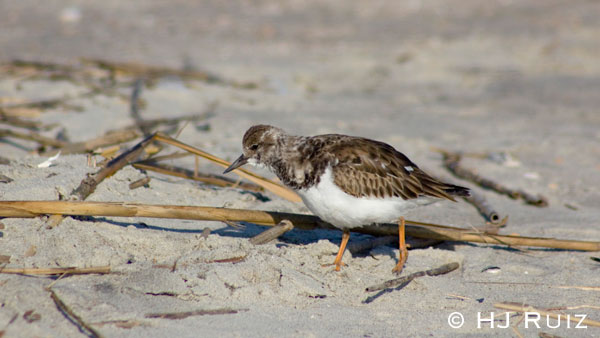
Non-breeding adults are duller than breeding birds and have dark grey-brown upperparts with black mottling and a dark head with little white. Juvenile birds have a pale brown head and pale fringes to the upperpart feathers creating a scaly impression.
Birds of the subspecies morinella are smaller with darker upperparts and less streaking on the crown.
The Ruddy Turnstone has a staccato, rattling call and also a chattering alarm-call which is mainly given during the breeding season.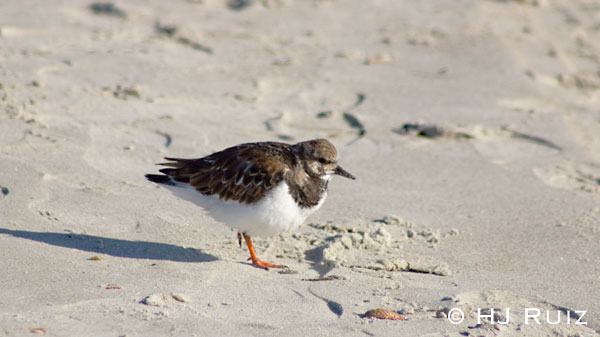
All photographs are © H.J. Ruiz – Avian 101
Text is available under the Creative Commons Attribution-ShareAlike License; additional terms may apply. See Terms of use for details.
Share this:

Tybee Island – Part 2
I am convinced that Tybee Island must be a great habitat for birds at mating season and nesting. There are vast amounts of territory that has all the elements to make a perfect place to get food and shelter for birds of all kinds.
I need to find what time of the year is best for birding in that area and perhaps drive out there again. I heard from several people that great amounts of birds occur the island returning from their migration.
The weather was soothingly nice while we were there. I even saw a couple of crews shooting professional or commercial videos on the beach and near the pier.
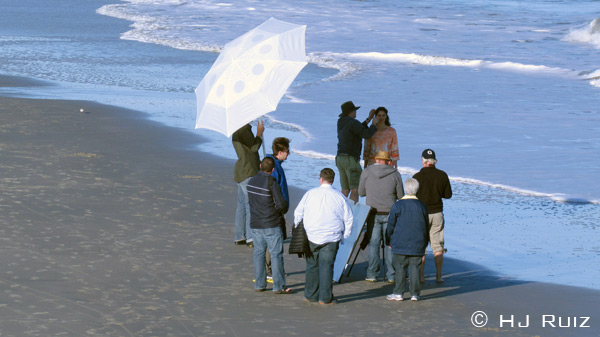
Shooting on the beach
I shot pictures on the pier and the beach the first day and surrounding areas on the second day.
I bring you some of them for this Part 2 post.
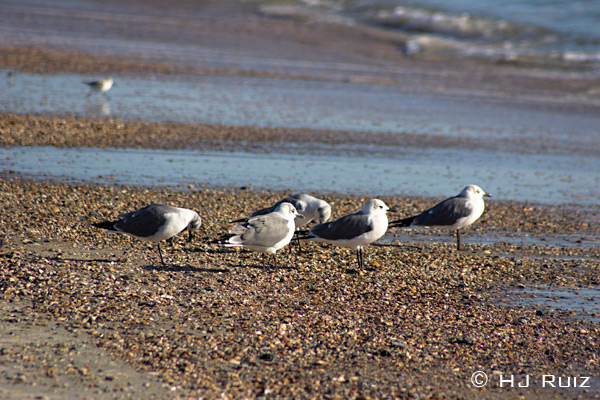
Seagulls
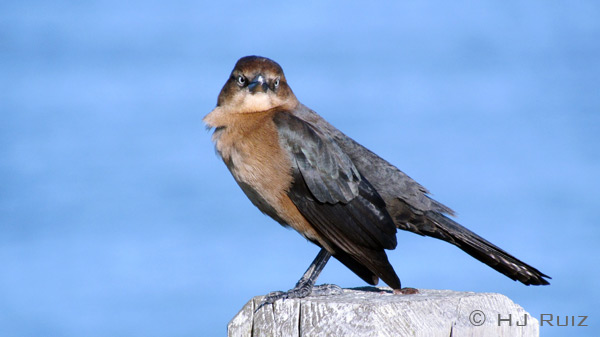
Female Boat-tailed Grackle

Male Boat-tailed Grackle
All photos are © H.J. Ruiz – Avian 101
Share this:

My trip to Tybee Island, Ga. – Part 1
My wife Lucy, my grandson Tyler and I spent 2 marvelous days in Tybee Island located 14 miles east of Savannah.
We couldn’t ask for more beautiful weather both days! They were brightly sunny and balmy warm.This trip was the very first time for Tyler to see the ocean and to walk over a sandy beach. He was so tremendously happy and excited to the point that later we had to carry him off the beach because he had sand all over him but he wanted more!. 🙂
Tybee Island has a long and wide beach of about 2 miles. The beach are known for being a nesting place for sea turtles at certain times of the year then for the new hatched turtles race to the waters by the thousands. Also known for the high tides that bring large quantities of small crustaceans shells which tourists pick up as souvenirs.
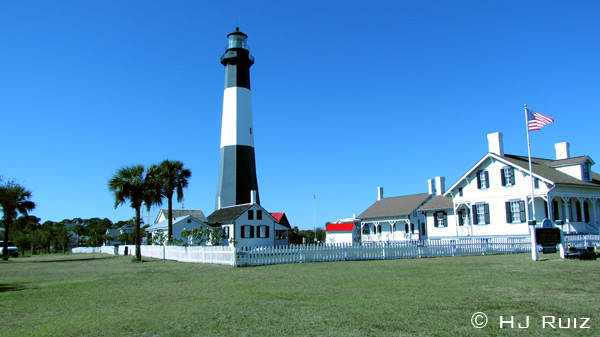
Tybee Island Lighthouse, constructed in 1736
At the north end of the island you can visit a gorgeous working lighthouse that is still serving as a beacon for ships guiding to safety.
The greater part of the island are pristine salt marshes and rivers of great beauty. We drove and hiked many different points of the island, everyone of them were nice.
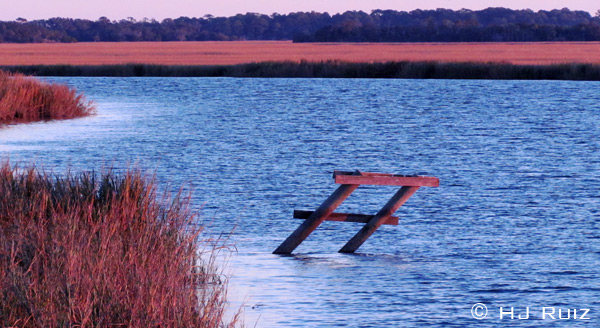
Beautiful marshes and river at sunset
Tybee Island has a very long and interesting pier were fishing enthusiasts try their luck, other visitors are there to see if they can spot dolphins swimming, other people like myself are there for bird watching and photography.
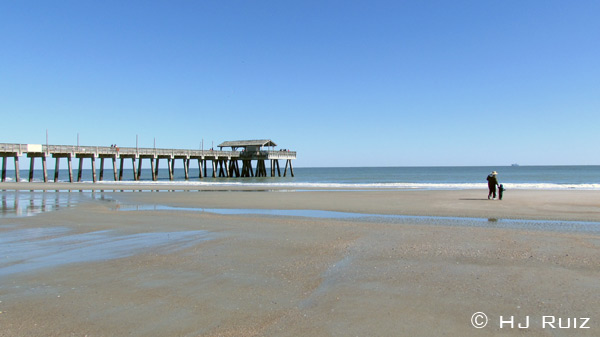
Lucy and Tyler walking the beach early in the morning
At the end of our 2 days we were totally satisfied with going to Tybee Island, we probably will go back some other time!
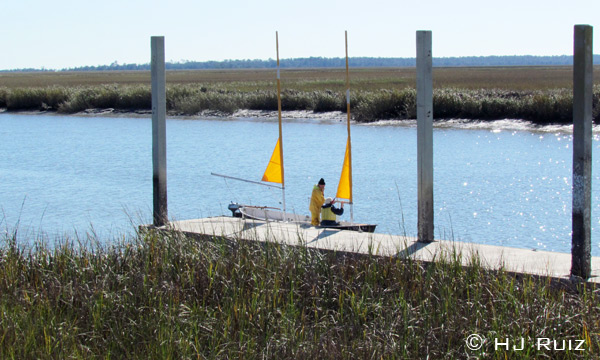
Preparing to sail before sunset
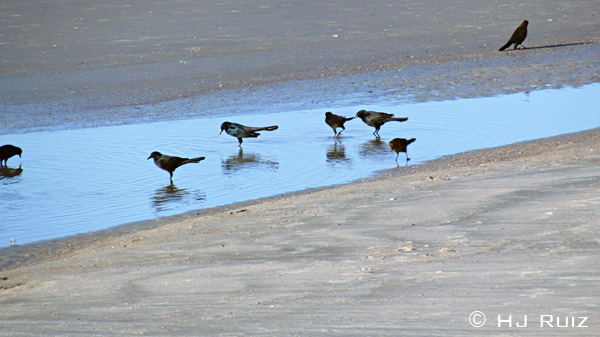
Boat-tailed Grackles in low tide pool
All photographs are © H.J. Ruiz – Avian 101
Share this:


Read Past Reviews

Book # 69

Quote from the Author
“A good chuckle is healthy, it helps you break the monotony of a serious life.” ~ H.J. Ruiz


You must be logged in to post a comment.