
Can Eggs be a Healthy Breakfast Choice?
Researcher says eggs, one of the most commonly consumed breakfast foods in the United States, have long been a subject of controversy. Are they healthy or are they a high-cholesterol trap? The answer depends on what the hen eats, says a Tel Aviv University researcher.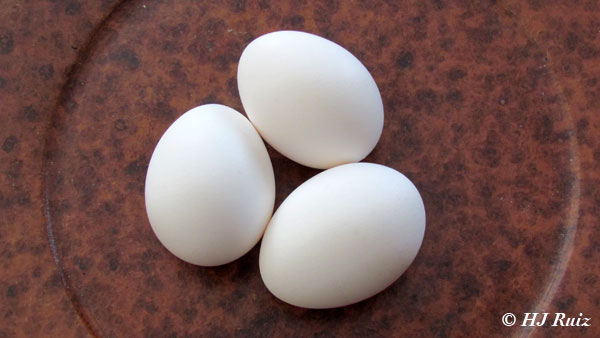
Dr. Niva Shapira of Tel Aviv University’s School of Health Professions says that all eggs are not created equal. Her research indicates that when hens are fed with a diet low in omega-6 fatty acids from a young age — feed high in wheat, barley, and milo and lower in soy, maize and sunflower, safflower, and maize oils — they produce eggs that may cause less oxidative damage to human health. That’s a major part of what determines the physiological impact of the end product on your table.
Her findings were published in the Journal of Agricultural and Food Chemistry.
Cholesterol oxidation: an industry standard?
Eggs high in omega-6 fatty acids heighten cholesterol’s tendency to oxidize, which forms dangerous plaque in our arteries. Dr. Shapira’s research shows that eggs laid by hens with healthier feed can lessen oxidation of LDL (low density lipoprotein), the body’s “bad cholesterol.”
But healthier eggs are likely to cost more, Dr. Shapira says. The price of chicken feed varies from region to region, and in many areas, feed containing products high in omega-6 fatty acids, such as maize, soy, and their oils, are much cheaper for egg producers to purchase.
To test the effect of a healthier feed on the eventual composition of the egg, Dr. Shapira and her fellow researchers designed feeds that were high in anti-oxidants and lower in omega-6 fatty acids, based on wheat, barley, and milo. The specialized feed was given to young hens who had not yet accumulated n-6 fatty acids in their tissues, and the composition of their eggs was then tested. When researchers achieved the desired composition of low omega-6 and high anti-oxidants, the eggs were given to test participants, who were instructed to eat two of these special eggs daily. Their results were measured against daily intake of two standard grocery store eggs, and a weekly intake of only two to four standard eggs.
There were vast differences in outcome among the treatments. Daily consumption of two industry-standard eggs, high in omega-6, caused a 40 percent increase in LDL oxidizibility in participants. After eating two per day of the specially-composed eggs, with both high anti-oxidant and low omega-6 levels, however, LDL oxidation levels were similar to the control group eating only two to four eggs a week.
Surprisingly, with the “healthier” eggs, we might be able to eat more than twice today’s generally recommended egg intake and still maintain a healthy level of LDL oxidation, Dr. Shapira concludes.
Demanding a better product
The drawback is that these eggs aren’t being widely produced. For now, consumers can only buy what the grocery store stocks.
Dr. Shapira recommends that consumers demand “health-oriented agriculture.”
“In addition to factoring in the cost of the chicken feed, farmers need to think about the health of the consumer,”
she says. To produce healthy foods, they need support from local authorities and increased consumer awareness. That would help to expand access to better foods.
As her study demonstrates, consumers should beware of egg studies that draw a single conclusion about the health value of all eggs, Dr. Shapira cautions, because the outcome could have a lot to do with how the egg was produced. In Europe, corn and soy are less commonly used in chicken feed, whereas in North America, these two ingredients often make up the bulk of the hen’s diet.
Photograph is © H.J. Ruiz – Avian 101
The above story is reprinted from materials provided by American Friends of Tel Aviv University.
Share this:

Walking and Flying Waterbirds
For today’s post I bring you a group of photos I had the opportunity of shooting in Tybee Island, Georgia. These waterbirds, some are considered walking birds and other flying birds.

Brown Pelicans
This group of Brown Pelicans are basking under the sun and at the base of a bridge uprights. Shot with a Canon 60D camera f/ 6.3 – 1/250 – ISO 125
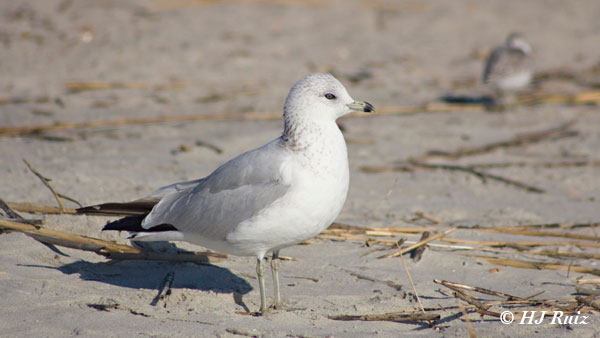
Ring-billed Gull
This bird is a flying type, feeds from the water mostly. Shot with Canon 60D camera, f/6.3 – 1/ 2000 – ISO 125
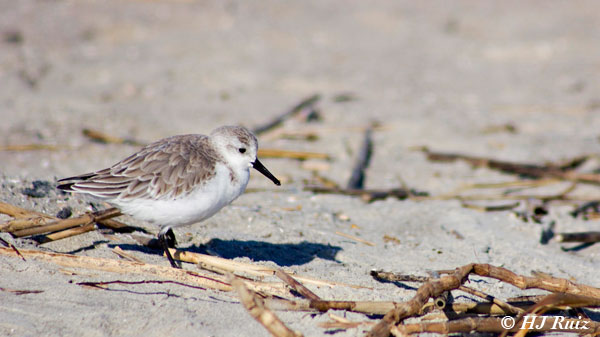
Sanderling
This little bird is a walking type waterbird, feeds on small mollusks and crustaceans at the beach shore. Shot with a Canon 60D – f/ 6.3 – 1/250 – ISO 125

Laughing Gull
This is another waterbird that feeds on the ground, this particular bird is at not breeding period plumage. shot with a Canon 60D camera, f/ 6.3 – 1/ 2000 – ISO 125
All photographs are © H.J. Ruiz – Avian 101
Share this:

Tybee Island’s Pier – Video
I’m still trying my hands with video shooting. Today I bring you a short video that I shot while being on the pier at Tybee Island’s Beach. I just hope that you will understand that I’m an amateur at video. I’m still learning, give me a little more time please! 🙂
Video © H.J. Ruiz – Avian 101
Share this:

Black Vulture
Black Vulture a.k.a. American Black Vulture – Spec. Name: Coragyps atratus
This is a bird in the New World vulture family whose range extends from the southeastern United States to Central Chile and Uruguay in South America. Although a common and widespread species, it has a somewhat more restricted distribution than its compatriot, the Turkey Vulture, which breeds well into Canada and south to Tierra del Fuego. Despite the similar name and appearance, this species is unrelated to the Eurasian Black Vulture. The latter species is an Old World vulture in the family Accipitridae (which includes eagles, hawks, kites and harriers), whereas the American species is a New World vulture. It is the only extant member of the genus Coragyps, which is in the family Cathartidae.

Black Vulture
It inhabits relatively open areas which provide scattered forests or shrublands. With a wingspan of 1.5 m (5 ft) the Black Vulture is a large bird though relatively small for a vulture. It has black plumage, a featherless, grayish-black head and neck, and a short, hooked beak.
The Black Vulture is a scavenger and feeds on carrion, but will also eat eggs or kill newborn animals. In areas populated by humans, it also feeds at garbage dumps. It finds its meals either by using its keen eyesight or by following other (New World) vultures, which possess a keen sense of smell. Lacking a syrinx—the vocal organ of birds—its only vocalizations are grunts or low hisses. It lays its eggs in caves or hollow trees or on the bare ground, and generally raises two chicks each year, which it feeds by regurgitation. In the United States, the vulture receives legal protection under the Migratory Bird Treaty Act of 1918. This vulture also appeared in Mayan codices.
The Black Vulture is a fairly large bird of prey, measuring 56-68 centimeters (22–27 in) in length, with a 1.37–1.67 meter (4.5–5.5 ft) wingspan. Weight for Black Vultures from North America and the Andes ranges from 1.6 to 2.75 kilograms (3.5–6 lb) but in the smaller vultures of the tropical lowlands it is 1.18–1.94 kg (2.6–4.3 lbs). Its plumage is mainly glossy black. The head and neck are featherless and the skin is dark gray and wrinkled.[26] The iris of the eye is brown and has a single incomplete row of eyelashes on the upper lid and two rows on the lower lid. The legs are grayish white, while the two front toes of the foot are long and have small webs at their bases. The feet are flat, relatively weak, and are poorly adapted to grasping; the talons are also not designed for grasping, as they are relatively blunt.
The nostrils are not divided by a septum, but rather are perforate; from the side one can see through the beak. The wings are broad but relatively short. The bases of the primary feathers are white, producing a white patch on the underside of the wing’s edge, which is visible in flight. The tail is short and square, barely reaching past the edge of the folded wings. The subspecies differ in size according to Bergmann’s Rule, and the amount of white underwing coloration also varies. As it probably forms a cline over its entire range, the species is often considered monotypic.
A leucistic Coragyps atratus brasiliensis was observed in Piñas, Ecuador in 2005. It had white plumage overall, with only the tarsus and tail as well as some undertail feathers being black. It was not an albino as its skin seemed to have had the normal, dark color and it was part of a flock of some twenty normally plumaged individuals.
All photographs are © H.J. Ruiz – Avian 101
Text is available under the Creative Commons Attribution-ShareAlike License; additional terms may apply. See Terms of use for details.
Share this:


Read Past Reviews

Book # 69

Quote from the Author
“A good chuckle is healthy, it helps you break the monotony of a serious life.” ~ H.J. Ruiz


You must be logged in to post a comment.