Welcome to Clinton, New Jersey
“Clinton is nestled in the hills of Hunterdon County, New Jersey. It is the quintessential American small town that has brought movie producers and visitors here for years. A charming historic shopping area, cherry tree lined streets and a river meandering through it makes Clinton a picture perfect hamlet.”
This is how you read on brochures ads attracting visitors and it only takes one visit and you will fall in love with this town. Honest!
I believe it one of the most beautiful towns I’ve seen that I can remember.
They have preserved much of their quaint town antiquity even included to their amenities is a perfect recreation acted by locals of events previous to the independence and life as it happened in that period. It’s quite interesting!
What will impress the most is the natural beauty of the surroundings, the river, lake, luscious vegetation and manicured green areas.
If you ever have a chance to visit this town, I assure you’ll love it! 🙂
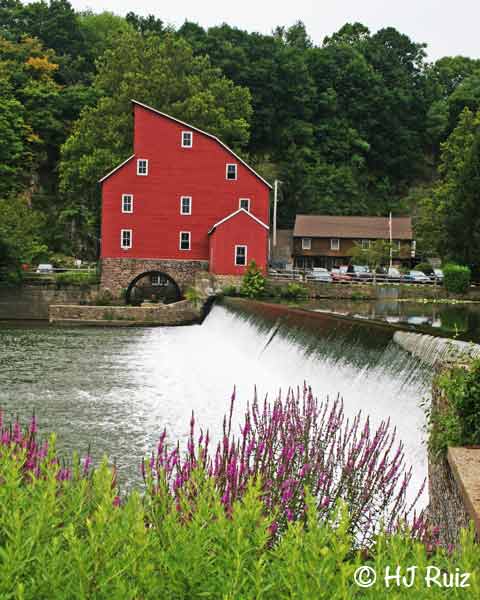
Clinton Old Mill and cascade
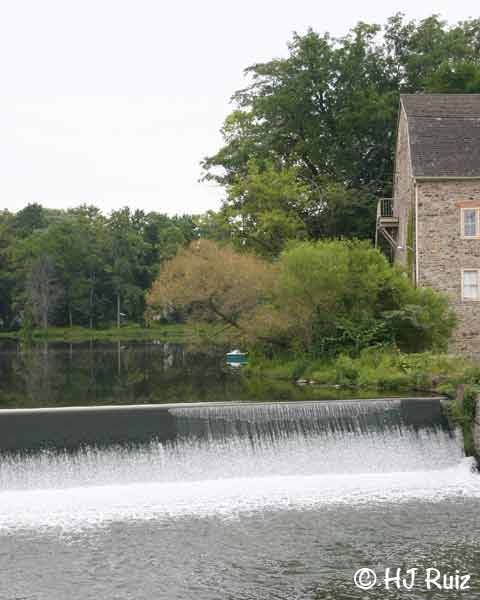
Cascade and Stone House
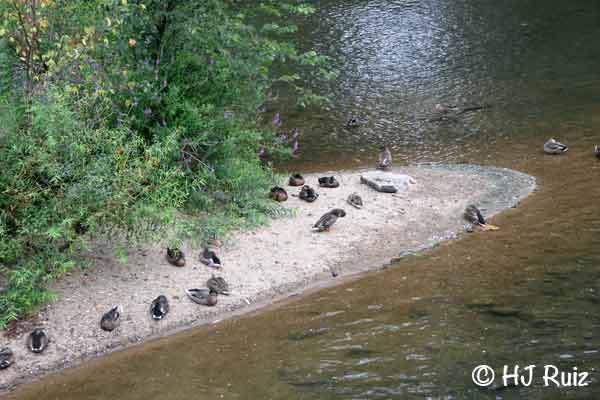
Flock of Mallard ducks on small river island

Scene of lake with lilly-pads

Re-creation of life as it was during the 1700s period
All photographs are © H.J. Ruiz – Avian 101
Share this:

Millions of bird deaths in Nevada
American Bird Conservancy, the nation’s leading bird conservation organization, is asking Nevada citizens to act on a state law that now gives them the ability to prevent thousands, possibly millions of bird deaths at mining claim sites. The law, passed in 2009, included a provision that became effective this month enabling anyone to pull up claim marker stakes that are improperly set and act as bird-killing traps.
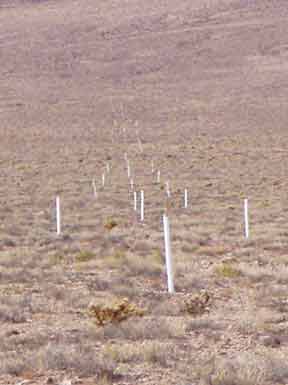
Thousands of claims markers made of PVC pipes, uncapped!
The stakes are PVC pipes, and to a lesser extent, metal pipes, often used to mark not only the corners but sometimes the lengths and widths of mining claims. Once driven into the ground, the four- to six-inch diameter pipes extend several feet above ground for easy spotting by claim holders and regulators. Small birds often see the opening of the pipe markers as a hollow suitable for nesting. After perching on the pipes, the birds then enter the hole only to become trapped because the walls of the pipes do not allow them to extend their wings and fly out and are too smooth to allow them to grapple their way up the sides. Death from dehydration or starvation in the hot, dry Nevada desert climate then soon follows. Other animals such as lizards also meet the same fate.
Recent examination of 854 pipes revealed 879 birds (as well as 113 reptiles and 20 mammals) – an average of more than one bird mortality per pipe. Given that, according to the Bureau of Land Management (BLM), there are in excess of one million federal mining claims in the Nevada, this could mean a million or more dead birds in that state alone.
Of the 43 species of birds so far recovered from the markers, by the Nevada Department of Wildlife (NVDOW), most are cavity nesters. The Ash-throated Flycatcher and the Mountain Bluebird were the most frequent victims, but others commonly trapped included woodpeckers, sparrows, shrikes, kestrels, and owls.
A 1993 Nevada law prohibited installation of deadly, uncapped or uncrimped pipes for marking the boundaries of mining claims that typically include such minerals as gold, silver, lead, copper, and zinc. However, the law did not require old pipes to be removed. A subsequent 2009 Nevada law made any claim still marked with open-ended pipe no longer valid. The legislature also included a citizen provision that became effective November 1 of this year, which allows anyone to pull up open pipe markers and lay them on the ground nearby.
Concern about the pipes prompted BLM’s Las Vegas Office, the NVDOW, and the Nevada Conservation Corps to organize a four-day marker removal
effort in a portion of the Spring Mountains early in November. Amelia Savage, BLM Las Vegas Wildlife Biologist said the three groups are planning two more pipe removal efforts, in each of the next two months.
“BLM and NVDOW planned the marker removal for months so we could spring into action the first full week after the law gave us the authority to act. We targeted an area where we knew we could make a difference and get a lot done. We look forward to the next efforts and hope they are as productive as the first one,” said Savage.
According to Christy Klinger, a Wildlife Biologist with the NVDOW and one of the organizers of the BLM/NVDOW marker-pulling effort as well as a second marker pulling effort with the Red Rock Audubon Society, “Certainly, the wildlife mortality was troubling, but another disconcerting discovery we made is that about half of those markers that had protective caps put in place at some earlier point in time, now had those caps displaced, on the ground nearby. So the hazard from the pipe became re-established.”
“It is certainly possible and perhaps even likely that a million or more birds have needlessly died in these pipes. It is encouraging that we are seeing efforts by local, federal, and state agencies to address the problem. However, given the enormous scale of the issue, long-term solutions are required. While Nevada has a large mining industry, the issue goes well beyond their borders to a number of other mining states. Mining claim holders need to be held accountable for their stakes through federal regulatory action: remove your hazardous markers or face fines under the Migratory Bird Treaty Act. The current Nevada law, for example, provides no meaningful enforcement provisions,” said ABC President George Fenwick.
Nevada’s mining industry is one of the biggest in the United States, producing over $5.8 billion in mineral material in 2009. With over 80 percent of Nevada land being federally owned – the highest of any state – BLM oversees most of the mining operations in the state. The state of Nevada, however, administers issues related to boundary markings.According to a BLM publication called Public Land Statistics, in 2010, there were 3,388,400 mining claims of record on BLM-managed lands in the 11 western states and Alaska. Following Nevada, the states with the highest number of federal mining claims are Utah, with 401,828, Wyoming (which includes minimal numbers from Nebraska) with 306,588, California, with 300,809, and Colorado with 278,326.
“When you look at numbers such as these, it is possible that these mining claims markers are a significant source of bird mortality in this country,” said Fenwick.
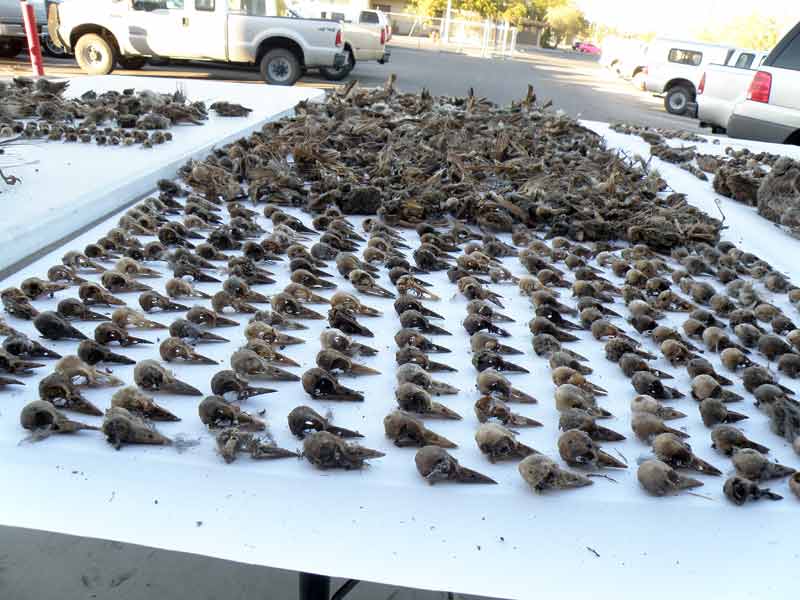
Thousands of dead birds extracted from claim pipes
American Bird Conservancy (ABC) is a 501(c)(3) not-for-profit membership organization whose mission is to conserve native birds and their habitats throughout the Americas. ABC acts by safeguarding the rarest species, conserving and restoring habitats, and reducing threats, while building capacity in the bird conservation movement.
Share this:

Butterfly Day
Butterfly Day? I heard of Black Friday a lot lately! but Butterfly Day sounds kinda silly! Besides it’s the only title I could think of. 🙂
No, I didn’t make a mistake! Today I’m posting some butterflies because somebody I know ask me: – Why is it that I don’t post butterfly pictures and flowers since I take pictures of them often?
Well…it’s because I have a blog about birds? Dah! Actually that didn’t work! 🙂
Ok let’s do butterflies today, after all they fly like birds too, feed from my flowers and they are humm…pretty! Yeah, I admit it, they are very pretty.
Flowers are also very pretty.
Folks, I’m trying to justify the best I can that I’ll post some other subjects once in a while on request.
Here they are!! I ask you experts, can you name the butterflies and the moth?
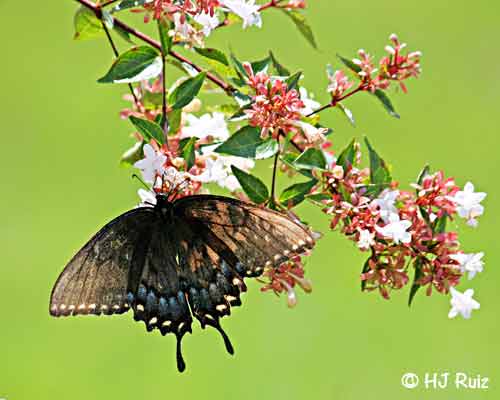

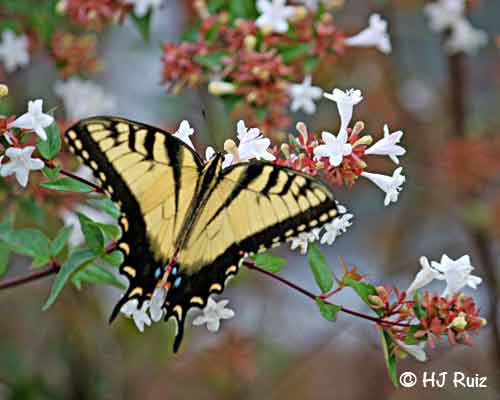

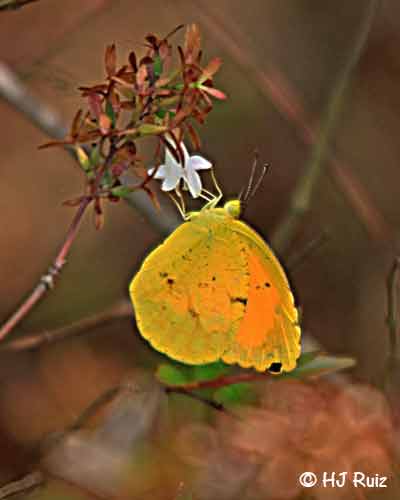

All photographs are © H.J. Ruiz – Avian 101
Share this:

Horned Lark – Video
This time we have the portrait of the Horned Lark on a wonderful video by © Lang Elliott and Beth Bannister. Enjoy the music of Nature!
Share this:


Read Past Reviews

Book # 69

Quote from the Author
“A good chuckle is healthy, it helps you break the monotony of a serious life.” ~ H.J. Ruiz


You must be logged in to post a comment.