Facing the Challenge in Hawaii
The Challenge
Since human colonization, 71 bird species have become extinct on Hawai’i; 48 prior to the arrival of Europeans, and 23 since Captain James Cook’s “discovery” of the islands in 1778. Of the 42 remaining endemic taxa, 33 (31 species and 2 sub-species) are federally listed under the Endangered Species Act. Ten of those species have not been observed in 40 years and their status is unknown, though they are likely extinct. Today, Hawai’i supports 157 regularly occuring bird species, only 91 of which (57%) are native. Hawai’i is the global epicenter for imminent extinctions.
The protection of the remaining native birds, including the diverse group of honeycreepers, is the highest bird conservation priority in the United States and a long-term commitment for American Bird Conservancy.
Most Hawaiian bird species are in decline due to habitat loss, predation by non-native predators, and habitat degradation due to introduced ungulates, exotic, invasive plants, introduced plant diseases, and introduced insects. Mosquitoes are among the most deadly of non-native species and are responsible for the spread of avian malaria and avian pox which have caused multiple avian extinctions.
Hawai’i is the epicenter of global extinctions. Efforts to prevent the loss of more bird species comes under Safeguarding the Rarest within ABC’s Conservation Framework
Primary Birds Impacted
42 endemic species, of which 33 are listed under the Endangered Species Act: Palila, ‘Akiapola’au, Maui Parrotbill, Nihoa Millerbird, Hawaiian Petrel, ‘Akikiki, ‘Akeke’e, Omao, Puaiohi, Hawaiian Coot, Hawaiian Stilt.
Solutions
Hawai’i boasts a concentration of bird species found nowhere else, and ABC wants to ensure their survival. ABC’s Hawai’i Program is a multi-year conservation effort aimed at reversing the decline of native, endangered Hawaiian bird species by:
- Increasing private and government funding for their conservation
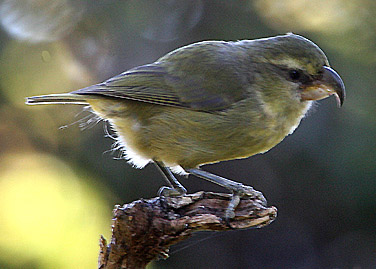
- Protecting, managing, or restoring critical bird habitat for species such as the Palila and Maui Parrotbill
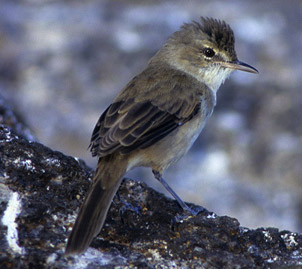
- Addressing major threats to bird populations such as the Nihoa Millerbird
- Increasing public awareness and support for Hawaiian bird conservation
-
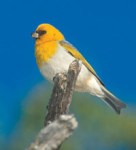
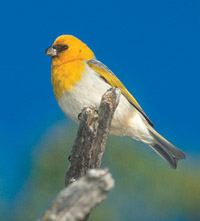
- Palila – © Jack Jeffrey
-
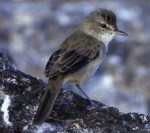
- Nihoa Millerbird – © Jack Jeffrey
-
- Maui Parrotbill – © Michael Walther
Excerpts from article © American Bird Conservancy (ABC) is a 501(c)(3) not-for-profit membership organization whose mission is to conserve native birds and their habitats throughout the Americas.
Share this:

Palm Warbler
Palm Warbler – Spec. Name: Dendroica palmarum,
This is a small songbird of the New World warbler family. The species comprises two distinct subspecies that may merit specific status.
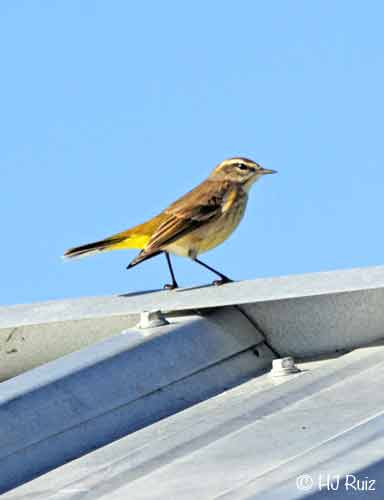
Palm Warbler
“Yellow Palm-Warbler” (D. p. hypochrysea) of the eastern third of the breeding range has brownish-olive upper parts and thoroughly yellow underparts with bold rufous breast and flank streaking. It migrates later in the fall than its western counterpart.
“Western Palm-Warbler” (D. p. palmarum) inhabits the remaining western two-thirds of the breeding range. It has much less yellow below, with less colorful streaking, and cold grayish-brown upper parts.
Palm Warblers breed in open coniferous bogs and edge east of the Continental Divide, across Canada and the northeastern United States. Their nests take the form of an open cup, usually situated on or near the ground in an open area.
These birds migrate to the southeastern United States, the Yucatán Peninsula, islands of the Caribbean, and eastern Nicaragua south to Panama to winter.
Palm Warblers forage on the ground much more than other warblers, sometimes flying to catch insects. These birds mainly eat insects and berries.
The song of this bird is a monotonous buzzy, trill. The call is a sharp chek.
Kirtland’s, Prairie, and Palm Warblers are the only Dendroica species that incessantly bob their tails.
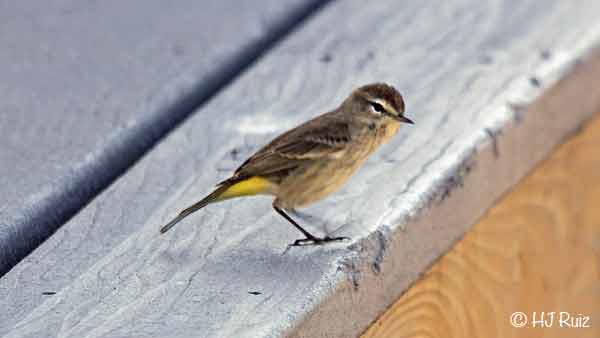
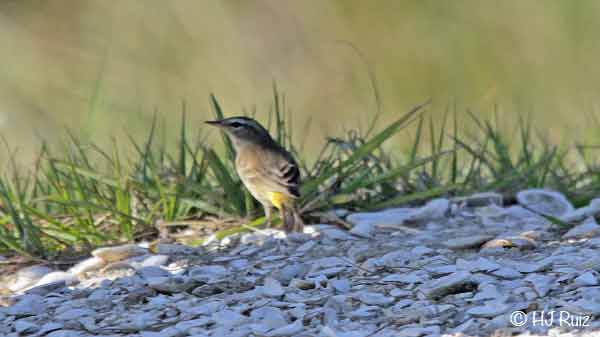
All photographs are © H.J. Ruiz – Avian 101
Text is available under the Creative Commons Attribution-ShareAlike License; additional terms may apply. See Terms of use for details.
Share this:

Shore Birds Photos
I feel good having my camera with me and observing the world through the lens. More so when I’m enjoying great weather conditions or near the beach. I love the smell of the ocean and the shooting sound of the waves.
I have a few pictures for you today, no exif this time. I’ll go right to the point. Subjects are shore birds. Enjoy!
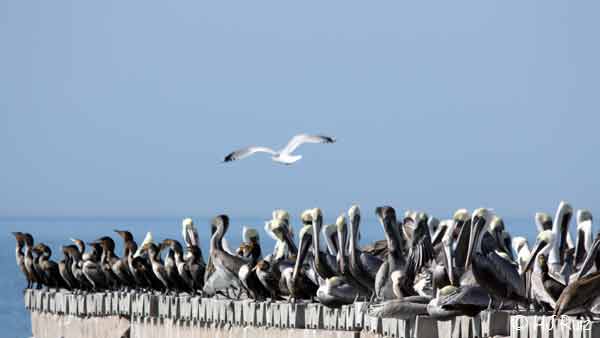
Sorry buddy no parking!
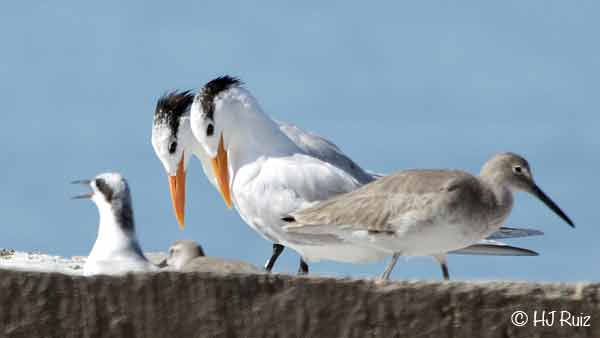
Don't talk, she can hear us!
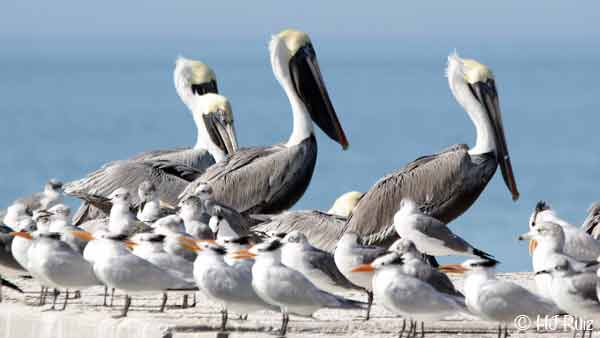
Large dudes to the other side!
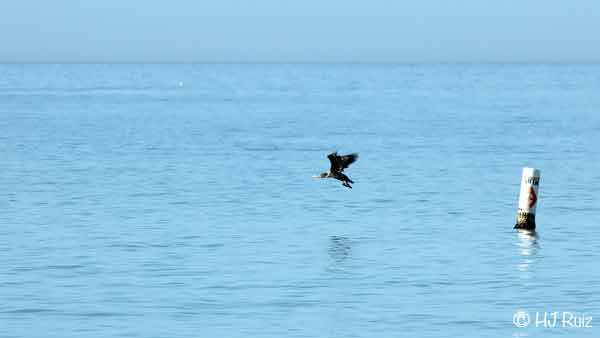
They left me behind! Wait up!
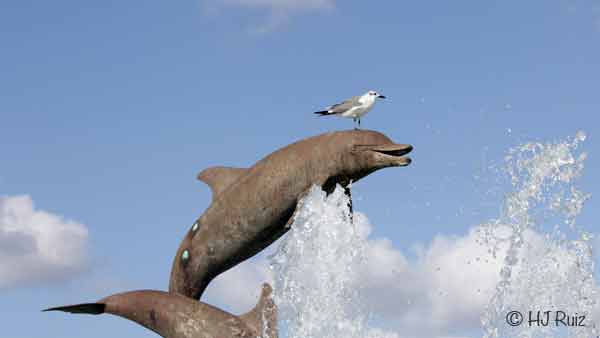
Don't you think this is cool?
All photographs are © H.J. Ruiz- Avian 101
Share this:

My Camera and I
It’s very common to be on location planning to shoot certain kinds of birds and suddenly lots of other things start to happen in the surrounding areas, distracting events that sometimes are more attractive to be photograph than your original plan.
When I go for a shoot I always have my mind and eyes open for anything and everything. I’m ready for whatever lures my attention and it doesn’t have to be only birds.
Today I bring you a few samples of what I observed and shot in my last trip.
Try to read the photo captions, they are part of this brief essay.
“Thank goodness for the invention of the camera!”
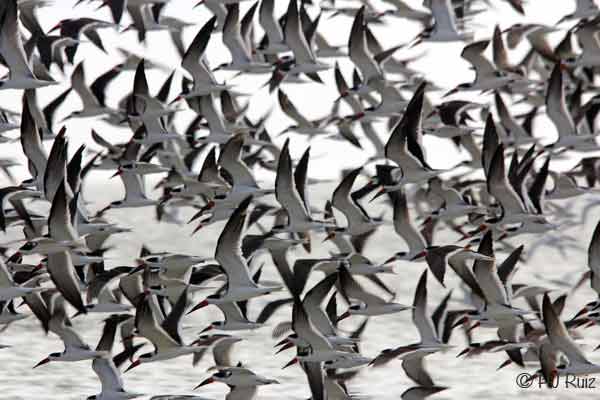
One minute is peace and quiet, next...
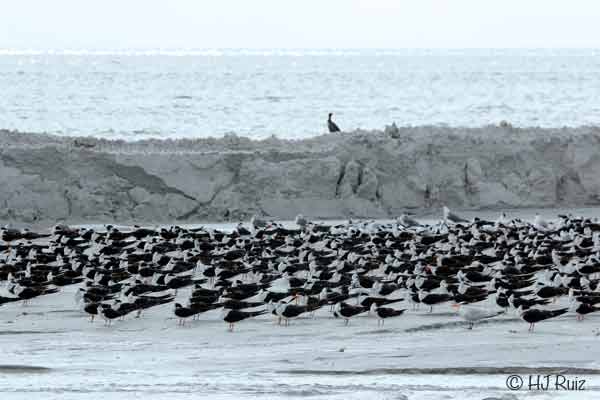
Kaboom! Like an explosion! Orderly chaos! Not one is hit!
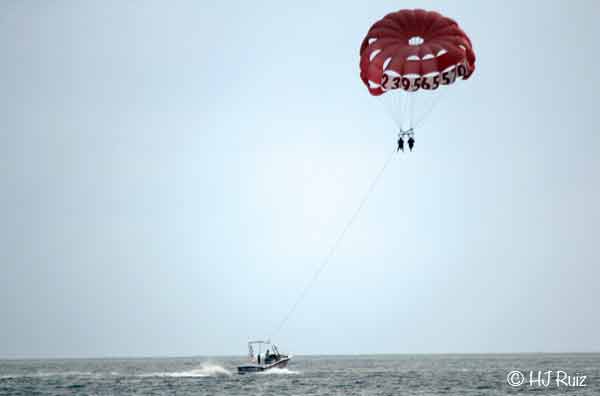
Strange birds! 🙂
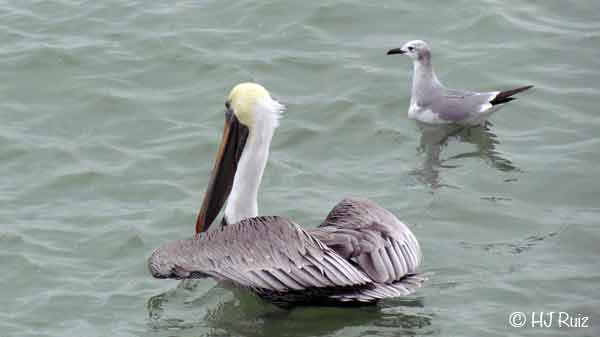
The gull follows the pelican to steal his fish catch! Smart or lazy?
Even dolphins are willing to be photographed! Just like in Hollywood! 🙂

Share this:


Read Past Reviews

Book # 69

Quote from the Author
“A good chuckle is healthy, it helps you break the monotony of a serious life.” ~ H.J. Ruiz


You must be logged in to post a comment.