Sams Lake Bird Sanctuary
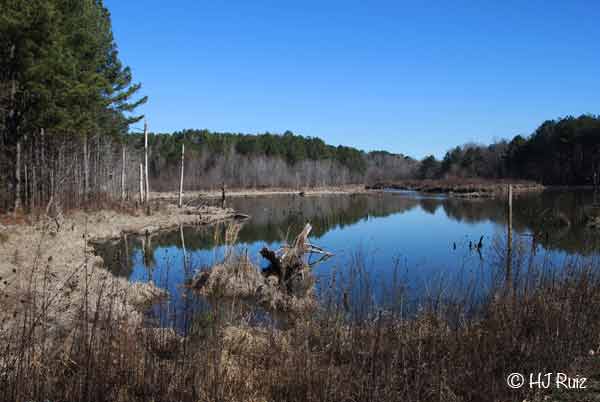
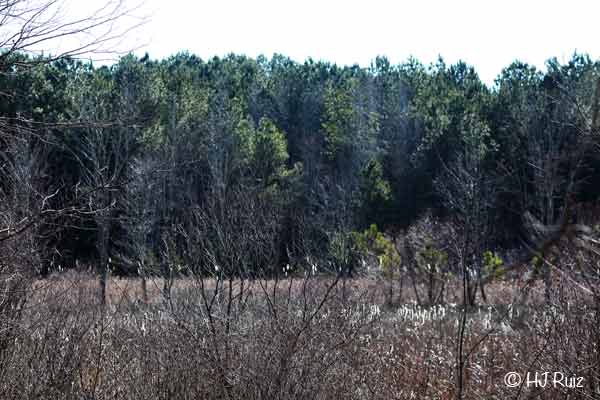
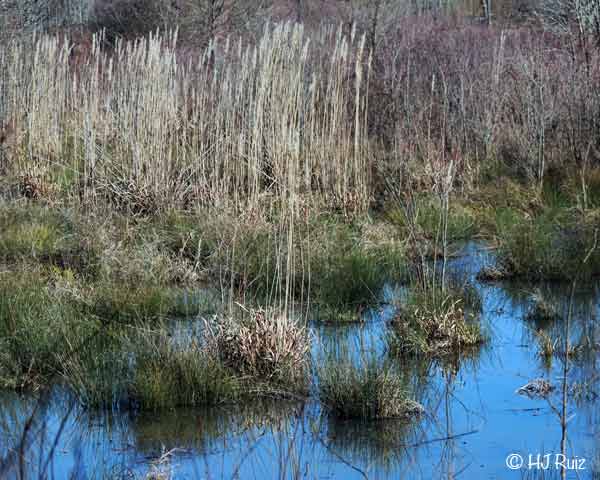
Last Saturday morning I went to Sams Lake Bird Sanctuaryin Fayetteville, Georgia. It takes approximately one hour and a half drive from where I live. I drove there with my wife and grandson, we take this as a outdoor activity. The weather forecast the day before called for a sunny and cool day perhaps 61 degrees at noon. They were wrong as always. We got to the place and the temperature was at that time 34 degrees, sunny but cold. Good thing that we were prepared for that effect. The problem was that in such cold temperature there were no birds to shoot pictures. So I went around the area to check the sanctuary. The place is not bad at all, it has several look out points as well as trails that allow you to circle around the wet areas and ponds. There’s a beaver dam but was barred from visitors. Later the temperature went up to the 50’s and I saw, not photographed:
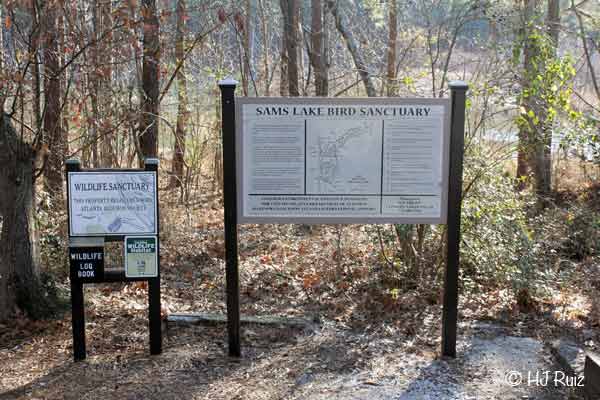
These signs are at the entrance by the parking area
- Downy woodpecker 1
- Cooper’s Hawk 2
- Brown-headed nuthatch 1
- Red Tanager 1
- Yellow warbler 3
I heard many woodpeckers all over but I couldn’t find them! Same happened with song birds. They were hiding obviously!
I took some shots of birds on flight:
- Turkey Vultures
- Black Vultures
- Flocks of Great Blue Herons
I’m almost sure that this Sanctuary gets very busy when most birds return from their migrations, I think I’d be worth it to come back here then.
We returned home on the early afternoon. By the way I forgot to mention that I was trying and testing my new camera Canon 5D Mark II ( Thank’s to Lucy) I wanted to have a full frame sensor digital camera for long time. 🙂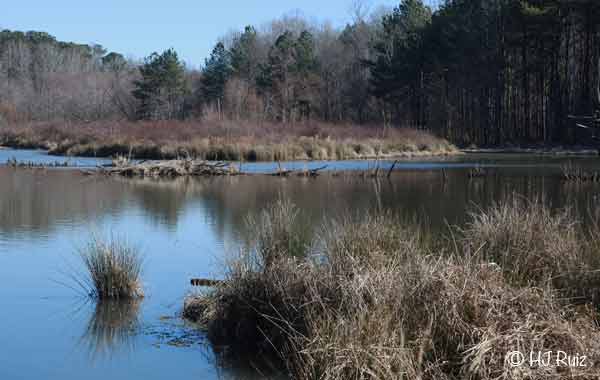
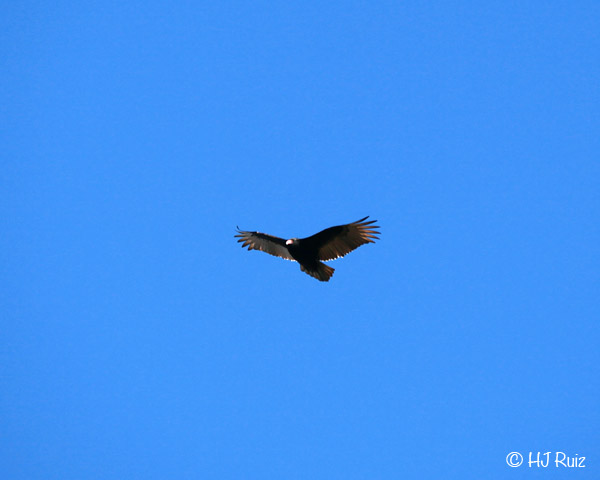
Black Vulture
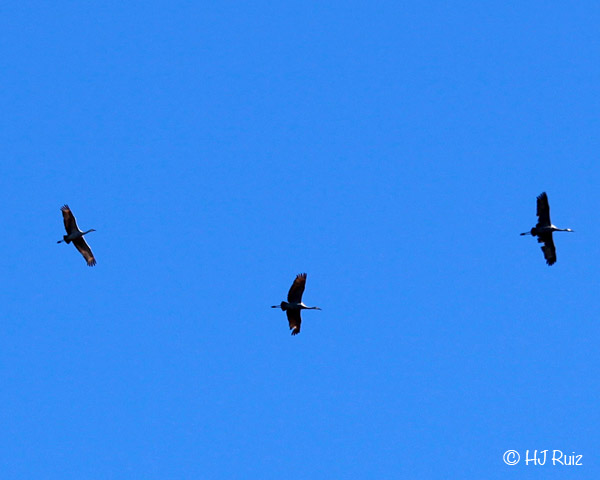
Great Blue Herons
All photographs are © H.J. Ruiz – Avian 101
Share this:

Amazon River and Rainforest – Part # 3 End
Before you start reading I’d like to let you know I have started a new PHOTO BLOG and I ‘d be very honored if you visit it after you have finished reading today’s post. Enter HERE
We had reached the nearest point toward our camp via boat already, now we have to take a hike to the camp. We walked on a path, very narrow, almost brushing the plants that surround you. The guide trims the plants that have grown too close to the path with his “machete”, we’re walking mostly on dark mud. Rain forests are dark too because of the canopy formed by large trees, they cast shadows and where there are openings the sun rays look like beams of bright light cutting through the shadows.
After going across creeks with primitive bridges made of fallen trees and some banana patches we got to the camp. The camp consists of series of thatched huts connected by covered pathways, all these are built on high stilts, main concern here is the rain, when it rains it rains copiously! Very heavy downpours and you can see water running like a river under the huts. We had cots for sleeping with mosquito nettings over it and outhouses. Also a place to shower.
The heat and humidity is very intense and unless you’re very tired it’s hard to fall asleep. In the mornings we usually left with our guide to explore what’s the rainforest all about.
He showed us giant trees which are a habitat for a number of species of birds, insects, monkeys and you name it. One tree is like the world for many creatures.
Showed us holes in the mud where tarantulas the size of soup dishes live. If you just keep quiet and do not walk they start coming out, the biggest I’ve seen in my life! Butterflies of all shapes and colors and huge! Capybaras in ponds, snakes around tree branches, small alligators basking under the sun at the edge of ponds. Worms and weird insects all over. Large mud licks for birds and butterflies. Parrots are noisy and fly al over! One time I stepped on a rotten branch on the side of a path which broke in pieces with my weight. In seconds there were thousands of ants crawling all over! Some came to me and quickly crawled on my legs inside my pants and they bit me many times, I smashed them with my hands and our guide helped me smash them with the flat side of the machete. The ants were black and large and their bite was painful. After that day I tucked my pant’s legs to my socks. Later after the trip was over I had some of the bites infected for awhile and had marks for about a year. It was some experience! ( I’m glad they weren’t spiders! I hate spiders!)
It’s a whole different world of animals here. When the night comes it’s pitch black if you don’t have a flash light you would find in total darkness!. We had gas lamps in camp. In several points to make us more comfortable. Just don’t get too close to where is to lighted because flying insects will star clinging on you!
The day came when we went to visit the tribe village.
It’s amazing to see how contrasty our world is! We live in a sophisticated society with comfort and latest technology, stylish and vain. The world of modern humankind! However, here I see generations of people that still live like when men lived in caves. They mostly walk around and live nude, they have taking dress a bit since they have learned the way that “civilized people” live. Their village is a mixture of huts made their way and some other made from what they’ve learned from modern times using slats of wood. Either way they’re at total poverty line grade. They manage to live eating roots, banana, plantains, fruits, rice, fish, yucca, cacava, monkey,etc. They love to trade their trinkets like beads, arrows, blow guns etc. They will trade for what ever the visitors have to give them like food, sweets, gum, hats or money, etc. In general, their living conditions are precarious and riddled with health problems, mostly inherited form the “Outsiders” When the people from the old world got in touch with the people of the new world not only brought them new trades and knowledge… along brought disease and pestilence. This is the sad reality of these people. Many say that they’re the forgotten people, they are not considered much into our daily trivialities. Thousands of forgotten people, die every year in the world and we are not so concerned. They too count and could possibly become extinct!
“I wish more people will read this blog perhaps as my last futile attempt to bring some insight about this recurring problem. I’ve tried before to raise my voice but unfortunately not many people has the desire to listen.”
I’m sorry that this is not like the popular “Reality Shows” they show on TV. Must be a different kind of reality!
The End
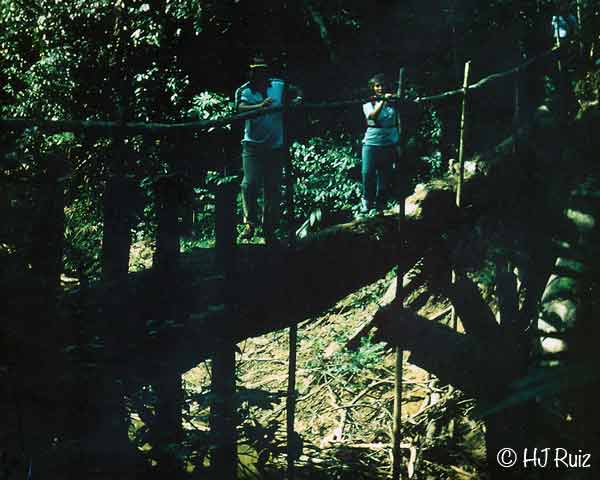
Lucy and I crossing a creek
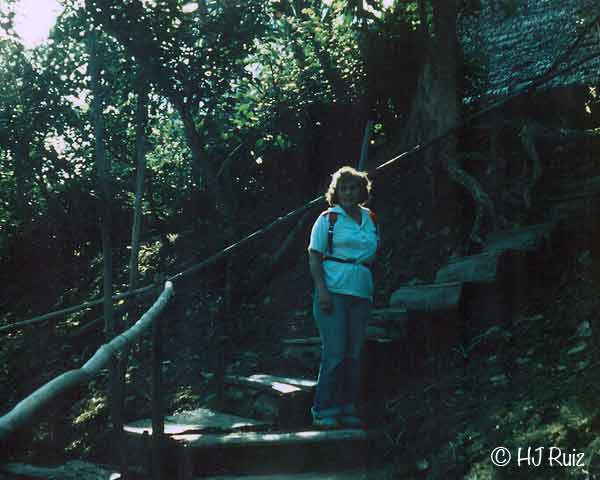
Lucy climbing stairs to the camp site
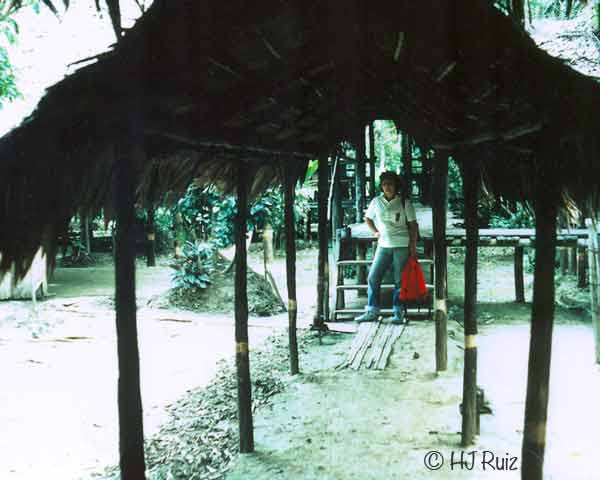
Lucy showing the cover passageways in camp
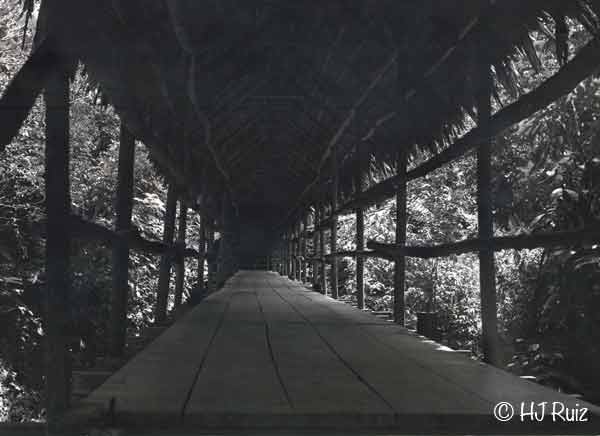
Connected passageways on stilts

Near sunset in the jungle, before the pitch dark night.
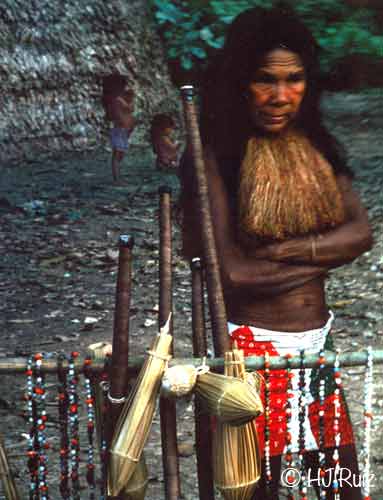
Native trading her trinkets with visitors.
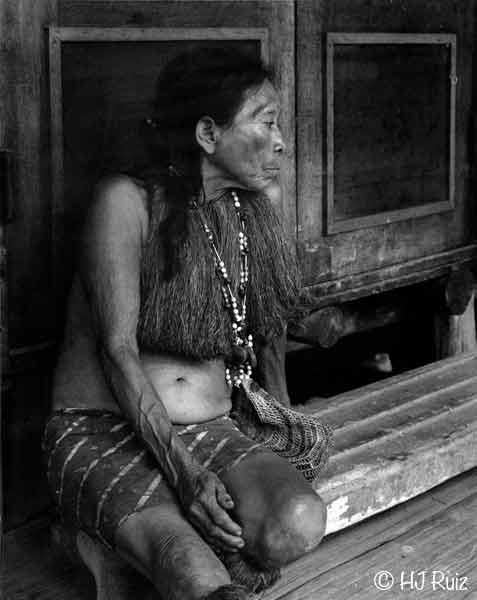
This photograph is the poster for "Sad Reality"
All text and photographs are © H.J. Ruiz – Avian 101
Share this:

The Amazon River and the Rainforest – Part Two
After our tour around the Belen village we were ready to go farther downriver and look at the heart of the matter. The tribes that live inside the “Matto Grosso” (Portuguese for “Great Tangle”) of the amazonic jungle. Us and our group went on board of a mid size covered boat. Along with our guide and the crew that run the boat. Our guide was a man from Iquitos but descendant from a ‘Campa’ tribe. He managed to speak a good English, Spanish, Portuguese and their native dialect. He was well versed and had good knowledge about the rainforest, the river and the people we were about to visit ing the jungle village. The Campa people are very friendly and have been the very first tribe that established a friendship with the civilized world. There’re many tribes in the vast jungle but not all are friendly.
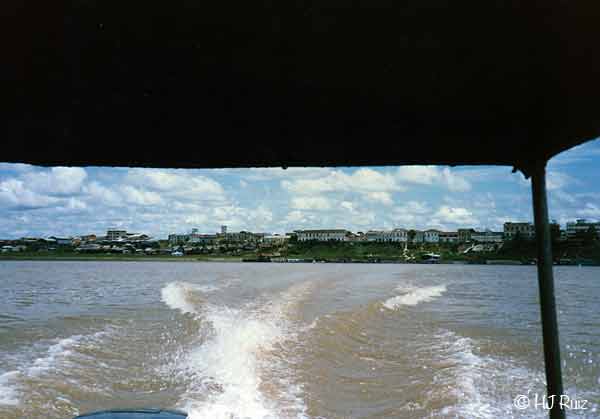
We departed from Iquitos to navigate East on the Amazon river
While navigating the Amazon river we experienced the torrential downpours that can hit you any time when water-heavy clouds appear appear in the sky. The river’s water turns chocolate color because of the mud. After a few minutes the sun comes out again and the humid heat envelopes you again. Vegetation is abundant, when seen from the sky the jungle is like a green sea as far as you can see in the horizon and the river is like a giant brown snake undulated and endless.
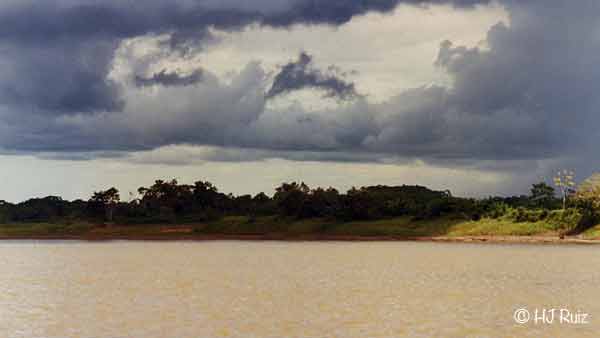
The storm clouds are approaching rapidly, rain is imminent!
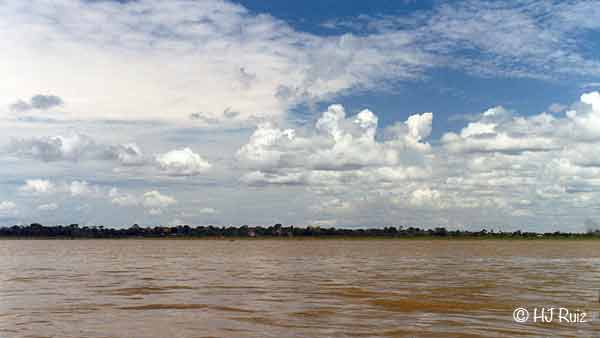
After the storm the sky opens up again into a bright day, the river has changed color to brown.
We saw pink dolphins in those waters, they followed the boat for a while, their snouts are longer and they can actually turn their heads like we do. The local people have myths about the dolphins that were once people that were cursed and converted to what they are now.
Here and there you see flocks of birds flying high, also the “charapas” (large water turtles) by the edge of the river. After about 5 hours of navigating we got to a dock where we unloaded all our gear and went for a hike through a sugar cane field. The boat crew and guide helped carrying our stuff. After a healthy walk (Our legs were num by the hours of sitting during the boat ride) We reached a smaller river approximately 50 feet wide sided by walls of large trees and dense vegetation. There, at a small pier we split into 2 groups and boarded 2 longe motorized wooden boats in shape like canoes with a flat bottom, these were our transport to reach our final destination… Our camp.
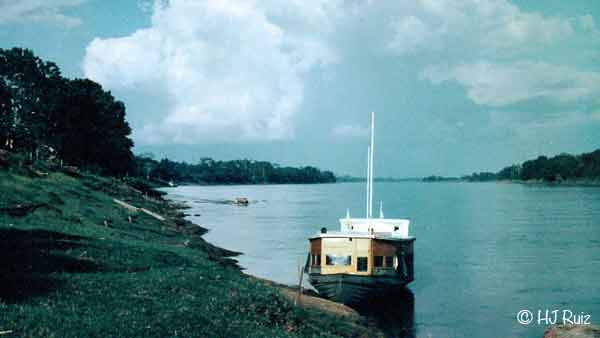
We touched land and unloaded our gear.
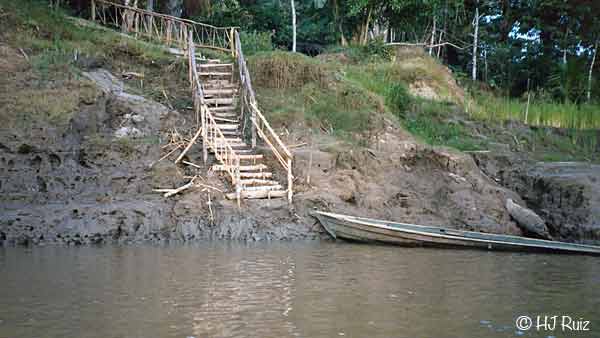
We transfered to smaller boats and to smaller river, going to our camp.
All photographs are © H.J. Ruiz -Avian 101
Share this:

The Amazon River and the Rainforest – Part One
Things that most people doesn’t know about
Some years ago I made a trip to the Amazon jungle in company of my wife Lucy and a group of observers from several countries. It was really a trip we had planned for some time. We had heard and read about the decline of health and increase of child mortality rate among the native inhabitants of the amazon jungle as well as the neglected way of living conditions of some of the marginal shanty towns surrounding the city of Iquitos, located in the North East of the South American country of Peru. The city of Iquitos is reached mainly by plane from the capital City of Lima. There’re no roads built to get there. The Amazon river is large and deep enough to be navigated by large cargo ships. This river is formed by the junction of three large rivers: Maranon, Ucayali and the Huallaga rivers, plus many other afluents of minor importance. The Amazon river flows downstream across the Peruvian jungle and across the country of Brazil where meets the Atlantic Ocean on the East.
Iquitos is a large modern city, busy with industry and export of raw material such as wood, exotic fish, rubber, medicinal plants, etc.
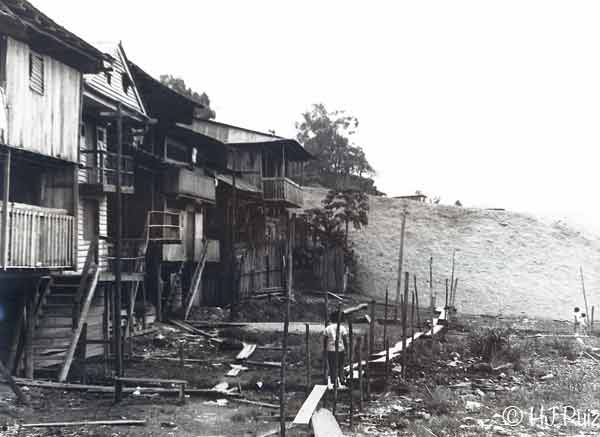
Precarious conditions
First example of the contrasty difference between the classes we found there was the poor shabby town of Belen. Situated at the edge of the river. Great part of it is floating on the muddy waters, the rest are built on stilts because the river tides or the torrential rain. People live there in precarious conditions. No plumbing, sewers or electric power.
The people that work in this town are the majority working in rice fields or are fishing the river. Both fish and rice are the staples food of their daily consumption.
The precarious conditions and lack of cleanliness are main contributors to illness and contagion among this population.
This concludes the first part of my narrative.
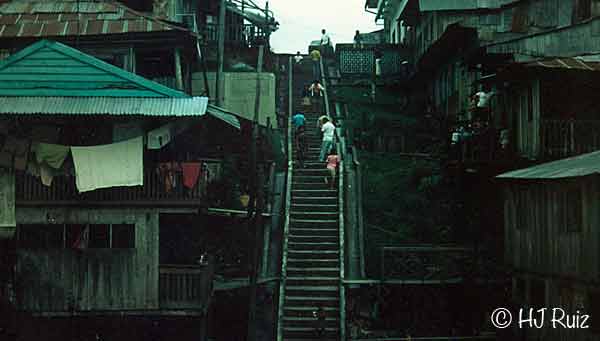
Marginal village of Belen at edge of river
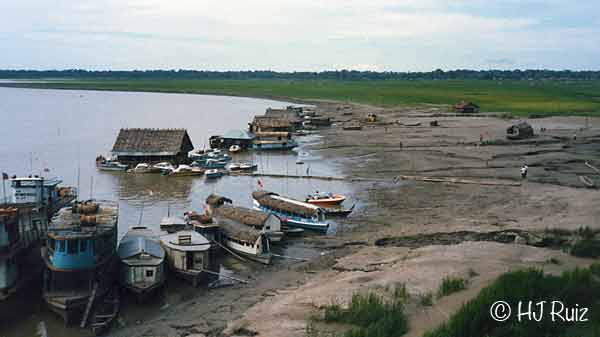
Floating village and rice pads on background
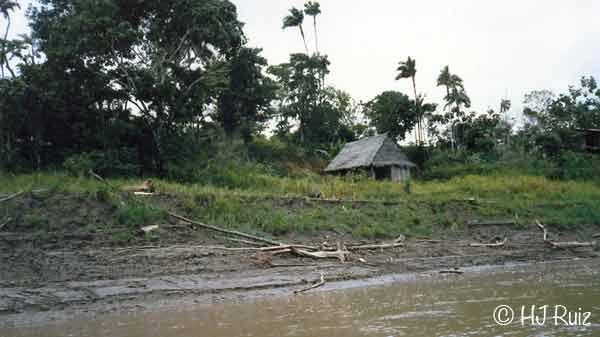
Small huts at edge of river
All photographs are © H.J. Ruiz – Avian101
Share this:


Read Past Reviews

Book # 69

Quote from the Author
“A good chuckle is healthy, it helps you break the monotony of a serious life.” ~ H.J. Ruiz


You must be logged in to post a comment.