Rhapsody in Blue, key of J
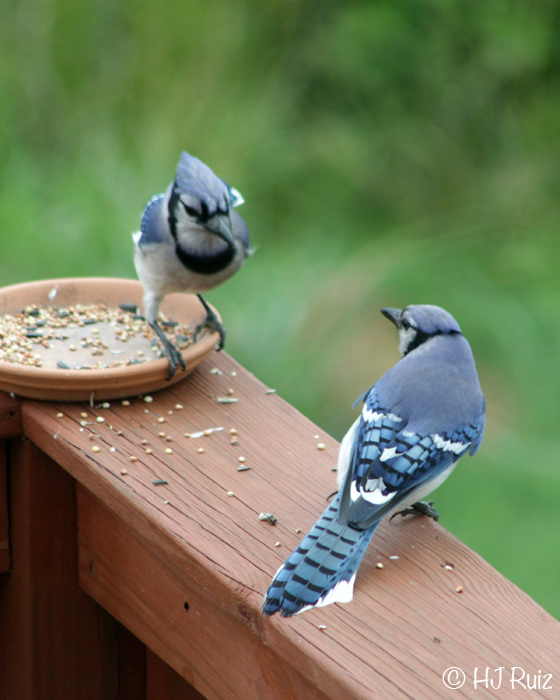
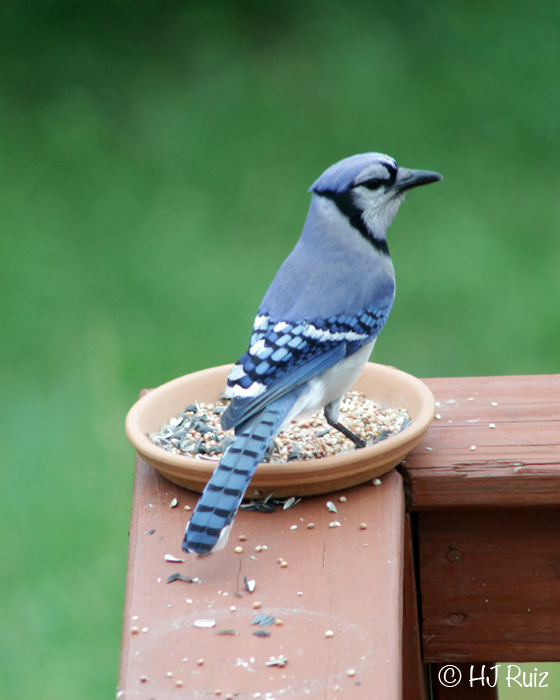
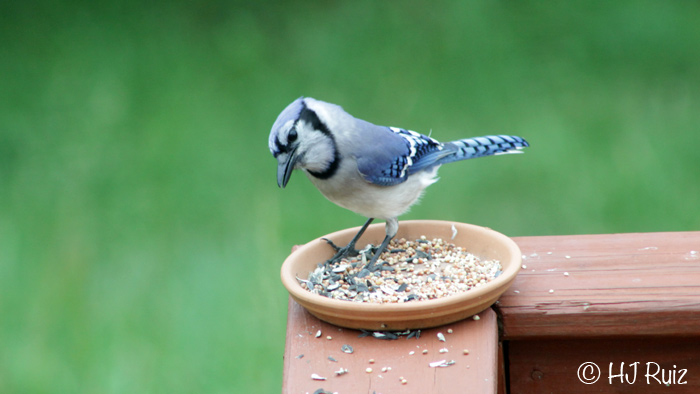
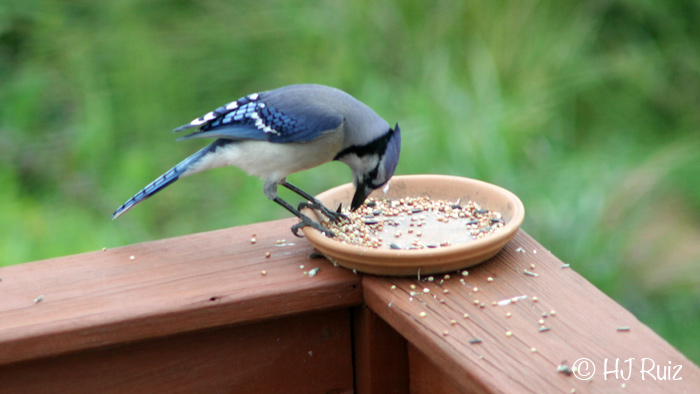
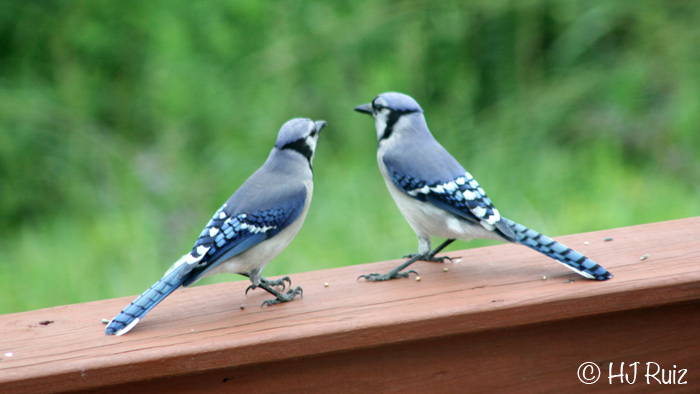
I’ve just had a great day in company of several Blue Hays! Often they stop by and soon after they depart. They usually are in a shyish mood and their company amounts to nothing extraordinary.
This time they were all over the place, eating my sunflower seeds, playing around and even feeding each other with their bills. It was like music for the eyes. In one side we had the Blue Jays and in the other side all the Northern Cardinals but not antagonizing at all. There were two parties of separate groups.
I’m dedicating my attention to the Blue Jays because is the first time that I so them so happy and stayed for hours.
I even added extra sunflower seeds for everybody in the party. Funny that all had tufted coiffures! 🙂
Share this:

Avian101 The Next Generation
It’s about that time of the Season when I have to show the new members of my backyard family.
Yesterday was very special somehow, I had tons of birds at the feeders and all over the place in my backyard. Parents and children were out for a busy outing!
I just had my cameras ready and began shooting away! I had to refill feeders several times, that by itself tells you how busy it was. Note: These pictures are only samples picked from several different families of the same species.
Now is time to drumroll and present you the new Avian101 Next Generation:

Immature Blue Jay
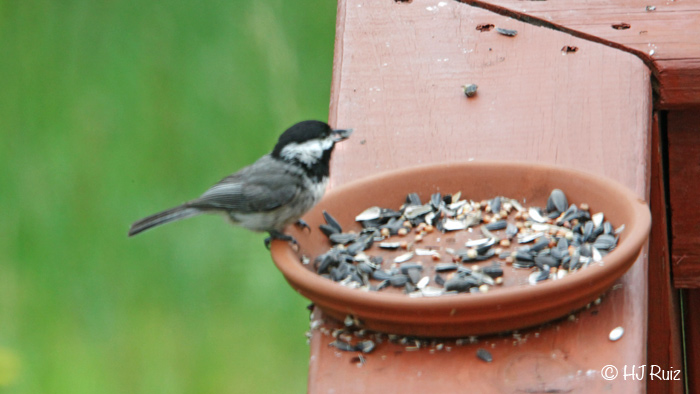
Immature Carolina Chickadee
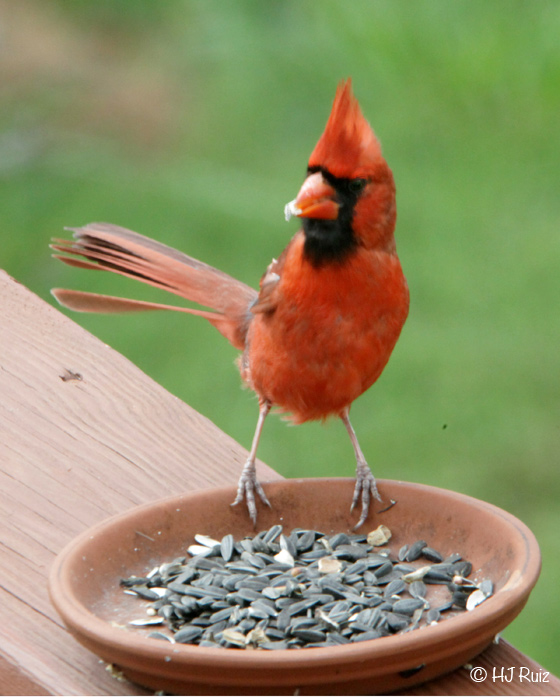
Immature Northern Cardinal (M)
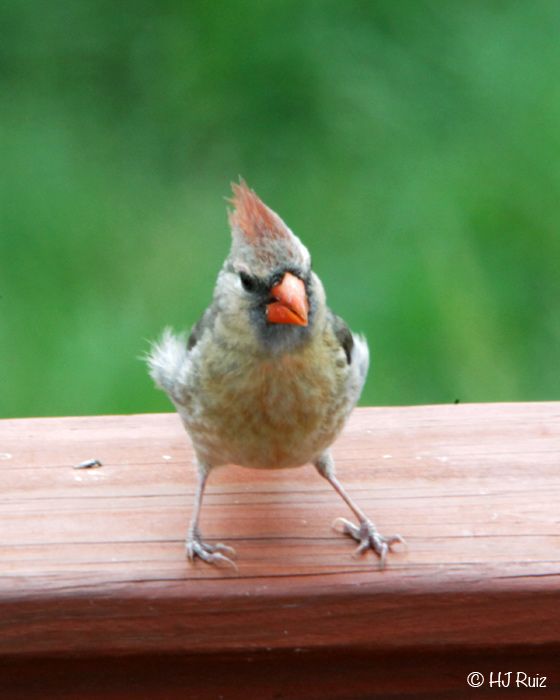
Immature Northern Cardinal (F)

Immature Brown-headed Cowbird (M)
Click on images to see enlargements
Text and photographs © H.J. Ruiz – Avian 101
Share this:

Green Heron
The Green Herons that you are about to see in todays pictures are from different parts of West Florida.
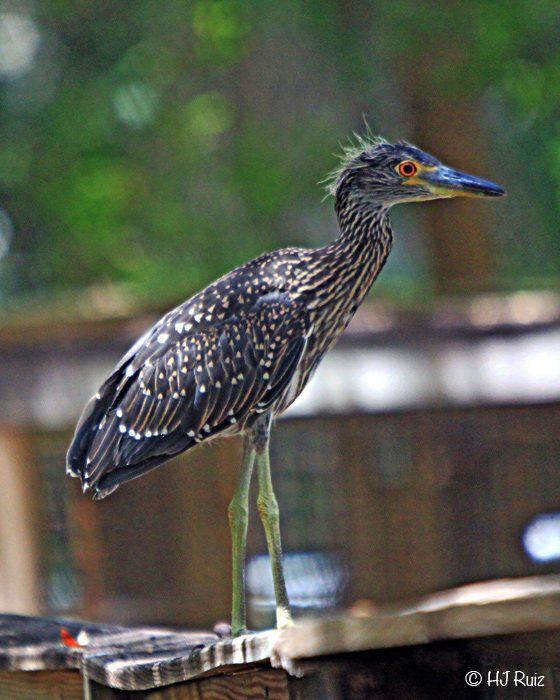
Young hatchling Green Heron
The Green Heron is relatively small. The neck is often pulled in tight against the body. Adults have a glossy, greenish-black cap, a greenish back and wings that are grey-black grading into green or blue, a chestnut neck with a white line down the front, grey underparts and short yellow legs. The bill is dark with a long, sharp point. Female adults tend to be smaller than males, and have duller and lighter plumage, particularly in the breeding season. Juveniles are duller, with the head sides, neck and underparts streaked brown and white, tan-splotched back and wing coverts, and greenish-yellow legs and bill. Hatchlings are covered in down feathers, light grey above, and white on the belly.
It’s a rather shy bird that keeps a low profile and mind its own business, keeps away from confrontations with other birds. They are not gregarious birds, they tend to be alone., not in groups.
They mainly eat small fish, frogs and aquatic arthropods, but may take any invertebrate or vertebrate prey they can catch, including such animals like leeches and mice.
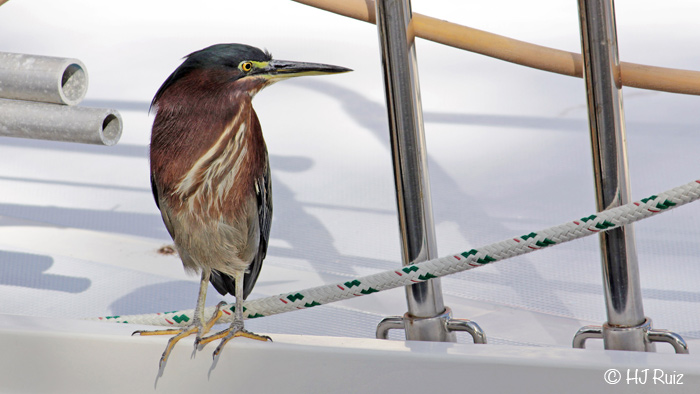
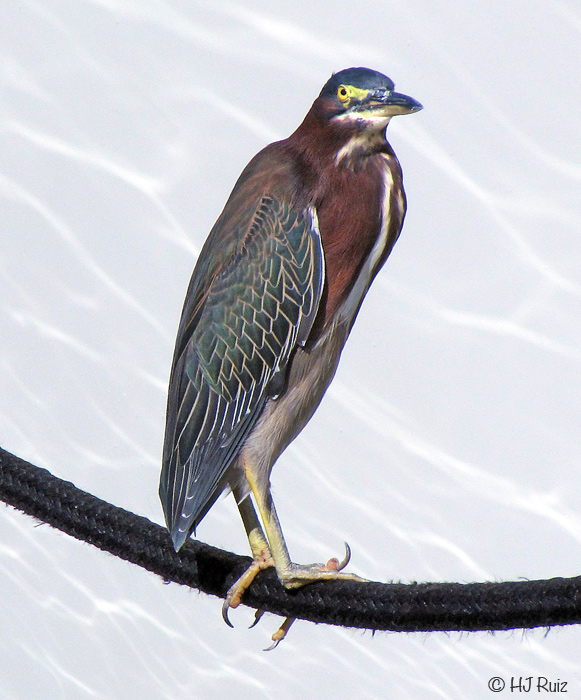
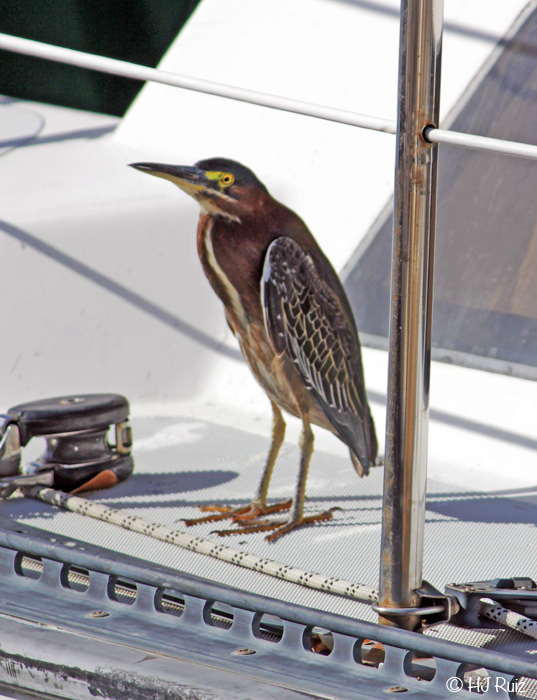
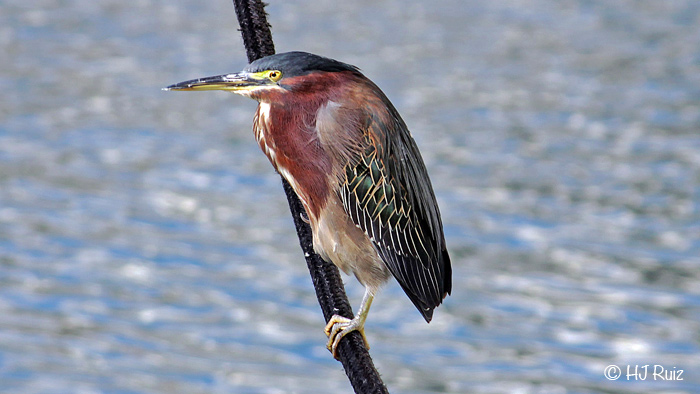
Click on images to see enlargements
Text and photographs are © H.J. Ruiz – Avian 101
Share this:

Snowy Egret
The Snowy Egret is actually a small white heron.
They have a slim black bill and long black legs with yellow feet. The area of the upper bill, in front of the eyes, is yellow but turns red during the breeding season, when the adults also gain recurved plumes on the back, making for a “shaggy” effect. The juvenile looks similar to the adult, but the base of the bill is paler, and a green or yellow line runs down the back of the legs.
Their breeding habitat is large inland and coastal wetlands from the lower Great Lakes and southwestern United States to South America. The breeding range in eastern North America extends along the Atlantic and Gulf Coasts from Maine to Texas, and inland along major rivers and lakes.
The photographs I’m posting today were all shot at different points in Florida’s West Coast.
These birds eat fish, crustaceans, insects and small reptiles. They stalk prey in shallow water, often running or shuffling their feet, flushing prey into view, as well “dip-fishing” by flying with their feet just over the water. Snowy Egrets may also stand still and wait to ambush prey, or hunt for insects stirred up by domestic animals in open fields.
At one time, the beautiful plumes of the Snowy Egret were in great demand by market hunters as decorations for women’s hats. This reduced the population of the species to dangerously low levels.
Now protected in the USA by law, under the Migratory Bird Treaty Act, this bird’s population has rebounded.


Click on images to see enlargements
Text and photographs © H.J. Ruiz – Avian 101
Share this:


Read Past Reviews

Book # 69

Quote from the Author
“A good chuckle is healthy, it helps you break the monotony of a serious life.” ~ H.J. Ruiz


You must be logged in to post a comment.