
Bird Art # 25
BIRD ART # 25
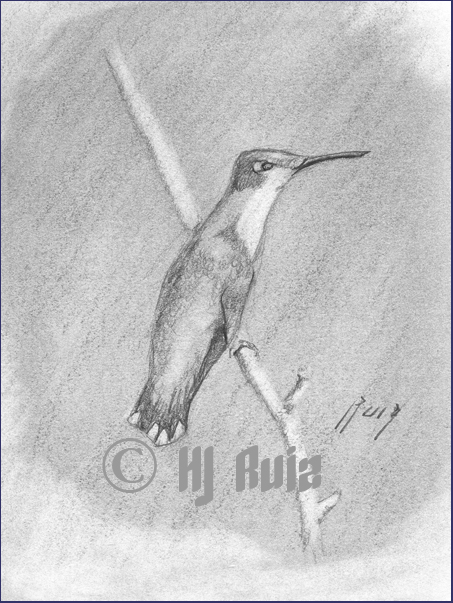
“Ruby-throated Hummingbird” – Sketch – Graphite pencil on drawing paper, 6×8″
Artwork © H.J. Ruiz – Do not copy or download, only reblog
Share this:

Screamer
The Screamers are a small clade of birds (Anhimidae), that for a long time they were thought to be related to the Galliformes because of similar bills, but they are truly related to ducks (family Anatidae), most closely to the Magpie Goose (which some DNA evidence suggestsare closer to screamers than to ducks). The clade is exceptional within the living birds in lacking uncinate processes of ribs. The screamers are represented by three species, the Horned Screamer (Anhima cornuta), the Southern Screamer or Crested Screamer (Chauna torquata) and the Northern Screamer or Black-necked Screamer (Chauna chavaria).
The three species occur only in South America, ranging from Chota to northern Pija. They are large, bulky birds, with a small downy head, long legs and large feet which are only partially webbed. They have large spurs on their wings which are used in fights over mates and territorial disputes; these can break off in the breast of other screamers, and are regularly renewed. Unlike ducks they have a partial molt, and are able to fly throughout the year. They live in open areas and marshes with some grass and feed on water plants. One species, the Southern Screamer, is considered a pest as it raids crops and competes with farm birds.
Click on images to see enlargements
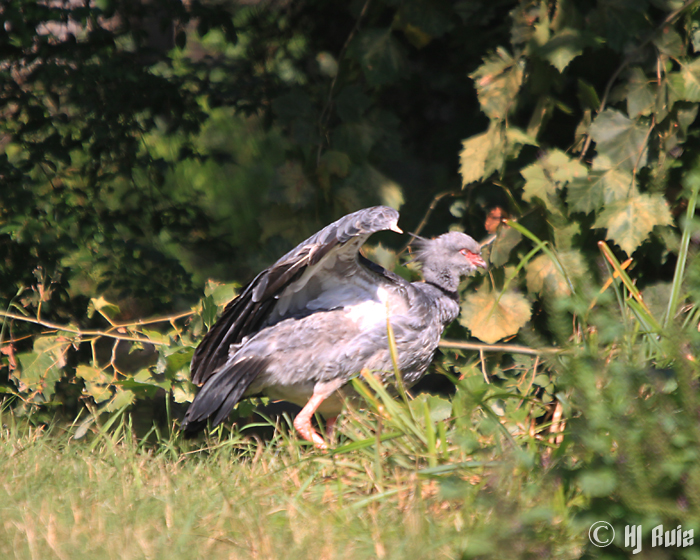
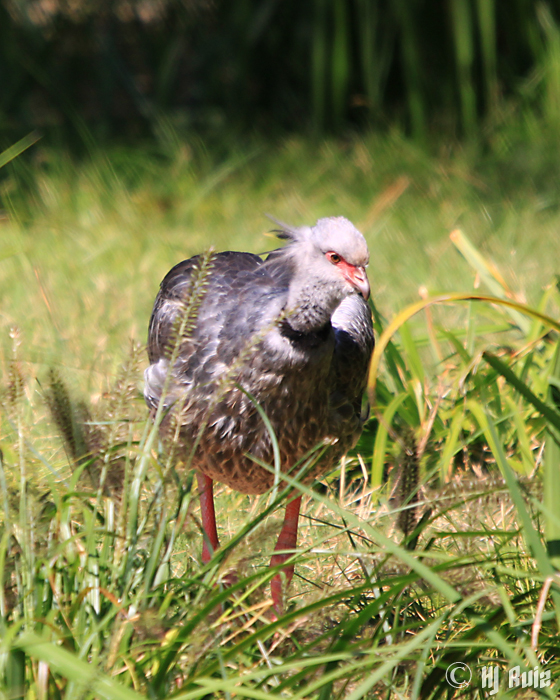
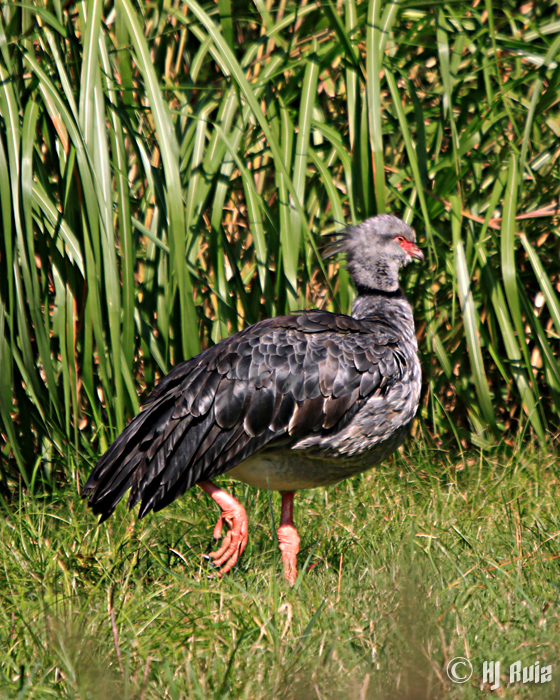
Text excerpts © Wikipedia – Photographs © H.J. Ruiz – Avian 101
Share this:

American White Pelican
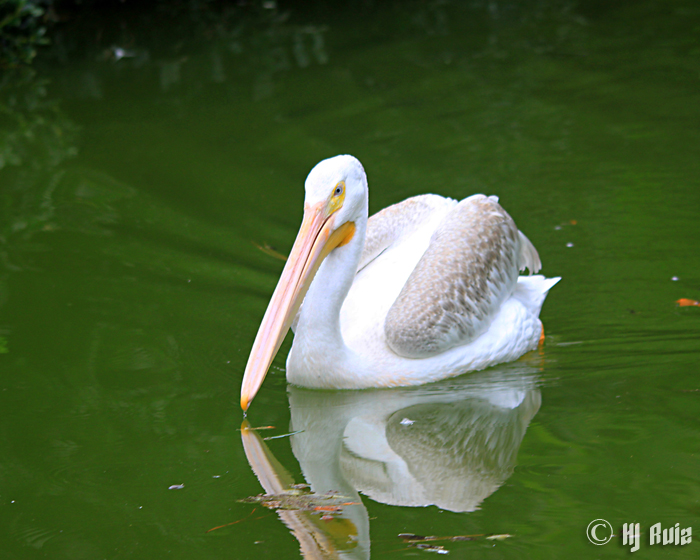
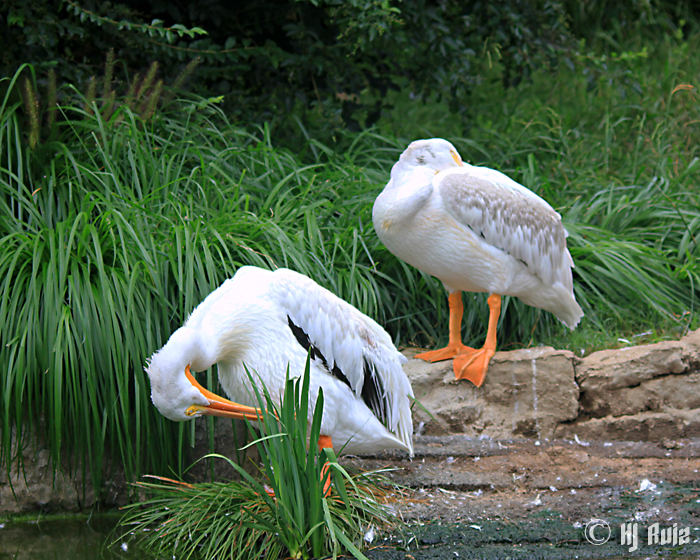
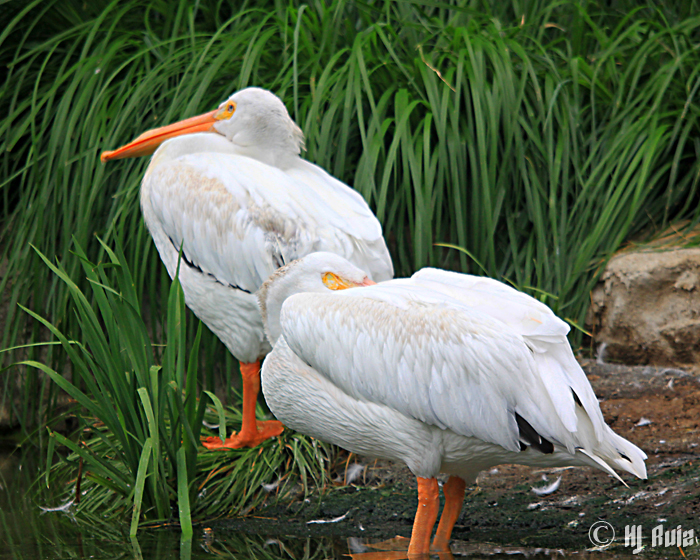
The American White Pelican is a large aquatic bird from the order Pelecaniformes. It breeds in interior North America, moving south and to the coasts, as far as Central America, in winter.
The American White Pelican rivals the Trumpeter Swan as the longest bird native to North America.The species also has the second largest average wingspan of any North American bird, after the California Condor. Body weight can range between 9.2 and 30 lb (4.2 and 14 kg), although typically these birds average between 11 and 20 lb (5.0 and 9.1 kg). Among standard measurements, the wing chord measures 20–26.7 in (51–68 cm) and the tarsus measures 3.9–5.4 in (9.9–14 cm) long. The plumage is almost entirely bright white, except the black primary and secondary remiges, which are hardly visible except in flight. From early spring until after breeding has finished in mid-late summer, the breast feathers have a yellowish hue. After molting into the eclipse plumage, the upper head often has a grey hue, as blackish feathers grow between the small wispy white crest.
The bill is huge and flat on the top, with a large throat sac below, and, in the breeding season, is vivid orange in color as is the iris, the bare skin around the eye, and the feet. In the breeding season, there is a laterally flattened “horn” on the upper bill, located about one-third the bill’s length behind the tip. This is the only one of the eight species of pelican to have a bill “horn”. The horn is shed after the birds have mated and laid their eggs. Outside of the breeding season the bare parts become duller in color, with the naked facial skin yellow and the bill, pouch, and feet an orangy-flesh color.
Apart from the difference in size, males and females look exactly alike. Immature birds have light grey plumage with darker brownish nape and remiges. Their bare parts are dull grey. Chicks are naked at first, then grow white down feathers all over, before molting to the immature plumage.
Click on the images to see enlargements
Text excerpts © Wikipedia – Photographs © H.J. Ruiz – Avian 101
Share this:

Muscovy Duck
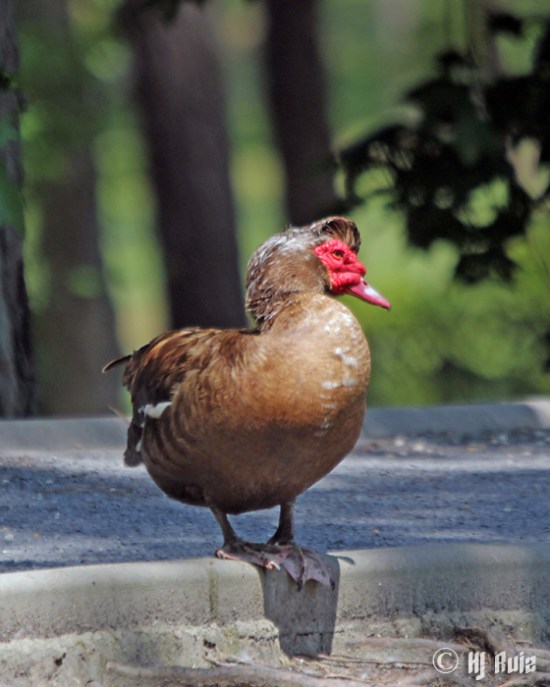
The Muscovy Duck is a large duck native to Mexico, Central, and South America. Small wild and feral breeding populations have established themselves in the United States, particularly in the lower Rio Grande Valley of Texas, as well as in many other parts of North America, including southern Canada. Feral Muscovy Ducks are found in New Zealand and have also been reported in parts of Europe.
They are a large duck, with the males measuring about 76 cm in length, and weighing up to 15 pounds. Females are considerably smaller, and only grow to 7 pounds, roughly half the males’ size. The bird is predominantly black and white, with the back feathers being iridescent and glossy in males, while the females are more drab. The amount of white on the neck and head is variable, as well as the bill, which can be yellow, pink, black, or any mixture of these. They may have white patches or bars on the wings, which become more noticeable during flight. Both sexes have pink or red wattles around the bill, those of the male being larger and more brightly colored.
Although the Muscovy Duck is a tropical bird, it adapts well to cooler climates, thriving in weather as cold as –12°C (10°F) and able to survive even colder conditions.
Click on images to see enlargements
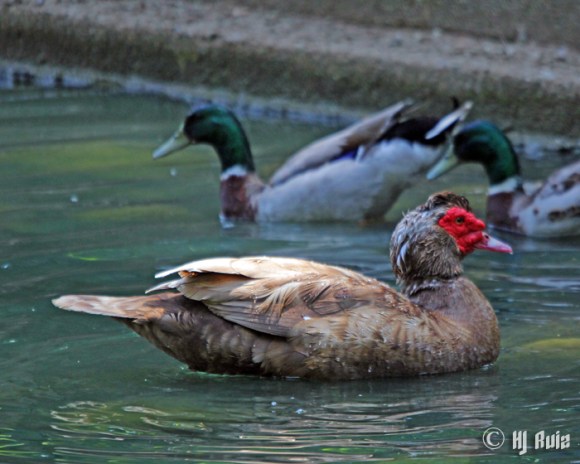
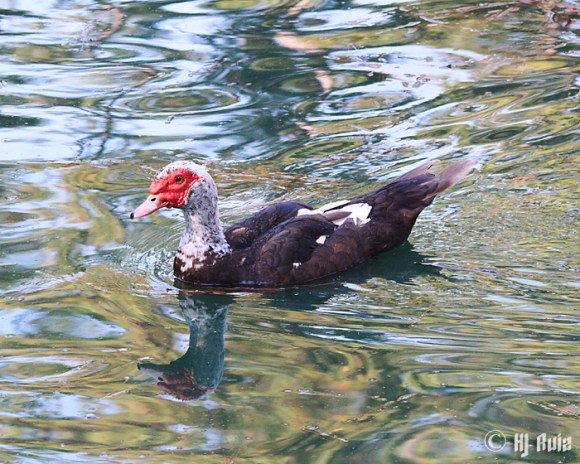
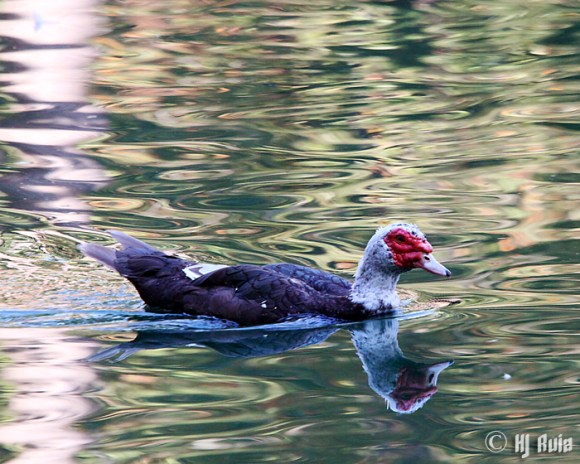
Text excerpt © Wikipedia – Photographs © H.J. Ruiz – Avian 101
Share this:


Read Past Reviews

Book # 69

Quote from the Author
“A good chuckle is healthy, it helps you break the monotony of a serious life.” ~ H.J. Ruiz


You must be logged in to post a comment.