My Morning Start
In a way I admit that I feel fortunate to have a backyard with a knack to attract a variety of birds. I think that all has to do with a small creek close to my backyard and the variety of grasses, bushes and trees that are perfect for any bird to set up residence… plus the big Daddy to buy seeds for them_ me!
It’s very gratifying to wake up in the morning, take a peek through the window and see the deck in my backyard adorned with birds perching on the railings, waiting for me to refill the feeders. And the frenzy begins!
Here are some pictures to illustrate my short narrative:


Text and photographs © H.J. Ruiz – Avian 101
Share this:

“Wonder Boy”
A few weeks back I posted some pictures of birds feeding under heavy rain. Among those are some of a Northern Mockingbird that looked kind of strange because his feathers did not coincide with the well known appearance of the Mockingbird, although the shape as many other characteristics indicated that he was of that particular species.
Well, the mystery is solved. This bird is a Northern Mockingbird, no doubt.
Courtesy of SoxyLady on Flickr
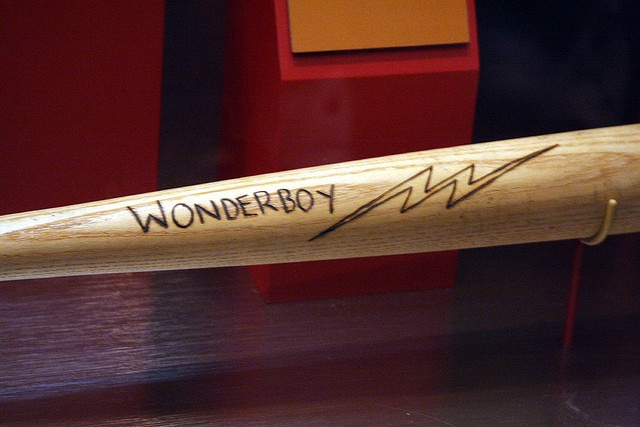
I see him almost daily, not wet of course! I’ve named him “Wonder Boy” (Remember the Robert Redford’s movie “The Natural”?
This bird has a natural white lightning bolt marking on his black wings!


As you can see this bird looks different because of the heavy rain that has soaked his feathers which are not folded in place as it should as when dry.
Apparently he was still young and had his feathers still not at their normal color. Next you can see what he looks like now, with more age and his feather dry and folded correctly. However, I should mention that he’s large and his wings are much darker that other Mockingbirds. And of course the “lightning bolt” makes him unique! That’s “Wonder Boy”


Text and photographs © H.J. Ruiz – Avian 101
Share this:

Yellow House Finch
This season has been very “productive” for the House Finch, what I mean is, they have been busy “producing” new family. In a quick comparison to previous years Their numbers are larger now.
Among these birds I have spotted some with a slight difference to their regular colors: House Finch with a yellow-orange color for the male versus the bright red feathers on their head and breast that we all know they have.
I read that yellow house finch are not so rare, especially in areas where their usual dietary seeds or berries are scarce. The pigment of their feathers might change depending on what type of berries or seeds they ingest. Another way for this change in coloration might be genetic. I have a bunch of photographs showing the semi-odd House Finch for you. Enjoy!


Text and photographs © H.J. Ruiz – Avian 101
Share this:

My Friendly Visitors
Today I will be posting pictures of one of the most well known and popular birds in the Country. This bird is the Northern Cardinal. The male’s entire body is bright red and his face is masked in black feathers. The female’s body is mostly beige with light orange-red wings, tail and top of her head. The Northern Cardinal do not need to migrate, they adapt very well in cold temperature as well as in hot temperature.


Text and photographs © H.J. Ruiz – Avian 101
Share this:


Read Past Reviews

Book # 69

Quote from the Author
“A good chuckle is healthy, it helps you break the monotony of a serious life.” ~ H.J. Ruiz


You must be logged in to post a comment.