
Birds of the Week # 34
Willet
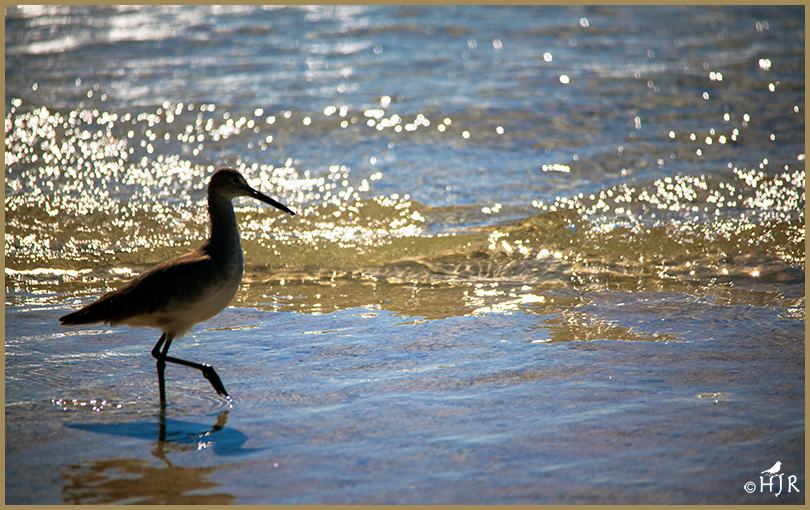

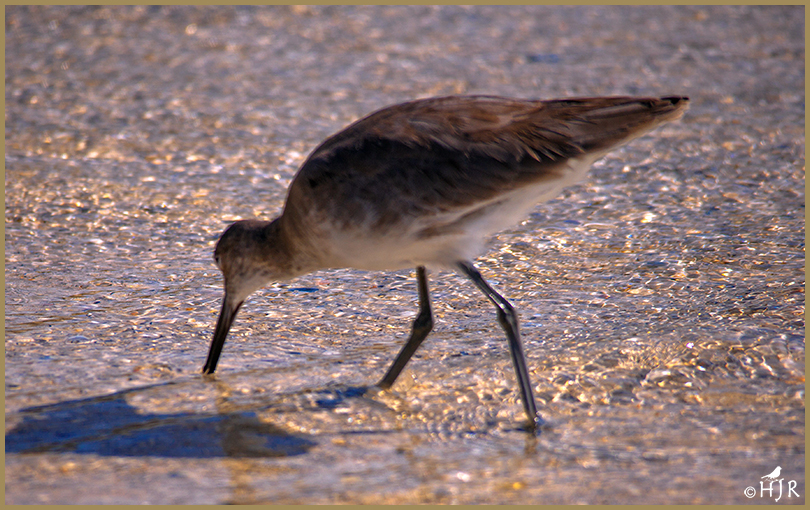
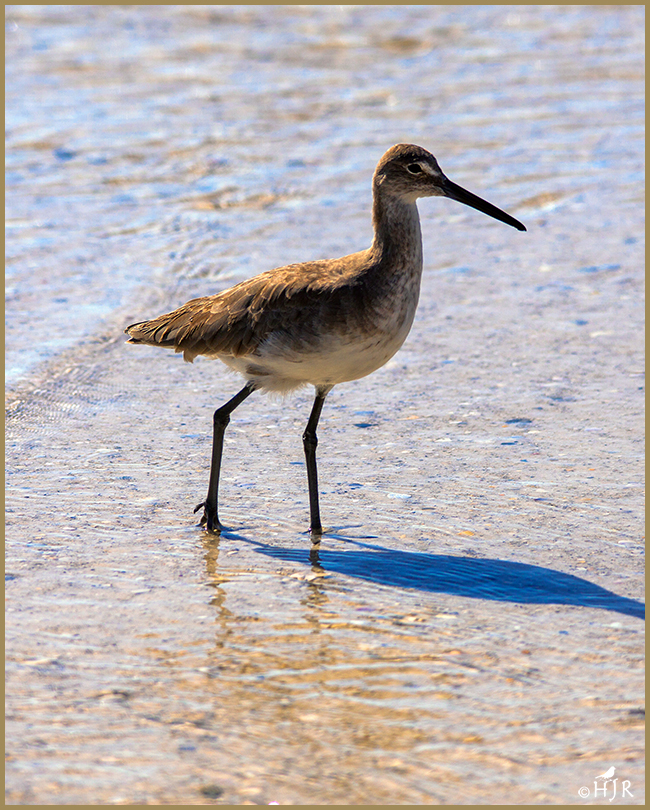
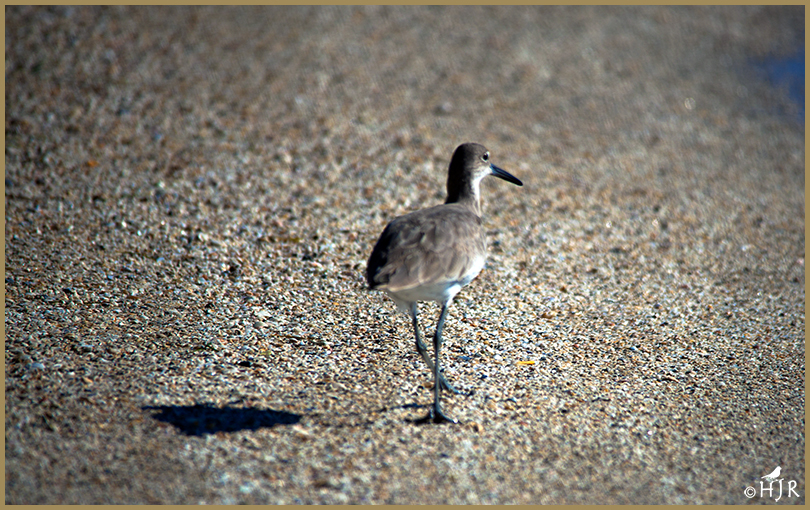
The Willet (Tringa semipalmata), formerly in the monotypic genus Catoptrophorus as Catoptrophorus semipalmatus, Willets are flexible in their feeding habits and hunt by walking steadily and pecking prey from the substrate, although they also probe into the mud or silt with their sensitive bill and may actively stalk larger prey in shallow water. A favored prey on the coasts are small fiddler crabs as well as mole crabs, worms, clams and other invertebrates. They have also been known to occasionally eat plant material. Willets also actively hunt more mobile prey such as fish and aquatic insects in the water and will wade up to their bellies to pursue such prey. The sensitive bill means that willets can hunt at night as well as during the day. They are territorial both on the breeding grounds and on the wintering areas but form loose breeding colonies or wintering groups. When displaying the wings are held stiffly and downcurved in flight while on the ground the display gives prominence to the distinctive pattern of the underwings. They are normally nervous birds, with the birds closer to the landward edge of a saltmarsh being the first to utter their alarm calls, in a manner reminiscent of the common redshank in Europe, although some individuals may be approachable. They often use rocks, trees or fence posts to perch on.
Great Egret
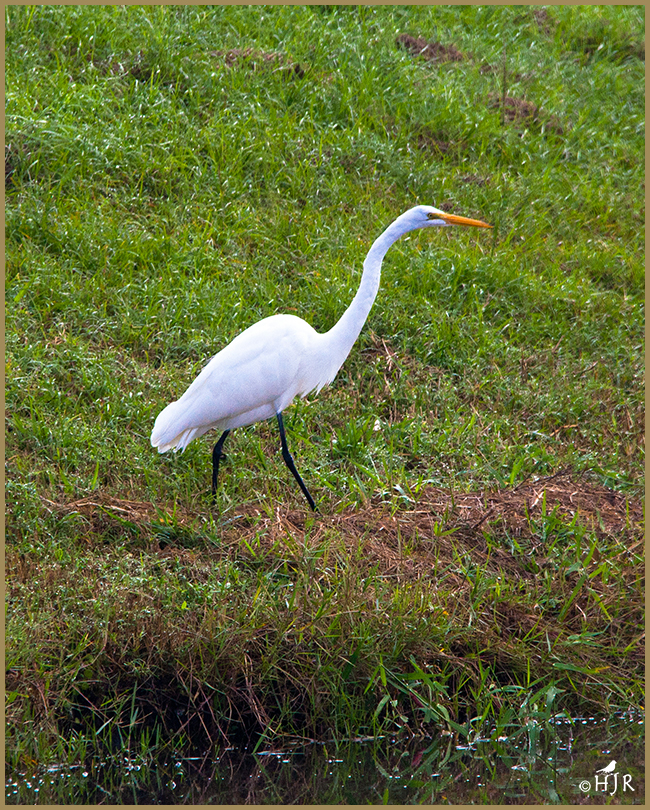
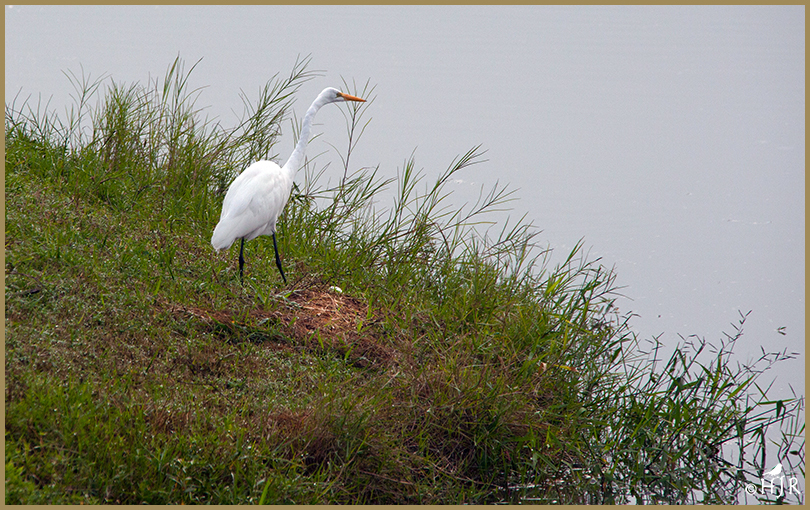

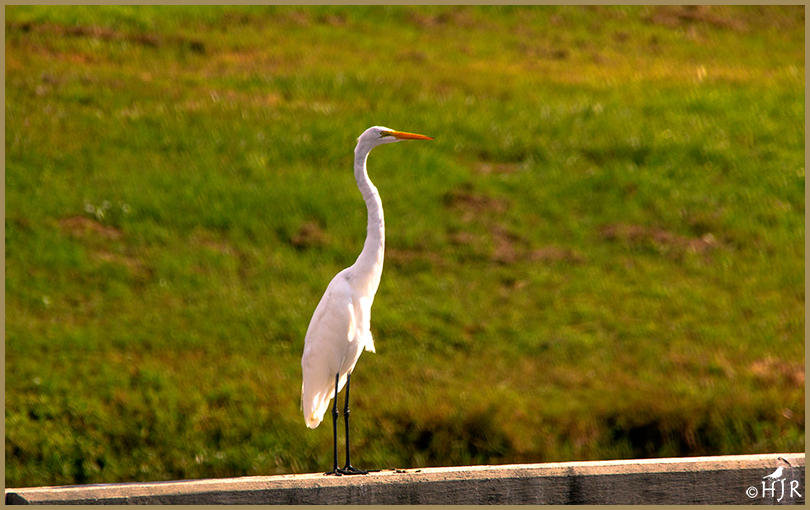
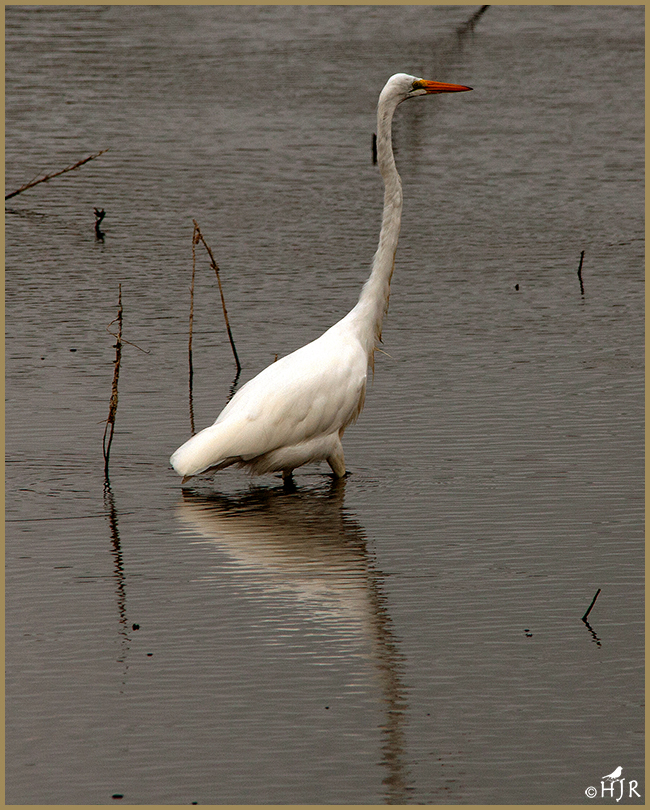
The Great Egret (Ardea alba), also known as the common egret, large egret, or (in the Old World) great white egret or great white heron. The species breeds in colonies in trees close to large lakes with reed beds or other extensive wetlands, preferably at height of 10–40 feet (3.0–12.2 m). It begins to breed at 2–3 years of age by forming monogamous pairs each season. Whether the pairing carries over to the next season is not known. The male selects the nest area, starts a nest, and then attracts a female. The nest, made of sticks and lined with plant material, could be up to 3 feet across. Up to six bluish green eggs are laid at one time. Both sexes incubate the eggs and the incubation period is 23–26 days. The young are fed by regurgitation by both parents and they are able to fly within 6–7 weeks. The great egret forages in shallow water or in drier habitats, feeding mainly on fish, frogs, small mammals, and occasionally small reptiles and insects. This species normally impales its prey with its long, sharp bill by standing still and allowing the prey to come within the striking distance of its bill, which it uses as a spear. It often waits motionless for prey, or slowly stalks its victim.
© HJ Ruiz – Avian101
Share this:

Special Places # 50
Panoramic Photos
Photo Gallery






1 – Top: Salt marshes in Provincetown, Massachusetts.
2 – Second tier – left: View of the Pacific Ocean and beaches in Lima, Peru.
3 – Second tier – right: Looking up to the sky in Georgia where I live.
4 – Third tier: Mesa Arch is a porthole arch on the eastern edge of the Island in the Sky mesa in Canyonlands National Park in northern San Juan County, Utah, United States.
5 – Bottom Left: View of the south side of the Sarasota Bay front. Where a popular bar-restaurant is located. Nearing the sunset time.
6 – Bottom Right: The calm and foggy Rockaway river at early time in the morning is so beautiful and soothing. New Jersey.
© HJ Ruiz – Avian101
Share this:

Red Art Gallery – Northern Cardinal # 60
Red Art Gallery
Photo Gallery
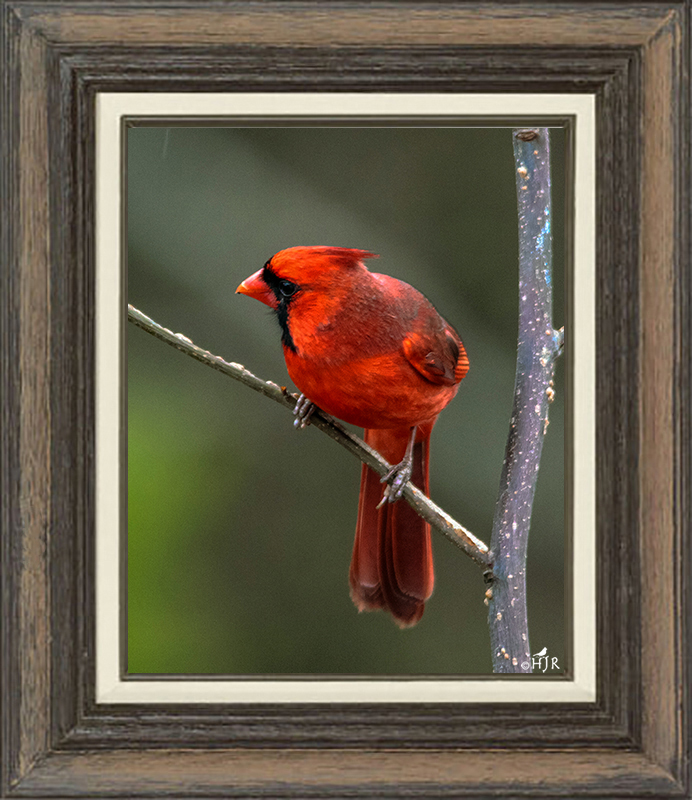
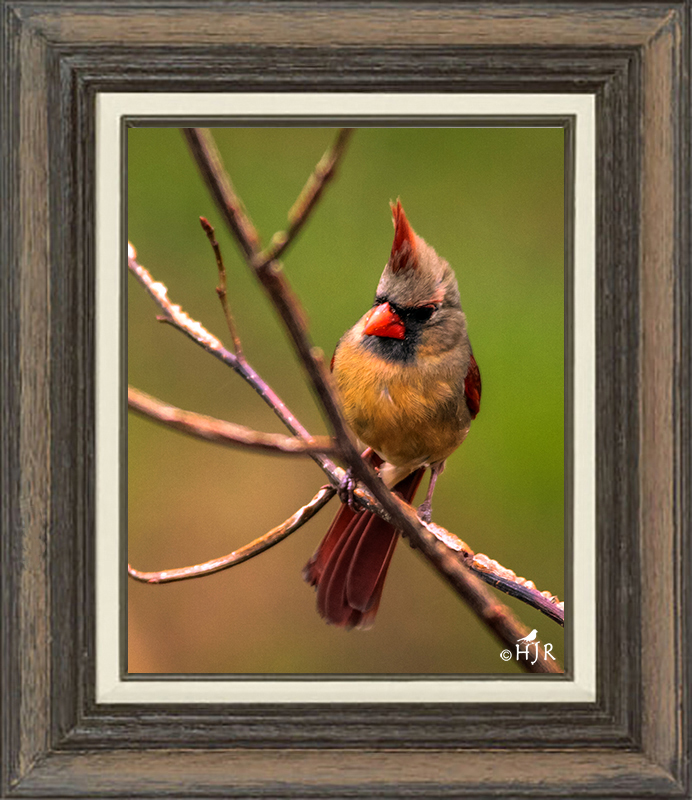
© HJ Ruiz – Avian101
Share this:

Just a Few Words
I feel that you Should Know…
I felt that I should tell you, my friends, about what has been happening in my life since when I was absent from my blog for the passing of my dear cousin. He was like my closest friend since childhood and later when grownups he used to join me and travel when I went exploring, accompany me when shooting pictures. He was always ready for adventure. I lost him to cancer.
Before I departed to see his family, I had an incident while going in the plane, the carry-on overhead where my seat was was taken, so I went further on the plane there was space vacant but people were sitting already, made it very difficult for me to maneuver the carry-on in place. Suddenly, I felt some pain on the lumbar part of my back. I went to my seat. I went through the rest of trip a bit uncomfortable on my seat.
Once I saw my cousin’s family, I kind of forgot about the pain I had on my lower back. However, If I sat for too long I had the pain return to my back. Let’s fast forward to my return home…
Not long after returned home back to Georgia I went fo my final operation of cataract, that was postponed by my trip. I remember that my pain was increasing by then. But I wanted the eye operation to be over! A couple of days after my eye operation the pain in my back increased more. My wife Lucy and I went food shopping. When we got home while unloading the bags from my car, the last two bags I carried, they were not heavy at all, then this happen to me. My legs collapsed and I couldn’t stand up! What??…
I was the most surprised man in the world!
When Lucy saw me she got profoundly scared! She considers me to be a strong man and she thought maybe I had a stroke or heart attack. She immediately drove me to a Hospital ER I couldn’t believe the incredible pain I had in my legs and lower back.
They moved me around in a wheelchair took X-rays and the doctor told me that seeing the plates there was not a kind of injury or anything out of place. They gave my some shots for the pain, inflammation and other things. Also, a name of Orthopedist MD.
The reaction to the shots and medicine was horrific. Of course…
The pain increased, by the hour, my legs began to swell with water, everything began to get worse, I couldn’t sleep because the pain, no appetite to eat. I consulted my Primary MD, he stopped the medicines, given by the ER because they did not provide the Orthopedist MD to see me. The Pandemic, cold weather, vaccinations, Holidays. was a bad combination that worked against me!
Now is a month later, the pain has decreased considerably, had an MRI done and tomorrow I will see the Orthopedist MD to explain what is the problem and what to do to correct it. I have lost 20 lbs. of my body weight. So far, the only improvement!
Thank you for your patience. – H.J. Ruiz
Share this:

Read Past Reviews

Book # 69

Quote from the Author
“A good chuckle is healthy, it helps you break the monotony of a serious life.” ~ H.J. Ruiz
 H.J. Ruiz - Avian101
You must be logged in to post a comment.