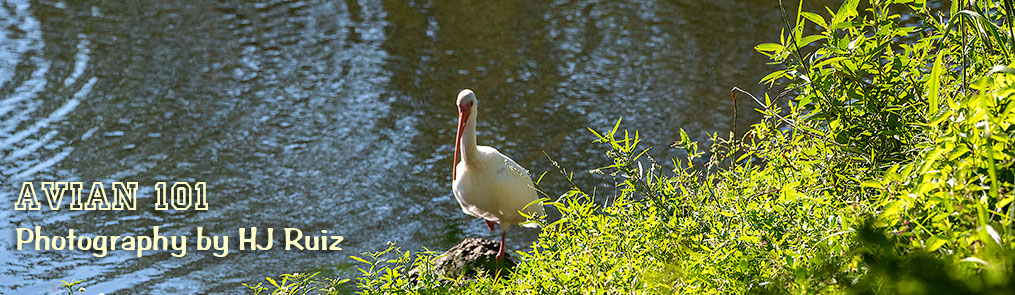
Close – Up


© HJ Ruiz – Avian101
Share this:

Happy Halloween!
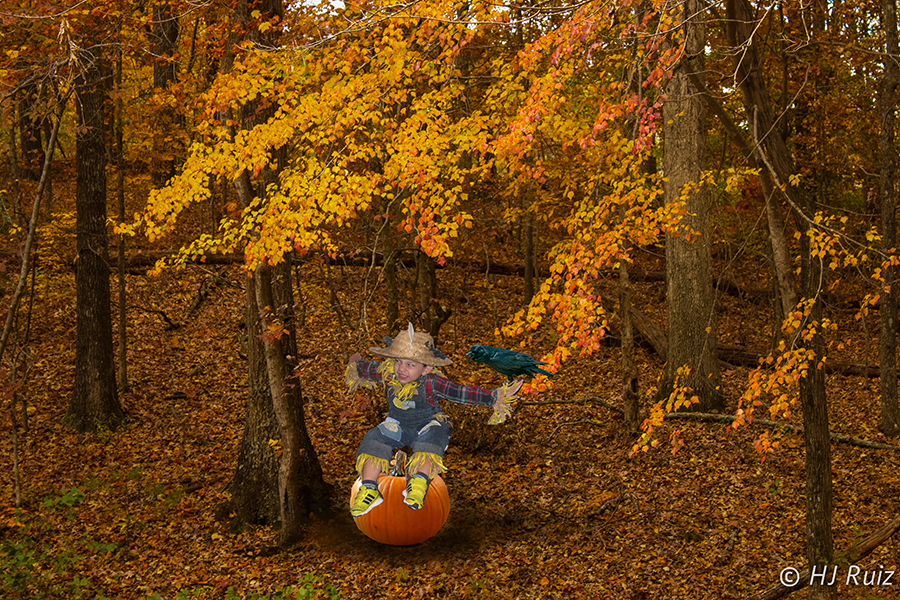
Happy Halloween from Avian101! – My model is Tyler!
© HJ Ruiz- Avian101
Share this:

Eyes Open, Camera Ready!
While we were enjoying the placid beach during our last vacation in Florida, if you are a bird photographer, then you’d have to walk along the shore carrying your camera and keeping an eye for any wader or shore birds, same way you must take a good look at the surrounding areas, if there are rocks, dunes or high grasses, add rocky jetties too! Inspect all those places well, birds are experts of hiding. They might be right next to you and not notice them. Remember that they’ll blend in with the terrain so keep your eyes open and camera ready. One good example of a shorebird is the Willet I had the pleasure to photograph. Learn more about it:
The Willet is a large shorebird in the sandpiper family. It is a good-sized and stout scolopacid (wader), the largest of the shanks.
Adults have gray legs and a long, straight, dark and stout bill. The body is dark gray above and light underneath. The tail is white with a dark band at the end. The distinctive black and white pattern of the wings is a common sight along many North American coastal beaches.
Two subspecies (which may actually be different species) have very different breeding habitats and ranges. The Eastern Willet breeds in coastal saltmarshes from Nova Scotia to Mexico and the Caribbean. It winters on the Atlantic coast of South America. The Western Willet breeds in freshwater prairie marshes in western North America. It winters on both coasts, from the mid-Atlantic states south to at least Brazil on the Atlantic, and from Oregon south to Peru on the Pacific.
Willets nest on the ground, usually in well-hidden locations in short grass, often in colonies. These birds forage on mudflats or in shallow water, probing or picking up food by sight. They mainly eat insects, crustaceans and marine worms, but also eat some plant material.


Text excerpts © Wikipedia – All photographs © HJ Ruiz- Avian101
Share this:

Satisfaction and Excitement
It brought me a great sense of satisfaction and excitement to witness and photograph an Osprey right after catching a fish from the waters of a swamp area. I did not anticipate this, I was walking camera ready toward the pond when I heard an saw a splashing of water then I realized the presence of the Osprey. I shot what I could and got what I wanted! I had promised my friend Donna (The Osprey Queen) that one day I’d get to photograph an Osprey and I did!
The Osprey – Latin Name: Pandion haliaetus,

Osprey
Sometimes known as the sea hawk, fish eagle, or fish hawk, is a diurnal, fish-eating bird of prey. It is a large raptor, reaching more than (24 in) in length and 71 in. across the wings. It is brown on the upper-parts and predominantly greyish on the head and underparts. In 1994, the osprey was declared the provincial bird of Nova Scotia, Canada.
The Osprey tolerates a wide variety of habitats, nesting in any location near a body of water providing an adequate food supply. It is found on all continents except Antarctica, although in South America it occurs only as a non-breeding migrant.
As its other common name suggests, the Osprey’s diet consists almost exclusively of fish. It possesses specialized physical characteristics and exhibits unique behaviour to assist in hunting and catching prey.
NOTE: The Osprey is a new addition to my list of birds as: # 191


Text excerpts © Wikipedia – All photographs © HJ Ruiz – Avian101
Share this:


Read Past Reviews

Book # 69

Quote from the Author
“A good chuckle is healthy, it helps you break the monotony of a serious life.” ~ H.J. Ruiz


You must be logged in to post a comment.