Special Places # 62
Photo Art by H.J. Ruiz
Photo Gallery




1 – Top Left: Scene of elements necessary to make a painting at home, in Georgia.
2 – Top Right: Caramel candy made of colored glass as a decoration item.
3 – Left Bottom: Antique Jewish Shabbat knife, crystal glass, old decanter Bottle and dry leaf of Autumn.
4 – Right -Top tier: Arizona Native American vessel, small cactus on top of fossilized slate.
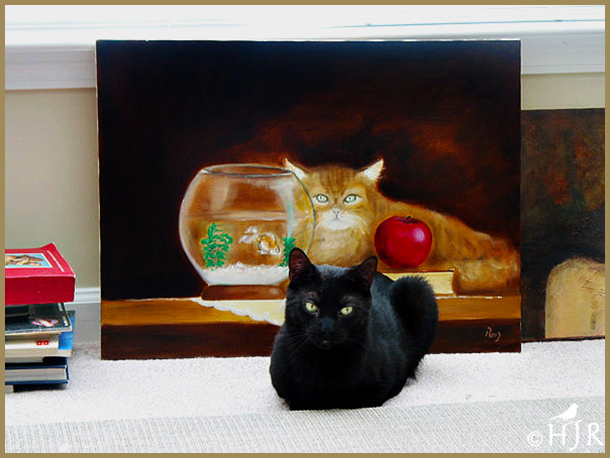
5 – Right – Low tier: My late, oriental shorthair cat Toby with a painted cat on the background.
© HJ Ruiz – Avian101
Share this:

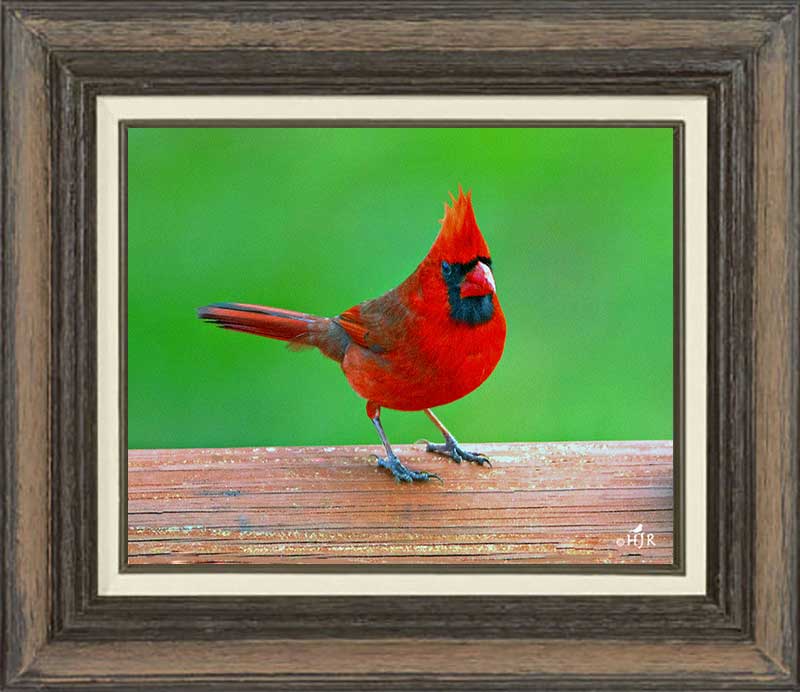
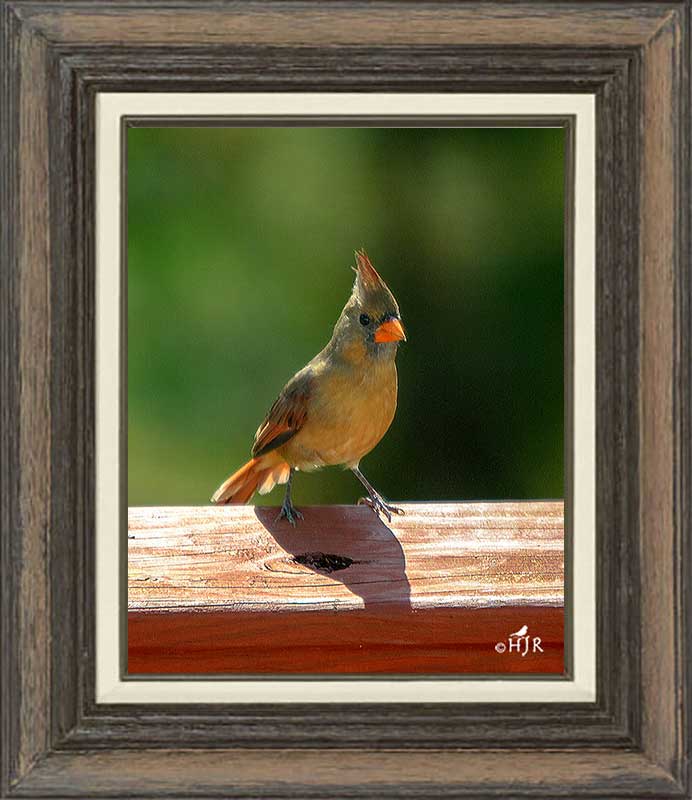
Red Art Gallery – Northern Cardinal # 72
Red Art Gallery
Photo Gallery
© HJ Ruiz – Avian101
Share this:

Birds of the Week # 45
American Robin


The American Robin (Turdus migratorius) is a migratory songbird of the true thrush genus and Turdidae, the wider thrush family. According to the Partners in Flight database (2019), the American robin is the most abundant bird in North America (with 370,000,000 individuals), ahead of red-winged blackbirds, introduced European starlings, mourning doves and house finches. It has seven subspecies, but only one of them, the San Lucas robin (T. m. confinis) of Baja California Sur, is particularly distinctive, with pale gray-brown underparts. The adult robin’s main predator is the domestic cat, other predators include hawks and snakes. When feeding in flocks, it can be vigilant, watching other birds for reactions to predators. Brown-headed cowbirds (Molothrus ater) lay their eggs in robin nests (see brood parasite), but the robins usually reject the egg.
Yellow – rumped Warbler


The Yellow-rumped Warbler (Setophaga coronata) is a regular North American bird species that can be commonly observed all across the continent. During the breeding season, the yellow-rumped warbler is generally known to be residing in either exclusively coniferous areas across the North American continent, or mixed coniferous-deciduous habitats where coniferous forests merge with trees like aspen (Populus spp.) and willow (Salix spp.), etc. Many of its habitats in the western U.S. tend to be mountainous, but it can also inhabit places at the sea level as long as there are conifers present—which is the case of its habitats in the Pacific Northwest and the Northeast of the United States.
© HJ Ruiz – Avian101
Share this:

Book Review # 66
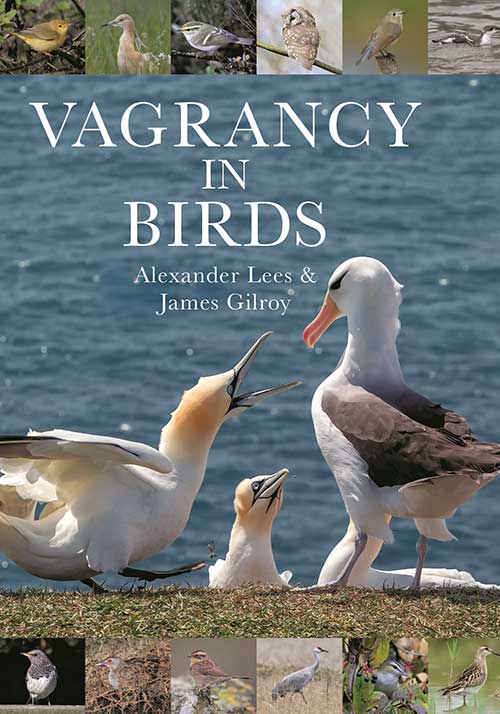
Vagrancy in Birds
Authors: Alexander Lees and James Gilroy
Publisher: Princeton University Press
ISBN:978-0-691-22488-6
Published: Dec. 2021
Pages: 400
Brief Review:
There are so many factors that make different species of birds become vagrants. While other birds remain as migrants with a definied destiny following their instincts.
The authors did a tremendous study and made things a lot clearer..
- Vagrancy though compass errors.
- Vagrancy by wind drift
- Vagrancy by overshooting
- Vagrancy by extreme weather and irruptions
- Vagrancy an Natural dispersal
- Human driven vagrancy
- Consequences of vagrancy fo species and Ecosystems
All of these points are explained in detail in clear and comprehensive manner. It makes a lot more sense for all the questions that one has, why this or that happens?
This book has a large quantity of information about species that have wandered around in the world classified by families.
It certainly has a section about:
Avian Vagrancy in an era of Global Change.
I believe it’s one book to make you think of why birds are found all over the world, also, are they related from all know locations?
Reviewed by:
H.J. Ruiz – Avian101Photography.com
March 28th, 2022
Share this:

Read Past Reviews

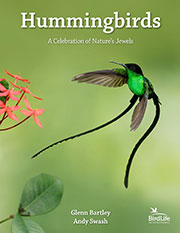
Book # 69
Quote from the Author
“A good chuckle is healthy, it helps you break the monotony of a serious life.” ~ H.J. Ruiz
 H.J. Ruiz - Avian101
You must be logged in to post a comment.