
Nocturnal Dude
During my last vacation to Florida, I had the pleasure of seeing and added, a great opportunity to photograph an interesting bird…The Yellow-crowned Night Heron, this timid bird with a peculiar quiet attitude and a plumage that blends perfectly with the surrounding vegetation, is a great subject for any photographer as many wader birds are. How about if I give you a more detailed information about this bird and you get acquainted.
The Yellow-crowned Night Heron (Nyctanassa violacea), also called the American Night Heron or squawk, is a fairly small heron. It is found throughout a large part of the Americas, especially (but not exclusively) in warmer coastal regions; an example occurrence is the Petenes mangroves of the Yucatan.
A related heron, the Bermuda Night Heron, was endemic to Bermuda, but became extinct following human colonization.
Adults are about 24 in. long and weigh 22 oz. They have a white crown and back with the remainder of the body grayish, red eyes and short yellow legs. They have a white stripe below the eye. Juveniles resemble young Black-crowned Night-Herons, being mainly brown flecked with white or gray.
These birds stalk their prey or wait in ambush at the water’s edge, mainly at night. They mainly eat crustaceans, mollusks, frogs, aquatic insects, and small fish.


Text excerpts © Wikipedia – Photographs © HJ Ruiz – Avian101
Share this:

Show and Tail

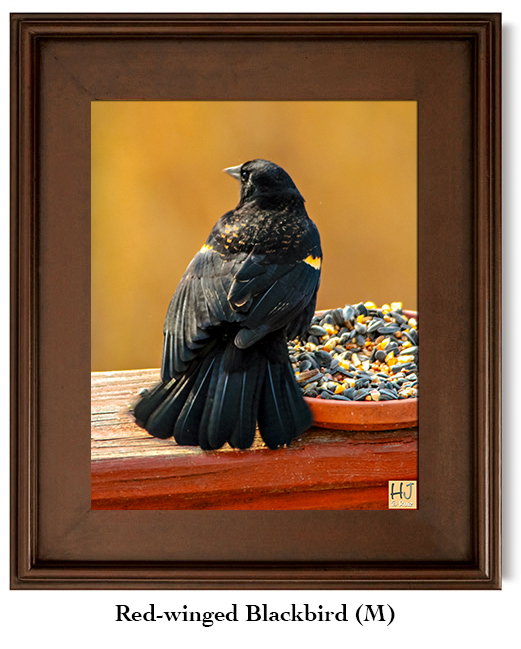
© HJ Ruiz – Avian101
Share this:

Gull of the Rings
There’s one species of gulls from the variety we have in the western hemisphere, that have recovered from a near extinction to be one of the most numerous we have around nowadays. This bird is the Ring-billed Gull. If you don’t see them at the sea shore then you can find them at any lake, pond, parking lot, or in large numbers at any city’s garbage dump. Here is some more information about this gull:
The Ring-billed Gull (Larus delawarensis) is a medium-sized gull.
Adults are 19 in. length and with a 49 in. wingspan. The head, neck and underparts are white; the relatively short bill is yellow with a dark ring; the back and wings are silver gray; and the legs are yellow. The eyes are yellow with red rims. This gull takes three years to reach its breeding plumage; its appearance changes with each fall molt.
Their breeding habitat is near lakes, rivers or the coast in Canada and the northern United States. They nest colonially on the ground, often on islands. This bird tends to be faithful to its nesting site, if not its mate, from year to year.
In some areas, it is displacing less aggressive birds such as the common tern.
They are migratory and most move south to the Gulf of Mexico and the Atlantic and Pacific coasts of North America, also the Great Lakes.
This gull is a regular wanderer to western Europe. In Ireland and Great Britain it is no longer classed as a rarity, with several birds regularly wintering in these countries.
Next are some pictures I shot in Florida while on vacation. Enjoy!


Text excerpts © Wikipedia – Photographs © HJ Ruiz – Avian101
Share this:

Panoramic View of Birds
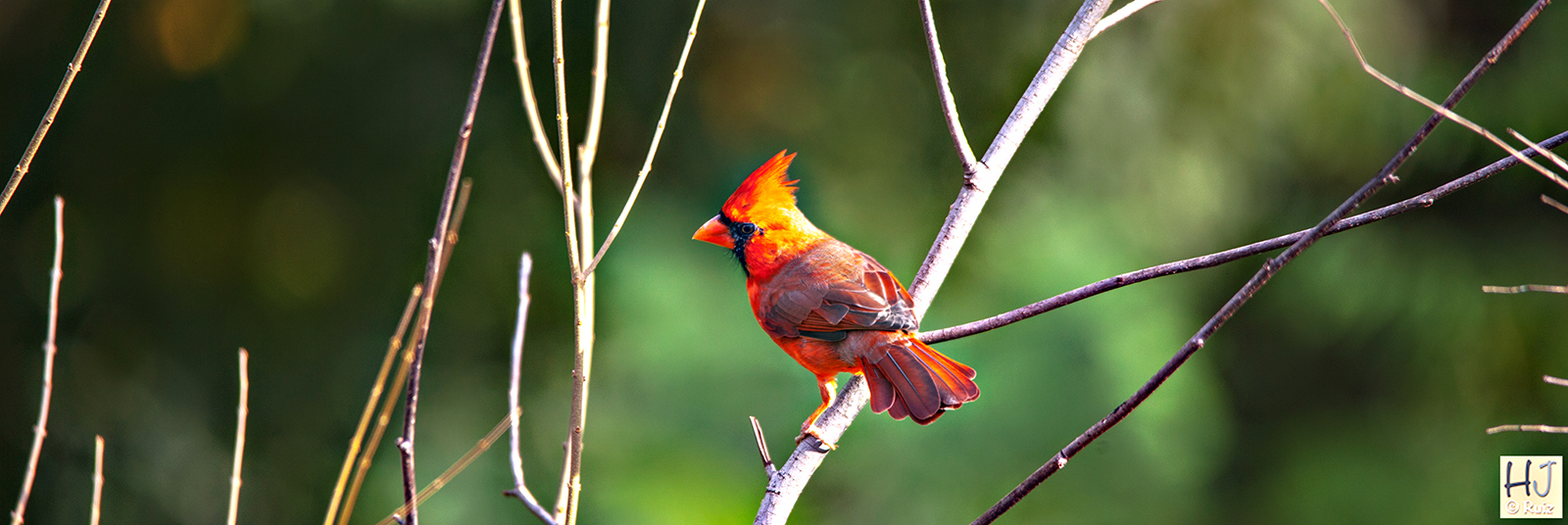
— Northern Cardinal (M) — Click on image to see enlargement —
© HJ Ruiz – Avian101
Share this:

Read Past Reviews

Book # 69
Quote from the Author
“A good chuckle is healthy, it helps you break the monotony of a serious life.” ~ H.J. Ruiz


You must be logged in to post a comment.