
Top Gun
Last Wednesday I was witness to another action of risky defense attack on part of a Northern Mockingbird versus an American Crow this time, which was most likely trying to steal eggs or hatchling from nests within the proclaimed mockingbird’s territory.
When I took notice of this event I had my camera ready but I was limited by the field of view and distance. The whole chase took only seconds but I was able to catch only glimpses of what occurred although with photos occasionally blurred.
The crow was avoiding the Mockingbird’s diving attacks, pecking his back and neck, from open air the crow moved to the tree area to impede the diving attacks but at the same time limiting itself to a sitting position, not such a good strategy at the moment. The mockingbird was relentless and kept the attack from behind in order to avert the powerful crow’s beak. Finally the crow decided although under duress, to flee the spot in the tree and just fly away as fast as it could from the mockingbird which was still in pursue at short distance; then, once the crow was at a safe distance away from the mockingbird’s territory the chase ended and the mockingbird came back to my backyard and sat on the deck’s handrail… victorious!
“His tenacity, skill and heroic determination had saved the day!”
Photo Gallery


Text and photographs © HJ Ruiz – Avian101
Share this:

Jolly Brown
This particular bird is always present in my backyard during the rain season days like lately. The Brown Thrasher gets very active when the rain stop and you are able to see this bird thrashing and picking worms and grubs, moving around in the muddy ground. I imagine that he has to do thrashing quickly before the ground get harder and the worms go deeper. I see them all the time but are hard to photograph when they move and hide in the brush.
The Brown Thrasher is bright reddish-brown above with thin, dark streaks on its buffy underparts. It has a whitish-colored chest with distinguished teardrop-shaped markings on its chest. Its long, rufous tail is rounded with paler corners, and eyes are a brilliant yellow. Its bill is brownish, long, and curves downward. Both male and females are similar in appearance. The juvenile appearance of the brown thrasher from the adult is not remarkably different, except for plumage texture, indiscreet upper part markings, and the irises having an olive color.
The brown thrasher has been observed either solo or in pairs. The brown thrasher is usually an elusive bird, and maintains its evasiveness with low-level flying. When it feels bothered, it usually hides into bushes and gives cackling calls. Thrashers spend most of their time on ground level or near it.
This bird is omnivorous, which has a diet that includes insects, berries, nuts and seeds, as well as earthworms, snails, and sometimes lizards and frogs. During the breeding season, the diet consists primarily of beetles, grasshoppers, and other arthropods, and fruits, nuts and seeds. By the late summer, it begins to shift towards more of a herbivore diet, focusing on fruits, nuts, seeds, and grains. By winter, the customary diet of the brown thrasher is fruit and acorns.
The brown thrasher utilizes its vision while scouring for food. It usually forages for food under leaves, brushes, and soil debris on the ground using its bill. It then swipes the floor in side-to-side motions, and investigates the area it recently foraged in. The brown thrasher can also hammer nuts such as acorns in order to remove the shell.
“The Brown Thrasher was proclaimed Georgia State Bird in 1935 and recognized by the Georgia legislature as the official state bird in 1970.”
Photo Gallery


Text and photographs © HJ Ruiz – Avian101
Share this:

One Shade of Gray
This post is about a species of bird which have been a resident of my backyard for the past 5 or 6 years.
The Tufted Titmouse is a small songbird from North America, a species in the tit and chickadee family (Paridae).
These birds have grey upperparts and white underparts with a white face, a grey crest, a dark forehead and a short stout bill; they have rust-colored flanks.
They live in deciduous and mixed woods as well as gardens, parks and shrubland in the eastern United States; they barely range into southeastern Canada in the Great Lakes region. They are all-year residents in the area effectively circumscribed by the Great Plains, the Great Lakes, the Gulf of Mexico and the Atlantic Ocean. The range is expanding northwards, possibly due to increased availability of winter food at bird feeders.
They forage actively on branches, sometimes on the ground, mainly eating insects, especially caterpillars, but also seeds, nuts and berries. They will store food for later use. They shy when seen at bird feeders; their normal pattern there is to scout the feeder from the cover of trees or bushes, fly to the feeder, take a seed, and fly back to cover to eat it.
Tufted titmice nest in a hole in a tree, either a natural cavity, a man-made nest box, or sometimes an old woodpecker nest. The pair may remain together and defend their territory year-round. These birds are permanent residents and often join small mixed flocks in winter.
I like these birds because they stay out of trouble and I’ve never seen them involved in any fights. They are nice birds to have in any backyard!
Photo Gallery


© HJ Ruiz – Avian101
Share this:

Show and Tail
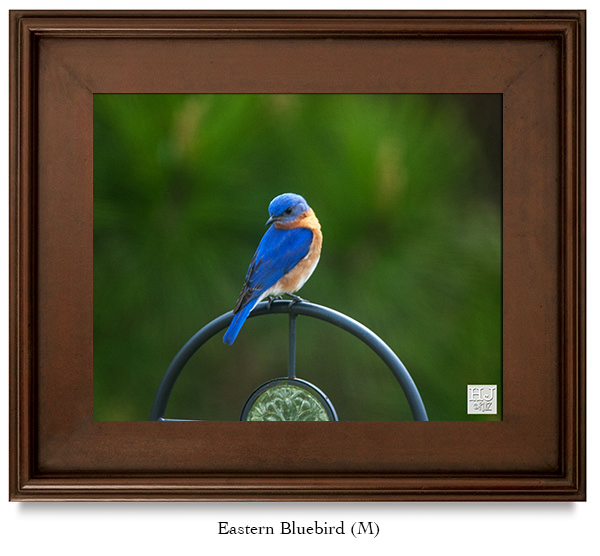
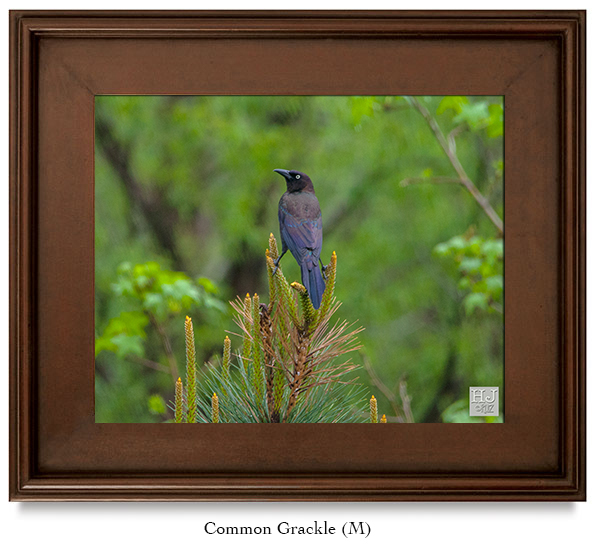
© HJ Ruiz – Avian101
Share this:

Read Past Reviews

Book # 69
Quote from the Author
“A good chuckle is healthy, it helps you break the monotony of a serious life.” ~ H.J. Ruiz


You must be logged in to post a comment.