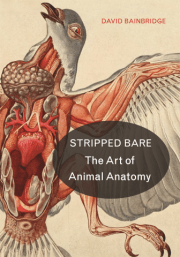
Book Review # 50 – Stripped Bare
Stripped Bare – The Art of Animal Anatomy
Author:
David Bainbridge
Publisher:
Princeton University Press
Review:
“Let’s start by saying, this book was written by David Bainbridge who is University Clinical Veterinary Anatomist at the University of Cambridge.
More information
His idea is to present a compilation of Scientific-artistic recorded studies done in ancient times up to our present era. Immediately after reading and seeing the illustrations of the recorded data, one just wonder about the intrigue that it was for the Anatomists without having all the modern scientific inventions of today’s. However, the idea was to study and learn all about how animals function in their daily life, and what makes them different from one to another. The book shows the illustrations as they were, stripped bare and in a sober way.
Personally, after reading it, made me ponder about how advanced we are in technology, compared to hundred of years ago.. At the same time , we had people already, with vision and smart ideas to investigate the natural creatures bodies and their functions.The book has 256 pages with 260 color images.”
Reviewed by:
H.J. Ruiz – Avian101.Wordpress.com – October 19th, 2018
Share this:

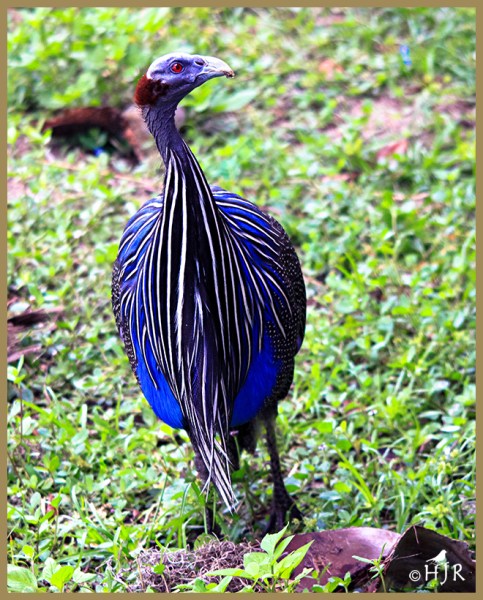
Bird’s ID – Vulturine Guineafowl
Vulturine Guineafowl
The Vulturine Guineafowl (Acryllium vulturinum) is the largest extant species of guineafowl. Systematically, it is only distantly related to other guineafowl genera. Its closest living relative, the white breasted guineafowl, Agelastes meleagrides inhabit primary forests in Central Africa. It is a member of the bird family Numididae, and is the only member of the genus Acryllium. It is a resident breeder in northeast Africa, from southern Ethiopia through Kenya and just into northern Tanzania.
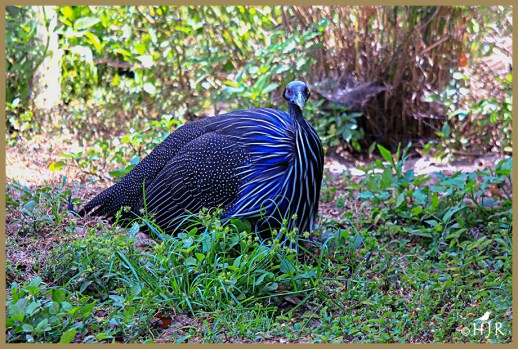
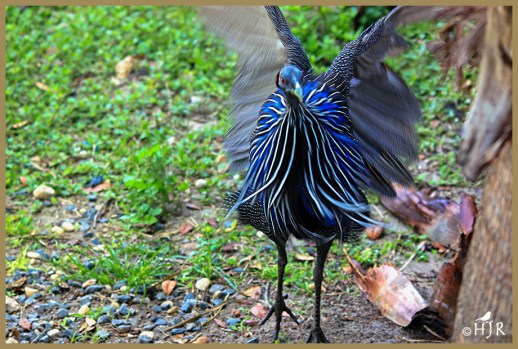
The vulturine guineafowl is a large (61–71 cm) bird with a round body and small head. It has a longer wings, neck, legs and tail than other guineafowl. The adult has a bare blue face and black neck, and although all other guineafowl have unfeathered heads, this species looks particularly like a vulture because of the long bare neck and head.
The slim neck projects from a cape of long, glossy, blue and white hackles. The breast is cobalt blue, and the rest of the body plumage is black, finely spangled with white. The wings are short and rounded, and the tail is longer than others in the family Numididae.
The sexes are similar, although the female is usually slightly smaller than the male and with smaller tarsal spurs. Young birds are mainly grey-brown, with a duller blue breast and short hackles.
Photo Gallery
© HJ Ruiz – Avian101
Share this:

What’s Up? – Hurricane Aftermath…
Hurricane Aftermath…
It’s been a busy week for three States mainly, Florida, Georgia and Alabama. The devastation of some towns in Florida is tremendous, the wind power as much as surf surges can really produce great damage and floods. Hurricane Michael proved to be one of the strongest in History.
I just hope that the people affected by this disaster will recover soon and live their lives normally. I feel sorry for the persons that passed away tragically and the relatives that lost them.
My home and backyard are luckily in good shape, despite the copious rain and wind did not cause any damages. My birds are still there and they managed bravely to overcome the bad weather event. Last Friday morning, we were at 49º F and it felt a bit chilly for a change.
My thanks to people that contacted me with concern about my safety and my family. I appreciate that very much!
Photo Gallery


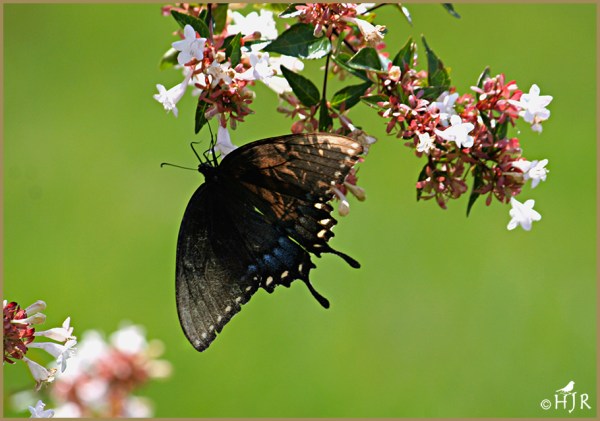
CAN YOU ID ME?
© HJ Ruiz – Avian101
Share this:

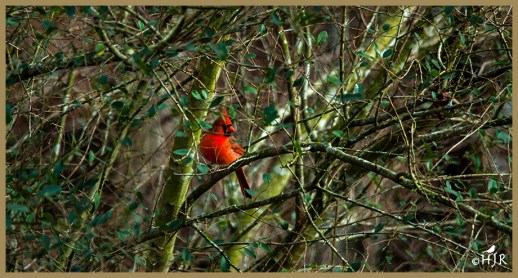
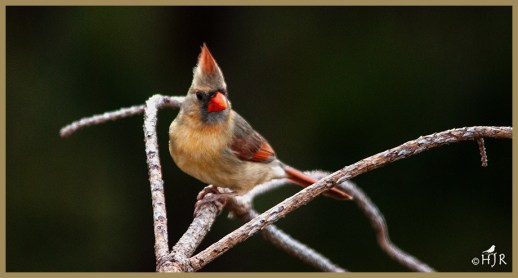
Red Gallery – Northern Cardinal
You are welcome to the Northern Cardinal Photo Gallery, every Saturday!
It’s suggested to relax and enjoy!
The northern cardinal is found in residential areas throughout its range. Backyard birders attract it using feeders containing seeds, particularly sunflower seeds and safflower seeds. Although some controversy surrounds bird feeding, an increase in backyard feeding by humans has generally been beneficial to this species. It is listed as a species of least concern by the IUCN Red List, with an estimated global range of 5,800,000 km2 (2,200,000 sq mi) and a global population of some 100 million.
Photo Gallery
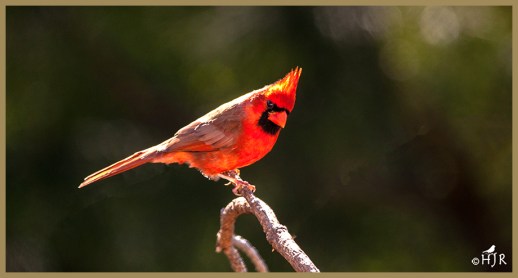

© HJ Ruiz – Avian101
Share this:

Read Past Reviews

Book # 69
Quote from the Author
“A good chuckle is healthy, it helps you break the monotony of a serious life.” ~ H.J. Ruiz


You must be logged in to post a comment.