
Red Gallery – Northern Cardinal
The Northern Cardinal is one of three birds in the genus Cardinalis and is included in the family Cardinalidae, which is made up of passerine birds found in North and South America.
The northern cardinal was one of the many species originally described by Linnaeus in his 18th-century work Systema Naturae. It was initially included in the genus Loxia, which now contains only crossbills. In 1838, it was placed in the genus Cardinalis and given the scientific name Cardinalis virginianus, which means “Virginia cardinal”. In 1918, the scientific name was changed to Richmondena cardinalis to honor Charles Wallace Richmond, an American ornithologist. In 1983, the scientific name was changed again to Cardinalis cardinalis and the common name was changed to “northern cardinal”, to avoid confusion with the seven other species also termed cardinals.
The common name, as well as the scientific name, of the northern cardinal refers to the cardinals of the Roman Catholic Church, who wear distinctive red robes and caps. The term “northern” in the common name refers to its range, as it is the northernmost cardinal species.
Photo Gallery

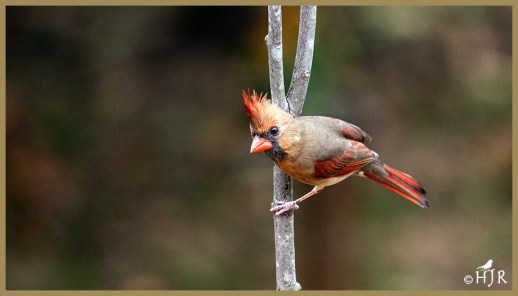
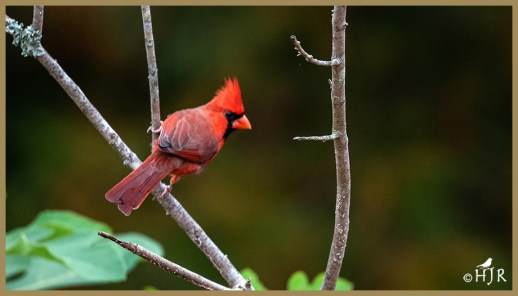
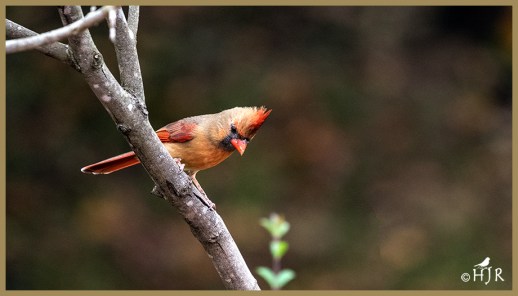
© HJ Ruiz – Avian101
Share this:

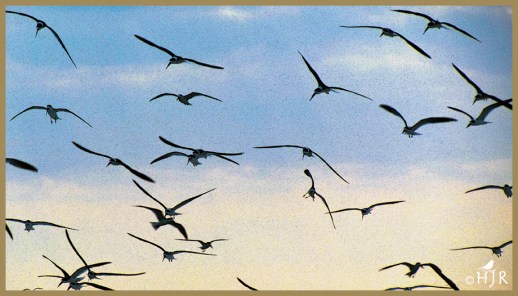
Bird’s ID – Black Skimmer
Black Skimmer
The Black Skimmer (Rynchops niger) is a tern-like seabird, one of three very similar birds species in the skimmer genus Rynchops in the gull family Laridae. It breeds in North and South America. Northern populations winter in the warmer waters of the Caribbean and the tropical and subtropical Pacific coasts, but the South American races make only shorter movements in response to annual floods which extend their feeding areas in the river shallows.
The black skimmer is the largest of the three skimmer species. It measures 40–50 cm (16–20 in) long with a 107–127 cm (42–50 in) wingspan. This species ranges from 212 to 447 g (7.5 to 15.8 oz), with males averaging about 349 g (12.3 oz), as compared to the smaller female’s 254 g (9.0 oz). The basal half of the bill is red, the rest mainly black, and the lower mandible is much-elongated. The eye has a dark brown iris and catlike vertical pupil, unique for a bird. The legs are red. The call is a barking kak-kak-kak.
Adults in breeding plumage have a black crown, nape and upper body. The forehead and underparts are white. The upper wings are black with white on the rear edge, and the tail and rump are dark grey with white edges. The underwing color varies from white to dusky grey depending on region.
Non-breeding adults have paler and browner upperparts, and a white nape collar. Immature birds have brown upperparts with white feather tips and fringes. The underparts and forehead are white, and the underwings as the adult.
Photo Gallery

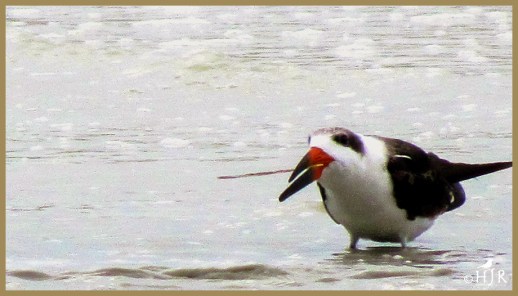

© HJ Ruiz – Avian101
Share this:

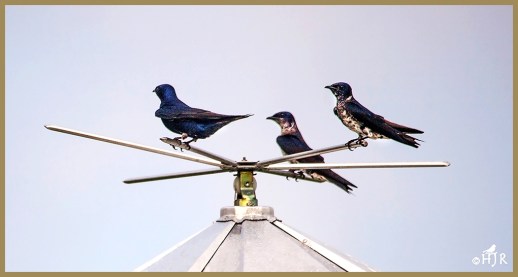
Photo Capture # 15 – Purple Martins
Purple Martins
Important note from H.J.
“I wish you my fellow Americans a very Happy Thanksgiving!
May G-d bless you and your loving family.”
© HJ Ruiz – Avian101
Share this:

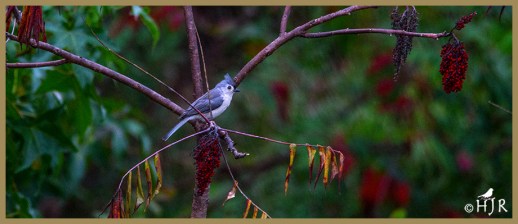
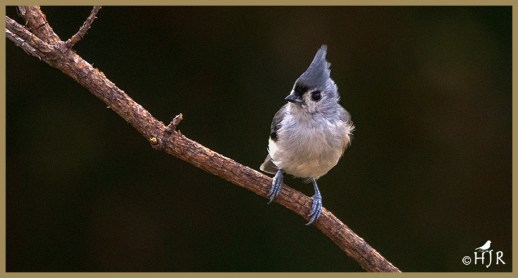
Bird’s ID – Tufted Titmouse
Tufted Titmouse
The Tufted Titmouse (Baeolophus bicolor) is a small songbird from North America, a species in the tit and chickadee family (Paridae).
These small birds are approximately 6 inches in length, with a white front, and grey upper body outlined with rust colored flanks. Other characteristics include their black forehead, and the tufted grey crest on their head.
The song of the tufted titmouse is usually described as a whistled peter-peter-peter, though this song can vary in approximately 20 notable ways.
Their habitat is deciduous and mixed woods as well as gardens, parks and shrubland. Though the tufted titmouse is non-migratory and originally native to Ohio and Mississippi, factors such as bird feeders have caused these birds to occupy a larger amount of territory across the United States and stretching into Ontario, Canada.
The tufted titmouse forages actively on branches, sometimes on the ground, mainly eating insects, especially caterpillars, but also seeds, nuts and berries. They will store food for later use. They tend to be curious about their human neighbors and can sometimes be spotted on window ledges peering into the windows to watch what’s going on inside. They are more shy when seen at bird feeders; their normal pattern there is to scout the feeder from the cover of trees or bushes, fly to the feeder, take a seed, and fly back to cover to eat it.
Tufted titmice nest in a hole in a tree, either a natural cavity, a man-made nest box, or sometimes an old woodpecker nest. They line the nest with soft materials, sometimes plucking hair from a live animal such as a dog. If they find shed snake skin, they will try to incorporate pieces of it in their nest. Their eggs are under an inch long and are white or cream-colored with brownish or purplish spots.
Photo Gallery


© HJ Ruiz – Avian101
Share this:

Read Past Reviews

Book # 69
Quote from the Author
“A good chuckle is healthy, it helps you break the monotony of a serious life.” ~ H.J. Ruiz
 H.J. Ruiz - Avian101
You must be logged in to post a comment.