
Photo Capture # 19 – Great Egret
Great Egret
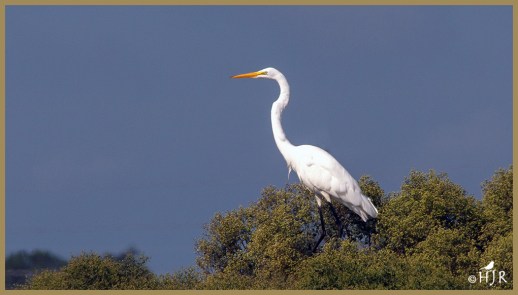
© HJ Ruiz – Avian101
Share this:

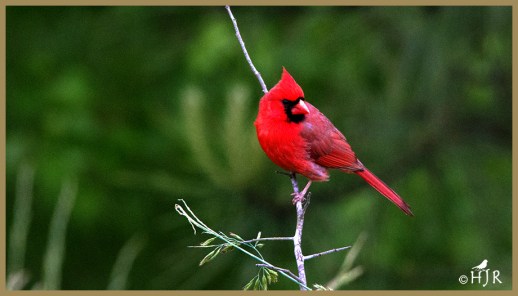
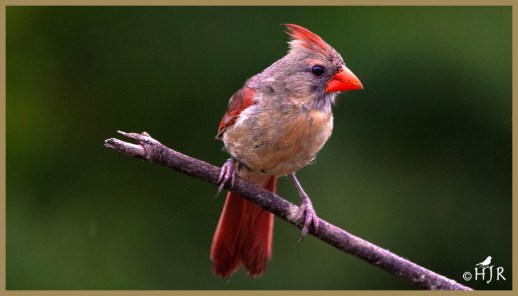
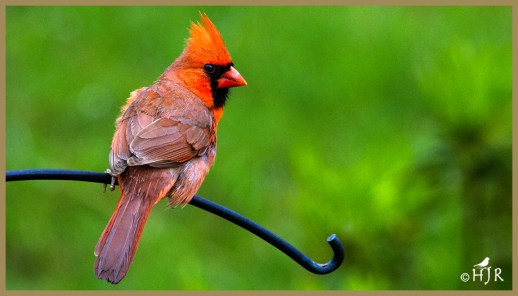
Red Gallery – Northern Cardinal
Red Gallery – Northern Cardinal
The adult male is a brilliant crimson red color with a black face mask over the eyes, extending to the upper chest. The color becomes duller and darker on the back and wings. The female is fawn, with mostly grayish-brown tones and a slight reddish tint on the wings, the crest, and the tail feathers. The face mask of the female is gray to black and is less defined than that of the male. Both sexes possess prominent raised crests and bright coral-colored beaks. The beak is cone-shaped and strong. Young birds, both male and female, show coloring similar to the adult female until the fall, when they molt and grow adult feathers.They are brown above and red-brown below, with brick-colored crest, forehead, wings, and tail. The legs and feet are a dark pink-brown. The iris of the eye is brown. The plumage color of the males is produced from carotenoid pigments in the diet. Coloration is produced from both red pigments and yellow carotenoid pigments. Northern cardinal males normally metabolize carotenoid pigments to create plumage pigmentation of a color different from the ingested pigment. When fed only yellow pigments, males become a pale red color.
Photo Gallery

© HJ Ruiz – Avian101
Share this:

Bird’s ID – Eastern Bluebird
Eastern Bluebird
The Eastern Bluebird (Sialia sialis) is a small thrush found in open woodlands, farmlands, and orchards. It is the state bird of Missouri and New York.
This species measures 16–21 cm (6.3–8.3 in) long, spans 25–32 cm (9.8–12.6 in) across the wings, and weighs 27–34 g (0.95–1.20 oz). Eastern bluebirds are found east of the Rockies, southern Canada to the Gulf states, and southeastern Arizona to Nicaragua. The increase in trees throughout the Great Plains during the past century due to fire suppression and tree planting facilitated the western range expansion of the eastern bluebird as well as range expansions of many other species of birds.
The bright-blue breeding plumage of the male, easily observed on a wire or open perch, makes this species a favorite of birders.
About two-thirds of the diet of an adult consists of insects and other invertebrates. The remainder of the bird’s diet is made up of wild fruits or berries. Favored insect foods include grasshoppers, crickets, katydids, and beetles. Other food items include earthworms, spiders, millipedes, centipedes, sow bugs, and snails.
Eastern bluebirds are very social birds. At times, they gather in flocks of a hundred or more. However, they are territorial during the breeding season and may continue to defend a feeding area throughout the winter. Mating occurs in the spring and summer. A mature female typically raises two broods each season. Nests are constructed in trees within abandoned woodpecker holes or other cavities that provide adequate protection (usually several feet above ground). Construction of the nest is done primarily by the female and takes around 10 days to complete
Eastern bluebirds can live for 6 to 10 years. The longest recorded lifespan for a bluebird is 10 years and five months.
Photo Gallery
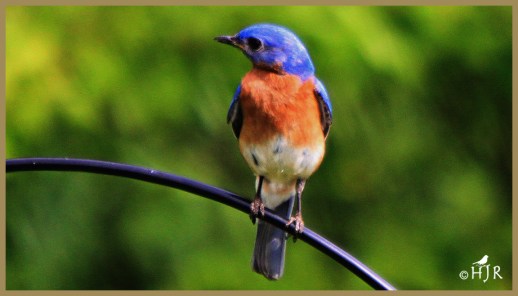


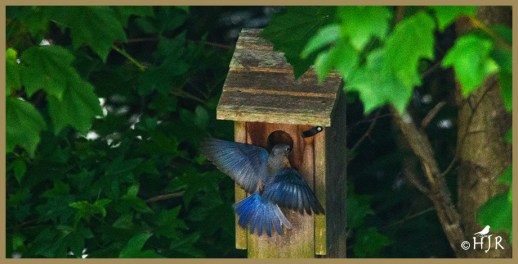
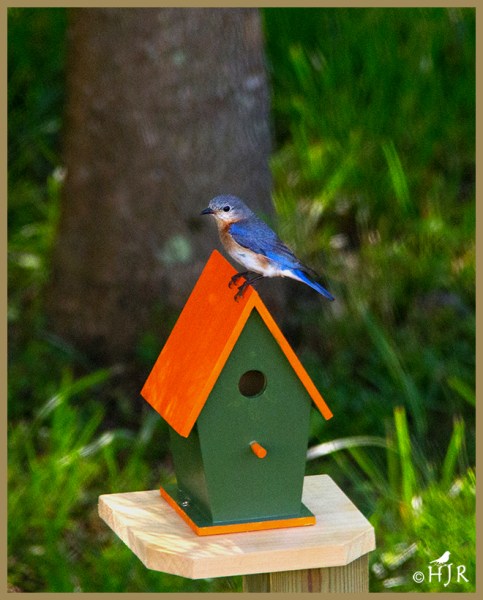
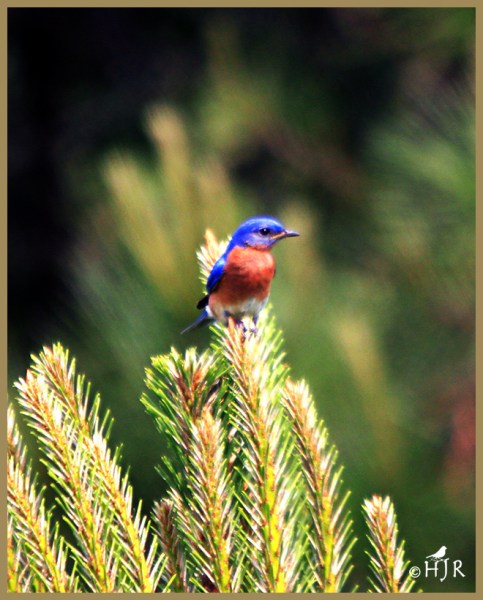
© HJ Ruiz – Avian101
Share this:

Photo Capture # 18 – Domestic Chinese Geese
Domestic Chinese Geese
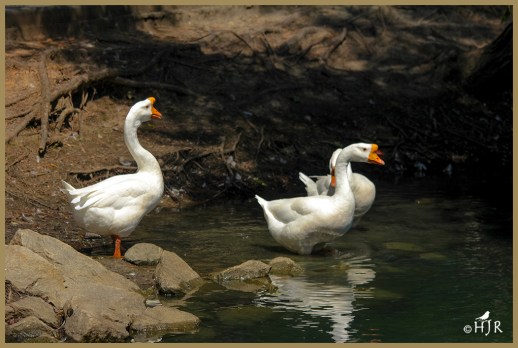
© HJ Ruiz- Avian101
Share this:

Read Past Reviews

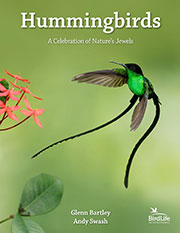
Book # 69
Quote from the Author
“A good chuckle is healthy, it helps you break the monotony of a serious life.” ~ H.J. Ruiz


You must be logged in to post a comment.