
Red Gallery – Northern Cardinal
Once considered a colorful pet with a unique song, Northern cardinals are now protected under the Migratory Bird Treaty Act of 1918. The cardinal is a relatively new member of Minnesota’s bird fauna. The state’s first record for a cardinal-sighting was in 1875.
Photo Gallery

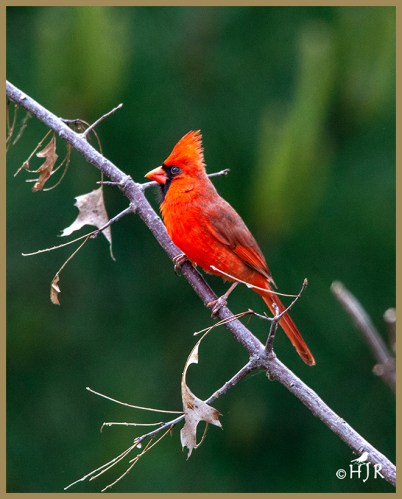
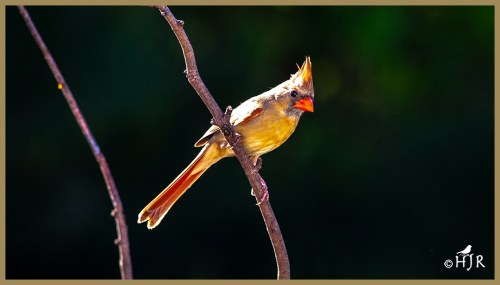
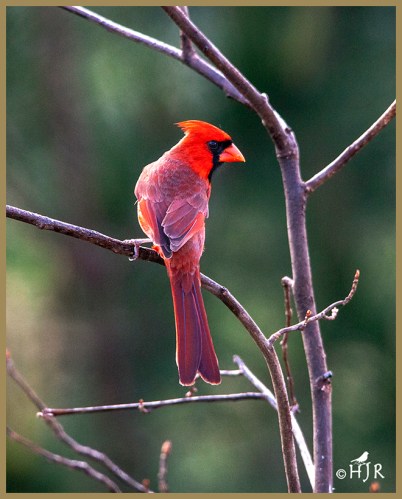
© HJ Ruiz – Avian101
Share this:

Bird’s ID – Loggerhead Shrike
Loggerhead Shrike
The Loggerhead Shrike (Lanius ludovicianus) is a passerine bird in the family Laniidae. It is the only member of the shrike family endemic to North America; the related northern shrike (L. borealis) occurs north of its range but also in the eastern Palearctic. It is nicknamed the butcherbird after its carnivorous tendencies, as it consumes prey such as amphibians, insects, lizards, small mammals and small birds, and some prey end up displayed and stored at a site, for example in a tree. Due to its small size and weak talons, this predatory bird relies on impaling its prey upon thorns or barbed wire for facilitated consumption.The numbers of Loggerhead shrike have significantly decreased in recent years, especially in Midwestern, New England and Mid-Atlantic areas.
The loggerhead shrike is a medium-sized passerine.”Loggerhead” refers to the relatively large size of the head as compared to the rest of the body. It measures approximately 9 inches from bill to tail. The wing and tail length is about 3.82 and 3.87 inches long, respectively. It weighs on average 50 grams, with a range of 45-60 grams for a healthy adult shrike. The adult plumage of the loggerhead shrike is grey above, with a white to pale grey breast and black tarsi and feet. The bird possesses a black mask that extends across the eyes to its bill. The wings are black, with a distinct white patch on the primaries. The tail is black edged with white and the irises are brown. The beak is short, black, and hooked, and contains a tomial tooth to help tear into prey. It is difficult to sex an adult loggerhead shrike in the field, as they are sexually monochromatic.However, several studies have reported sexual dimorphism in plumage and size traits. Juveniles possess a paler gray plumage that is subtly vermiculated.
The bird requires an open habitat with an area to forage, elevated perches and nesting sites. They are often found in open pastures or grasslands and appears to prefer red-cedar and hawthorn trees for nesting. The hawthorn’s thorns and the cedar’s pin-like needles protect and conceal the shrike from predators. It may also nest in fence-rows or hedge-rows near open pastures, and requires elevated perches as lookout points for hunting. Open pastures and grasslands with shorter vegetation are preferred by loggerhead shrikes, as they increase the bird’s hunting efficiency. Longer vegetation often requires more time and energy to be spent searching for prey, so these birds gravitate towards areas of shorter vegetation.
Loggerhead shrikes have been repeatedly observed killing prey larger than themselves by spearing the neck or head of the animal and twisting. The speed at which this occurs causes a whiplash injury to the animal. The neck strength of the shrikes compensates,
Photo Gallery


© HJ Ruiz – Avian101
Share this:

Photo Capture # 87 – Palm Warbler
Palm Warbler
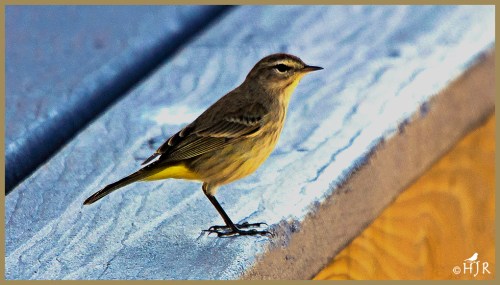
Palm Warbler
© HJ Ruiz – Avian101
Share this:

Bird’s ID – Peruvian Pelican
Peruvian Pelican
The Peruvian Pelican (Pelecanus thagus) is a member of the pelican family. It lives on the west coast of South America, breeding in loose colonies from about 33.5° in central Chile to Piura in northern Peru, and occurring as a visitor in southern Chile and Ecuador.
These birds are dark in color with a white stripe from the top of the bill up to the crown and down the sides of the neck. They have long tufted feathers on the top of their heads. It was previously considered a subspecies of the brown pelican (Pelecanus occidentalis). The Peruvian pelican is considerably larger, ranging from about 5 to 7 kg (11–15 lb) in weight, 137 to 152 cm (4.5–5.0 ft) in length and with a wingspan of about 228 cm (7.5 ft). Compared to the brown pelican, it also has proportionally longer crest feathers, as well as differences in the colors of the gular pouch, beak, scapulars and greater wing coverts.
The main breeding season occurs from September to March. Clutch size is usually two or three eggs. Eggs are incubated for approximately 4 to 5 weeks, with the rearing period lasting about 3 months.
This bird feeds on several species of fish. Unlike the brown pelican, it never dives from a great height to catch it food, instead diving from a shallow height or feeding while swimming on the surface. On occasion it may take other food items, such as nestling of imperial shags, young Peruvian diving petrels, gray gulls and cannibalize unrelated chicks its own species.
Its status was first evaluated for the IUCN Red List in 2008, being listed as Near threatened.
Photo Gallery


© HJ Ruiz – Avian101
Share this:

Read Past Reviews

Book # 69
Quote from the Author
“A good chuckle is healthy, it helps you break the monotony of a serious life.” ~ H.J. Ruiz


You must be logged in to post a comment.