
Framed Memories # 2
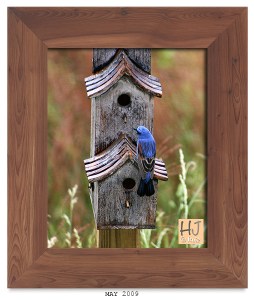

© HJ Ruiz – Avian101
Share this:

Photography of Birds – Set # 74
Set # 74
House Finch (M)
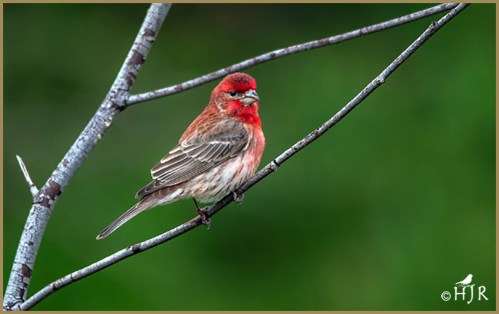
House Finch (M)
House Finch (M) (Morph)
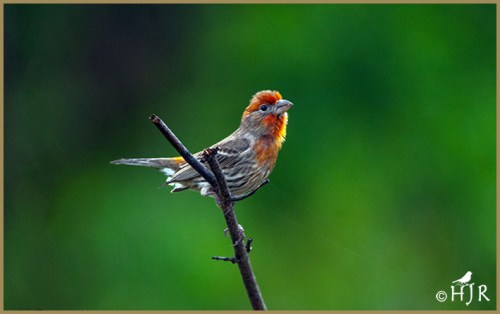
House Finch (M) (Morph)
Adults have a long, square-tipped brown tail and are a brown or dull-brown color across the back with some shading into deep gray on the wing feathers. Breast and belly feathers may be streaked; the flanks usually are. In most cases, adult males’ heads, necks and shoulders are reddish. This color sometimes extends to the belly and down the back, between the wings. Male coloration varies in intensity with the seasons and is derived from the berries and fruits in its diet. As a result, the colors range from pale straw-yellow through bright orange (both rare) to deep, intense red. Adult females have brown upperparts and streaked underparts.
© HJ Ruiz – Avian101
Share this:

Photography of Birds – Set # 73
Set # 73
Red-winged Blackbird
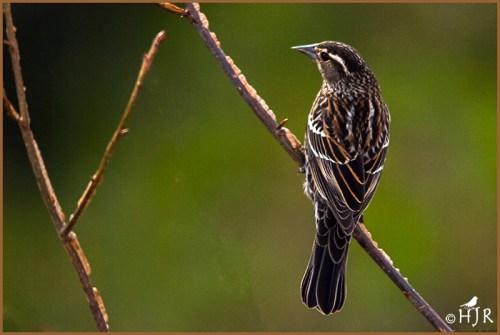
Red-winged Blackbird (F)
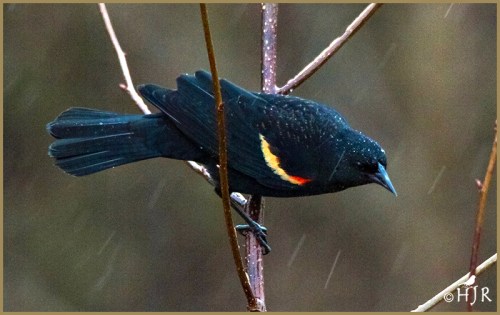
Red-winged Blackbird (M)
Red-winged blackbirds are polygynous, with territorial males defending up to 10 females. However, females frequently copulate with males other than their social mate and often lay clutches of mixed paternity. Pairs raise two or three clutches per season, in a new nest for each clutch.
© HJ Ruiz – Avian101
Share this:

Photography of Birds – Set # 72
Set # 72
Song Sparrow
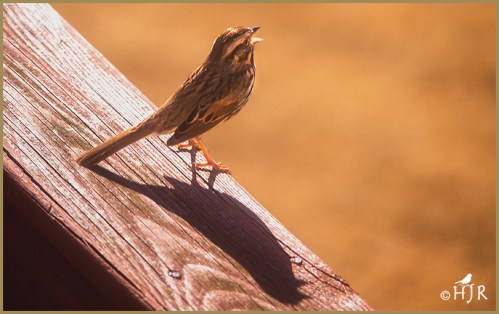
Song Sparrow
Song sparrows typically learn their songs from a handful of other birds that have neighboring territories. They are most likely to learn songs that are shared between these neighbors. Ultimately, they will choose a territory close to or replacing the birds that they have learned from. This allows the song sparrows to address their neighbors with songs shared with those neighbors. It has been demonstrated that song sparrows are able to distinguish neighbors from strangers on the basis of song, and also that females are able to distinguish (and prefer) their mate’s songs from those of other neighboring birds, and they prefer songs of neighboring birds to those of strangers.
Field Sparrow
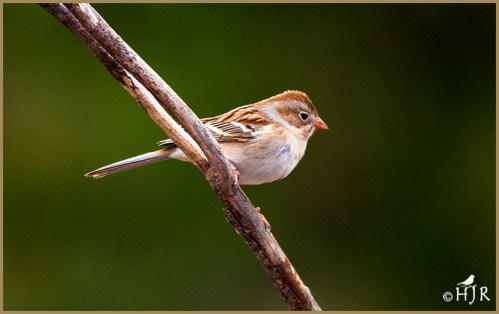
Field Sparrow
Their breeding habitat is brushy, shrubby fields across eastern North America. The nest is an open cup on the ground under a clump of grass or in a small thicket.
These birds are permanent residents in the southern parts of their range. Northern birds migrate to the southern United States and Mexico.
© HJ Ruiz – Avian101
Share this:

Read Past Reviews

Book # 69
Quote from the Author
“A good chuckle is healthy, it helps you break the monotony of a serious life.” ~ H.J. Ruiz


You must be logged in to post a comment.